
الموارد
استكشف مجموعة واسعة من الموارد القيمة حول تعليم المواطنة العالمية لتعميق فهمك وتعزيز البحث والمناصرة والتعليم والتعلم.
تم العثور على 792 نتيجة
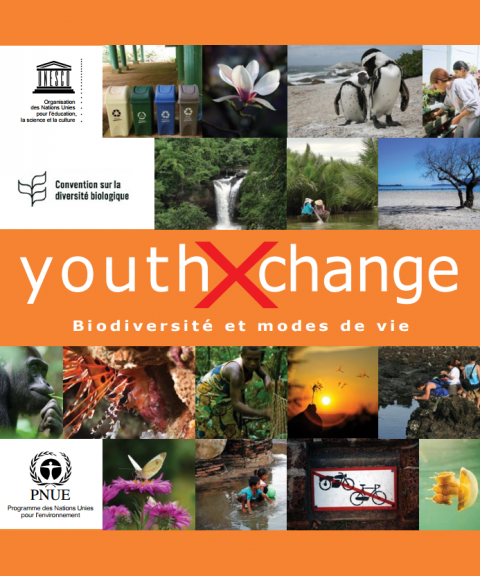 Série de guides youthXchange: biodiversité et modes de vie سنة النشر: 2015 المؤلف المؤسسي: UNESCO | United Nations Environment Programme (UNEP) The YouthXchange Biodiversity and LifestylesGuidebook is designed to help young people familiarize themselves with the dimensions of global biological and cultural diversity, as well as help them to develop essential skills whileengaging with biodiversity.The guidebook aims to:• Explore the interactions between biodiversity and lifestyle choices by explaining the interrelatedness of food, consumption, culture and biodiversity conservation;• Help young people familiarize themselves with the dimensions of global biological and cultural diversity, as well as help them to develop essential skills while engaging with biodiversity; and• Help young people consider how they can preserve biodiversity though responsible lifestyle choices, engagement and action.
  The ABCs of Global Citizenship Education سنة النشر: 2016 المؤلف المؤسسي: UNESCO UNESCO's FAQ flyers on GCED
  L'ABC de l'éducation à la citoyenneté mondiale سنة النشر: 2016 المؤلف المؤسسي: UNESCO UNESO's FAQ on Global citizenship education
  Multilingual education: Why is it important? How to implement it? سنة النشر: 2014 المؤلف المؤسسي: UNESCO Mother tongue instruction is in the context of bilingual education / multilingual education (MLE) because it lays a solid foundation for learning, improves access to education (especially for girls), improves learning outcomes, raises the quality of education by emphasizing understanding and creativity rather than repetitive memorization. Furthermore, learners who are excluded from the education system are those who mosk likely benefit from multilingual education. There are several ways to implement MLE, such as by creating a favourable environment, using appropriate materials, training teachers and educators, and taking into account the learners' knowledge.
  Regional overview: Central and Eastern Europe and Central Asia سنة النشر: 2015 المؤلف المؤسسي: UNESCO Central and Eastern Europe (CEE) and Central Asia (CA) have both made significant advances towards Education for All (EFA) since 1999. However, the 2015 EFA Global Monitoring Report shows that despite progress, Education For All remains unfinished business, including in Central and Eastern Europe and in Central Asia. This must be taken into account in the post-2015 agenda.
  Analysis of Determinants of a Measure of Sustainability Literacy سنة النشر: 2017 المؤلف: Aurélien Decamps المؤلف المؤسسي: UNESCO This paper highlights the contribution of the Sulitest to analyse the determinants of sustainability literacy in higher education. Sulitest is an open online training and assessment tool designed to assess and improve sustainability literacy. It is a multi-stakeholder initiative supported by several UN agencies and academic networks. Based on collaboration through the volunteer contribution of an international community, this tool aims to be internationally recognized and locally relevant by addressing global as well as local issues. With a growing community of more than 500 higher education institutions and other organizations from more than 50 countries, Sulitest begins to be recognized as a standard to assess and improve sustainability literacy. As the use of the tool is expanding, the data collected provides tangible indicators to map the current level of sustainability literacy and to monitor progress over time.
  Contributing to peace and human development in an era of globalization سنة النشر: 2002 المؤلف المؤسسي: UNESCO The Medium-Term Strategy (2002-2007) for the countries of the Africa region is an essential programme axis of UNESCO’s new decentralization policy. It forms an integral part of the Organization’s overall strategic objectives defined by the Member States in the UNESCO MediumTerm Strategy for 2002-2007 (31 C/4), which aims to contribute to peace and human development through education, the sciences, culture and communication.
  Teacher Training for Multicultural Education in Favour of Democracy and Sustainable Development: the Territorial Approach سنة النشر: 1995 المؤلف: Raúl Galiardi | Paula Bernadini Mosconi المؤلف المؤسسي: UNESCO This publication is part of the book Teacher Training and Multiculturalism: National Studies. This book presents the outcomes concerning the initial training systems of teachers in eight countries at different levels of development in different regions of the world but who are faced with a common challenge to educate for cultural diversity. Both the conclusions of each particular study and the general outcomes demonstrate the complexity of the problems and the benefits of comparative analysis. Overcoming prejudices and stereotypes is not an easy task nor likely to be achieved in the short term. Mentalities change far more slowly than knowledge and, because of this, educational strategies need to be applied in the long term. This study also shows that it is necessary to improve the exchange of experiences as well as contacts between people and institutions who are confronted with the same problems in different contexts. The publication of the initial outcomes of this project is intended to enrich the quality of discussions between specialists and institutions who, in different parts of the world, are concerned by multicultural education as an instrument to promote understanding, respect and dialogue between cultures.
  Non-formal and Informal Programs and Activities that Promote the Acquisition of Knowledge and Skills in Areas of Global Citizenship Education (GCED) and Education for Sustainable Development (ESD) سنة النشر: 2016 المؤلف: Ashley Stepanek Lockhart المؤلف المؤسسي: UNESCO This study will examine the nature of, and how, non-formal and informal programs and activities contribute to the acquisition of knowledge and skills for children, adolescents, youth and adults in precise areas of Target 4.7. This will be done by highlighting different definitions, conceptual approaches and history, along with policies of GCED and ESD and non-formal education and informal learning, comparing attempts to operationalize GCED and ESD to indicators for measurement and monitoring and challenges therein, and by identifying relevant sample programs and activities from around the world to analyze and consider using as data sources. How non-formal and informal provision related to GCED and ESD links to formal education will be considered, along with its connection to the larger notion of lifelong learning.
  How Does Education About the Holocaust Advance Global Citizenship Education? سنة النشر: 2018 المؤلف: E. Doyle Stevick المؤلف المؤسسي: UNESCO Can education about past genocides shape our understanding of how violence occur in today’s world? Can it foster a sense of belonging to a common humanity and empower young people to become active citizens who work globally for peace and human rights? How does learning about such crimes, which profoundly affect the core dignity of human beings, support the objectives of Global Citizenship Education (GCED), a priority of the 2030 Education Agenda?This paper, commissioned by UNESCO, offers an overview of empirical research on teaching and learning about the Holocaust and how such education may impact leaners’ cognitive, socio-emotional and behavioural skills and competencies. It provides insights for educators on how effective lessons about the Holocaust can meet some of the key expected outcomes of Global Citizenship Education (GCED), such as critical thinking skills, attitudes of empathy and solidarity, and motivation to take action to prevent human rights abuses.