
الموارد
استكشف مجموعة واسعة من الموارد القيمة حول تعليم المواطنة العالمية لتعميق فهمك وتعزيز البحث والمناصرة والتعليم والتعلم.
تم العثور على 39 نتيجة
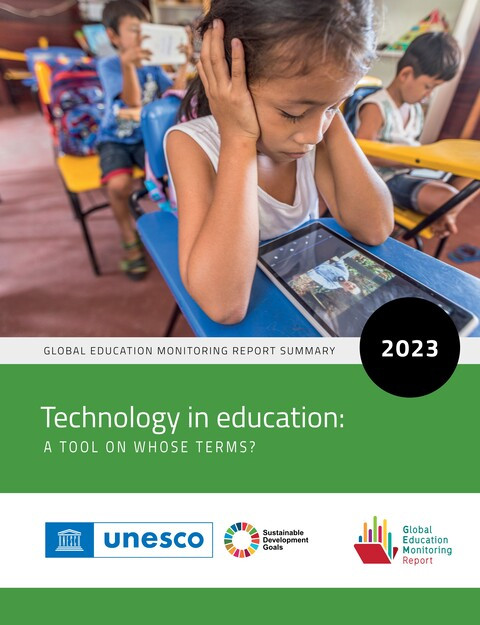 [Summary] Global Education Monitoring Report Summary 2023: Technology in Education; A Tool on whose Terms? سنة النشر: 2023 المؤلف المؤسسي: UNESCO | Global Education Monitoring Report Team Technology’s role in education has been sparking intense debate for a long time. Does it democratize knowledge or threaten democracy by allowing a select few to control information? Does it offer boundless opportunities or lead towards a technology-dependent future with no return? Does it level the playing field or exacerbate inequality? Should it be used in teaching young children or is there a risk to their development? The debate has been fuelled by the COVID-19 school closures and the emergence of generative artificial intelligence. But as developers are often a step ahead of decision makers, research on education technology is complex. Robust, impartial evidence is scarce. Are societies even asking the right questions about education before turning to technology as a solution? Are they recognizing its risks as they seek out its benefits? Information and communication technology has potential to support equity and inclusion in terms of reaching disadvantaged learners and diffusing more knowledge in engaging and affordable formats. In certain contexts, and for some types of learning, it can improve the quality of teaching and learning basic skills. In any case, digital skills have become part of a basic skills package. Digital technology can also support management and increase efficiency, helping handle bigger volumes of education data. But technology can also exclude and be irrelevant and burdensome, if not outright harmful. Governments need to ensure the right conditions to enable equitable access to education for all, to regulate technology use so as to protect learners from its negative influences, and to prepare teachers. This report recommends that technology should be introduced into education on the basis of evidence showing that it would be appropriate, equitable, scalable and sustainable. In other words, its use should be in learners’ best interests and should complement face-to-face interaction with teachers. It should be seen as a tool to be used on these terms. Midway to the deadline, the 2023 Global Education Monitoring Report assesses the distance still to go to reach the 2030 education targets. Education is the key to unlocking the achievement of other development objectives, not least the goal of technological progress. [Resumen] Resumen del informe de seguimiento de la educación en el mundo 2023: tecnología en la educación; ¿una herramienta en los términos de quién? سنة النشر: 2023 المؤلف المؤسسي: Organización de las Naciones Unidas para la Educación, la Ciencia y la Cultura (UNESCO) | Global Education Monitoring Report Team El papel de la tecnología en la educación lleva mucho tiempo suscitando intensos debates. ¿Democratiza el conocimiento o amenaza la democracia al permitir que unos pocos controlen la información? ¿Ofrece oportunidades ilimitadas o conduce a un futuro tecnodependiente sin retorno? ¿Nivela las desigualdades?¿Debe utilizarse en la enseñanza de niños pequeños o supone un riesgo para su desarrollo? El debate ha sido alimentado por el cierre de las escuelas debido al COVID-19 y la aparición de la inteligencia artificial generativa. Pero como los desarrolladores suelen ir un paso por delante de los responsables de la toma de decisiones, la investigación sobre tecnología educativa es compleja. Las pruebas sólidas e imparciales son escasas. ¿Se plantean las sociedades las preguntas adecuadas sobre la educación antes de recurrir a la tecnología como solución? ¿Reconocen sus riesgos mientras buscan sus beneficios? Las tecnologías de la información y la comunicación pueden contribuir a la equidad y la inclusión para llegar a los alumnos desfavorecidos y difundir más conocimientos en formatos atractivos y asequibles. En determinados contextos y para algunos tipos de aprendizaje, puede mejorar la calidad de la enseñanza y el aprendizaje de las competencias básicas. En cualquier caso, las competencias digitales se han convertido parte de un paquete de habilidades básicas. La tecnología digital también puede respaldar la gestión y aumentar la eficiencia, ayudando a manejar volúmenes más grandes de datos educativos. Pero la tecnología también puede excluir y ser irrelevante y onerosa, cuando no directamente perjudicial. Los gobiernos deben garantizar las condiciones adecuadas para permitir un acceso equitativo a la educación para todos, regular el uso de la tecnología para proteger a los alumnos de sus influencias negativas y preparar a los profesores. Este informe recomienda que la tecnología se introduzca en la educación sobre la base de pruebas que demuestren que sería apropiada, equitativa, escalable y sostenible. En otras palabras, su uso debe estar en el mejor interés de los estudiantes y debe complementar la interacción cara a cara con los profesores. Debe verse como una herramienta a utilizar en estos términos. A medio camino de la fecha límite, el Informe de seguimiento de la educación en el mundo 2023 evalúa la distancia que queda por recorrer para alcanzar los objetivos educativos de 2030. La educación es la clave para alcanzar otros objetivos de desarrollo, entre ellos el del progreso tecnológico.
 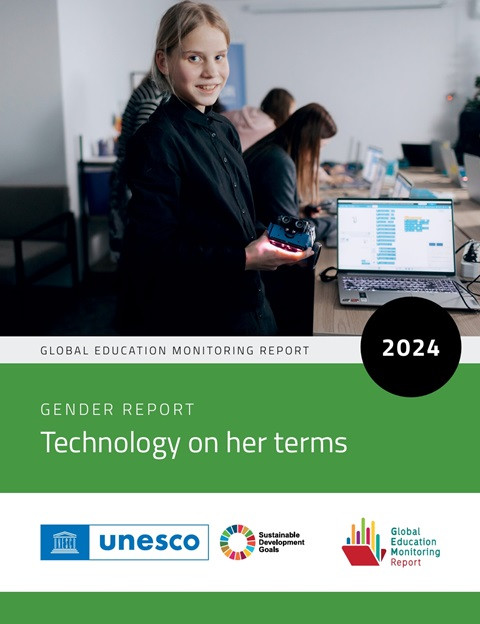 Global Education Monitoring Report 2024: Gender Report; Technology on Her Terms سنة النشر: 2024 المؤلف المؤسسي: UNESCO | Global Education Monitoring Report Team The 2024 Gender Report tells the increasingly positive story of girls’ education access, attainment and achievement, which is helping reverse decades of discrimination. But there is much more to say on gender equality in and through education. A companion to the 2023 GEM Report, this report looks at the interaction between education and technology with a gender lens. First, it looks at the impact of technology on girls’ education opportunities and outcomes. Although many instances are seen of radio, television and mobile phones providing a learning lifeline for girls, particularly in crisis contexts, gender divides exist globally in both access to technology and in digital skills, although the latter are smaller among youth compared to among adults. Biased social and cultural norms inhibit equitable access to and engagement with technology in and outside of school, with girls always left on the wrong side of the divide. While technology offers many girls opportunities to access important education content in safe environments, for instance on comprehensive sexuality education, technology in practice often exacerbates negative gender norms or stereotypes. Social media usage impacts learners’ and particularly girls’ well-being and self-esteem. The ease with which cyberbullying can be magnified through the use of online devices in the school environment is a cause of concern, as is the biased design of artificial intelligence algorithms. Second, the report looks into the role of education on the shape of future technological development. It shows that women struggle to pursue STEM careers, which manifests from an early age in the form of anxiety in mathematics and develops into a reluctance to study STEM subjects, ultimately resulting in a lack of women in the technology workforce. Women make up only 35% STEM graduates, and hold only a quarter of science, engineering and ICT jobs. Ensuring women participate on equal terms in shaping the world’s ongoing digital transformation will ensure that technology works for everyone and takes into consideration the needs of all humanity.
 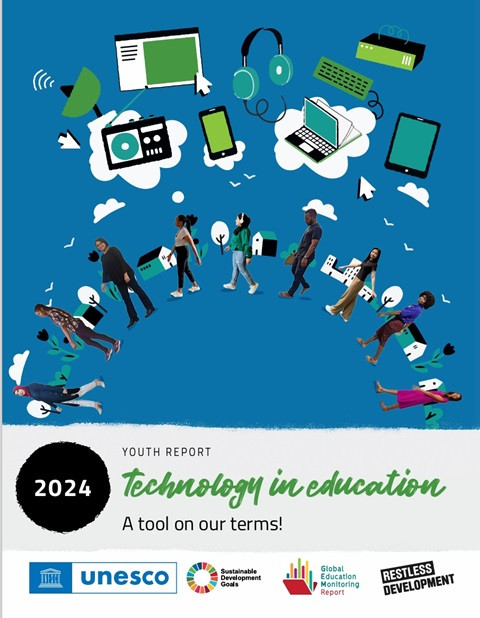 Youth Report 2024: Technology in Education; A Tool on Our Terms! سنة النشر: 2024 المؤلف المؤسسي: UNESCO | Global Education Monitoring Report Team | Restless Development The 2024 Youth Report on technology in education is the result of an extensive consultation process in partnership with Restless Development involving +1500 youth and students across 8 regions. The consultations invited participants to reflect on the key challenges and opportunities for the use of technology in education in their regions through the lenses of the recommendations in the global 2023 Global Education Monitoring Report on technology in education: Technology on our terms. The discussions centred on the need for the use of technology in education to be appropriate for national and local contexts and to be equitable and leave no one behind. The report calls for decisions about technology in education to keep learners at the centre when deciding whether the use of technology in education would be appropriate, equitable, evidence-based, and sustainable. Through this report, young people have described what technology on their terms would look like. It concludes with a call to action calling which highlights concrete recommendations that governments can follow to ensure that technology in education is on youth terms.
 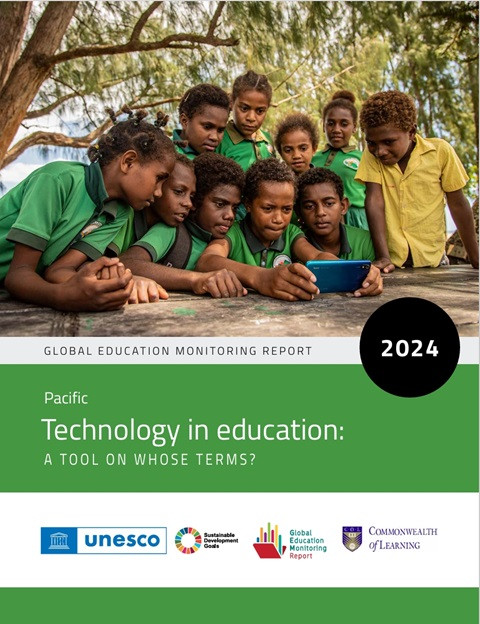 Global Education Monitoring Report 2024, Pacific: Technology in Education; A Tool on Whose Terms? سنة النشر: 2024 المؤلف المؤسسي: UNESCO | Global Education Monitoring Report Team | Commonwealth of Learning Information transmission and connectivity is crucial in the Pacific, a region characterized by high geographic dispersion. While the application of ICT in education has significant potentials, it is hindered by the region's limited and costly infrastructure. This edition accompanies the 2023 Global Education Monitoring Report, which acknowledges technology as a useful tool but invites the education community to question on whose terms it is deployed. The report considered four key policy areas of the Pacific Regional Education Framework (PacREF) (2018–2030): In terms of quality and relevance, mobile technology has offered an affordable and flexible approach to learning, and social media have improved communication between institutions, parents and learners. Moodle is the most widely used digital platform in the region. Textbooks are being digitalised and digital resources made available. Yet content is not always developed or adapted to local languages and cultural contexts. Open and distance learning has historically expanded learning pathways in the Pacific, specially in higher education and as a response to natural hazards. The University of South Pacific is a leading example of open and distance learning connecting campus across 12 countries. With the aim to enhance student outcomes and well-being, efforts have been made to incorporate digital skills into curricula and initiatives have increased outside formal education. Yet regulations do not adequately address threats from the use of technology to privacy, safety and well-being. With a focus on the teaching profession, countries leverage technology to provide training opportunities and transform the teaching profession. However, ICT training varies greatly across the region and limited digital infrastructure hinders technology integration into classrooms and teacher training. Three conditions need to be met for technology's potential to be fulfilled: equitable access to technology, appropriate governance and regulation, and sufficient teacher capacity. Supporting this publication is seven background thematic studies that provide a comprehensive overview of education technology issues; Commonwealth of Learning’s short case studies on some of its projects; a survey administered to key informed respondents from the region; and a series of country profiles on PEER, a policy dialogue resource describing policies and regulations related to technology in the region’s education systems.
  Right to Education and Schooling in Latin America سنة النشر: 2020 المؤلف: Mariela Alejandra Acevedo | Felicitas Acosta | Myriam Feldfeber | Pablo Imen | María Mercedes Palumbo | Fernanda Saforcada | Soledad Vercellino المؤلف المؤسسي: Universidad Nacional de General Sarmiento | Consejo Latinoamericano de Ciencias Sociales (CLACSO) The extension of the right to education in Latin America is part of the contemporary debate about schooling. The educational reforms of the latter part of the 20th century and the beginning of the 21st century in the region accompanied this debate: enactment of new laws, changes in the structure of educational systems, curricular reforms, revision of classroom teaching, modification of the teacher training are some of the ways these reforms take. Changes in education systems are also affected by the emergence of new actors, topics and forms of intervention: from standardized international tests and the participation of civil society and non-governmental organizations, to the introduction of content related to issues of gender and sexuality. This book brings together works that attempt to account for the set of changes mentioned, from different perspectives: historical, political, philosophical and pedagogical. It also brings together the award-winning articles from the CLACSO-UNGS essay contest on the right to education within the framework of the Education Axis of the Democracies in Revolution / Revolutions in Democracy program. Derecho a la educación y escolarización en América Latina سنة النشر: 2020 المؤلف: Mariela Alejandra Acevedo | Felicitas Acosta | Myriam Feldfeber | Pablo Imen | María Mercedes Palumbo | Fernanda Saforcada | Soledad Vercellino المؤلف المؤسسي: Universidad Nacional de General Sarmiento | Consejo Latinoamericano de Ciencias Sociales (CLACSO) La extensión del derecho a la educación en América Latina forma parte del debate contemporáneo acerca de la escolarización. Las reformas educativas de la última parte del siglo XX y comienzos del siglo XXI en la región acompañaron dicho debate: sanción de nuevas leyes, cambios en la estructura de los sistemas educativos, reformas curriculares, revisión de la enseñanza en el aula, modificación de la formación docente son algunas de las maneras que adoptan estas reformas. Las modificaciones en los sistemas educativos también se encuentran atravesadas por la emergencia de nuevos actores, temas y formas de intervención: desde las pruebas internacionales estandarizadas, la participación de la sociedad civil y las organizaciones no gubernamentales, hasta la introducción de contenidos vinculados con cuestiones de género y sexualidad. Este libro reúne trabajos que intentan dar cuenta del conjunto de cambios mencionados desde diferentes perspectivas: histórica, política, filosófica y pedagógica. Reúne también los artículos premiados del concurso de ensayos CLACSO-UNGS sobre el derecho a la educación en el marco del Eje Educación del programa Democracias en revolución/Revoluciones en democracia.
  LEARNING to Realize Education’s Promise المؤلف المؤسسي: World Bank The World Development Report 2018 (WDR 2018)—LEARNING to Realize Education’s Promise—is the first ever devoted entirely to education. And the timing is excellent: education has long been critical to human welfare, but it is even more so in a time of rapid economic and social change. The best way to equip children and youth for the future is to place their learning at the center. The 2018 WDR explores four main themes: 1) education’s promise; 2) the need to shine a light on learning; 3) how to make schools work for learners; and 4) how to make systems work for learning.
 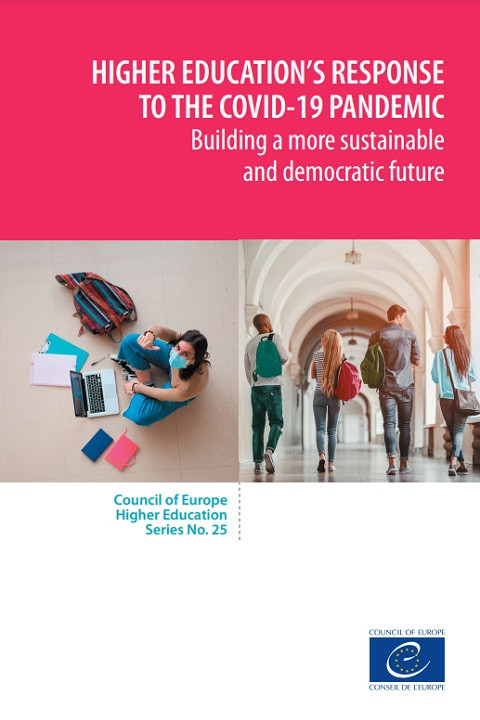 Higher Education's Response to the COVID-19 Pandemic: Building a More Sustainable and Democratic Future (Council of Europe Higher Education Series; No. 25) سنة النشر: 2021 المؤلف: Sjur Bergan | Tony Gallagher | Ira Harkavy | Ronaldo Munck | Hilligje van’t Land المؤلف المؤسسي: Council of Europe Public health was the immediate concern when the Covid-19 pandemic struck in Asia, then in Europe and other parts of the world. The response of our education systems is no less vital. Higher education has played a major role in responding to the pandemic and it must help shape a better, more equitable and just post-Covid-19 world. This book explores the various responses of higher education to the pandemic across Europe and North America, with contributions also from Africa, Asia and South America. The contributors write from the perspective of higher education leaders with institutional responsibility, as well as from that of public authorities or specialists in specific aspects of higher education policy and practice. Some contributions analyse how specific higher education institutions reacted, while others reflect on the impact of Covid-19 on key issues such as internationalisation, finance, academic freedom and institutional autonomy, inclusion and equality and public responsibility. The book describes the various ways in which higher education is facing the Covid-19 pandemic. It is designed to help universities, specifically their staff and students as well as their partners, contribute to a more sustainable and democratic future.
 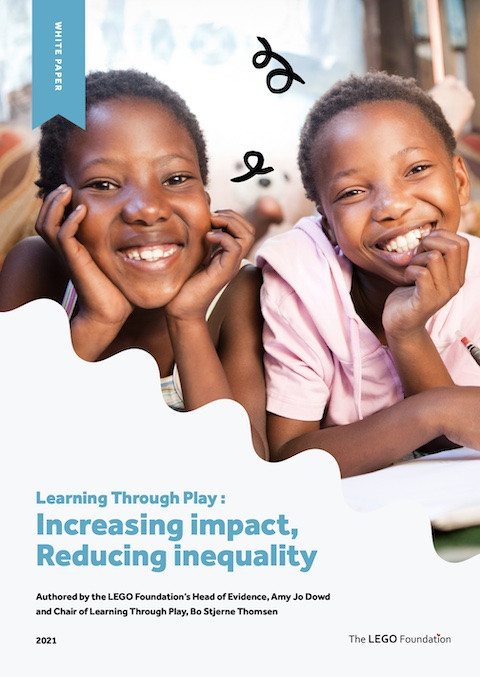 Learning Through Play: Increasing Impact, Reducing Inequality سنة النشر: 2021 المؤلف: Amy Jo Dowd | Bo Stjerne Thomsen المؤلف المؤسسي: LEGO Foundation This study explores the role of play in contributing to the effort to promote learning and reduce inequality. Reviews of play’s importance for learning present mostly correlational evidence from small samples in high-income, developed contexts, most often the United States, and often under laboratory conditions. This review expands both the geographic breadth and the scale of this evidence and explores the use of play in early childhood classroom and home-based educational interventions that have demonstrated causal impact on learning and the closing of achievement gaps. By doing so, it aims to understand whether and how the evidence about play and learning relates to tackling the learning crisis, especially in terms of inequality in learning outcomes around the globe.