
الموارد
استكشف مجموعة واسعة من الموارد القيمة حول تعليم المواطنة العالمية لتعميق فهمك وتعزيز البحث والمناصرة والتعليم والتعلم.
تم العثور على 178 نتيجة
 Report on the survey on the implementation of the road map for arts education سنة النشر: 2010 المؤلف المؤسسي: UNESCO The Road Map for Arts Education is a reference document that aims to explore the role of arts education in meeting the need for creativity and cultural awareness in the 21st Century, while placing emphasis on the strategies required to introduce or promote arts education in the learning environment. Within this conceptual framework, all UNESCO Member States interested in initiating or developing arts education practices can mould their own national policy guidelines, adapted to their socio-cultural specificities. With the Road Map, UNESCO advocates the essential role of arts education within societies, to create a common ground of understanding for all stakeholders. The development of the Road Map for Arts Education was a lengthy and comprehensive consultation process. The document was first elaborated by a group of experts and UNESCO, then presented at the First World Conference on Arts Education (Lisbon, 2006) and later revised and updated, following recommendations from NGOs and Member States. The Road Map was finally distributed to the UNESCO Member States in November 2007 in English and French and then translated into Spanish and Russian following popular demand. More than a year after this distribution, UNESCO launched a wide-ranging survey in order to assess the implementation of the Road Map in its 193 Member States. Through its National Commissions, the Organization relayed this document to Ministries of both Education and Culture. The aim of this exercise was threefold: to learn whether the Road Map was being applied and to what extent it was influencing policy decisions at national level; to act as a reminder of the importance of the UNESCO reference document and encourage its use; finally, to assess the situation of arts education in the responding countries. Thus, this survey not only acted as a catalyst for the implementation of the Road Map, but also provided precious knowledge on arts education around the world. The Member States’ responses also contributed greatly to the Second World Conference on Arts Education (Seoul, May 2010), inspiring one of its main themes and the topics for a number of workshops. They also encouraged a more integral participation of these States in the conference through preparatory consultations. ПЕРЕКЛИКАЮЩИЕСЯ ГОЛОСА: Десятая годовщина принятия Всеобщей декларации ЮНЕСКО о культурном разнообразии سنة النشر: 2011 المؤلف المؤسسي: Организация Объединенных Наций по вопросам образования, науки и культуры (UNESCO) This founding text was the first to acknowledge cultural diversity as “the common heritage of humanity”. It is with great pride that UNESCO is commemorating the 10th anniversary of the Declaration. Commemorate – from the Latin cum memorare – means quite literally “to remember together” or “to remember with”. This collection is compiled the voices of all those who have contributed to the heightening of human awareness by throwing into relief the inestimable value of cultural diversity. These excerpts from books, articles and statements by global intellectual and political leaders, artists and Nobel Prize-winners all call for the safeguarding of cultural diversity, which is inseparable from respect for human dignity. Their voices resound in bearing witness to the strength of cultural diversity and to its capacity to enlighten the minds of women and men. We are duty-bound to ensure that it is central to public policies and a resource for development and dialogue among nations. The United Nations was born of the determination of men and women “to save succeeding generations from the scourge of war...”. In accordance with that principle, UNESCO was established on a key idea, expressed at the very beginning of its Constitution: “... since wars begin in the minds of men, it is in the minds of men that the defences of peace must be constructed”. In the world today, globalized, connected and interdependent as never before, this mission is more vital than ever. The rapprochement of peoples and cultures requires a commensurately global awareness. Cultural diversity has always been at the heart of international relations. It is also, increasingly, a feature of the contemporary mixed and plural societies in which we live. In view of this reality, we must formulate appropriate public policies and rethink the mechanisms of social cohesion and civic participation. How can we build common ground on the basis of such diversity? How can we construct genuine moral and intellectual solidarity of humanity? Any new vision of humanism must be grounded itself in the dynamism and diversity of cultural heritage. It is a source of inspiration and knowledge to be shared and a means of broadening our horizons. The goal of the UNESCO Universal Declaration on Cultural Diversity is to provide keys and benchmarks for capitalizing on this wealth. There can be no sustainable governance if cultural diversity is not acknowledged. There can be no economic and social development if specific features of every culture are belittled and ignored. أصداء، التنوع الثقافي: طريق نحو تحقيق التنمية؛ الذكرى السنوية العاشرة لإعتماد الإعلان العالمي لليونسكو بشأن التنوع الثقافي سنة النشر: 2011 المؤلف المؤسسي: UNESCO This founding text was the first to acknowledge cultural diversity as “the common heritage of humanity”. It is with great pride that UNESCO is commemorating the 10th anniversary of the Declaration. Commemorate – from the Latin cum memorare – means quite literally “to remember together” or “to remember with”. This collection is compiled the voices of all those who have contributed to the heightening of human awareness by throwing into relief the inestimable value of cultural diversity. These excerpts from books, articles and statements by global intellectual and political leaders, artists and Nobel Prize-winners all call for the safeguarding of cultural diversity, which is inseparable from respect for human dignity. Their voices resound in bearing witness to the strength of cultural diversity and to its capacity to enlighten the minds of women and men. We are duty-bound to ensure that it is central to public policies and a resource for development and dialogue among nations. The United Nations was born of the determination of men and women “to save succeeding generations from the scourge of war...”. In accordance with that principle, UNESCO was established on a key idea, expressed at the very beginning of its Constitution: “... since wars begin in the minds of men, it is in the minds of men that the defences of peace must be constructed”. In the world today, globalized, connected and interdependent as never before, this mission is more vital than ever. The rapprochement of peoples and cultures requires a commensurately global awareness. Cultural diversity has always been at the heart of international relations. It is also, increasingly, a feature of the contemporary mixed and plural societies in which we live. In view of this reality, we must formulate appropriate public policies and rethink the mechanisms of social cohesion and civic participation. How can we build common ground on the basis of such diversity? How can we construct genuine moral and intellectual solidarity of humanity? Any new vision of humanism must be grounded itself in the dynamism and diversity of cultural heritage. It is a source of inspiration and knowledge to be shared and a means of broadening our horizons. The goal of the UNESCO Universal Declaration on Cultural Diversity is to provide keys and benchmarks for capitalizing on this wealth. There can be no sustainable governance if cultural diversity is not acknowledged. There can be no economic and social development if specific features of every culture are belittled and ignored.
 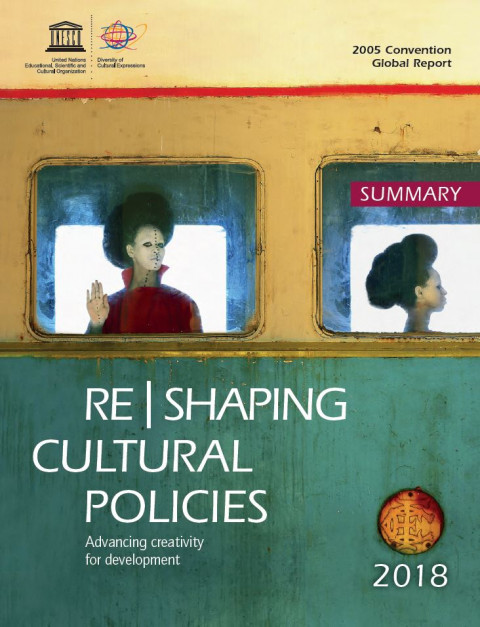 [Summary] Re|shaping Cultural Policies: Advancing Creativity for Development; 2005 Convention Global Report, 2018: Summary سنة النشر: 2017 المؤلف المؤسسي: UNESCO The Global Report series has been designed to monitor the implementation of the UNESCO Convention on the Protection and Promotion of the Diversity of Cultural Expressions (2005). It also provides evidence of how this implementation process contributes to attaining the United Nations 2030 Sustainable Development Goals and targets.The 2018 Global Report analyses progress achieved in implementing the 2005 Convention since the first Global Report was published in 2015.Grounded in the analysis of the Quadrennial Periodic Reports submitted by Parties to the Convention and relevant new findings, this report examines how the 2005 Convention has inspired policy change at the global and country level in ten areas of monitoring. It puts forward a set of policy recommendations for the future, addressing the adaptation of cultural policies to rapid change in the digital environment, based on human rights and fundamental freedoms.When deployed together, the two editions of the Global Report are beginning to produce new and valuable evidence to inform cultural policy making and advance creativity for development. [Résumé] Re|penser les politiques culturelles: la créativité au coeur du développement, Rapport mondial Convention 2005, 2018: résumé سنة النشر: 2017 المؤلف المؤسسي: UNESCO Le Rapport mondial 2018 analyse les progrès accomplis dans la mise en oeuvre de la Convention de 2005 depuis la publication du premier Rapport mondial en 2015.A partir des rapports périodiques quadriennaux soumis par les Parties à la Convention et de nouvelles analyses, ce Rapport examine comment la Convention de 2005 a inspiré des changements politiques aux niveaux mondial et national dans dix domaines clés de l’action politique. Il propose un ensemble de recommandations politiques pour le futur et met l’accent sur l’adaptation des politiques culturelles, fondées sur les droits de l’homme et les libertés fondamentales, afin de faire face aux transformations rapides suscitées par l’environnement numérique.Prises ensemble, les deux éditions du Rapport mondial offrent un ensemble de données et d’informations nouvelles et précieuses qui permettent d’éclairer l’élaboration des politiques culturelles et de placer la créativité au coeur du développement. [Resumen] Re|pensar las políticas culturales: creatividad para el desarrollo, Convención de 2005 Informe Mundial 2018: resumen سنة النشر: 2017 المؤلف المؤسسي: UNESCO Concebida para efectuar el seguimiento de la aplicación de la Convención de la UNESCO sobre la Protección y la Promoción de la Diversidad de las Expresiones Culturales (2005), esta serie de Informes Mundiales también proporciona pruebas de cómo el proceso de aplicación de esta Convención contribuye a la consecución de las metas fijadas en los Objetivos de Desarrollo Sostenible de la Agenda para 2030 de las Naciones Unidas.En el Informe Mundial 2018 se examinan los progresos realizados en la aplicación de la Convención de 2005 desde la publicación del primer Informe en 2015.Basándose en un análisis de los informes periódicos cuadrienales presentados por las Partes en la Convención, así como en los resultados pertinentes de recientes investigaciones, el presente Informe muestra cómo la Convención de 2005 ha contribuido a hacer evolucionar las políticas culturales a nivel nacional y mundial en diez ámbitos. En el Informe se formula un conjunto de recomendaciones sobre esas políticas con vistas al futuro, abordando la cuestión de su adaptación a la rápida evolución del universo digital sobre la base del respeto de los derechos humanos y las libertades fundamentales.Las dos ediciones de 2015 y 2018 del Informe Mundial proporcionan conjuntamente toda una serie de datos recientes y valiosos que aportan información para la elaboración de políticas culturales y contribuyen al progreso de la creatividad para el desarrollo.
  Interculturalism at the Crossroads: Comparative Perspectives on Concepts, Policies and Practices سنة النشر: 2017 المؤلف: Fethi Mansouri المؤلف المؤسسي: UNESCO Today most societies across the world are witnessing rising levels of social and cultural diversity brought about by globalisation and in particular increased human mobility and significant advances in information and communications technologies. The dilemma, therefore, has been how best to manage the resultant diversity and what optimal social policy paradigms to adopt towards this end.Assimilation, multiculturalism and presently interculturalism have all been proposed as possible policy conduits for managing socio-cultural diversity.This book, in focusing on the latter concept, and in particular in its intercultural dialogue manifestation, offers at once theoretical examinations, policy discussion and practical explorations of its uptake across the world. The core argument connecting the book’s three distinct sections is that whilst assimilation in its racist manifestation is no longer a viable option in today’s world, intercultural dialogue within existing multicultural settings has much to offer.
  Educational Policy Recommendations Based on TERCE سنة النشر: 2016 المؤلف: Ernesto Treviño, Cristóbal Villalobos, Andrea Baeza المؤلف المؤسسي: UNESCO Recommendations for Educational Policies in Latin America based on TERCE have been elaborated on request of the Regional Office of Education for Latin America and the Caribbean, OREALC/UNESCO Santiago. This publication is aimed at educational policy makers. For LLECE, decision-making is based on evidence and anchored to conceptual models that allow for the adequate interpretation of reality. This document fulfills this purpose, since it has the fundamental characteristic of translating the conclusions drawn from the TERCE into policy and educational practice. In this sense, the empirical evidence provided by the study shows the main factors that influence the achievement of learning, which represent concrete challenges of educational policy. Recomendaciones de Politicas Educativas en base al TERCE سنة النشر: 2016 المؤلف: Ernesto Treviño, Cristóbal Villalobos, Andrea Baeza المؤلف المؤسسي: Organización de las Naciones Unidas para la Educación, la Ciencia y la Cultura (UNESCO) Recomendaciones de Políticas Educativas en América Latina en base al TERCE ha sido elaborado por encargo de la Oficina Regional de Educación para América Latina y el Caribe, OREALC/ UNESCO Santiago. La presente publicación se encuentra orientada a hacedores de política educativa. Para el LLECE, la toma de decisiones debe estar basada en evidencia y anclada a algunos modelos conceptuales que permitan interpretar de manera adequada la realidad. Este documento cumple con este propósito, puesto que posee la característica fundamental de traducir las conclusiones extraídas de la evidencia del TERCE en política y la práctica educativa. En este sentido, la evidencia empírica que aporta el estudio muestra los principales factores que influyen en el logro de los aprendizajes, los cuales representan desafíos concretos de política educativa.
 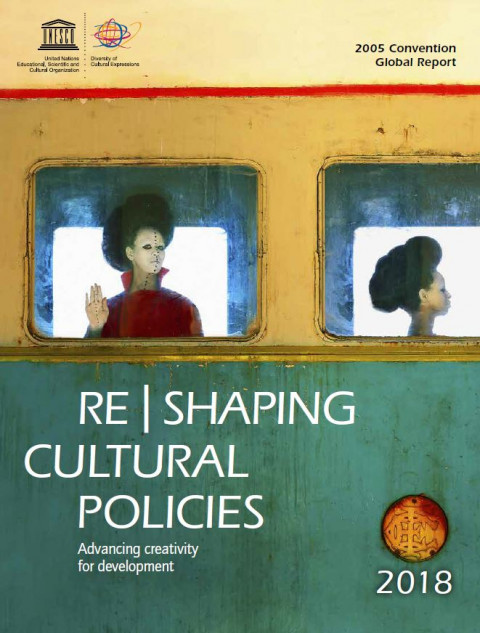 문화정책의 (재)구성: 발전을 위한 창의성 증진; 문화다양성 협약 글로벌 리포트, 2018 سنة النشر: 2018 المؤلف المؤسسي: 유네스코 '글로벌 리포트(Global Report)' 시리즈는 유네스코 「문화적 표현의 다양성 보호과 증진에 관한 협약(2005)」의 이행을 모니터링하기 위해 기획되었다. 본 시리즈는 이러한 이행 과정이 UN의 2030 지속가능발전목표 및 세부목표를 달성하는 데 어떻게 기여하는지 증거를 통해 보여주고 있다.2018년 글로벌 리포트는 2015년에 첫 번째 리포트가 출간된 이후 협약을 이행하면서 이루어진 진전 사항을 분석하고 있다.본 보고서는 협약 당사국들이 제출한 국가보고서에 대한 분석과 그와 관련된 새로운 연구 결과를 바탕으로 협약이 10개의 모니터링 분야에서 세계 및 국가 수준의 정책 변화에 어떻게 영향을 주었는지 검토하고 있다. 또한 본 보고서는 디지털 환경의 급속한 변화에 맞는 문화정책을 다루면서 인권과 기본적 자유를 기반으로 하는 향후 일련의 정책 권고안을 제시하고 있다.이 두 편의 글로벌 리포트는 문화정책을 수립하고 발전을 위한 창의성을 증진시킬 수 있는 새롭고 가치 있는 증거를 제시하기 시작하고 있다.