
الموارد
استكشف مجموعة واسعة من الموارد القيمة حول تعليم المواطنة العالمية لتعميق فهمك وتعزيز البحث والمناصرة والتعليم والتعلم.
تم العثور على 13 نتيجة
 Saving our world heritage سنة النشر: 2023 المؤلف: Hopkinson, Leo المؤلف المؤسسي: UNESCO
 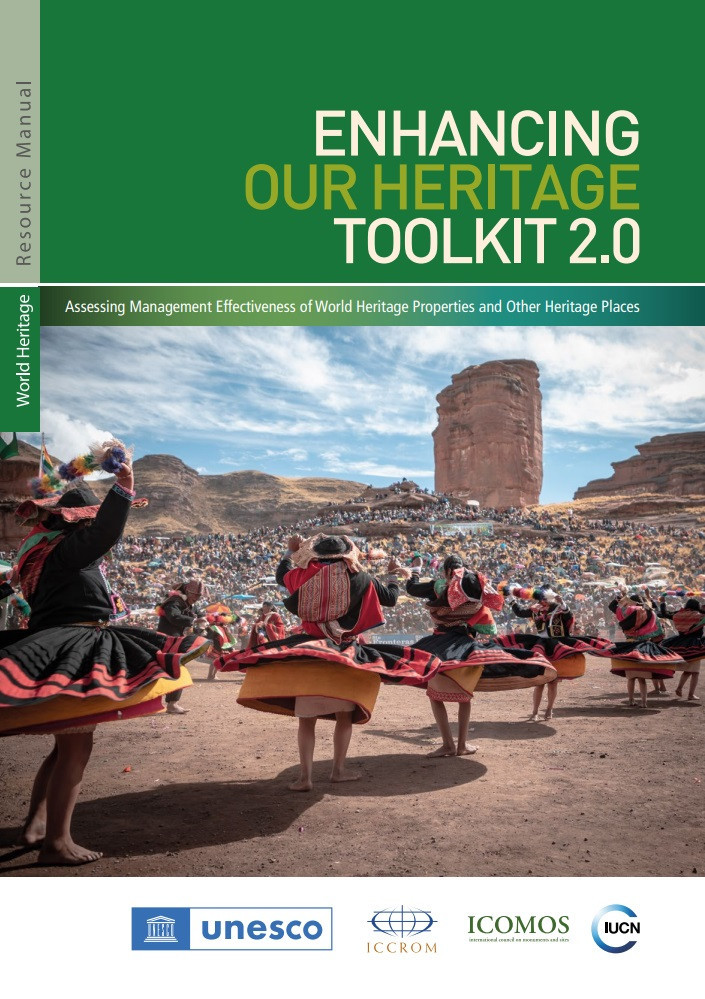 Enhancing our heritage toolkit 2.0: assessing management effectiveness of World Heritage properties and other heritage places سنة النشر: 2023 المؤلف المؤسسي: UNESCO | International Centre for the Study of the Preservation and Restoration of Cultural Property (ICCROM) | International Council on Monuments and Sites (ICOMOS) | International Union for Conservation of Nature (IUCN) <Short summary>EoH 2.0 toolkit helps assess management effectiveness in World Heritage places World Heritage properties are internationally recognized as places of Outstanding Universal Value that should benefit from the highest level of management effectiveness. Despite the best efforts to conserve these places for present and future generations, many are under threat from a range of factors. These include inappropriate development, mass tourism, pollution, resource extraction or climate change, to name but a few.What can be done to better respond to factors negatively affecting World Heritage places? Do management processes influence conservation results? If so, how can critical management weaknesses be identified and improved?The Enhancing Our Heritage Toolkit 2.0 offers a self-assessment methodology to evaluate management effectiveness in a World Heritage property or other heritage place. It contains 12 tools that can be used separately or collectively to understand in detail what is working well and what can be done better. To facilitate their use, the tools are accompanied by worksheets, in the form of either a template to help compile information in a systematic way or a questionnaire, both of which can be adapted to the specific needs of each heritage place.The Toolkit supports managers in identifying ways to improve conservation practices, management processes and resource allocation – particularly if used before reviewing or updating management plans. While there is a focus on World Heritage, it can be applied to all heritage places, whether natural, cultural or combinations of both.
  Urban heritage for resilience: consolidated results of the implementation of the 2011 Recommendation on the Historic Urban Landscape; 3rd Member States Consultation سنة النشر: 2023 المؤلف المؤسسي: UNESCO <Short summary>Integrating heritage conservation with urban development plans: fosters inclusive and sustainable local development Urban heritage, including its tangible and intangible attributes, constitutes a key resource in enhancing the liveability of urban areas and fosters economic development and social cohesion in a changing global environment. The UNESCO 2011 Recommendation on the Historic Urban Landscape has contributed towards promoting a holistic approach to managing historic urban areas. The third Member States consultation on the implementation of the 2011 Recommendation conducted between June to November 2022 emphasizes both the importance and the urgency of integrating heritage conservation with urban development plans, disaster risk reduction and climate action at the local level.The report covered six thematic areas of implementation that captured the key principles of the 2011 Recommendation in the framework of the 2030 Agenda for Sustainable Development, including the mapping and inventorying of heritage values and attributes, governance mechanisms, laws, regulations, and planning tools to protect these different attributes, inclusive and participatory decision-making, equitable economic development, the impacts of climate change, and the use of digital technologies for managing urban heritage including capacity building.The publication includes key recommendations emerging from consultations with international experts, exchanging innovative practices, developing guidance, tools, and initiatives, notably on planning, civic engagement, regulatory frameworks and financial mechanisms and management to support the implementation of the 2011 Recommendation.