
الموارد
استكشف مجموعة واسعة من الموارد القيمة حول تعليم المواطنة العالمية لتعميق فهمك وتعزيز البحث والمناصرة والتعليم والتعلم.
تم العثور على 39 نتيجة
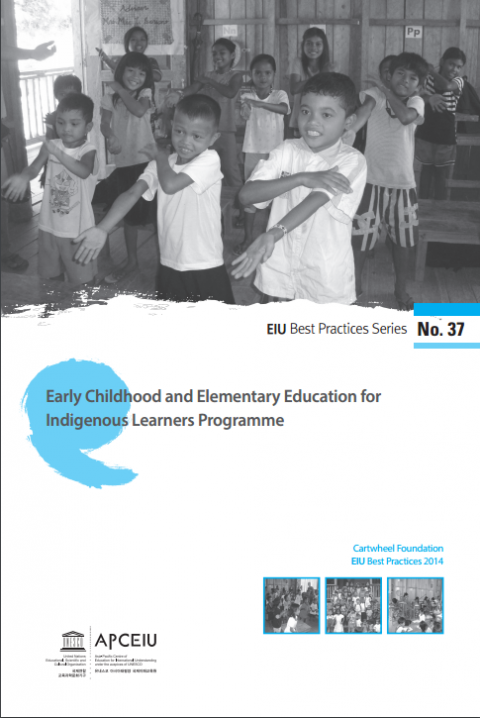 EIU Best Practices Series No. 37: Early Childhood and Elementary Education for Indigenous Learners Programme سنة النشر: 2014 المؤلف: Bricks Sabella Sintaon المؤلف المؤسسي: APCEIU This monograph is one of APCEIU's EIU Best Practices Series, which aims to encourage educators, scholars, and activists to implement and share local initiatives on EIU. The Series No.37 introduces the Early Childhood and Elementary Education (ECEE) for Indigenous Learners Programme initiated in the Philippines. The indigenous peoples (IP) reside in the mountainous regions, away from basic social services and struggling with poverty, malnutrition, and lack of proper education. The aim of ECEE is to facilitate access to quality and culturally-relevant early childhood and elementary education for the Higaonon indigenous children. To achieve this, activities such as curriculum indigenization and teacher training are provided in collaboration with the community members. As the program creates learning process for all through openness, sharing, and collaboration, this is an exemplary case of EIU/GCED pedagogical approach.
 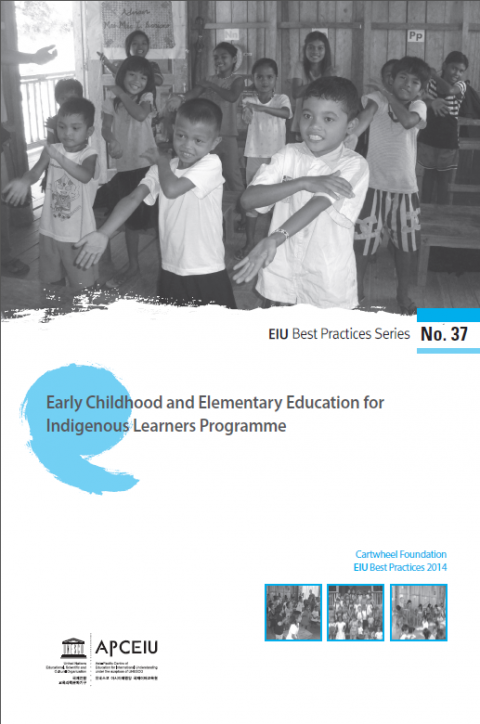 EIU Best Practices Series No.37: Early Childhood and Elementary Education for Indigenous Learners Programme سنة النشر: 2014 المؤلف المؤسسي: APCEIU This monograph is one of APCEIU's EIU Best Practices Series, which aims to encourage educators, scholars, and activists to implement and share local initiatives on EIU. The Series No.37 introduces the Early Childhood and Elementary Education (ECEE) for Indigenous Learners Programme initiated in the Philippines. The indigenous peoples (IP) reside in the mountainous regions, away from basic social services and struggling with poverty, malnutrition, and lack of proper education. The aim of ECEE is to facilitate access to quality and culturally-relevant early childhood and elementary education for the Higaonon indigenous children. To achieve this, activities such as curriculum indigenization and teacher training are provided in collaboration with the community members. As the program creates learning process for all through openness, sharing, and collaboration, this is an exemplary case of EIU/GCED pedagogical approach.
  Policy Review Report: Early Childhood Care and Education in Kazakhstan سنة النشر: 2005 المؤلف المؤسسي: UNESCO UNESCO launched a joint UNESCO/OECD Early Childhood Policy Review Project as a component of the 2004-2005 plan. The purpose is to provide selected countries with an opportunity to review their early childhood policies and identify concrete options and strategies for improvement. Four countries were chosen based on their expressed interest - Brazil, Indonesia, Kazakhstan and Kenya. This review was conducted as part of Kazakhstan's participation in the project, which is being implemented in collaboration with the OECD. Отчет по обзору политики: дошкольное воспитание и обучение в Казахстане سنة النشر: 2005 المؤلف المؤسسي: Организация Объединенных Наций по вопросам образования, науки и культуры (UNESCO) ЮНЕСКО, в качестве составного компонента плана на 2004-2005 годы, запустило совместный Проект ЮНЕСКО/ОЭСР по обзору политики в области дошкольного воспитания и обучения. Целью является предоставить выбранным странам возможность провести обзор своей политики в области дошкольного воспитания и обучения и определить конкретные варианты и стратегии по его совершенствованию. Четыре страны были выбраны на основе выраженного ими интереса – Бразилия, Индонезия, Казахстан и Кения. Настоящий обзор был проведен в рамках участия Казахстана в проекте, который реализуется в сотрудничестве с ОЭСР.
 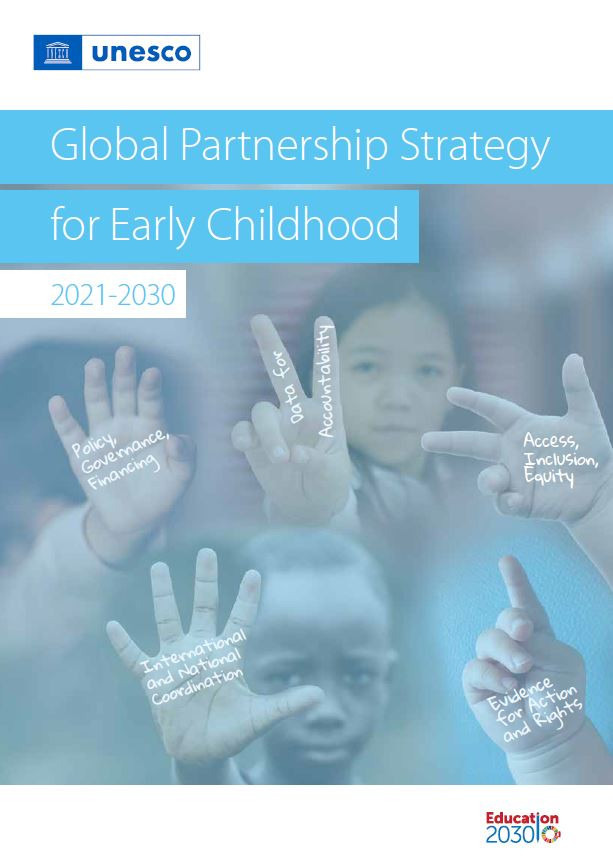 Global Partnership Strategy for Early Childhood, 2021-2030 سنة النشر: 2022 المؤلف المؤسسي: UNESCO The Global Partnership Strategy for early childhood is the result of inter-agency efforts to counter the negative trend in education and to overcome the reduction and closure of services for health, nutrition, sanitation, and child protection in all regions of the world during the COVID-19 pandemic. Well-designed and implemented policies and services for early childhood care, education and development enable all countries to protect and guarantee child rights, achieve high rates of return on their investments in child and family development and widen avenues for transforming societies and lives. Stratégie de partenariat mondial pour la petite enfance, 2021-2030 سنة النشر: 2022 المؤلف المؤسسي: Organisation des Nations Unies pour l'éducation, la science et la culture (UNESCO) La Stratégie de Partenariat mondial pour la petite enfance est le résultat des efforts interagences pour contrer la tendance négative dans l’éducation et pour surmonter la réduction et la fermeture des services de santé, de nutrition, d’assainissement et de protection de l’enfance dans toutes les régions du monde pendant la pandémie de COVID-19. Des politiques et des services bien conçus et mis en oeuvre pour la protection, l’éducation et le développement de la petite enfance permettent à tous les pays de protéger et de garantir les droits de l’enfant, d’obtenir des taux de rendement élevés sur leurs investissements dans le développement de l’enfant et de la famille et d’élargir les possibilités de transformation des sociétés et des vies.
  Inclusive Early Childhood Care and Education: From Commitment to Action سنة النشر: 2023 المؤلف المؤسسي: UNESCO The development of inclusive programmes and services for early childhood care and education is a priority of Sustainable Development Goal 4 on education to which the international community has committed itself to achieve by 2030.This publication calls for a renewed global commitment to early childhood inclusion through the presentation of qualitative and quantitative data and action-oriented thinking. It presents lessons from country practices and recent research to provide policy-makers, partners, and ECCD practitioners with guidelines for action.The publication contains key messages that stakeholders can draw upon for actions that address the diversity and trajectory of each child. Pour une inclusion dans l’éducation dès la petite enfance: De l’engagement à l’action سنة النشر: 2023 المؤلف المؤسسي: Organisation des Nations Unies pour l'éducation, la science et la culture (UNESCO) Développer des programmes et offrir des services inclusifs pour l’éducation et la protection de la petite enfance est une priorité de l’Objectif de développement 4 sur l’éducation que la communauté internationale s’est engagée à atteindre en 2030.Cette publication appelle à un engagement mondial renouvelé en faveur de l’inclusion dès la petite enfance par la présentation de données qualitatives et quantitatives et des réflexions orientées vers l’action. Elle présente des leçons tirées de pratiques de divers pays, ainsi que des travaux de recherche récents, afin d’offrir aux décideurs politiques, aux partenaires et aux praticiens de la petite enfance des repères pour l’action.La publication contient des messages clés que les parties prenantes pourront s’approprier pour mener des actions qui tiennent compte de la diversité et du parcours de chaque enfant. 包容性儿童早期保育和教育 : 从承诺到行动 سنة النشر: 2023 المؤلف المؤسسي: 联合国教科文组织 (UNESCO) 人生的前一千天对孩子的一生至关重要。优质的儿童早期教育为儿童未来的福祉、发展 和学习奠定坚实的基础, 同时有助于减少和 预防社交及学习困难, 并通过适当的有效干 预,在早期阶段对发育迟缓和残障进行识别。人道主义危机、残障、族裔、性别、母语和 贫困等因素仍然导致许多儿童无法享受早期 教育、保健和保护的权利, 因此国际社会必 须加倍努力, 确保早期保育和教育惠及所有 儿童。在新冠肺炎疫情之前, 大多数国家的 儿童早期服务已经严重不足, 许多对儿童发 展至关重要的服务正在关闭或暂停。 因此, 迫切需要集中精力建立有弹性的儿童早期保 育和教育体系和方案, 以确保在包容、公平 和非歧视的基本原则指导下,为所有儿童(无 论男女)的终身学习奠定坚实的基础。要获得优质的包容性儿童早期保育和教育方 案, 需要制定跨部门政策, 并在政策的制定 中考虑到学习者需求的多样性。这些政策必 须转化为教育实践, 力求满足每个儿童的需 求, 并为专业人员和实践社区提供基础和持 续的培训, 以提高儿童早期保育和教育从业 者的技能。发挥研究在支持和评估这些改革 中的关键作用。最后, 一个强有力和富有成 效的伙伴关系框架对于优化现有资源、推进 儿童早期保育和教育议程并使其更具包容性 至关重要。教科文组织相信, 从儿童早期开 始的包容性教育将有助于建立友好型社区和 包容性社会。基于这一点, 2021 年 1 月, 教科文组织启 动了儿童早期保育和教育全球伙伴关系战 略, 旨在动员各国和合作伙伴实现可持续发 展教育目标 4.2。我们希望本刊物将帮助各国建立一个包容性 儿童早期保育和教育体系, 为每个儿童提供 最佳的机会, 促进社区和社会的包容性和可 持续发展。
  المؤتمر العالمي لرعاية وتعليم الطفولة المبكرة: إعلان طشقند والتزامات العمل لتحويل رعاية وتعليم الطفولة المبكرة، 16 نوفمبر 2022 سنة النشر: 2022 المؤلف المؤسسي: منظمة الأمم المتحدة للتربية والعلم والثقافة (UNESCO) من 14 إلى 16 نوفمبر 2022، تم عقد المؤتمر العالمي الثاني لرعاية وتعليم الطفولة المبكرة في طشقند في أوزبكستان. اجتمع أكثر من 2600 مشارك في المؤتمر من 147 دولة عضو، بما فيها الوزراء وشركاء التنمية والممارسين والعلماء والمجتمع المدني والمنظمات الخاصة، لإعادة التأكيد على حق كل طفل في تنمية الطفولة المبكرة والرعاية والتعليم الجيد.يحدد إعلان طشقند والتزامات العمل لتحويل رعاية وتعليم الطفولة المبكرة المبادئ التوجيهية والاستراتيجيات اللازمة للتحول العاجل لرعاية وتعليم الطفولة المبكرة لتسريع تحقيق الهدف 4.2 من أهداف التنمية المستدامة، والإجراءات الملموسة للدول الأعضاء والمجتمع الدولي والمنظمات غير الحكومية واليونسكو التي يجب مراقبتها ومراجعتها وتقييمها بانتظام.