
الموارد
استكشف مجموعة واسعة من الموارد القيمة حول تعليم المواطنة العالمية لتعميق فهمك وتعزيز البحث والمناصرة والتعليم والتعلم.
تم العثور على 39 نتيجة
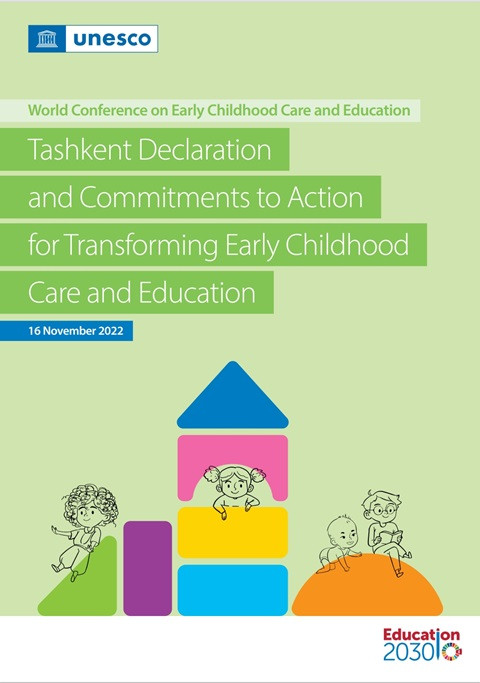 World Conference on Early Childhood Care and Education: Tashkent Declaration and Commitments to Action for Transforming Early Childhood Care and Education, 16 November 2022 سنة النشر: 2022 المؤلف المؤسسي: UNESCO From 14 to 16 November 2022, the second World Conference on Early Childhood Care and Education took place in Tashkent, Uzbekistan. Over 2,600 conference participants from 147 Member States, including ministers, development partners, practitioners, scientists, civil society, and private organizations, came together to reaffirm the right of every young child to quality early childhood development, care, and education. The Tashkent Declaration and Commitments to Action for Transforming Early Childhood Care and Education (ECCE) sets out the guiding principles and strategies for the urgent transformation of ECCE for accelerating achievement of SDG Target 4.2, and concrete actions for Member States, the international community, non-governmental organizations, and UNESCO to be regularly monitored, reviewed, and evaluated. Conferencia Mundial sobre Atención y Educación de la Primera Infancia: Declaración de Tashkent y Compromisos de Acción para Transformar la Atención y Educación de la Primera Infancia, 16 de noviembre de 2022 سنة النشر: 2022 المؤلف المؤسسي: Organización de las Naciones Unidas para la Educación, la Ciencia y la Cultura (UNESCO) Del 14 al 16 de noviembre de 2022 se celebró en Tashkent (Uzbekistán) la segunda Conferencia Mundial sobre Atención y Educación de la Primera Infancia. Más de 2.600 participantes de 147 Estados Miembros, incluidos ministros, socios para el desarrollo, profesionales, científicos, la sociedad civil y organizaciones privadas, se reunieron para reafirmar el derecho de cada niño pequeño a un desarrollo, atención y educación de calidad durante la primera infancia. La Declaración de Tashkent y los Compromisos de Acción para Transformar de la Atención y Educación de la Primera Infancia (AEPI) establecen los principios rectores y las estrategias para la transformación urgente de la AEPI a fin de acelerar la consecución de la Meta 4.2 de los ODS, así como las medidas concretas para los Estados Miembros, la comunidad internacional, las organizaciones no gubernamentales y la UNESCO, que se supervisarán, examinarán y evaluarán periódicamente. Conférence mondiale sur l’éducation et la protection de la petite enfance: Déclaration de Tachkent et engagements à l’action pour la transformation de l’éducation et la protection de la petite enfance, 16 novembre 2022 سنة النشر: 2022 المؤلف المؤسسي: Organisation des Nations Unies pour l'éducation, la science et la culture (UNESCO) Du 14 au 16 novembre 2022, la deuxième Conférence mondiale sur l'éducation et la prise en charge de la petite enfance s'est tenue à Tachkent, en Ouzbékistan. Plus de 2 600 participants issus de 147 États membres, dont des ministres, des partenaires de développement, des praticiens, des scientifiques, la société civile et des organisations privées, se sont réunis pour réaffirmer le droit de chaque jeune enfant à un développement, une prise en charge et une éducation de qualité dès la petite enfance.La Déclaration de Tachkent et les engagements pour l'action visant à transformer l'éducation et la prise en charge de la petite enfance (ECCE) établissent les principes directeurs et les stratégies pour la transformation urgente de l'ECCE, afin d'accélérer la réalisation de la cible 4.2 des ODD. Ils définissent également des actions concrètes pour les États membres, la communauté internationale, les organisations non gouvernementales et l'UNESCO, qui feront l'objet d'un suivi, d'une révision et d'une évaluation réguliers. Всемирная конференция по воспитанию и образованию детей младшего возраста. Ташкентская декларация и обязательства по принятию мер в интересах преобразования воспитания и образования детей младшего возраста. 16 ноября 2022 года سنة النشر: 2022 المؤلف المؤسسي: Организация Объединенных Наций по вопросам образования, науки и культуры (UNESCO) С 14 по 16 ноября 2022 года в Ташкенте, Узбекистан, прошла вторая Всемирная конференция по воспитанию и образованию детей младшего возраста. Более 2600 участников конференции из 147 государств-членов, включая министров, партнеров по развитию, практиков, ученых, представителей гражданского общества и частных организаций, собрались вместе, чтобы подтвердить право каждого маленького ребенка на качественное развитие, уход и образование в раннем детстве. В Ташкентской декларации и обязательствах к действиям по преобразованию воспитания и образования детей младшего возраста (ВОДМ) изложены руководящие принципы и стратегии срочного преобразования ВОДМ для ускорения достижения задачи 2 ЦУР 4, а также конкретные действия для государств-членов, международного сообщества, неправительственных организаций и ЮНЕСКО, подлежащие регулярному мониторингу, обзору и оценке. 世界幼儿保育和教育大会: 塔什干宣言及变革幼儿保育和教育行动承诺 2022年11月16日 سنة النشر: 2022 المؤلف المؤسسي: 联合国教科文组织 (UNESCO) 2022年11月14日至16日,第二届世界幼儿保育和教育大会在乌兹别克斯坦塔 什干举行。来自147个成员国的2600多名与会者,包括部长、发展伙伴、从 业人员、科学家、民间社会和私营组织,汇聚一堂,重申每个幼儿都拥有获 得高质量的幼儿发展、保育和教育的权利。《塔什干宣言和变革幼儿保育和教育行动承诺》提出了为加速实现可持续发 展目标4.2而紧急变革幼儿保育和教育的指导原则和战略,以及会员国、国 际社会、非政府组织和教科文组织应定期监测、审查和评价的具体行动。
 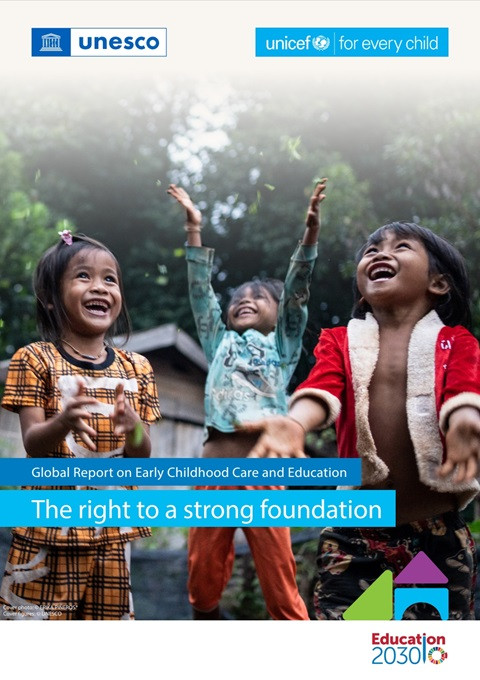 Global Report on Early Childhood Care and Education: The Right to a Strong Foundation سنة النشر: 2024 المؤلف المؤسسي: UNESCO | United Nations Children's Fund (UNICEF) Inclusive and quality early childhood care and education (ECCE) are vital for promoting school readiness, foundational learning, and lifelong well-being. Yet almost 60% of children in low-income countries do not have access to early care and learning opportunities. To meet national targets of providing at least one year of organized learning before primary school, low-income and lower-middle-income countries must fill an annual financial gap of USD 21 billion and recruit at least six million more educators before 2030. The first global report, jointly published by UNESCO and UNICEF, offers insights into global and regional ECCE trends. The report, which is a key response to the commitments outlined in the Tashkent Declaration, synthesizes scientific evidence on ECCE’s importance, and exposes persistence gaps in policy and investment. It illustrates how countries have responded to providing equitable and quality ECCE opportunities. The report invites all stakeholders, from governments and policy-makers, to educators, parents and organizations, to ensure that the commitments made in the Tashkent Declaration are fully realized by building a strong foundation for every child.
  Global Report on Early Childhood Care and Education: The Right to a Strong Foundation; Key Highlights سنة النشر: 2024 المؤلف المؤسسي: UNESCO | United Nations Children's Fund (UNICEF) This document is the key highlights of the Global Report on Early Childhood Care and Education: The Right to a Strong Foundation. Rapport mondial sur l’éducation et la protection de la petite enfance : le droit à une base solide; points saillants سنة النشر: 2024 المؤلف المؤسسي: Organisation des Nations Unies pour l'éducation, la science et la culture (UNESCO) | United Nations Children's Fund (UNICEF) Ce document présente les points clés du Rapport mondial sur l'éducation et la prise en charge de la petite enfance : Le droit à une base solide.
 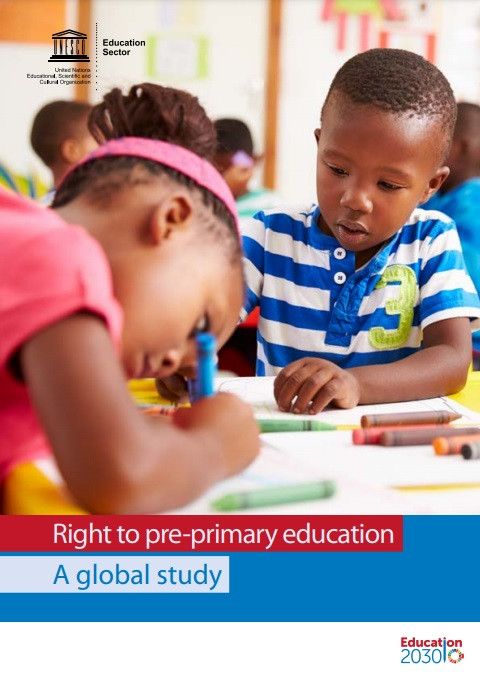 Right to Pre-Primary Education: A Global Study سنة النشر: 2021 المؤلف المؤسسي: UNESCO Early childhood care and education is increasingly recognized as an essential element in realizing a wide range of educational, social and economic rights. Children from vulnerable households and communities stand to gain most from access to quality early learning opportunities. With about 50 per cent of children globally not yet enrolled in pre-primary education, enabling their inclusion remains a central question for education policymakers, stakeholders and parents.This Study provides a global overview and an analysis of the adoption of legal provisions for free and compulsory pre-primary education at national level. By offering a rights-based perspective to the implementation of pre-primary education, it aims to complement existing literature on SDG Target 4.2, which focuses mainly on policy outcomes.The results show that pre-primary education is a well determined and defined right in too few countries. Yet, the benefit of free and compulsory education observed is that children appear to have higher rates of early childhood well-being.In light of the research conducted and its main conclusions, a set of levers to promote the inclusion of early childhood and pre-primary education as a human right within long-term education and development objectives are presented in terms of governance and financing, legal framework, societal expectations, monitoring and evaluation and early childhood development overall. Prioritizing the needs of young children and the fulfilment of their right to free and compulsory pre-primary education is a critical opportunity for governments to make positive differences in children’s lives and to achieve broader national, social and economic goals.