
الموارد
استكشف مجموعة واسعة من الموارد القيمة حول تعليم المواطنة العالمية لتعميق فهمك وتعزيز البحث والمناصرة والتعليم والتعلم.
تم العثور على 526 نتيجة
 Designing for a Circular Economy: Seeing The Bigger Picture - Lesson 4 المؤلف المؤسسي: United Nations Children's Fund (UNICEF) World’s Largest Lesson is a collaborative education project to support the announcement of the United Nations Global Goals for Sustainable Development. Learning outcomes of the project: • To learn about companies that have adopted the circular economy framework • To design a product or service based on the circular economy
 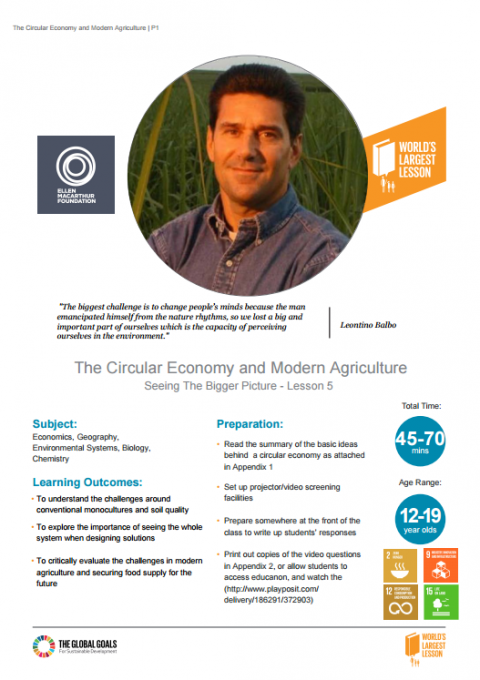 The Circular Economy and Modern Agriculture: Seeing The Bigger Picture - Lesson 5 المؤلف المؤسسي: United Nations Children's Fund (UNICEF) World’s Largest Lesson is a collaborative education project to support the announcement of the United Nations Global Goals for Sustainable Development. Learning outcomes of the project: • To understand the challenges around conventional monocultures and soil quality • To explore the importance of seeing the whole system when designing solutions • To critically evaluate the challenges in modern agriculture and securing food supply for the future
  El camino hacia los Objetivos de Desarrollo Sostenible سنة النشر: 2015 المؤلف المؤسسي: United Nations Children's Fund (UNICEF) Animated video to help children learn about important concepts for people and planet as covered in the Sustainable Development Goals (SDGs) Le chemin vers les objectifs de developpement durable سنة النشر: 2015 المؤلف المؤسسي: United Nations Children's Fund (UNICEF) Animated video to help children learn about important concepts for people and planet as covered in the Sustainable Development Goals (SDGs)
 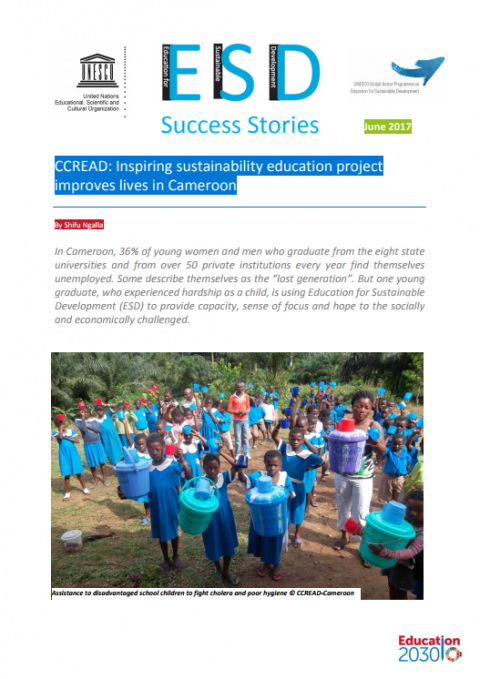 CCREAD: Inspiring sustainability education project improves lives in Cameroon (CAMEROON) سنة النشر: 2017 المؤلف: Shifu Ngalla المؤلف المؤسسي: UNESCO In Cameroon, 36% of young women and men who graduate from the eight state universities and from over 50 private institutions every year find themselves unemployed. Some describe themselves as the “lost generation”. But one young graduate, who experienced hardship as a child, is using Education for Sustainable Development (ESD) to provide capacity, sense of focus and hope to the socially and economically challenged. CCREAD: un estimulante proyecto sobre educación para la sostenibilidad mejora la vida en el Camerún سنة النشر: 2017 المؤلف: Shifu Ngalla المؤلف المؤسسي: UNESCO In Cameroon, 36% of young women and men who graduate from the eight state universities and from over 50 private institutions every year find themselves unemployed. Some describe themselves as the “lost generation”. But one young graduate, who experienced hardship as a child, is using Education for Sustainable Development (ESD) to provide capacity, sense of focus and hope to the socially and economically challenged. CCREAD: un projet d'éducation au développement durable améliore des vies au Cameroun سنة النشر: 2017 المؤلف: Shifu Ngalla المؤلف المؤسسي: UNESCO In Cameroon, 36% of young women and men who graduate from the eight state universities and from over 50 private institutions every year find themselves unemployed. Some describe themselves as the “lost generation”. But one young graduate, who experienced hardship as a child, is using Education for Sustainable Development (ESD) to provide capacity, sense of focus and hope to the socially and economically challenged.
 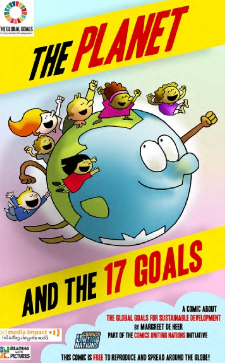 The Planet and the 17 Goals المؤلف: Margreet De Heer المؤلف المؤسسي: United Nations Children's Fund (UNICEF) UNICEF has teamed up with the Comics UnitingNations initiative to use the creative and exciting medium of comics to bring the messages of sustainable development to comics fans globally! Comics have been developed by world renown illustrators, writers and comics developers from around the world.Dutch illustrator Margreet de Heer has lent her talents to the Comics United Nations project to help inform children and youth about the new global goals.
  Education for sustainable development for social transformation سنة النشر: 2017 المؤلف المؤسسي: UNESCO Hanoi | Viet Nam. Ministry of Education and Training This course on Education for Sustainable Development for Social Transformation explains the connection between sustainable development, education and the successful implementation of national and international policies and initiatives on Sustainable Development, such as the Education for Sustainable Development Framework, Global Citizenship Education and the post-2015 Development Agenda. A particular focus is placed on Viet Nam's implementation of these initiatives, including MOET's Action Plan to Implement the National Strategy on Natural Disaster Prevention, Control and Mitigation in the Education Sector in the 2011-2020 Period.The courses promote creative thinking and a holistic approach to some of our planet's most pressing issues. A contribution to sustainable development will be made by encouraging students, families, schools and communities to be bioliterate. Education for sustainable development for social transformation سنة النشر: 2017 المؤلف المؤسسي: UNESCO Hanoi | Viet Nam. Ministry of Education and Training This course on Education for Sustainable Development for Social Transformation explains the connection between sustainable development, education and the successful implementation of national and international policies and initiatives on Sustainable Development, such as the Education for Sustainable Development Framework, Global Citizenship Education and the post-2015 Development Agenda. A particular focus is placed on Viet Nam's implementation of these initiatives, including MOET's Action Plan to Implement the National Strategy on Natural Disaster Prevention, Control and Mitigation in the Education Sector in the 2011-2020 Period.The courses promote creative thinking and a holistic approach to some of our planet's most pressing issues. A contribution to sustainable development will be made by encouraging students, families, schools and communities to be bioliterate.