
الموارد
استكشف مجموعة واسعة من الموارد القيمة حول تعليم المواطنة العالمية لتعميق فهمك وتعزيز البحث والمناصرة والتعليم والتعلم.
تم العثور على 526 نتيجة
 Developing a Monitoring Instrument to Measure Extracurricular and Non-formal Activities which Promote Global Citizenship Education (GCED) and Education for Sustainable Development (ESD) سنة النشر: 2016 المؤلف: Bassel Akar المؤلف المؤسسي: UNESCO The goal on Education is 1 of 17 Sustainable Development Goals that comprises a target to ensure all learners around the world have an opportunity to develop the competencies to promote sustainable approaches to living, including appreciating of cultural diversity, non-violence, and gender equality. Extracurricular activities and non-formal education (ENA) provides a non-traditional space for learning global citizenship and sustainable development. Around the world, communities have organized education programs and activities for youth outside school to learn the values and practices of being global citizens. Research shows, however, that most efforts to review and improve ENA for global citizenship and sustainable development have focused on summative evaluations with little attention to formative approaches of monitoring. Drawing on basic principles of action research, sustainable professional development, and education quality enhancement, a monitoring framework emerges to support organizations around the world in measuring progress towards education for global citizenship and sustainable development. This framework also suggests (1) inclusive monitoring spaces like internal reviews and online social networking platforms, (2) roles of stakeholders like donor agencies in institutionalizing monitoring practices, (3) instruments and measurable scales to facilitate dialogues that review program objectives and action plans, and (4) challenges in inclusive and sustainable monitoring tools and approaches.
  教科文组织在实施全球公民教育以及促进和平与人权教育和可持续发展教育中的作用和责任 سنة النشر: 2015 المؤلف المؤسسي: UNESCO This document is an addendum to document 196 EX/32. This item was included in the provisional agenda of the 196th session of the Executive Board at the request of Austria and Italy
 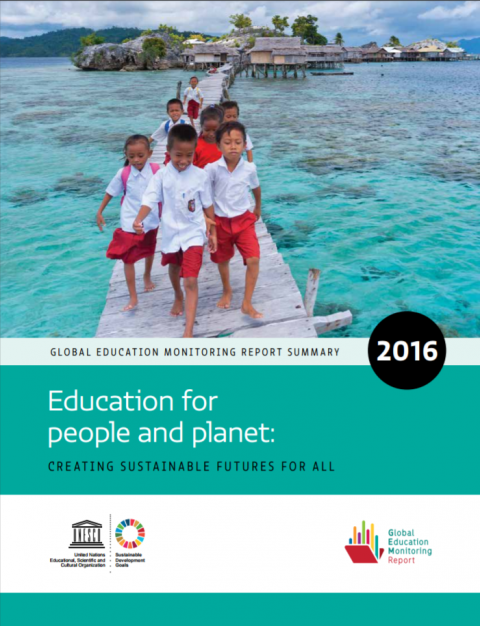 教育造福 人类与地球:为全民创造可持续的未来, 2016 全球教育监测报告; 摘要 سنة النشر: 2016 المؤلف المؤسسي: UNESCO The GEM Report provides an authoritative account of how education is the most vital input for every dimension of sustainable development. Better education leads to greater prosperity, improved agriculture, better health outcomes, less violence, more gender equality, higher social capital and an improved natural environment. Education is key to helping people around the world understand why sustainable development is such a vital concept for our common future. Education gives us the key tools – economic, social, technological, even ethical – to take on the SDGs and to achieve them. These facts are spelled out in exquisite and unusual detail throughout the report. Yet the report also emphasizes the remarkable gaps between where the world stands today on education and where it has promised to arrive as of 2030. La Educación al servicio de los pueblos y el planeta: creación de futuros sostenibles para todos, resumen del informe de seguimiento de la educación en el mundo 2016; سنة النشر: 2016 المؤلف المؤسسي: UNESCO The GEM Report provides an authoritative account of how education is the most vital input for every dimension of sustainable development. Better education leads to greater prosperity, improved agriculture, better health outcomes, less violence, more gender equality, higher social capital and an improved natural environment. Education is key to helping people around the world understand why sustainable development is such a vital concept for our common future. Education gives us the key tools – economic, social, technological, even ethical – to take on the SDGs and to achieve them. These facts are spelled out in exquisite and unusual detail throughout the report. Yet the report also emphasizes the remarkable gaps between where the world stands today on education and where it has promised to arrive as of 2030.
 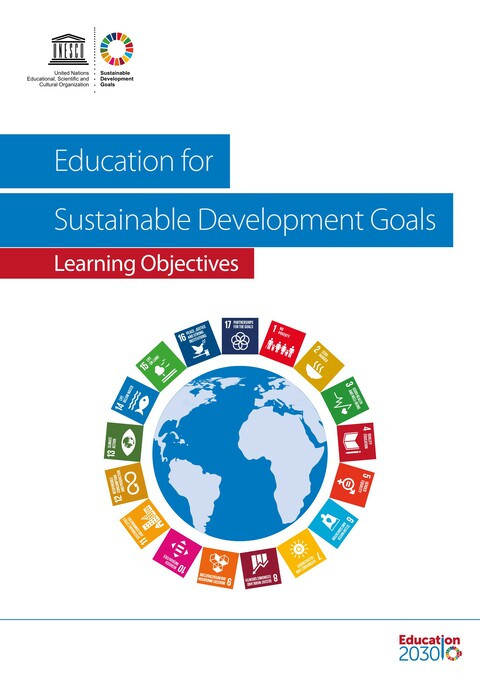 Education for Sustainable Development Goals: Learning Objectives سنة النشر: 2017 المؤلف المؤسسي: UNESCO UNESCO has been promoting Education for Sustainable Development (ESD) since 1992. It led the UN Decade for ESD from 2005 to 2014 and is now spearheading its follow-up, the Global Action Programme (GAP) on ESD. The momentum for ESD has never been stronger. Global issues – such as climate change – urgently require a shift in our lifestyles and a transformation of the way we think and act. To achieve this change, we need new skills, values and attitudes that lead to more sustainable societies. Education systems must respond to this pressing need by defining relevant learning objectives and learning contents, introducing pedagogies that empower learners, and urging their institutions to include sustainability principles in their management structures. The new 2030 Agenda for Sustainable Development clearly reflects this vision of the importance of an appropriate educational response. Education is explicitly formulated as a stand-alone goal – Sustainable Development Goal 4. Numerous educationrelated targets and indicators are also contained within other Sustainable Development Goals (SDGs). Education is both a goal in itself and a means for attaining all the other SDGs. It is not only an integral part of sustainable development, but also a key enabler for it. That is why education represents an essential strategy in the pursuit of the SDGs. This publication is designed as a guide for education professionals on the use of ESD in learning for the SDGs, and consequently to contribute to achieving the SDGs. The guide identifies indicative learning objectives and suggests topics and learning activities for each SDG. It also presents implementation methods at different levels, from course design to national strategies. The guide does not aim to be prescriptive in any way, but to provide guidance and suggestions that educators can select and adapt to fit concrete learning contexts Educación para los Objetivos de Desarrollo Sostenible: Objetivos de aprendizaje سنة النشر: 2017 المؤلف المؤسسي: UNESCO Desde 1992, la UNESCO ha promovido la Educación para el Desarrollo Sostenible (EDS). Entre 2005 y 2014, coordinó el Decenio de las Naciones Unidas de la EDS, y ahora está llevando a cabo el programa de seguimiento, el Programa de Acción Mundial sobre la EDS. El impulso de la EDS nunca ha sido más fuerte. Temas mundiales –como el cambio climático- requieren de forma urgente un cambio en nuestros estilos de vida y una transformación en nuestra forma de actuar y pensar. Para lograrlo, necesitamos nuevas competencias, actitudes y conductas que nos conduzcan a sociedades más sostenibles. Los sistemas educativos tienen que responder a esta necesidad a la hora de definir los objetivos y contenidos de aprendizaje pertinentes, introduciendo pedagogías que empoderen a los alumnos e instando a las instituciones a incluir los principios de sostenibilidad en sus estructuras de gestión. La nueva agenda mundial para el desarrollo sostenible 2030 refleja claramente esta visión de la importancia de una respuesta educativa apropiada. La educación está explícitamente formulada como un objetivo independiente en el Objetivo de Desarrollo Sostenible número 4. Metas e indicadores relacionados con la educación también están incluidos en otros ODS. La educación de calidad es tanto una meta en sí misma como un medio para lograr todos los otros ODS, porque es parte integral del desarrollo sostenible y un facilitador clave del mismo. Es por ello que la educación representa una estrategia esencial en la consecución de los ODS. Este documento ha sido diseñado para guiar a los profesionales de la educación en el uso de la EDS en el aprendizaje para los ODS y, en consecuencia, para lograr los ODS. Esta guía identifica objetivos específicos de aprendizaje y sugiere temas y actividades para cada ODS. También presenta métodos de implementación a distintos niveles, desde el diseño de cursos hasta las estrategias nacionales. Este documento no busca de ninguna forma ser prescriptivo, sino servir como una guía y ofrecer sugerencias que los educadores puedan seleccionar y adaptar a contextos específicos de aprendizaje. L’éducation en vue des objectifs de développement durable: Objectifs d’apprentissage سنة النشر: 2017 المؤلف المؤسسي: UNESCO L’UNESCO promeut l’éducation en vue du développement durable (EDD) depuis 1992. Après avoir été le chef de file de la Décennie des Nations Unies pour l’éducation au service du développement durable de 2005 à 2014, elle est maintenant le fer de lance du Programme d’action global pour l’éducation en vue du développement durable qui lui a succédé. La dynamique en faveur de l’EDD n’a jamais été aussi forte. Des enjeux planétaires, tels que le changement climatique, exigent d’urgence un changement de nos modes de vie et une transformation de notre façon de penser et d’agir. Pour y parvenir, nous avons besoin de compétences, de valeurs et d’attitudes nouvelles qui conduisent à des sociétés plus viables. Les systèmes éducatifs doivent répondre à ce besoin urgent en définissant des objectifs et des contenus d’apprentissage pertinents, en proposant des pédagogies qui autonomisent les apprenants et en pressant leurs établissements d’intégrer les principes de la durabilité dans leurs structures de gestion. Le nouveau Programme mondial de développement durable à l’horizon 2030 reflète clairement cette vision de l’importance d’une réponse éducative adaptée. L’éducation est explicitement présentée comme un objectif autonome dans l’Objectif de développement durable 4. De nombreux indicateurs et cibles relatifs à l’éducation sont également intégrés à d’autres Objectifs de développement durable (ODD). L’éducation est à la fois un but en soi et un moyen de réaliser tous les autres ODD ; elle est non seulement un élément à part entière du développement durable, mais elle en est également l’un des principaux moteurs. C’est pourquoi l’éducation représente une stratégie essentielle dans la réalisation des ODD. La présente publication est conçue pour guider les professionnels de l’éducation en leur montrant comment faire de l’EDD un apprentissage au service des ODD et donc contribuer à la réalisation de ces objectifs. Il propose une liste indicative d’objectifs d’apprentissage et suggère des thèmes et des activités d’apprentissage pour chaque ODD. Il présente également des méthodes de mise en œuvre aux différents niveaux de l’enseignement, des plans de cours aux stratégies nationales. Ce guide ne se veut en aucun cas prescriptif ; il vise à offrir des conseils et des suggestions que les éducateurs pourront choisir et adapter à des situations d’apprentissage concrètes.
  Working Together for a More Resilient and Sustainable Society: MOET, UNESCOand Samsung ESD Initiative; Final Report - Extended Version سنة النشر: 2015 المؤلف المؤسسي: UNESCO Hanoi The overarching aim of the ESD Initiative is to support Viet Nam in shaping a more resilient and sustainable learning society. The strategy for the ESD Initiative was developed to establish enabling environments for students to better apply what they learn in school within their homes and communities, and to enhance the education of parents and the community through students. The strategy applies to various themes under ESD. In the case of the current implementation of the Initiative, the key areas are: climate change mitigation and adaptation, disaster risk reduction and biodiversity conservation and restoration, in line with the United Nations Decade of Education for Sustainable Development (UN DESD) and national needs and strategies.
 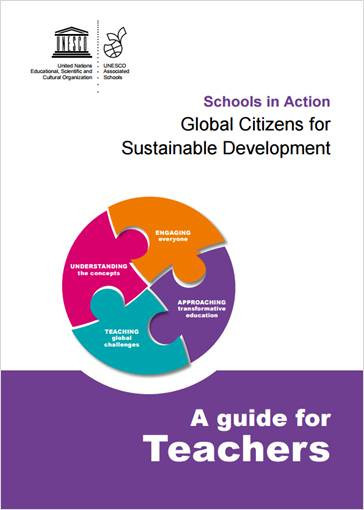 Schools in Action: Global Citizens for Sustainable Development: A Guide for Teachers سنة النشر: 2016 المؤلف المؤسسي: UNESCO The Global Citizens for Sustainable Development Teachers’ guide aims to introduce teachers to Global Citizenship Education (GCED) and Education for Sustainable Development (ESD). It provides secondary school teachers with ideas and activities to help students become global citizens and sustainable development actors. The Teachers’ guide draws on the discussions and activities of almost 1,100 participants from 104 countries, including ASPnet National Coordinators, school principals, teachers, students and experts who contributed to the Online Collaborative Platform ASPnet in Action: Global Citizens Connected for Sustainable Development in 2014 and 2015 [http://en.unesco. org/aspnet/globalcitizens] with associated activities and initiatives. The Teachers’ guide provides: An overview of what it means for learners to become global citizens and of how learners can contribute to sustainable development. Ideas for classroom activities that can help secondary school students to develop knowledge, skills, values, attitudes and behaviours that promote GCED and ESD. Selected activities on GCED and ESD from ASPnet schools around the world. Escuelas en acción, ciudadanos del mundo para el desarrollo sostenible: guía para el profesorado سنة النشر: 2016 المؤلف المؤسسي: UNESCO The Global Citizens for Sustainable Development Teachers’ guide aims to introduce teachers to Global Citizenship Education (GCED) and Education for Sustainable Development (ESD). It provides secondary school teachers with ideas and activities to help students become global citizens and sustainable development actors. The Teachers’ guide draws on the discussions and activities of almost 1,100 participants from 104 countries, including ASPnet National Coordinators, school principals, teachers, students and experts who contributed to the Online Collaborative Platform ASPnet in Action: Global Citizens Connected for Sustainable Development in 2014 and 2015 [http://en.unesco. org/aspnet/globalcitizens] with associated activities and initiatives. The Teachers’ guide provides: An overview of what it means for learners to become global citizens and of how learners can contribute to sustainable development. Ideas for classroom activities that can help secondary school students to develop knowledge, skills, values, attitudes and behaviours that promote GCED and ESD. Selected activities on GCED and ESD from ASPnet schools around the world.