
الموارد
استكشف مجموعة واسعة من الموارد القيمة حول تعليم المواطنة العالمية لتعميق فهمك وتعزيز البحث والمناصرة والتعليم والتعلم.
تم العثور على 114 نتيجة
 무형유산을 통해 키우는 세계시민성: 2023 아태지역 무형유산 교수학습계획안 سنة النشر: 2023 المؤلف المؤسسي: 유네스코 아시아태평양 국제이해교육원 | UNESCO Bangkok | 유네스코아태무형유산센터 유네스코 아태교육원은 2020년부터 유네스코 방콕사무소와 유네스코아태무형유산센터(ICHCAP)와 협력하여 「아시아태평양 교실에서 만나는 무형유산 사업」을 수행하였다. 이 사업의 일환으로, <2023 아태지역 무형유산 교수학습계획안 공모전 >을 개최하였으며, 총 10개국(네팔, 말레이시아, 베트남, 부탄, 싱가포르, 인도, 인도네시아, 중국, 필리핀, 한국)의 18개 교수학습계획안을 모범사례로 최종 선정하였다. 다음은 수상작 목록이다. - Saykha Offering (Subject: English), Tsirangtoe Central School, Bhutan- Setting Up a Herbarium, Learning about Medicinal Herbs and their Cultural and Traditional Uses in the Community (Subject: Science/Grades 7–9), Zilukha Middle Secondary School, Bhutan- Shamanistic Worship and Propitiation to the Spirits (Subject: Bhutan History and Civics and Citizenship Education/Grade 8), Bajothang Higher Secondary School, Bhutan- Beauty of Intangible Cultural Heritage (Subject: Foundations of College Art Education/ Freshman Year), Anhui Medical University, China- The Folk Custom of Building the Peace Kiln for the Mid-Autumn Festival in Jingdezhen (Subject: Mathematics/Grade 7), Jingdezhen No.13 Secondary School, China - When Xiabu Meets Batik (Subject: Art/Grade 5–6), ChongQing Shuren Primary School, China- Agricultural Practices (Subject: Biology/Grade 8), Paramita Heritage School, India- Living Heritage – Quilting in the Kalbelia Community of Rajasthan (Subject: Social Science/Grade 9), St. Stephen's Senior Secondary School, India- My City: Varanasi (Subject: Environmental Studies/Grade 2), Sunbeam School Lahartara, India - Bringing Back the Javanese Saka Calendar through Ethnomathematics (Subject: Mathematics/Grade 7–12), Binus School Bekasi, Indonesia- Song, Play, and Dance (Subject: Interdisciplinary for Indonesian Language, Balinese Culture, Music and Physical Education/Grade 3), Green School Bali, Indonesia- Teaching Sound Wave with Sundanese Traditional Instruments (Subject: Physics/Grade 8), Binus School Bekasi, Indonesia- Wau – The Malays Traditional Kite: Introduction, Wau Bulan Appreciation, Wau Making and Flying Workshop and Wau Corner (Subject: Traditional Games/Grades 4–5), SMU (A) Tarbiah Islamiah (SABK), Malaysia- Himalayan Aromatic Incense-Making and Meditation Workshop (Subject: Economics and Social Studies/ Grades 8–9, 11–12), Pragati Pathshala, Nepal- Influence of Biodiversity on the Stability of Ecosystems (Subject: Science/Grade 10), Philippine Normal University Mindanao, The Philippines- Understanding the Nature of Religion: From the Perspective of the Tripeople (Christians, Muslims, & Lumads) of Kidapawan City, North Cotabato (Subject: Humanities and Social Sciences/Grade 12), Kidapawan City National High School, The Philippines- Bongsan Talchum that Helps the Community Become More Sustainable (Subject: Korean Language and Literature, Social Studies, P.E., Arts/Grade 6), Kimje Buk Elementary School, Republic of Korea- Exploring Community Gardens – How and why are they so precious to humans? (Subject: Geography/Grade 9), Admiralty Secondary School, Singapore
  Road Map to Implement UNESCO’s ‘Recommendation on Education for Peace, Human Rights and Sustainable Development’ in Asia-Pacific سنة النشر: 2024 المؤلف المؤسسي: UNESCO Bangkok | APCEIU The Road Map is a product of the Regional Policy Dialogue and the Launch of the Recommendation on Education for Peace, Human Rights, and Sustainable Development (hereafter referred to as the 2023 Recommendation), held in Bangkok in June 2024. This document aims to promote the regional implementation of the 2023 Recommendation and outlines the challenges and priorities within the Asia-Pacific educational landscape, making it a valuable resource for policymakers, researchers, and practitioners.
  유네스코 1974 국제이해교육 권고 개정안 검토 포럼 자료집 سنة النشر: 2022 المؤلف المؤسسي: 한국국제이해교육학회 | 유네스코 아시아태평양 국제이해교육원 | 유네스코한국위원회 2022년 10월 5일 유네스코 아태교육원과 유네스코한국위원회, 한국국제이해교육학회가 공동으로 개최한 <유네스코 1974 국제이해교육 권고 개정안 검토 포럼> 자료집 입니다. 본 포럼은 유네스코의 「국제이해, 협력, 평화를 위한 교육과 인권, 기본 자유에 관한 교육 권고( 1974 국제이해교육 권고)」가 오늘날 변화된 시대 상황과 지구촌의 새로운 과제 등을 반영할 수 있도록 개정안 초안에 대한 전문적 검토 요지 발표와 토론을 실시한 후, 참가자들의 의견을 수렴하였습니다. <목차> I. 인사말 한경구 (유네스코한국위원회 사무총장) 임현묵 (유네스코 아시아태평양 국제이해교육원장) 박순용 (한국국제이해교육학회장) II. [1부] 1974 국제이해교육 권고 개정 배경 및 현황 1974 국제이해교육 권고 개요와 개정 추진 현황 - 유네스코 아시아태평양 국제이해교육원 / 유네스코한국위원회 국제전문가그룹의 주요 활동 및 1974 국제이해교육 권고 개정안 초안의 주요 내용 / 강순원 (한신대학교 교수) III. [2부] 1974 국제이해교육 권고 개정안 초안 검토 조대훈 (성신여자대학교 교수) 김병연 (양재고등학교 교사) 권혁장 (국가인권위원회 인권교육기획과장) 이선경 (청주교육대학교 교수) 변순용 (서울교육대학교 교수) 이동연 (한국예술종합학교 교수) 손동빈/장경희 (서울시교육청 민주시민생활교육과 과장/장학사) 부록 Recommendation concerning Education for International Understanding, Co-operation and Peace and Education relating to Human Rights and Fundamental Freedoms 국제이해, 협력, 평화를 위한 교육과 인권, 기본 자유에 관한 교육 권고 REVISED RECOMMENDATION CONCERNING EDUCATION FOR INTERNATIONAL UNDERSTANDING, CO-OPERATION AND PEACE AND EDUCATION RELATING TO HUMAN RIGHTS AND FUNDAMENTAL FREEDOMS (‘1974 RECOMMENDATION’)
  제22회 한국국제이해교육학회 국제학술대회: 미래형 교육과정과 세계시민교육: 도전과 과제 سنة النشر: 2021 المؤلف المؤسسي: 한국국제이해교육학회 2021년 11월 13일에 개최되었던 제22회 한국국제이해교육학회 국제학술대회 자료집으로 '미래형 교육과정과 세계시민교육: 도전과 과제'라는 주제로 세계시민교육의 역할과 가능성을 어떻게 학교교실 안으로 가져올지에 대한 토론과 발표내용을 담고 있습니다. 본 자료집에는 기조강연/패널부터 자유 발표 등에 이르기까지 모든 발표자들의 자료가 포함되어 있으며 기조강연 및 패널, 패널4(이기 프로젝트)의 경우 일본어 번역자료도 함께 수록되어 있습니다.
 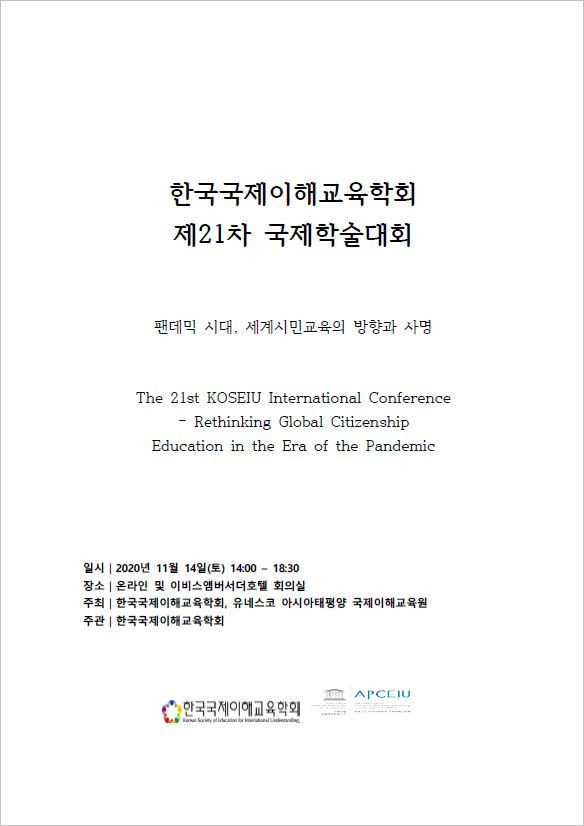 한국국제이해교육학회 제21차 국제학술대회: 팬데믹 시대, 세계시민교육의 방향과 사명 سنة النشر: 2020 المؤلف المؤسسي: 한국국제이해교육학회 | 유네스코 아시아태평양 국제이해교육원 제21차 한국국제이해교육학회 학술대회 자료집으로 ‘팬데믹 시대, 세계시민교육의 방향과 사명’이라는 주제로 팬데믹으로 인한 상황이 더 정의롭고 평화로우며 지속가능한 세상을 만드는데 어떤 새로운 위기를 초래하는지를 점검하고, 그 가운데 교육이 담당해야 할 과제를 다각도로 검토하였다.
 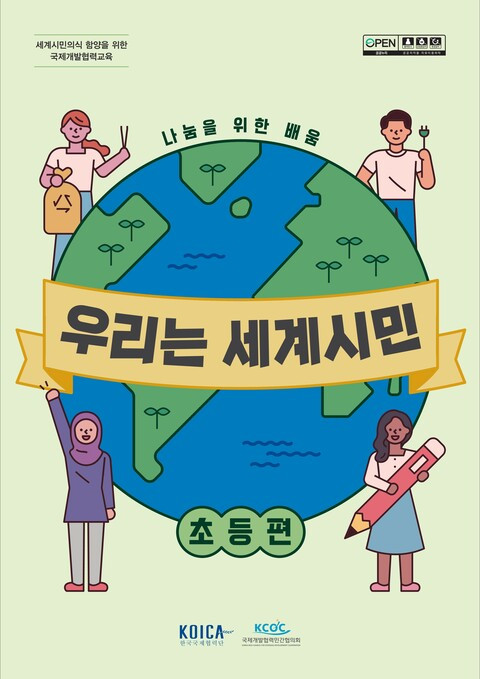 [개정판] 우리는 세계시민: 나눔을 위한 배움; 초등편 سنة النشر: 2021 المؤلف المؤسسي: 한국국제협력단 | 국제개발협력민간협의회 본 교재는 KOICA ODA 교육원의 연구용역으로 발간된 것으로 초등학생 대상의 세계시민과 개발교육을 위한 교안및 활용 가이드를 수록하였고 부록으로 교안 선택 활동과 교안 활용을 위한 교보재 등을 다루고 있다. 본 저작물은 국제개발협력민간협의회에서 2021년 작성하여 공공누리 제4유형으로 개방한 ‘우리는 세계시민: 초등편’을 이용하였으며 해당 저작물은 국제개발협력민간협의회 홈페이지 (www.ngokcoc.or.kr)에서 무료로 다운받으실 수 있습니다.
 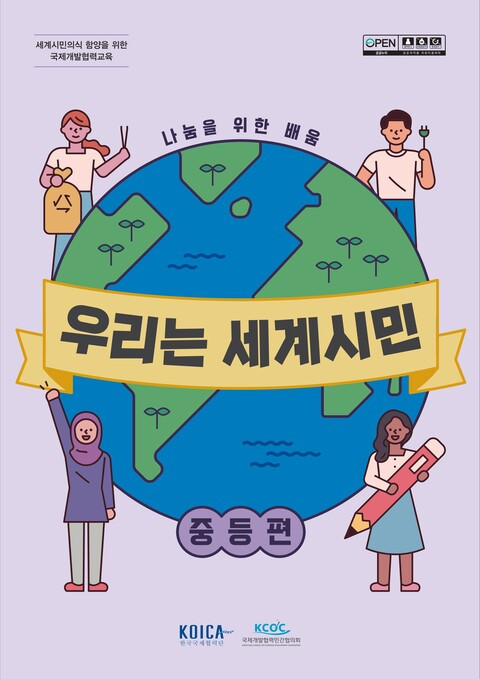 [개정판] 우리는 세계시민: 나눔을 위한 배움; 중등편 سنة النشر: 2021 المؤلف المؤسسي: 한국국제협력단 | 국제개발협력민간협의회 본 교재는 KOICA ODA 교육원의 연구용역으로 발간된 것으로 중학생 대상의 세계시민과 개발교육을 위한 교안및 활용 가이드를 수록하였고 부록으로 교안 선택 활동과 교안 활용을 위한 교보재 등을 다루고 있다. 본 저작물은 국제개발협력민간협의회에서 2021년 작성하여 공공누리 제4유형으로 개방한 ‘우리는 세계시민: 중등편’을 이용하였으며 해당 저작물은 국제개발협력민간협의회 홈페이지 (www.ngokcoc.or.kr)에서 무료로 다운받으실 수 있습니다.
 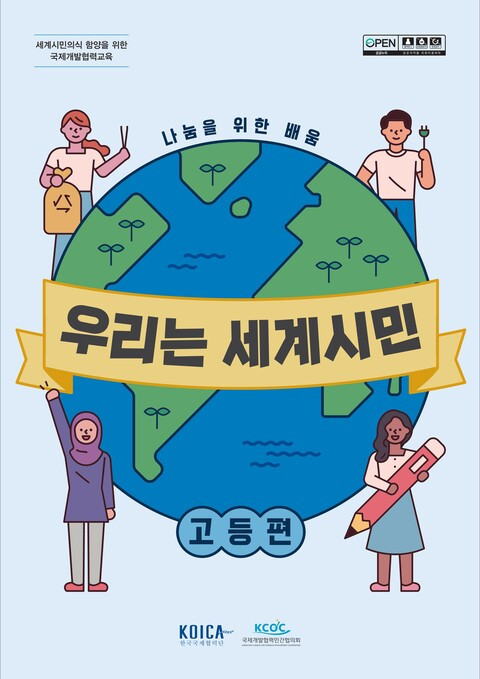 [개정판] 우리는 세계시민: 나눔을 위한 배움; 고등편 سنة النشر: 2021 المؤلف المؤسسي: 한국국제협력단 | 국제개발협력민간협의회 본 교재는 KOICA ODA 교육원의 연구용역으로 발간된 것으로 고등학생 대상의 세계시민과 개발교육을 위한 교안및 활용 가이드를 수록하였고 부록으로 교안 선택 활동과 교안 활용을 위한 교보재 등을 다루고 있다. 본 저작물은 국제개발협력민간협의회에서 2021년 작성하여 공공누리 제4유형으로 개방한 ‘우리는 세계시민: 고등편’을 이용하였으며 해당 저작물은 국제개발협력민간협의회 홈페이지 (www.ngokcoc.or.kr)에서 무료로 다운받으실 수 있습니다.
 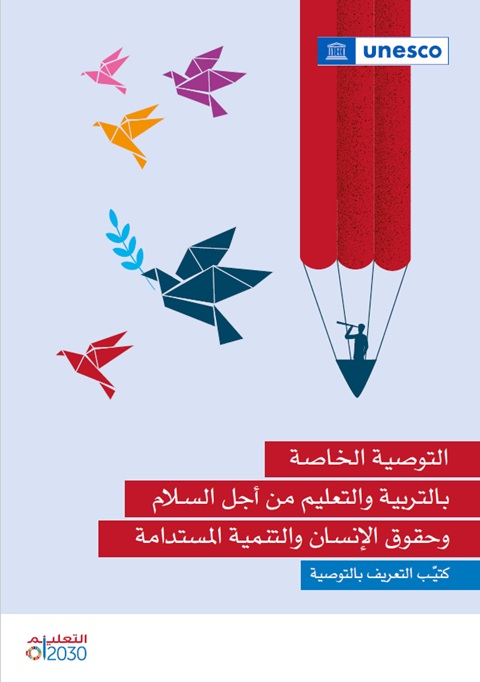 التوصية الخاصة بالتربية والتعليم من أجل السلام وحقوق الإنسان والتنمية المستدامة: دليل تفسيري سنة النشر: 2024 المؤلف المؤسسي: منظمة الأمم المتحدة للتربية والعلم والثقافة (UNESCO) ويقدّم هذا الكتيّب تعريفاً بالتوصية بصيغتها المعدّلة ويبيّن مضمون التوصية ويوضح لمختلف الجهات المعنية بالتربية والتعليم كيفية استخدامها بطريقة عملية في عملها اليومي.
 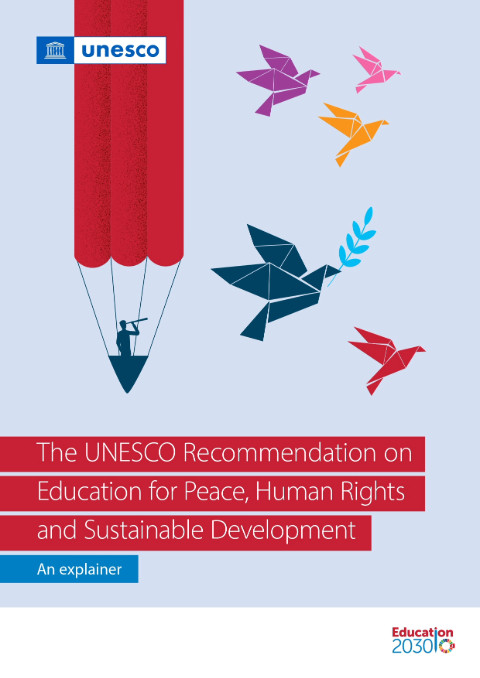 The Recommendation on Education for Peace, Human Rights and Sustainable Development: An Explainer سنة النشر: 2024 المؤلف المؤسسي: UNESCO This is an explainer brochure of the new UNESCO Recommendation on Education for Peace and Human Rights, International Understanding, Cooperation, Fundamental Freedoms, Global Citizenship and Sustainable Development, which is commonly referred to as the Recommendation on Education for Peace, Human Rights and Sustainable Development, about its purpose, history, content and potential to bring about necessary change.