
الموارد
استكشف مجموعة واسعة من الموارد القيمة حول تعليم المواطنة العالمية لتعميق فهمك وتعزيز البحث والمناصرة والتعليم والتعلم.
تم العثور على 15 نتيجة
 Consultation Paper on AI Regulation: Emerging Approaches Across the World سنة النشر: 2024 المؤلف: Juan David Gutiérrez المؤلف المؤسسي: UNESCO Since 2016, over thirty countries have passed laws explicitly mentioning AI, and in 2024, the discussion about AI bills in legislative bodies has increased globally. This policy brief aims to inform legislators about the different regulatory approaches to artificial intelligence (AI) being considered worldwide by legislative bodies. The brief explains nine emerging regulatory approaches, each illustrated with specific cases worldwide. The order in which the nine AI regulatory approaches are presented is deliberately structured to guide readers from less interventionist, light-touch regulatory measures to more coercive, demanding approaches. These regulatory approaches are not mutually exclusive and AI bills often combine two or more approaches:1. Principles-Based Approach2. Standards-Based Approach3. Agile and Experimentalist Approach4. Facilitating and Enabling Approach5. Adapting Existing Laws Approach6. Access to Information and Transparency Mandates Approach7. Risk-Based Approach8. Rights-Based Approach9. Liability Approach The policy brief suggests parliamentarians how they can address three key questions before adopting AI regulations:1. Why regulate? Determine whether regulation is needed to address public problems, fundamental and collective rights, or desirable futures.2. When to regulate? Reach a consensus on why regulation is needed, map available regulatory instruments, compare them with other policy instruments, and assess the feasibility of adopting the former.3. How to regulate? Identify a combination of AI regulatory approaches that are tailored to specific contexts.
  Managing the State Under the Globalization Analytical Study (Journal of Al Farahidi's Arts; Vol.15, Issue 52-3) سنة النشر: 2023 المؤلف: Ahmed Saleh Ahmed Dawood المؤلف المؤسسي: Tikrit University This research dealt with how to manage the state in light of the major global changes, which are imposing its dominance on states and societies, and tampering with their values and cultures. The research problem can be summed up in two things: the first: the interference of international organizations and companies in the policies of countries, and the second: the resulting effects if countries tried to object to the policy of these organizations or drift in their current. Our research aims to: Study and analyze the effects of globalization on countries that have drifted in the current of globalization, and highlight the importance and role of state independence in exercising its authority and making its decisions. Using the descriptive analytical method, the description was to reveal everything related to globalization as a phenomenon that has an important role in changing many countries of their economic policies, trade systems and social affairs. As for the analysis, it was through the explanation and interpretation of the effects of globalization on the sovereignty of the state and how to manage it. This research will be organized into an introduction and a topic that deals with the elements of the research, problem, importance, goal, approach and definition of concepts. Then comes the second topic deals with globalization and the nation-state, and management of the state in light of globalization. As for the third topic, it dealt with developing countries and the challenges of globalization, and managing the Iraqi state in light of globalization, and then globalization and the Keynesian state. In the end of the research, resuls will be presented and recommendations will be made. إدارة الدولة في ظل العولمة: دراسة تحليلية (مجلة آداب الفراهيدي؛ Vol.15, Issue.52-3) سنة النشر: 2023 المؤلف: Ahmed Saleh Ahmed Dawood المؤلف المؤسسي: Tikrit University تناول هذا البحث كيفية ادارة الدولة في ظل المتغيرات العالمية الكبرى، التي باتت تفرض سطوتها على الدول والمجتمعات، وتعبث بقيمها وثقافاتها. وتتلخص مشكلة البحث في امرين: الاول: تدّخّل المنظمات والشركات العالمية في سياسات الدول وحتى الداخلية منها، والثاني: الاثار الناتجة لو حاولت الدول الاعتراض على سياسة هذه المنظمات او الانجراف في تيارها. ويهدف بحثنا الى: دراسة وتحليل اثار العولمة على الدول التي انجرفت بتيار العولمة، وابراز اهمية ودور استقلال الدولة في ممارسة سلطتها واتخاذ قراراتها. مستعينين بالمنهج الوصفي التحليلي، فكان الوصف للكشف عن كل ما يتعلق بالعولمة كظاهرة لها اهمية ودور في تغيير الكثير من الدول لسياساتها الاقتصادية وانظمتها التجارية وشؤونها الاجتماعية. اما التحليل فكان من خلال شرح وتفسير اثار العولمة على سيادة الدولة وكيفية ادارتها. وسينتظم بحثنا هذا في مقدمة وثلاث مباحث، تناول المبحث الاول عناصر البحث، مشكلة واهمية وهدف ومنهج وتعريف بالمفاهيم. ثم يأتي المبحث الثاني ليتناول العولمة والدولة القومية، وادارة الدولة في ظل العولمة. اما المبحث الثالث فتناول الدول النامية وتحديات العولمة، وادارة الدولة العراقية في ظل العولمة، ومن ثم العولمة والدولة الكينزية. وفي النهاية النتائج التي أسفر عنها البحث، ومن ثم التوصيات.
 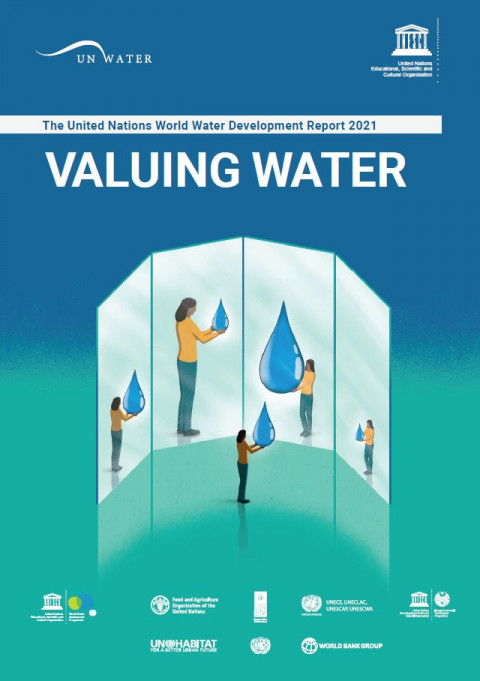 The United Nations World Water Development Report 2021: Valuing Water سنة النشر: 2021 المؤلف المؤسسي: UNESCO World Water Assessment Programme (WWAP) The 2021 edition of the United Nations World Water Development Report focuses on valuing water. There is enough water for all provided we use and manage it efficiently. But we don’t. We invest too little, and ineffectively. We use too much water, creating scarcities. Quality is suffering and so is the environment.The value we place on water varies, depending upon who is using it, and why. Value can be a guide to what our goals should be, what actions are needed, and where we should invest. Many of our problems arise because we don’t value water highly enough; all too often water is not valued at all.This report explains various approaches to valuing water for environmental considerations, water-related infrastructure, drinking water, sanitation and hygiene. It looks at valuation issues in food and agriculture, business, industry, energy and financing. And it highlights the perspectives of different value systems and cultures, and associated social and gender-based considerations.
  Stepping Forward: Parliaments in the Fight Against Hate Speech سنة النشر: 2023 المؤلف: Kevin Deveaux | Tim Baker | Mary O’Hagan | David Ennis المؤلف المؤسسي: United Nations Development Programme (UNDP) This brief provides an overview of the background, drivers, enablers and the impact of hate speech and identifies strategies to counter it, with a focus on the role of parliaments as a positive force for change. Of particular relevance are the concrete actions parliaments can take to address and mitigate the prevalence and impact of hate speech on those who are most vulnerable in society, including women, minorities and other underrepresented groups. The objective of this brief is to provide meaningful and practical guidance for parliaments and parliamentarians, as well as those who programmatically support them, on steps they can take to reduce and counter hate speech while fostering peace, constructive dialogue and trust.
  Connections that Matter: How the Quality of Governance Boosts Climate Action; A Systematic Scoping Review of the Literature سنة النشر: 2024 المؤلف المؤسسي: United Nations Development Programme (UNDP) | German Institute of Development and Sustainability (IDOS) This report reflects the findings of a systematic literature review jointly undertaken by the UNDP Global Policy Centre for Governance and the German Institute of Development and Sustainability. The report offers aggregated empirical insight from across the globe about how inclusive, effective and accountable governance systems produces positive effects on climate action. The report aims to galvanize development actors and stakeholders to invest in SDG 16 and the strengthening of governance systems, and to better identify pathways that raise the ambition and effectiveness of climate action.
  [Executive Summary] Connections that Matter: How the Quality of Governance Boosts Climate Action سنة النشر: 2024 المؤلف المؤسسي: United Nations Development Programme (UNDP) | German Institute of Development and Sustainability (IDOS) This is the executive summary of the Connections that Matter: How the Quality of Governance Boosts Climate Action prepared by the UNDP Global Policy Centre for Governance and the German Institute of Development and Sustainability.
  Governing AI for Humanity: Final Report سنة النشر: 2024 المؤلف المؤسسي: United Nations (UN) The United Nations Secretary-General’s High-level Advisory Body on AI’s Final Report, “Governing AI for Humanity,” builds on months of work, including extensive global consultations, and the publication of an interim report in December 2023. Proposals for Global Governance on AI This report outlines a blueprint for addressing AI-related risks and sharing its transformative potential globally, including by:• Urging the UN to lay the foundations of the first globally inclusive and distributed architecture for AI governance based on international cooperation;• Proposing seven recommendations to address gaps in current AI governance arrangements;• Calling on all governments and stakeholders to work together in governing AI to foster development and protection of all human rights. This includes light institutional mechanisms to complement existing efforts and foster inclusive global AI governance arrangements that are agile, adaptive and effective to keep pace with AI’s evolution. Extensive Global Consultations The report is the product of extensive consultations, involving more than 2,000 participants across all regions of the world, including via: • 18 deep-dive discussions on key issues with top experts• More than 50 consultation sessions across all regions• More than 250 written submissions from over 150 organizations and 100 individuals The Advisory Body also commissioned an AI Risk Global Pulse Check – the most comprehensive global horizon scanning exercise on AI risks to date – and an AI Opportunity Scan to crowdsource expert assessments of emerging AI trends.
  العوامل الخارجية المؤثرة في الحوكمة والتوجهات الإستر اتيجية لمؤسسات التعليم العالي في دولة الإمارات العربية المتحدة سنة النشر: 2022 المؤلف: Ghassan A. Al-Qaimari المؤلف المؤسسي: University of Fujairah منذ نشأتها في عام 1971، عملت دولة الإمارات العربية المتحدة على تأسيس نظام حديث ومتنوع للتعليم العالي. وفي فترة زمنية وجيزة، تغلبت دولة الإمارات العربية المتحدة على العديد من العقبات لتبرز كمركز تعليمي مهم في المنطقة، جاذب للطلاب وللأكاديميين ولمؤسسات التعليم العالي الأجنبية الراغبة في الحضور في هذه المنطقة من العالم. في هذا البحث نقوم بتوصيف التعليم العالي في دولة الإمارات العربية المتحدة: نصف أنواع مؤسسات التعليم العالي في الدولة، والهيئات الرسمية المنظمة للتعليم العالي، ونتحدث عن رؤية قيادة الدولة للبحث العلمي ولتطور المؤسسات التعليمية كما تم التعبير عنها في الأجندات الوطنية المتعلقة بالتكنولوجيا والبحث العلمي والتعليم العالي، وكيفية تأثر حوكمة مؤسسات التعليم العالي بهذه العوامل. يركز البحث على مواكبة مؤسسات التعليم للتحديات المستقبلية للتطور المتسارع في العلوم والتكنولوجيا، ما يعرف اليوم بالثورة الصناعية الرابعة، وكيف ستؤثر هذه الثورة التي بدأت ملامحها بالتبلور على التوجهات الإستراتيجية للمؤسسات التعليمية وعلى حوكمة مؤسسات التعليم العالي في دولة الإمارات العربية المتحدةفي القرن الحادي والعشرين. External Factors Affecting the Governance and Strategic Directions of Higher Education Institutions in the United Arab Emirates سنة النشر: 2022 المؤلف: Ghassan A. Al-Qaimari المؤلف المؤسسي: University of Fujairah Since its inception in 1971, the UAE has worked to establish a modern and diverse system of higher education. In a short period of time, the UAE overcame many obstacles to emerge as an important educational center in the region, attracting foreign students, academics, and higher education institutions wishing to be present in this region of the world. In this research, we describe higher education in the United Arab Emirates: we describe the types of higher education institutions in the country, and the official bodies regulating higher education (Regulators), and we talk about the vision of the country's leadership for scientific research and the development of educational institutions, as expressed in the National Agendas related to technology and scientific research and higher education. How is the governance of higher education institutions affected by these factors? The research focuses on the educational institutions’ keeping pace with the future challenges of the rapid development of science and technology, what is known today as the Fourth Industrial Revolution, and how this revolution, whose features have begun to take shape, will affect the strategic directions of educational institutions and the governance of higher education institutions in the UAE in the twenty-first century.