
الموارد
استكشف مجموعة واسعة من الموارد القيمة حول تعليم المواطنة العالمية لتعميق فهمك وتعزيز البحث والمناصرة والتعليم والتعلم.
تم العثور على 51 نتيجة
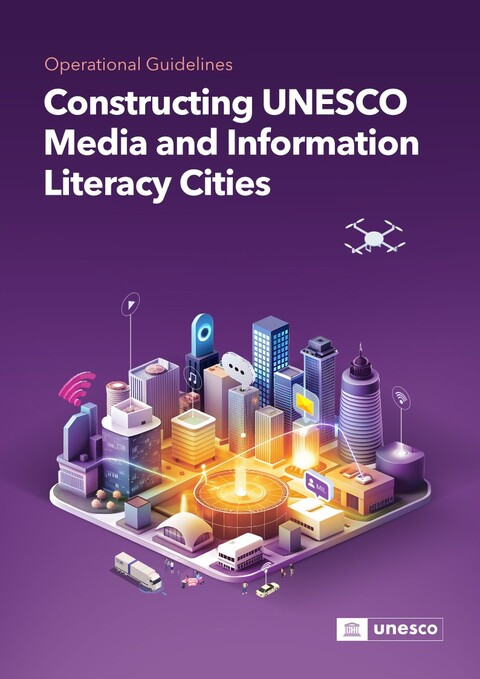 Operational Guidelines: Constructing UNESCO Media and Information Literacy Cities سنة النشر: 2024 المؤلف المؤسسي: UNESCO To support the integration of media and information literacy in urban spaces, UNESCO is releasing operational guidelines for city governance stakeholders. These guidelines aim to help cities align their goals with the benefits of integrating MIL into physical and virtual spaces.The guidelines offer examples of actions for cities interested in pioneering the MIL Cities. Cities are encouraged to share their progress and achievements with UNESCO for future initiatives.All cities and municipalities can participate, regardless of size, internet penetration, or technology use. The guidelines aim to foster diverse partnerships at the municipal level for implementing MIL actions and programmes. Directrices operativas: construyendo Ciudades de Alfabetización Mediatica eIinformacional de la UNESCO سنة النشر: 2024 المؤلف المؤسسي: UNESCO Con miras a apoyar la integración de la alfabetización mediática e informacional en los entornos urbanos, la UNESCO publica directrices operativas para las partes interesadas en la gobernanza de las ciudades. Estas directrices procuran ayudar a las ciudades a alinear sus objetivos con los beneficios de integrar la AMI en espacios físicos y virtuales.Las directrices ofrecen ejemplos de actividades a las ciudades interesadas en ser pioneras en “Ciudades AMI”. Se les alienta a compartir sus avances y logros con la UNESCO para la elaboración de iniciativas en el futuro.Todas las ciudades y municipios pueden participar, independientemente de su tamaño, penetración de Internet o utilización de tecnología. Las directrices intentan propiciar asociaciones diversas a nivel municipal con objeto de ejecutar actividades y programas AMI.
  User Empowerment through Media and Information Literacy Responses to the Evolution of Generative Artificial Intelligence (GAI) سنة النشر: 2024 المؤلف: Divina Frau-Meigs المؤلف المؤسسي: UNESCO Key messages Artificial Intelligence and Generative AI are having a significant impact on people’s engagement with information, digital technology, and media. This raises concerns about control human agency and autonomy over information, decision making, gender equality, and freedoms in general. User empowerment through Media and Information Literacy (MIL) as a response to GAI, which is still in its infancy, needs to be fully deployed and public policy makers should be concerned in developing it well from the outset. MIL is necessary to build people’s ethical use of synthetic media, i.e. video, text, image or voice content fully or partially generated by AI-systems. The societal opportunities being deepened by GAI include: access to information, participation, employability, creativity, lifelong learning and creative industries. The societal potential risks being deepened by GAI include: disinformation, loss of data privacy, threats to integrity of elections, surveillance, lack of source reliability, discrimination, including gender-based and racial stereotypes, and copyrights violations. Building on familiarity in the face of urgency, AI literacy can be embedded in MIL to teach and train all sorts of communities (educators, librarians, youth workers, women networks, etc.). Ensuring explainable AI is key to both the design of MIL curricula and to the design of policy and governance around GAI. To build trust in information and education, source reliability needs to be revised to encompass the different types of “evidence” provided by GAI. MIL can train informed people from outside the technology industry to participate in the design, implementation and regulation of AI, in a manner that remains human-centered, gender-responsive and mindful of the public interest. Training for MIL is within the remit of governments and institutions of higher education, which have a duty to ensure MIL policy actions are sustained and strengthened over time, to be future-proof, in the face of an ever-evolving AI/GAI. L’autonomisation des utilisateurs grâce aux réponses apportées par l’éducation aux médias et à l’information à l’évolution de l’intelligence artificielle générative (IAG) سنة النشر: 2024 المؤلف: Divina Frau-Meigs المؤلف المؤسسي: UNESCO Messages clés L’intelligence artificielle et l’IA générative influent grandement sur les rapports des indivi- dus à l’information, aux technologies numériques et aux médias. Mais cela ne va pas sans inquiétudes quant à leur contrôle, au pouvoir d’action et à l’autonomie dont disposent les utilisateurs vis-à-vis de l’information, à la prise de décisions, à l’égalité des genres et aux libertés en général. . Pour constituer une réponse à l’IAG, technologie qui en est à ses balbutiements, l’autonomisation des utilisateurs grâce à l’éducation aux médias et à l’information (EMI) doit être pleinement déployée, et les autorités publiques doivent s’efforcer de la promouvoir dès le début. L’EMI est indispensable pour garantir une utilisation éthique des médias synthétiques, c’est-à-dire des vidéos, textes, images et sons totalement ou partiellement créés à l’aide de systèmes d’IA. L’IAG offre de nombreuses opportunités sociales dans différents domaines, dont l’accès à l’information, la participation, l’employabilité, la créativité, l’apprentissage tout au long de la vie et les industries créatives, entre autres. Il existe cependant des risques sociaux potentiels aggravés par l’IA générative, dont : la désinformation, la perte de contrôle sur la confidentialité des données, les menaces pour l’intégrité des élections, la surveillance, le manque de fiabilité des sources, la discrimination notamment fondée sur le genre et les stéréotypes raciaux et les violations des droits d’auteur. Pour mettre à profit la familiarité face à l’urgence, la maîtrise de l’IA pourrait être intégrée dans les programmes d’EMI afin d’éduquer et de former des communautés très diverses (éducateurs, bibliothécaires, animateurs pour la jeunesse, réseaux de femmes, etc.). Pour bien concevoir non seulement les programmes d’EMI mais aussi la gouvernance de l’IAG et les politiques connexes, l’IA explicable joue un rôle essentiel. Pour renforcer la confiance dans l’information et l’éducation, la fiabilité des sources doit être réexaminée pour englober tous les différents types de « preuves » fournies par l’IAG. L’EMI peut former des acteurs éclairés n’appartenant pas au secteur de la technologie afin qu’ils contribuent à la conception, à la mise en œuvre et à la réglementation de l’IA d’une manière qui reste centrée sur l’humain, sensible au genre et soucieuse de l’intérêt public. La formation dans le cadre de l’EMI relève des gouvernements et des établissements d’enseignement supérieur, qui doivent veiller à ce que les actions politiques en la matière soient soutenues et renforcées dans la durée, pour s’adapter aux évolutions constantes de l’IA/IAG. Directives opérationnelles : Vers la création de villes UNESCO pour l’éducation aux médias et à l’information سنة النشر: 2024 المؤلف المؤسسي: UNESCO Pour soutenir l’intégration de l’éducation aux médias et à l’information dans les espaces urbains, l’UNESCO publie des lignes directrices opérationnelles à l’intention des acteurs de la gouvernance des villes.Ces lignes directrices ont pour objectif d’aider les villes à aligner leurs objectifs sur les avantages de l’intégration de l’éducation aux médias et à l’information dans les espaces physiques et virtuels.Les lignes directrices proposent des actions à titre d’exemple aux villes désireuses d’être parmi les pionnières Villes EMI. Les villes sont encouragées à partager leurs progrès et leurs réalisations avec l’UNESCO dans la perspective d’initiatives futures. Как создавать города медийной и информационной грамотности ЮНЕСКО سنة النشر: 2024 المؤلف المؤسسي: UNESCO Чтобы содействовать интеграции медийной и информационной грамотности в городские пространства, ЮНЕСКО выпускает практическое руководство для участников процесса управления городами. Это руководство призвано помочь городам формировать цели своего развития с учетом преимуществ интеграции МИГ в физические и виртуальные пространства.В руководстве приводятся примеры действий для населенных пунктов, которые заинтересованы в том, чтобы стать первопроходцами в деле создания городов медийной и информационной грамотности. ЮНЕСКО будет рада узнать об их успехах и достижениях для будущих проектов.К инициативе могут присоединиться любые города и населенные пункты независимо от размера, уровня проникновения интернета или использования технологий. Задача данного руководства — содействовать развитию сотрудничества на муниципальном уровне для реализации мероприятий и программ в сфере МИГ.
  الصحافة، «الأخبار الزائفة» و«التضليل» : دليل التدريس والتدريب في مجال الصحافة سنة النشر: 2020 المؤلف: Julie Posetti | Cherilyn Ireton | Claire Wardle | Hossein Derakhshan | Alice Matthews | Magda Abu-Fadil | Tom Trewinnard | Fergus Bell | Alexios Mantzarlis المؤلف المؤسسي: منظمة الأمم المتحدة للتربية والعلم والثقافة (UNESCO) يسعى هذا الكتيب إلى توفير مقرر نموذجي ذي صلة دولياً، ومفتوح للتصرف أو التكييف، ويستجيب لمشكلة التضليل العالمي الناشئة التي تواجه المجتمعات بشكل عام، والصحافة بشكل خاص.تم تصميم هذا المقرر الدراسي النموذجي لتزويد مدارس ومدربي الصحافة بإطار ودروس لمساعدة الطلاب والممارسين في مجال الصحافة على التغلب على المشكلات المرتبطة بـ “الأخبار الزائفة“. ونأمل أيضاً أن يكون دليلاً مفيداً للصحفيين الممارسين.ويضم هذا المقرر مدخلات من كبار المدرسين والباحثين والمفكرين في مجال الصحافة الدولية الذين يسهمون في تحديث طرائق الصحافة وممارساتها لمواجهة تحديات التضليل ومعلوماته المضللة. والدروس قائمة على السياق وذات طبيعة نظرية، ولكن في حالة التحقق عبر الإنترنت، فهي عملية للغاية. وسواء استخدمت كمقرر دراسي في الجامعة أو بشكل مستقل، فإن هذه الصفحات تساعد في تحديث الوحدات التعليمية القائمة أو إنشاء مناهج جديدة.وهي جزء من “المبادرة العالمية للتميز في تدريس الصحافة“، والتي هي محور برنامج اليونسكو الدولي لتنمية الاتصال (IPDC). وتسعى هذه المبادرة إلى الانخراط في تدريس الصحافة والبحث في هذا المجال من منظور عالمي، بما في ذلك تبادل الممارسات الدولية الجديدة.
  저널리즘, 가짜뉴스 & 허위정보 : 저널리즘 교육과 훈련을 위한 핸드북 سنة النشر: 2020 المؤلف: Julie Posetti | Cherilyn Ireton | Claire Wardle | Hossein Derakhshan | Alice Matthews | Magda Abu-Fadil | Tom Trewinnard | Fergus Bell | Alexios Mantzarlis المؤلف المؤسسي: 유네스코 | 유네스코한국위원회 | 한국언론진흥재단 이 핸드북은 여러 나라에서 적절하게 활용할 수 있는 모델 커리큘럼을 제공하기 위해 만들어졌다. 그대로 채택하거나 상황에 맞게 수정해서 활용할 수 있다. 이를 통해 사회 문제로 떠오른, 특히 저널리즘 영역의 문제로 떠오른 전 세계적인 허위정보에 대응하고자 한다.모델 커리큘럼 역할을 할 이 책은 저널리즘 학생과 수행자들의 ‘가짜뉴스’와 관련된 이슈 탐구에 도움을 줄 수 있도록, 저널리즘 교육자와 훈련자들에게 적절한 프레임워크와 교과를 제공하도록 설계됐다. 우리는 또 이 자료가 저널리스트들의 실천에도 유용한 안내자가 되기를 바란다.이 콘텐츠들은 세계 최고 저널리즘 교육자, 연구자, 사상가들의 작업을 한데 모은 것이다. 이들은 잘못된 정보와 허위정보의 도전을 다루는 저널리즘 기법과 실천과 관련된 최신 정보를 제공하고 있다.이 교과들은 맥락적이며 이론적인 정보를 담고 있다. 하지만 온라인 검증은 굉장히 실질적인 내용들로 구성돼 있다. 이 자료들을 한 교과로 한꺼번에 사용할 수도 있고, 개별 모듈을 별도로 활용해도 된다. 이러한 자료들은 기존 교육 모델을 새롭게 하거나 새로운 교과를 만드는 데 도움이 될 것이다.이 책은 유네스코 국제 커뮤니케이션 개발 사업이 주력하고 있는 ‘탁월한 저널리즘 교육을 위한 글로벌 이니셔티브’의 일환이다. 이 이니셔티브는 국제적인 모범 실천 사례를 공유하고, 국제적 관점에서 저널리즘을 가르치고 실천하며 연구하는 작업에 참여하기 위해 노력한다.
  Global Media and Information Literacy Assessment Framework: Country Readiness and Competencies سنة النشر: 2013 المؤلف المؤسسي: UNESCO The MIL Assessment Framework can foster lifelong learning initiatives by building on the relationship between information, media, digital, and ICT literacies, along with societal transformations, education, workforce, policy and decision making processes, economic growth and democracy. The overall goal of the publication is to guide UNESCO’s Member States throughout the assessment of country readiness and competencies regarding the media and information literacy of citizens, in particular teachers in service and in training. The document is particularly aimed at the following stakeholders: policy makers and decision makers; national officers responsible for statistical data collection and analysis; educational policy makers and planners working in formal and informal education settings; teacher training institutions and teachers. It is also of relevance to the professional information and communication community, and has wide applicability for civil society at large.
  Overview of Information Literacy Resources Worldwide سنة النشر: 2013 المؤلف: Forest Woody Horton المؤلف المؤسسي: UNESCO This publication aims to bring together Information Literacy contributions in forty-two languages from all of the different geographic regions around the world in order to provide inclusive and multilingual Information Literacy resources for Library and Information Science professionals, teachers, researchers, and students.