
الموارد
استكشف مجموعة واسعة من الموارد القيمة حول تعليم المواطنة العالمية لتعميق فهمك وتعزيز البحث والمناصرة والتعليم والتعلم.
تم العثور على 24 نتيجة
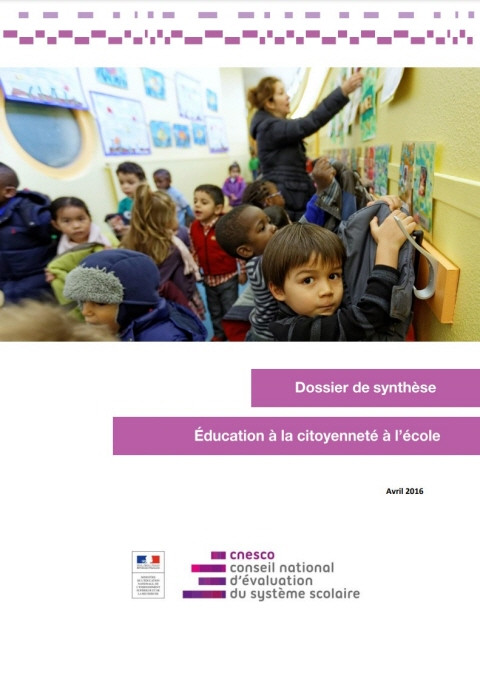 Éducation à la citoyenneté à l'école : Dossier de synthèse سنة النشر: 2016 المؤلف المؤسسي: National Center for the Study of School Systems (CNESCO) Ce dossier explore l'évolution de l'éducation à la citoyenneté dans les écoles françaises face aux défis contemporains. Il met en avant les principes clés de cette éducation et son impact sur les élèves, soutenu par des recherches et des sondages récents. Le rapport compare les pratiques internationales et présente des exemples innovants, offrant des perspectives pour améliorer l'enseignement de la citoyenneté en France.
  Bibliography: Citizenship Education سنة النشر: 2021 المؤلف المؤسسي: France Education International Prepared at the request of the French Institute of the Netherlands, this selection of freely accessible digital resources is aimed at French as a Foreign Language (FLE) teachers who wish to educate their students about citizenship. Focused on secularism and the values of the French Republic, it includes international reports, articles and podcasts, didactic and pedagogical resources, as well as presentations of European projects and French academic and school projects that can be adapted to various contexts. Bibliographie: Éducation à la citoyenneté سنة النشر: 2021 المؤلف المؤسسي: France Education International Réalisée à la demande de l’Institut français des Pays-Bas, cette sélection de ressources numériques en accès libre s’adresse aux enseignants de FLE désireux d’éduquer leurs élèves à la citoyenneté. Centrée sur la laïcité et les valeurs de la République française, elle comprend des rapports internationaux, des articles et des podcasts, des ressources didactiques et pédagogiques ainsi qu’une présentation de projets européens et de projetsacadémiques et d’établissement français, transposables en différents contextes.
  The Critical global educator: global citizenship education as sustainable development سنة النشر: 2016 المؤلف: Maureen Eills An acknowledged challenge for humanitarian democratic education is its perceived lack of philosophical and theoretical foundation, often resulting in peripheral academic status and reduced prestige. A rich philosophical and theoretical tradition does however exist. This book synthesises crucial concepts from Critical Realism, Critical Social Theory, Critical Discourse Studies, neuro-, psycho-, socio- and cognitive-linguistic research, to provide critical global educators with a Cultural Historical Activity Theory (CHAT) framework for self- and negotiated evaluation.