
الموارد
استكشف مجموعة واسعة من الموارد القيمة حول تعليم المواطنة العالمية لتعميق فهمك وتعزيز البحث والمناصرة والتعليم والتعلم.
تم العثور على 40 نتيجة
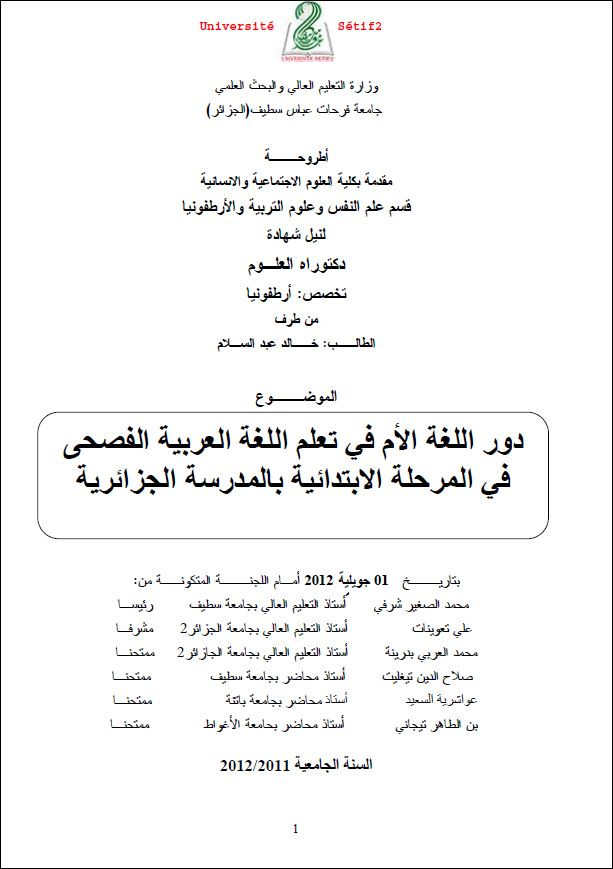 The Role of the Mother Tongue in Learning Standard Arabic at the Primary Stage in the Algerian School سنة النشر: 2012 المؤلف: Khaled Abdel Salam المؤلف المؤسسي: Farhat Abbas Setif University Our study has two mean objectives: To determine the first language consequences, whatever they are general, Arabic, or Kabyle, in the learning of school language at different vocabulary, singular, grammar, and, conjugation structures, therefore, exploring if they are helping factors in the learning process or hampering it. To identify the cognitive strategies used by the novices in their learning process in relation to their language performance and errors made in the oral and written expression. In order to deal with this situation, we utilized the descriptive analytical method, in which we had chosen randomly two samples composed of 90 scholars (45 scholars speaking general Arabic language, and 45 scholars speaking Kabyle language), on which we administered two tests, one in the form of an interview about personal and health informations, and the other one about the environment conservation. After, we had analysed the content of the responses, via the extraction of the language errors expanded, and categorising them to different styles or patterns, and computing their frequencies, and explaining them, we founded the following results: Whatever, the first language is general, Arabic or Kabyle, it has a big consequence over all the language structures, therefore, making the scholars language not different from them. According to these results, we can conclude that these factors are not considered as helping factors in the learning process. There is a tendency for the novices to utilize more, both of the revising strategies of courses and the deduction strategy compared to the others. there are no significant differences between scholars speaking general Arabic language and scholars speaking kabyle language in the vocabulary structure, but, there are significant differences between these two samples on the grammatical and conjugational structures, related to personal, pedagogical and familiar factors. According to these results, we can conclude that the language level of the novices on both samples is not related to the abilities required by the school system. دور اللغة الأم في تعلم اللغة العربية الفصحى في المرحلة الابتدائية بالمدرسة الجزائرية سنة النشر: 2012 المؤلف: Khaled Abdel Salam المؤلف المؤسسي: Farhat Abbas Setif University تهدف دراستنا إلى التعرف على تأثيرات اللغة األولى سواء كانت عامية عربية او قبائلية في تعلم اللغة المدرسية في مختلف البنيات اللغوية الصوتية والمفرداتية والتركيبية والنحوية والصرفية. وبالتالي الكشف إن كانت ،عامال ميسرا في التعلم أو معرقال. و التعرف على االستراتيجيات المعرفية التي يستعملها المتعلمون في تعلمهم وعالقتها بأدائهم اللغوي في التعبيرين الشفوي والكتابي. ولتحقيق ذلك استعملنا المنهج الوصفي التحليلي، فاخترنا عينتين بمجموع 90 تلميذا (45 ناطقا بالعامية العربية و45 ناطقا بالقبائلية). فطبقنا عليهما ثالث اختبارات، أحدهما شفوي على شكل مقابلة حول معلومات شخصية وصحية واآلخر كتابي حول المحافظة على البيئة، ومقياس حول ،استراتيجيات التعلم. ولما حللنا محتوى االجابات واستخرجنا األخطاء اللغوية المنتشرة وصنفناها إلى مختلف األنماط وبعد حسابنا لتكراراتها و تحليلنا وتفسيرنا لها، توصلنا إلى النتائج اآلتية: ـ أن اللغة األولى سواء كانت عامية عربية او قبائلية قد أثرت بشكل كبير في كل بنيات اللغة الصوتية، التركيبية، النحوية والصرفية بشكل كبير حتى أصبحت .لغة التعليم ال تختلف كثيرا عنها. لذلك استنتجنا أنه ال يمكن اعتبارها عامال ميسرا في التعلم .ـ أن المتعلمين يستخدمون كثيرا استراتيجيات المراجعة للدروس واالستنباط أكثر من االستراتيجيات األخرى .ـ أنه ال توجد عالقة بين االستراتيجيات المستعملة وأداء المعلمين باللغة المدرسية شفويا وكتابيا ـ وأنها ال توجد فروق ذات داللة إحصائية بين الناطقين بالعامية العربية و الناطقين بالقبائلية في البنية الصوتية لكن هناك فروقا دالة إحصائيا بينهما في البنيتين النحوية والصرفية لكنها تعود إلى عوامل اخرى ذاتية وبيداغوجية .وأسرية .واستنتجنا ان مستوى المتعلمين من العينتين بلغة التعليم لم يرتق إلى الكفاءات المنشودة في المنهاج المدرسي.
  Educación para la ciudadanía y la convivencia: sintiendo y pensando; ciclo uno (primero y segundo) سنة النشر: 2014 المؤلف المؤسسي: Secretaría de Educación del Distrito (SED) | Fe y Alegría These twelve modules make reference to a series of activities that focus on how children from all the educative grades understand and live citizenship, strengthening and facilitating the learning processes based on autonomy. This educative materials, which are aimed at being implemented inside the classrooms, attempt to serve as input resources for educators and other agents that work on or are interested in working with citizenship education and coexistence. The overall objective is to provide quality education. Educación para la ciudadanía y convivencia: aprendiendo a vivir juntas y juntos, base para construir cultura de paz; ciclo uno (primero y segundo) سنة النشر: 2015 المؤلف المؤسسي: Secretaría de Educación del Distrito (SED) | Fe y Alegría These twelve modules make reference to a series of activities that focus on how children from all the educative grades understand and live citizenship, strengthening and facilitating the learning processes based on autonomy. This educative materials, which are aimed at being implemented inside the classrooms, attempt to serve as input resources for educators and other agents that work on or are interested in working with citizenship education and coexistence. The overall objective is to provide quality education. Educación para la ciudadanía y convivencia: aprendiendo a vivir en dignidad y armonía. Compartiendo la vida; ciclo dos (tercero y cuarto) سنة النشر: 2014 المؤلف المؤسسي: Secretaría de Educación del Distrito (SED) | Fe y Alegría These twelve modules make reference to a series of activities that focus on how children from all the educative grades understand and live citizenship, strengthening and facilitating the learning processes based on autonomy. This educative materials, which are aimed at being implemented inside the classrooms, attempt to serve as input resources for educators and other agents that work on or are interested in working with citizenship education and coexistence. The overall objective is to provide quality education. Educación para la ciudadanía y convivencia: somos promotores de paz, aprendiendo a actuar con justicia; ciclo dos (tercero y cuarto) سنة النشر: 2015 المؤلف المؤسسي: Secretaría de Educación del Distrito (SED) | Fe y Alegría These twelve modules make reference to a series of activities that focus on how children from all the educative grades understand and live citizenship, strengthening and facilitating the learning processes based on autonomy. This educative materials, which are aimed at being implemented inside the classrooms, attempt to serve as input resources for educators and other agents that work on or are interested in working with citizenship education and coexistence. The overall objective is to provide quality education.
  Holocaust education in the primary school: Some reflections on an emergent debate Recent years have witnessed the beginnings of a debate over whether the Holocaust should be taught in primary schools. In this article the claims advanced in favour of the proposal are shown to be plausible but lacking in empirical support, while the counter-claims are considered either peripheral, contentious or contrary to established research. It is argued that some key omissions in the debate, such as the way primary school pupils conceptualize Jewish culture and identity, significantly strengthen the case against introducing young children to the Holocaust. (By the author) Feature or footnote ? Teacher's attitudes toward the teaching of the Holocaust in primary schools in Scotland The question of teaching controversial and difficult issues in primary schools remains itself controversial. This article discusses the area of teaching the Holocaust in primary schools in Scotland by examining its relevance to the primary curriculum and reporting on survey and interview research amongst a sample of primary teachers in Scotland. Based on limited research, this paper suggests that the Holocaust is appropriate for primary pupils, provides insight into the reactions of parents and colleagues and shows that Holocaust history in Scottish primary schools is set firmly within the contexts of Anne Frank and World War Two. We find that there are significant barriers to its teaching, yet most of these can be successfully overcome. (By the author)
 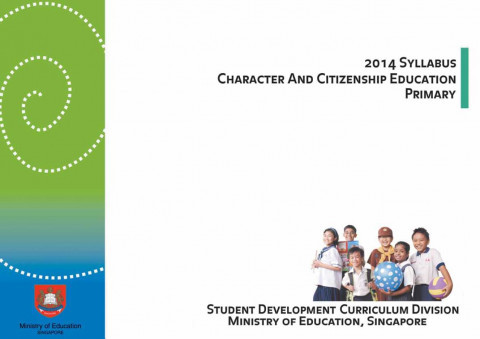 2014 syllabus: character and citizenship education: primary سنة النشر: 2014 المؤلف المؤسسي: Singapore. Ministry of Education. Student Development Curriculum Division Character and Citizenship Education (CCE) has always been at the heart of Singapore's education system. In CCE, students learn to be responsible to family and community; and understand their roles in shaping the future of nation. The emerging trends and global developments that impact the society, such as social changes, globalisation and technological advancements are taken into consideration in the development of the CCE curriculum.The goal of CCE is to inculcate values and build competencies in students to develop them to be good individuals and useful citizens. Since 1959, various key programmes have been introduced to inculcate values, habits, competencies and skills in students. Some of these programmes include Civics and Moral Education (CME, 1992), National Education (NE, 1997), Social and Emotional Learning (SEL, 2005), and learning experiences such as Co-Curricular Activities (CCA).The new CCE curriculum shifts focus from programmes to a common purpose. The desired outcomes of CCE are aligned to the Key Stage Outcomes (KSOs) and Desired Outcomes of Education (DOE). CCE is central to the Framework for 21st Century Competencies and Student Outcomes. It emphasizes the interconnectedness of the core values, social and emotional competencies and civic literacy, global awareness and cross-cultural skills that are critical for character and citizenship development of students. 2014 syllabus: le caractère et l'éducation à la citoyenneté: primaire سنة النشر: 2014 المؤلف المؤسسي: Singapore. Ministry of Education. Student Development Curriculum Division Caractère et éducation à la citoyenneté (CEC) a toujours été au cœur du système éducatif de Singapour. En CEC, les élèves apprennent à être responsables de la famille et de la communauté; et de comprendre leurs rôles dans l'élaboration de l'avenir de la nation. Les nouvelles tendances et évolutions mondiales qui influent sur la société, tels que les changements sociaux, la mondialisation et les progrès technologiques sont pris en considération dans l'élaboration du programme d'études du CEC. Le but du CEC est d'inculquer des valeurs et de construire des compétences chez les élèves de les développer pour être de bons individus et des citoyens utiles. Depuis 1959, divers programmes clés ont été mis en place pour inculquer des valeurs, des habitudes, des compétences et des compétences chez les élèves. Certains de ces programmes comprennent l'éducation civique et l'éducation morale (ECM, 1992), l'éducation nationale (NE, 1997), social et apprentissage émotionnel (SPE, 2005), et les expériences d'apprentissage tels que Co-curriculaires Activités (CCA). Les nouveaux changements du curriculum CEC se concentrent des programmes à un but commun. Les résultats escomptés du CEC sont alignés sur les résultats clés de scène (RCS) et résultats souhaités de l'Education (RSE). CEC est au centre du cadre pour les compétences du 21e siècle et résultats des élèves. Il met l'aCECnt sur l'interdépendance des valeurs fondamentales, les compétences sociales et émotionnelles et alphabétisation civique, la sensibilisation mondiale et les compétences interculturelles qui sont critiques pour le caractère et la citoyenneté développement des élèves.