
الموارد
استكشف مجموعة واسعة من الموارد القيمة حول تعليم المواطنة العالمية لتعميق فهمك وتعزيز البحث والمناصرة والتعليم والتعلم.
تم العثور على 56 نتيجة
 Социальные медиа для профилактики/предотвращения насильственного экстремизма: практическое руководство سنة النشر: 2017 المؤلف المؤسسي: Search for Common Ground Данный инструментарий был создан на основе ключевых результатов, полученных в рамках пилотного проекта «Поиск социальных сетей (Кыргызстан: модель для Центральной Азии)« Поиск в социальных сетях для Кыргызстана: модель для Центральной Азии », финансируемого Бюро по борьбе с терроризмом, Госдеп США. Проект основан на двух частях: совместный подход, ориентированный на Резолюцию ООН 2250, и профессиональный подход, направленный на создание и проведение кампаний в социальных сетях в Кыргызстане.Экстремистские и террористические группы используют Интернет для радикализации и вербовки молодых людей через социальные сети и приложения для обмена мгновенными сообщениями. Поэтому важно создать новые методы для борьбы с экстремистской пропагандой в Интернете, сосредоточив внимание не только на таких мерах, как блокировка и фильтрация контента, либо контррассказах, которые очень популярны и появляются естественным образом в ответ на радикализацию и насильственный экстремизм, но также предлагая Позитивная альтернатива экстремистской пропаганде, бросая вызов их идеологии и сообщениям.
  세계시민을 위한 미디어정보리터러시 교안 개발 연구 سنة النشر: 2022 المؤلف: 김아미 | 김영은 | 박다혜 | 박유신 | 고기식 | 김현정 المؤلف المؤسسي: 유네스코한국위원회 어린이·청소년은 디지털 공간에서 세계시민이자 디지털 시민으로 성장하고 있다. 그러나 지금까지 어린이·청소년과 디지털 미디어를 논할 때에는 어린이·청소년을 미디어로부터 보호하거나 과의존을 방지하는 교육을 강조하거나 디지털 공간에서의 에티켓 교육 등에 치우친 경향이 있다. 하지만 어린이·청소년은 이미 디지털 공간의 중요한 구성원이자 성인과 미디어를 함께 경험해 나가는 주체이므로, 어린이·청소년이 디지털 세상에서 누려야 하는 권리는 무엇인지, 그리고 그러한 권리를 어떻게 지킬 것인지에 대한 보다 활발한 논의가 필요하다.어린이·청소년의 경험과 요구를 이해하고 학습자와 교육자가 함께 만들어가는 미디어정보리터러시 교육이야말로 지금 디지털 시민이자 세계시민으로 성장하는 어린이·청소년에게 필수적인 역량을 함양시킬 수 있는 교육일 것이다.이에 본 연구는 어린이·청소년이 경험하는 여러 미디어 관련 이슈에 대한 이해를 바탕으로 하여, 세계시민을 위한 미디어정보리터러시 교육안을 개발하는 것을 목적으로 한다. 특히 유엔아동권리협약 제12조에서 강조하고 있는 어린이·청소년의 참여권을 지원하기 위하여, 당사자의 목소리를 듣고 이를 반영하는 어린이·청소년 참여형 연구(participatory research)를 계획하였다.
  Journalism, Fake News & Disinformation: Handbook for Journalism Education and Training سنة النشر: 2018 المؤلف: Julie Posetti | Cherilyn Ireton | Claire Wardle | Hossein Derakhshan | Alice Matthews | Magda Abu-Fadil | Tom Trewinnard | Fergus Bell | Alexios Mantzarlis المؤلف المؤسسي: UNESCO This handbook seeks to provide an internationally-relevant model curriculum, open to adoption or adaptation, which responds to the emerging global problem of disinformation that confronts societies in general, and journalism in particular. Serving as a model curriculum, the publication is designed to give journalism educators and trainers a framework and lessons to help students and practitioners of journalism to navigate the issues associated with ‘fake news’.The contents draw together the input of leading international journalism educators, researchers and thinkers who are helping to update journalism method and practice to deal with the challenges of misinformation and disinformation. The lessons are contextual, theoretical and in the case of online verification, extremely practical. Used together as a course, or independently, they can help refresh existing teaching modules or create new offerings.It is part of the “Global Initiative for Excellence in Journalism Education”, which is a focus of UNESCO’s International Programme for the Development of Communication (IPDC). The Initiative seeks to engage with teaching, practising and researching of journalism from a global perspective, including sharing international good practices.
 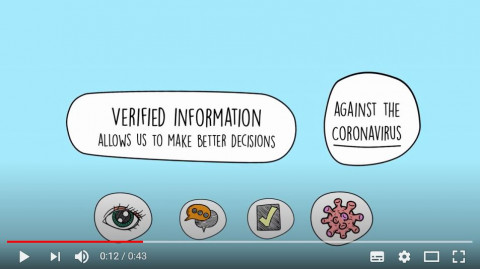 How to Stop Misinformation in Times of Coronavirus? سنة النشر: 2020 المؤلف المؤسسي: United Nations Development Programme (UNDP) | UNESCO Learn how to identify unverified content you receive on your cell phone and avoid spreading information on social media that has not been checked by credible sources. Caring for reliable information is everyone's responsibility, and helps us make better decisions.Learn more about this campaign by UNESCO and UNDP at:https://en.unesco.org/news/disinformation-silent-weapon-times-pandemic
  اﻟﺘﺼﺪي ﻟﺨﻄﺎب اﻟﻜﺮاﻫﻴﺔ: ﻫﻞ اﻟﺘﻌﻠﻴﻢ ﻫﻮ اﻟﺤﻞ؟ سنة النشر: 2022 المؤلف: Nicole Fournier-Sylvester المؤلف المؤسسي: UNESCO | UN. Office on Genocide Prevention and the Responsibility to Protect هذه الورقة جزء من مجموعة أوراق المناقشة ، التي تمّ إعدادها بتكليف من اليونسكو ومكتب الأمم المتحدة للمستشار الخاص وتعتبر الأوراق مساهمة ، )OSAPG( المعني بمنع الإبادة الجماعية مباشرة في استراتيجية وخطة عمل الأمم المتحدة. في سياق منتدى أصحاب المصلحة المتعددين والمؤتمر الوزاري المعني بمعالجة خطابالكراهية من خلال التعليم في سبتمبر وأكتوبر 2021.وقد سلط تفشي جائحة كوفيد- 19 الضوء على أهمية استراتيجية وخطة عمل الأمم المتحدة ، مما أدى إلى ظهور موجة من خطاب الكراهية في جميع أنحاء العالم - مما يؤدي إلى تفاقم التعصب والتمييز تجاه مجموعات معينة وزعزعة استقرار المجتمعات والأنظمة السياسية. تسعى أوراق المناقشة إلى تفريغ القضايا الرئيسية المتعلقةبهذا التحدي العالمي واقتراح الاستجابات والتوصيات الممكنة. Addressing Hate Speech: Educational Responses سنة النشر: 2022 المؤلف: Nicole Fournier-Sylvester المؤلف المؤسسي: UNESCO | UN. Office on Genocide Prevention and the Responsibility to Protect This paper is part of a collection of discussion papers, commissioned and produced by UNESCO and the United Nations Office of the Special Adviser on the Prevention of Genocide (OSAPG).The papers are a direct contribution to the United Nations Strategy and Plan of Action and are published in the context of the Multistakeholder Forum and Ministerial Conference on Addressing Hate Speech through Education in September and October 2021.The outbreak of the COVID-19 pandemic has highlighted the pertinence of the United Nations Strategy and Plan of Action, generating a wave of hate speech across the world –further exacerbating intolerance and discrimination towards particular groups and destabilizing societies and political systems. The discussion papers seek to unpack key issues related to this global challenge and propose possible responses and recommendations. Afrontar el discurso de odio: respuestas educativas سنة النشر: 2022 المؤلف: Nicole Fournier-Sylvester المؤلف المؤسسي: UNESCO | UN. Office on Genocide Prevention and the Responsibility to Protect Este documento forma parte de una colección de documentos de discusión, encargados y producidos por la UNESCO y la Oficina del Asesor Especial para la Prevención del Genocidio de las Naciones Unidas (OSAPG). Los documentos son una contribución directa a la Estrategia y el Plan de Acción de las Naciones Unidas y se publican en el contexto del Foro Multilateral y la Conferencia Ministerial sobre Combatir los discursos de odio a través de la educación en septiembre y octubre de 2021.El estallido de la pandemia del COVID-19 ha puesto de manifiesto la pertinencia de la Estrategia y el Plan de Acción de las Naciones Unidas, generando una ola de discursos de odio en todo el mundo, exacerbando aún más la intolerancia y la discriminación hacia determinados grupos y desestabilizando las sociedades y los sistemas políticos. Los documentos de discusión tratan de desentrañar las cuestiones clave relacionadas con este reto mundial y proponer posibles respuestas y recomendaciones. Lutter contre les discours de haine : réponses éducatives سنة النشر: 2022 المؤلف: Nicole Fournier-Sylvester المؤلف المؤسسي: UNESCO | UN. Office on Genocide Prevention and the Responsibility to Protect Ce document fait partie d’une série de documents de synthèse commandés et produits par l’UNESCO et le Bureau du Conseiller spécial pour la prévention du génocide des Nations Unies (OSAPG). Ces documents sont une contribution directe à la stratégie et le Plan d’action des Nations Unies et sont publiés dans le cadre du Forum multipartite et de la Conférence ministérielle sur la lutte contre les discours de haine par l’éducation, en septembre et octobre 2021.L’apparition de la pandémie de COVID-19 a mis en évidence la pertinence de la Stratégie et le Plan d’action des Nations Unies, générant une vague de discours de haine dans le monde entier, exacerbant encore l’intolérance et la discrimination à l’égard de certains groupes et déstabilisant les sociétés et les systèmes politiques. Les documents de synthèse visent à analyser les questions clés liées à ce défi mondial et à proposer des réponses et des recommandations possibles.
 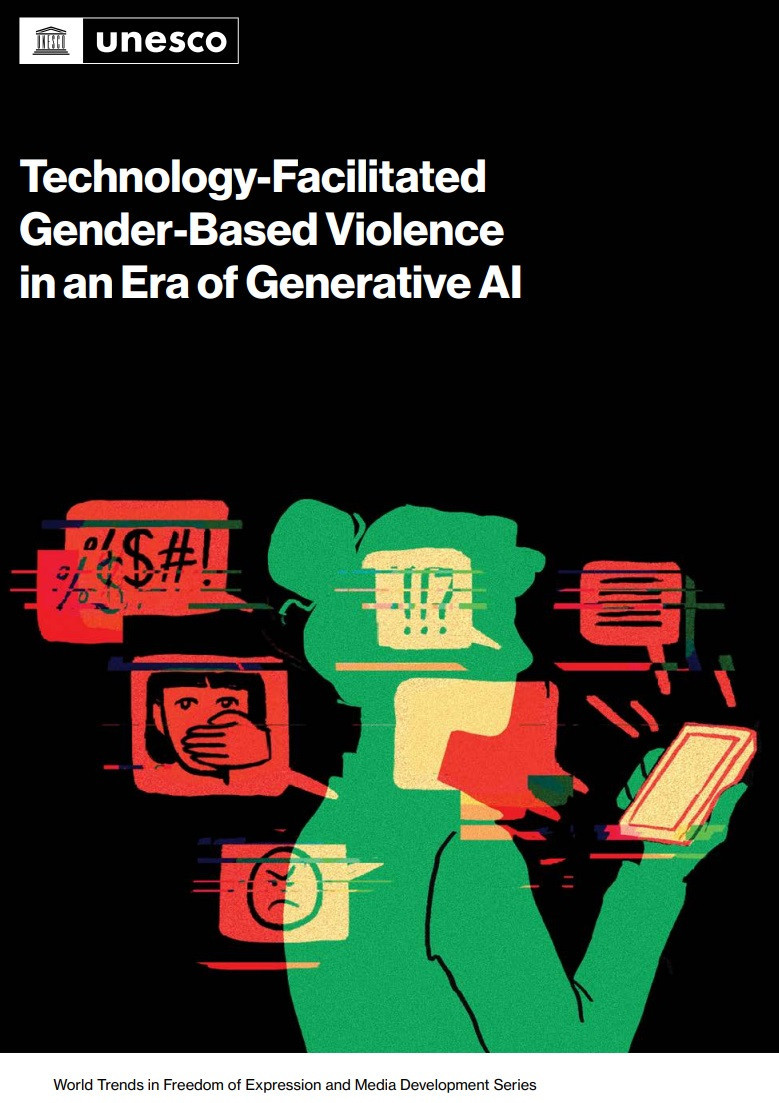 Technology-facilitated gender-based violence in an era of generative AI سنة النشر: 2023 المؤلف المؤسسي: UNESCO <Short summary>Experiments reveal how generative AI facilitates gender-based violence Generative Artificial Intelligence (AI) — deep-learning models that create voice, text, and image — are revolutionizing the way people access information and produce, receive and interact with content. While technological innovations like ChatGPT, DALL-E and Bard offer previously unimaginable gains in productivity, they also present concerns for the overall protection and promotion of human rights and for the safety of women and girls.The arrival of generative AI introduces new, unexplored questions: what are the companies’ policies and normative cultures that perpetuate technology-facilitated gender-based violence and harms? How do AI-based technologies facilitate gender-specific harassment and hate speech? What “prompt hacks” can lead to gendered disinformation, hate speech, harassment, and attacks? What measures can companies, governments, civil society organisations and independent researchers take to anticipate and mitigate these risks?A combination of measures are proposed to be put in place by generative AI companies and the technology companies that platform them, regulators and policy makers, by civil society organisations and independent researchers, as well as users.
 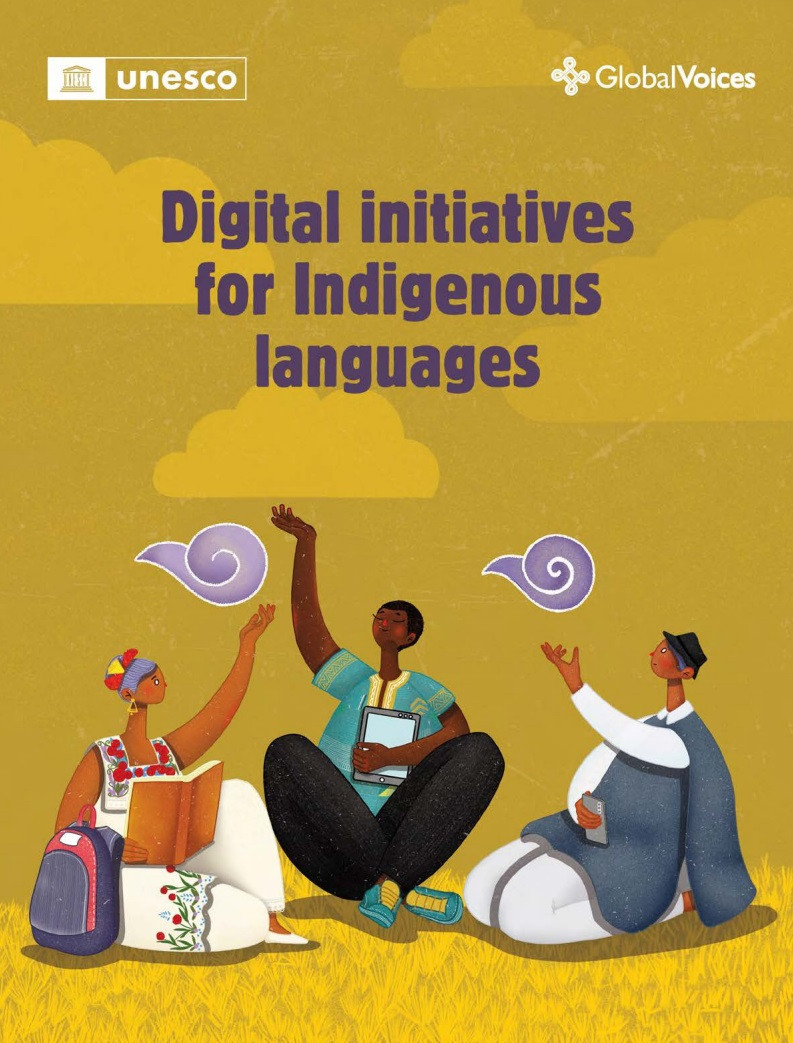 Digital initiatives for indigenous languages سنة النشر: 2023 المؤلف: Genner Llanes-Ortiz المؤلف المؤسسي: UNESCO | Global Voices (Amsterdam) <Short summary> Supported by UNESCO and Global Voices’ Rising Voices (RV), this toolkit extends the efforts of dedicated Indigenous digital practitioners. It illustrates how internet and other digital tools can be utilized to conserve, revive, and promote Indigenous languages, as well as other marginalized or minority languages.This toolkit has been co-designed in close partnership with both established and emerging networks of Indigenous digital practitioners, language advocates, and collaborators, within the framework of the International Decade of Indigenous Languages 2022-2032. The toolkit promotes the foundation of language preservation, revival, and promotion on eight key approaches:Facilitating, Multiplying, Normalizing, Educating, Reclaiming, Imagining, Defending and Protecting. It also offers a curated list of valuable resources, including guides, tutorials, and manuals for utilizing digital tools. In conjunction with the advisory group established for the toolkit’s preparation and other collaborating organizations, it presents a wealth of inspiring stories showcasing innovative projects that have made a significant impact on languages at local, national, or global levels.Finally, the toolkit is openly licensed as an Open Educational Resource. It is expected that the toolkit will continue to evolve and grow as the needs of language users and digital language defenders and promoters change alongside the introduction of new technological solutions, innovation and creativity.