
الموارد
استكشف مجموعة واسعة من الموارد القيمة حول تعليم المواطنة العالمية لتعميق فهمك وتعزيز البحث والمناصرة والتعليم والتعلم.
تم العثور على 126 نتيجة
 Engineering for Sustainable Development: Delivering on the Sustainable Development Goals سنة النشر: 2021 المؤلف المؤسسي: UNESCO | International Centre for Engineering Education (ICEE) The report highlights the crucial role of engineering in achieving each of the 17 SDGs. It shows how equal opportunities for all is key to ensuring an inclusive and gender balanced profession that can better respond to the shortage of engineers for implementing the SDGs. It provides a snapshot of the engineering innovations that are shaping our world, especially emerging technologies such as big data and AI, which are crucial for addressing the pressing challenges facing humankind and the planet. It analyses the transformation of engineering education and capacity-building at the dawn of the Fourth Industrial Revolution that will enable engineers to tackle the challenges ahead. It highlights the global effort needed to address the specific regional disparities, while summarizing the trends of engineering across the different regions of the world.By presenting case studies and approaches, as well as possible solutions, the report reveals why engineering is crucial for sustainable development and why the role of engineers is vital in addressing basic human needs such as alleviating poverty, supplying clean water and energy, responding to natural disasters, constructing resilient infrastructure, and bridging the development divide, among many other actions, leaving no one behind.It is hoped that the report will serve as a reference for governments, engineering organizations, academia and educational institutions, and industry to forge global partnerships and catalyse collaboration in engineering so as to deliver on the SDGs.
  Synergy Solutions for a World in Crisis: Tackling Climate and SDG Action Together سنة النشر: 2023 المؤلف المؤسسي: UNFCCC | UN. Department of Economic and Social Affairs (UN. DESA) In May 2023 UNDESA and UNFCCC Secretariat co-convened the Expert Group on Climate and SDG Synergy. The Group consists of 14 renowned experts from diverse thematic and geographic backgrounds who were given the task of developing the First Global Report on Climate and SDG Synergies. This report demonstrates that aggressively acting on climate and development in an integrated and synergistic way is an important opportunity to achieve the course correction the UN Secretary- General has called for. It highlights some of the challenges but also the opportunities if the international community is seriously committed to enhancing these synergies and thereby addressing these challenges. The report is designed to provide a broad overview of available data and evidence, insights from experts on the frontlines, and recommendations for enhancing synergistic action across the 2030 Agenda and the SDGs. This first edition will form the basis for future iterations, which will entail a wider scope of sectors, and thematic areas and deep dives on specific issues pertaining to strengthening and operationalizing synergic climate and SDG actions at all levels.
  Third Global Conference on Strengthening Synergies Between the Paris Agreement and the 2030 Agenda for Sustainable Development: Building the Evidence Base for Synergistic Action in Support of Raising Climate and SDGs Ambition سنة النشر: 2022 المؤلف المؤسسي: UN. Department of Economic and Social Affairs (UN. DESA) The Third Global Conference on Strengthening Synergies Between the Paris Agreement and the 2030 Agenda For Sustainable Development was co-convened by the United Nations Department of Economic and Social Affairs (UNDESA) and the Secretariat of the United Nations Framework Convention on Climate Change (UNFCCC), and it was hosted by the Ministry of the Environment of Japan, in partnership with the United Nations University (UNU) and the Institute for Global Environmental Strategies (IGES).
  ESCWA Water Development Report 8: The Water-related Sustainable Development Goals in the Arab Region سنة النشر: 2019 المؤلف المؤسسي: UN. Economic and Social Commission for Western Asia (UN. ESCWA) Water-related SDGs have a central role in achieving the 2030 Agenda for Sustainable Development and its interlinked Sustainable Development Goals (SDGs) and targets. While the dedicated goal on water (SDG6) aims to ensure availability and the sustainable management of water and sanitation for all, pursing this goal supports the achievement many other goals. Regional monitoring and reporting of the water-related SDGs thus supports a better understanding of water across the sustainable development agenda and provides insights on the progress and challenges facing the Arab region as it aims to achieve the SDGs and associated national targets under conditions of water scarcity and increasing water stress. This eighth issue of the Water Development Report of the Economic and Social Commission for Western Asia (ESCWA) examines the water-related SDGs from the perspective of water security and scarcity in the Arab region. It identifies ways to assess and address present and projected water scarcity at the regional and national levels for various climate change scenarios. It reviews regional and national water strategies and action plans coherency with global water-related goals and targets. The study analyses how the water-related SDG targets and indicators can guide the development of policy measures to tackle water challenges in the Arab region. Proposed policy interventions include measures to conserve and protect water resources and generate additional nonconventional water resources. Selected policy options are quantified and analysed for two climate scenarios for the future period 2030-2050 in view of informing sustainable planning and appropriate decision support systems to optimize and rationalize water use. The report also provides insights on institutional mechanisms in place for monitoring and implementing water-related SDGs at various scales. تقرير المياه والتنمية الثامن: أهداف التنمية المستدامة المتعلقة بالمياه في المنطقة العربية سنة النشر: 2019 المؤلف المؤسسي: UN. Economic and Social Commission for Western Asia (UN. ESCWA) لأهداف التنمية المستدامة ذات الصلة بالمياه دور رئيسي في تحقيق خطة التنمية المستدامة لعام 2030 وأهداف التنمية المستدامة الأخرى ومقاصدها. ويسعى الهدف المكرّس للمياه (الهدف 6) إلى ضمان توفر المياه وإتاحة خدمات الصرف الصحي للجميع وإدارتهما بشكل مستدام. وفي العمل على بلوغه ما يدعم تحقيق العديد من الأهداف الأخرى. ويساهم رصد أهداف التنمية المستدامة ذات الصلة بالمياه والإبلاغ عنها على الصعيد الإقليمي في فهم أفضل لموقع المياه في خطة التنمية المستدامة، ويعطي فكرة عما حققته المنطقة العربية من تقدم وما واجهته من تحديات في سعيها إلى تحقيق أهداف التنمية المستدامة والغايات الوطنية المرتبطة بها، في ظل ندرة المياه وزيادة الإجهاد المائي. ويبحث العدد الثامن من تقرير اللجنة الاقتصادية والاجتماعية لغربي آسيا (الإسكوا) حول تنمية المياه في أهداف التنمية المستدامة ذات الصلة بالمياه من منظور الأمن المائي وندرة المياه في المنطقة العربية. ويحدّد طرقاً لتقييم ومعالجة ندرة المياه الحالية والمتوقعة على المستويين الإقليمي والوطني على ضوء سيناريوهات مختلفة لتغيُّر المناخ. ويستعرض مدى اتساق الاستراتيجيات وخطط العمل المائية الإقليمية والوطنية مع الأهداف والمقاصد العالمية ذات الصلة بالمياه. وتبيّن الدراسة كيف يمكن الاسترشاد بمقاصد ومؤشرات أهداف التنمية المستدامة ذات الصلة بالمياه في وضع تدابير في السياسة العامة لمواجهة تحديات المياه في المنطقة العربية. وتشمل التدخلات المقترحة على صعيد السياسات العامة تدابير للحفاظ على موارد المياه وحمايتها، وتوليد موارد مائية إضافية غير تقليدية. ويتم تقدير السياسات العامة المختارة وتحليلها ضمن سيناريوهين مناخيين للفترة المستقبلية 2030-2050 بهدف توجيه التخطيط المستدام والنُظُم الداعمة لعمليات اتخاذ القرارات بما يؤدي إلى تحسين استخدام المياه وترشيده. ويستعرض التقرير الآليات المؤسسية القائمة لرصد أهداف التنمية المستدامة ذات الصلة بالمياه وتنفيذها على مستويات مختلفة.
  The Climate Dictionary: Speak Climate Fluently سنة النشر: 2023 المؤلف المؤسسي: United Nations Development Programme (UNDP) The Climate Dictionary is a guide to understanding climate change. It aims to bridge the gap between complex scientific jargon and the general public, making climate concepts accessible and understandable to people of different backgrounds and levels of expertise. It is based on the belief that empowering people with knowledge is crucial to fostering collective action and responsibility in the face of climate change. Using a creative combination of engaging images, concise explanations and engaging storytelling, The Climate Dictionary effectively communicates complex climate concepts in a visual and easy-to-consume way. El diccionario climático: Una guía práctica para el cambio climático سنة النشر: 2023 المؤلف المؤسسي: United Nations Development Programme (UNDP) El Diccionario Climático es una guía para entender el cambio climático. El objetivo de la misma es tender un puente entre la compleja jerga científica y el público en general, haciendo que los conceptos sobre el clima sean accesibles y comprensibles para personas de distintos orígenes y niveles de especialización. Se basa en la creencia de que dotar a la gente de conocimientos es crucial para fomentar la acción y la responsabilidad colectiva frente al cambio climático. Utilizando una combinación creativa de imágenes atractivas, explicaciones concisas y una narración interesante, El Diccionario Climático comunica con eficacia conceptos complejos sobre el clima de una manera visual y fácil de consumir.
 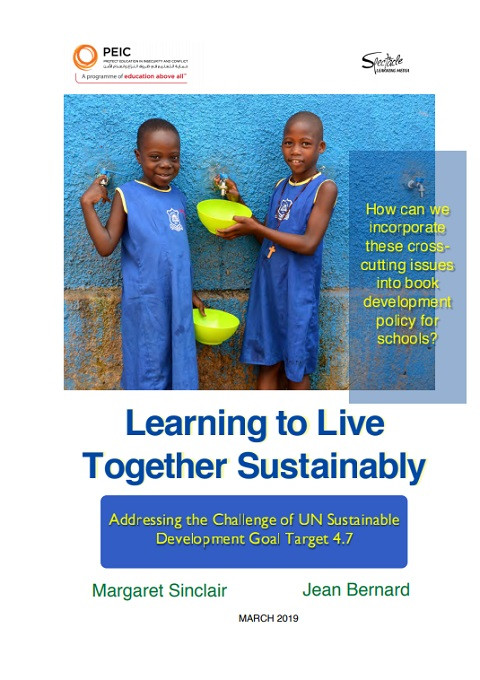 Learning to Live Together Sustainably: Addressing the Challenge of UN Sustainable Development Goal Target 4.7 سنة النشر: 2019 المؤلف: Margaret Sinclair | Jean Bernard المؤلف المؤسسي: Protect Education in Conflict and Insecurity (PEIC) | Spectacle Learning Media The practical advice and guidelines in this book help support learning to live together, conflict transformation and peace at the individual, group and community levels. The framework for developing widely accessible, high quality learning materials supports the UN Sustainable Development Goals and is relevant to formal and non-formal education activities and projects. This document also raises important issues about the professional responsibilities of policy-makers at global and national level, who determine what content is addressed in the classroom. In particular, it addresses the need for education materials that support cross-cutting issues such as learning to live together, global citizenship education, and education for sustainable development.
 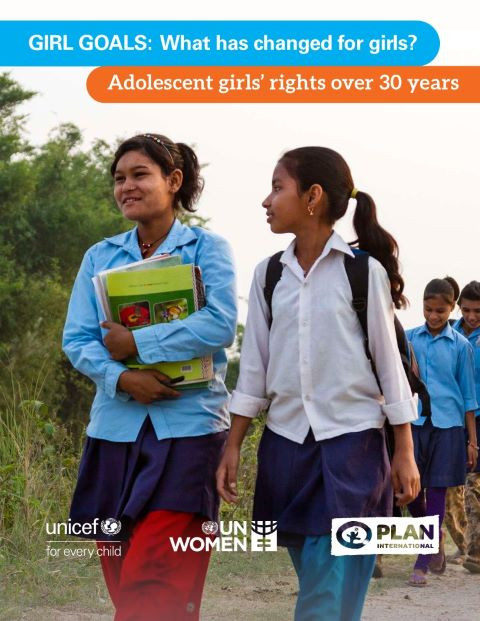 Girl Goals: What has Changed for Girls? Adolescent Girls’ Rights over 30 Years سنة النشر: 2025 المؤلف المؤسسي: United Nations Children's Fund (UNICEF) | United Nations Entity for Gender Equality and the Empowerment of Women (UN Women) | Plan International This report makes three key recommendations on action we can take now to advance adolescent girls’ rights at scale, in ways that account for fiscally constrained contexts and multiple competing priorities: 1. Ensure tangible and actionable support for adolescent girls’ voices, advocacy and action. The current generation of girls are raising their voices to be heard and are already at the forefront of making change around the world. With the right support, resources and seats at the table, adolescent girls can help transform the world for the better, shaping better policy outcomes for themselves and everyone. This is not about girls’ voices above all others, or endless consultation, but about specific, meaningful actions that ensure girls get the support they need and are heard on policy issues that matter to them. 2. Establish and track explicit targets for change for adolescent girls, who are too often invisible and sidelined Setting explicit targets to monitor outcomes for adolescent girls is key to making progress. Context-specific prioritization will be necessary, but there are some issues that stand out globally. Gaps in progress (such as child marriage gains accruing disproportionately to wealthier households) demonstrate the need forprogrammes that address poverty and economic realities alongside harmful social norms. The disproportionate number of adolescent girls not in education, employment or training, not entering the labour market as young women, and left behind when it comes to digital skills, is a threat to the gains made for girls and to economic growth that will benefit everyone. Stagnation on issues like underweight also stand out. Country- specific priorities supported by data- driven accountability mechanisms and investments are needed to translate policy commitments into change on the ground. 3. Resource and deliver smartly to unlock the social and economic dividend Governments and partners should invest in solutions proven to change outcomes across multiple SDGs at scale – for example, investing in education and skills, cash transfers and economic empowerment programmes designed to support girls. Existing systems, from maternal health care to school curricula, should be adapted to meet girls’ needs rather than creating small- scale, separate projects. Streamlined, evidence-based ‘add-ons’ – such as adding parenting support to existing maternal health-care programmes – can be cost effective and accelerate outcomes if well designed. Change is possible, and this report shows that great gains have been made. Smart investments now can transform the world for girls, families, communities and national economies. It is time to act.
  Учёт показателей достижения ЦУР 4: доклад о ходе достижения национальных контрольных показателей; в фокусе внимания — учителя سنة النشر: 2024 المؤلف المؤسسي: Global Education Monitoring Report Team | UNESCO Institute for Statistics (UIS) В настоящем издании представлена вторая оценка прогресса в достижении странами контрольных показателей, или национальных плановых ориентиров, установленных ими в отношении восьми показателей достижения ЦУР 4 в качестве вклада в реализацию глобальных целей. В этой оценке, охватывающей период с 2015 года, анализируется вероятность достижения каждой из стран национального контрольного показателя на 2025 год или (если контрольный показатель не был установлен) значения, которого они могли бы достичь в случае, если бы темпы их прогресса в истекший период (2000–2015 годы) были на уровне 25 % наиболее быстро прогрессирующих стран.В докладе об учете показателей достижения ЦУР 4 за 2024 год отмечено, что по большинству показателей темпы прогресса в достижении национальных целевых ориентиров отстают от плановых. Более того, по двум аспектам – гендерный дисбаланс (в пользу девочек) по показателю завершения полной средней школы и государственные расходы на образование в процентной доле от общего объема государственных расходов – в странах был зафиксирован регресс.Напротив, ускорился прогресс в достижении нового, восьмого показателя ЦУР 4 (доступ школ к интернету), который был добавлен с учетом приоритетного внимания, уделенного в ходе Саммита по трансформации образования 2022 года проблематике внедрения цифровых технологий. Треть стран установила в 2023 году национальные плановые ориентиры по этому показателю, в связи с чем в настоящем издании был впервые рассмотрен прогресс в этом вопросе.Наряду с этим относительно быстрыми темпами растет процентная доля учителей, имеющих минимально требуемый уровень квалификации. Этому показателю в настоящей публикации также было уделено повышенное внимание. В докладе представлены новые данные о национальных стратегиях в отношении минимальных уровней квалификации для доступа к учительской профессии, а также о правилах и стандартах, касающихся обязательного непрерывного повышения квалификации и обучения учителей навыкам применения новых технологий в сфере образования.