
الموارد
استكشف مجموعة واسعة من الموارد القيمة حول تعليم المواطنة العالمية لتعميق فهمك وتعزيز البحث والمناصرة والتعليم والتعلم.
تم العثور على 23 نتيجة
 L'utilisation des médias sociaux dans l'éducation de l'Holocauste المؤلف المؤسسي: International Holocaust Remembrance Alliance (IHRA) Les médias sociaux est une forme en pleine expansion de la communication et de la communauté dans notre monde et dans l'éducation plus spécifiquement. éducateurs Holocauste sont chargés de déterminer la meilleure façon d'utiliser cet outil dans leur programmation sans programme ou l'intégrité objet compromettant. Ces lignes directrices décrivent les considérations et les pratiques dans le déploiement de médias sociaux dans l'environnement éducatif de l'Holocauste. Using social media in Holocaust Education المؤلف المؤسسي: International Holocaust Remembrance Alliance (IHRA) Social media is a rapidly expanding form of communication and community in our world and in education more specifically. Holocaust educators are tasked with determining how best to use this tool in their programming without compromising programme or subject integrity. These guidelines outline considerations and practices in deploying social media in the Holocaust educational environment.
  Ecopedagogy and citizenship in the age of globalisation: connections between environmental and global citizenship education to save the planet سنة النشر: 2015 المؤلف: Greg William Misiaszek المؤلف المؤسسي: Wiley‑Blackwell Teaching the connections between environmentally-harmful acts and social conflict is essential but is often ignored in education. This article presents two ways in which these are not taught because of the policies of those who benefit from the ignorance of these connections: first, the avoidance of teaching global-local connectivity and second, the devaluing of non-dominant cultures. Ecopedagogy is a democratic, transformative pedagogy centred on increasing justice by critically teaching the politics of environmental issues. I argue that global citizenship education (GCE) must be an element of ecopedagogy to contextually learn globalisation's effects upon local communities. In addition, GCE's goal is to increase students' understanding of diverse cultures to respect them. Ecopedagogy is also essential to GCE to fully teach social conflicts resulting from environmentally harmful acts. I offer policy and pedagogical changes to disrupt reproductive environmental pedagogies that help to sustain environmental ills for ecopedagogy-GCE models to emerge. Ecopedagogy et Citoyenneté à l'ère de la Mondialisation: des liens entre l'environnement et l'éducation à la citoyenneté Mondiale (ECM) pour sauver la planète سنة النشر: 2015 المؤلف: Greg William Misiaszek المؤلف المؤسسي: Wiley‑Blackwell Enseigner les liens entre les actes nuisibles à l'environnement et les conflits sociaux est essentielle, mais est souvent ignorée dans l'éducation. Cet article présente deux façons dont ceux-ci ne sont pas enseignées à cause des politiques de ceux qui profitent de l'ignorance de ces connexions: d'abord, l'évitement de l'enseignement connectivité mondiale-locale et, deuxièmement, la dévalorisation des cultures non dominantes. Ecopedagogy est une société démocratique, la pédagogie transformative centrée sur l'augmentation de la justice par l'enseignement critique la politique des questions environnementales. Je soutiens que L'éducation à la citoyenneté Mondiale (ECM) doit être un élément de ecopedagogy apprendre contextuellement les effets de la mondialisation sur les communautés locales. En outre, l'objectif de l'ECM est d'accroître la compréhension des élèves de diverses cultures à les respecter. Ecopedagogy est également essentiel d'ECM pour enseigner pleinement les conflits sociaux résultant d'actes préjudiciables à l'environnement. Je propose des changements politiques et pédagogiques pour perturber les pédagogies environnementaux de reproduction qui aident à maintenir les maux environnementaux pour les modèles ecopedagogy-ECM à émerger. Education for sustainable development country guidelines for changing the climate of teacher education to address sustainability: putting transformative education into practice سنة النشر: 2011 المؤلف المؤسسي: UNESCO Jakarta This document on ESD Country Guidelines for TEIs is the result of the Regional Training Workshop Programme, titled “Developing Capacities of Teacher Education Institutions (TEIs) of Brunei Darussalam, Indonesia, Malaysia, Philippines and Timor-Leste in Reorienting Teacher Education to Address Sustainability” and has been developed by the five cluster countries of the UNESCO Office, Jakarta. The developed guidelines ultimately aim to reorient each country's curriculum, policies, standard practices and programmes to address sustainability and implement it in a tangible way. Although many idealistic descriptions of sustainability and sustainability education exist, faculties of education must decide which themes should receive particular focus and create their own guidelines and design criteria on this specific area. Therefore, these ESD Country Guidelines are significant initial steps to ensuring teacher education programmes fit the environmental, social, cultural and economic conditions and goals of each country's communities, regions and nations. Lignes directrices pour l'éducation au service du développement durable pour changer le climat de la formation des enseignants pour aborder la durabilité: mettre en pratique l'éducation transformatrice سنة النشر: 2011 المؤلف المؤسسي: UNESCO Jakarta Le présent document sur EDD pour les Institutions de Formations des Enseignants (IFE) est le résultat du Programme régional d'ateliers de formation intitulé «Développer les capacités des établissements d'enseignement de Brunei Darussalam, de l'Indonésie, de la Malaisie, des Philippines et du Timor-Leste pour réorienter la formation des enseignants pour la durabilité» et a été développé par les cinq pays du Bureau de l'UNESCO à Jakarta. Les lignes directrices élaborées visent en fin de compte à réorienter les programmes, les politiques, les pratiques et les programmes standard de chaque pays en vue d'aborder la durabilité et de la mettre en œuvre de façon tangible. Bien que de nombreuses descriptions idéalistes de la durabilité et de l'éducation en matière de durabilité existent, les facultés d'éducation doivent décider quels thèmes devraient recevoir une attention particulière et créer leurs propres lignes directrices et critères de conception dans ce domaine spécifique. Par conséquent, ces EDD directrices sont des étapes importantes pour assurer que les programmes de formation des enseignants correspondent aux conditions et aux objectifs environnementaux, sociaux, culturels et économiques des communautés, des régions et des nations de chaque pays.
  Sharing Malaysian experience in participation of girls in STEM education سنة النشر: 2016 المؤلف المؤسسي: UNESCO International Bureau of Education (IBE) The Malaysia government has placed STEM as a focus in developing the country towards achieving the status of a developed nation. The government acknowledges the role of women as equal partners in nation building. Thus, various policies ranging from economy, education, women’s welfare and human resources have been formulated through the years. These policies have resulted in among others, the increase in women researchers from 35.8% in 2004 to 49.9% in 2012 as well as more women’s participation in selected STEM courses at the tertiary level. A total of 84 girls’ day schools with 6 of them as residential STEM Girls’ schools have been built since 1939. There are many female role models in STEM for the girls to emulate. This has been made possible by the successful implementation of the various policies related to women in STEM as well as innovative measures in facing the continuing challenges in STEM education.
 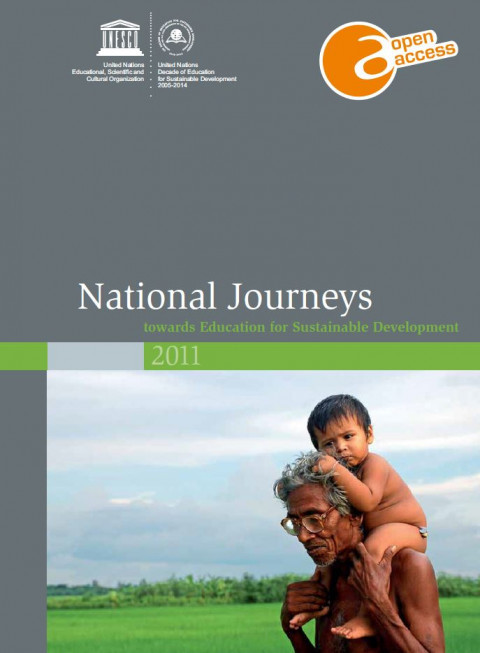 National journeys towards education for sustainable development, 2011: reviewing national experiences from Chile, Indonesia, Kenya, the Netherlands, Oman سنة النشر: 2011 المؤلف: I. Mulà | Daniella Tilbury المؤلف المؤسسي: UNESCO This publication has sourced information from a series of national reviews commissioned by UNESCO in 2010 and written by authoritative stakeholders in Chile, Indonesia, Kenya, the Netherlands and Oman. The selection of countries was based on: i) work showcased at the 2009 World Conference on Education for Sustainable Development held in Bonn, Germany; ii) submissions to the monitoring and evaluation process for the Decade of Education for Sustainable Development (DESD); as well as iii) through evaluation material submitted by UNESCO staff in regional bureaux of education.The countries showcased in this report are not necessarily the ‘best’ examples of the region, as many other countries are also progressing effectively towards implementing ESD. Rather, the countries selected illustrate the wide diversity of ESD approaches and initiatives taking place in different parts of the learnt world. The national studies were then edited and harmonized before common themes and lessons learned were identified to support other national efforts in moving towards the second half of the UN Decade of Education for Sustainable Development. Recorridos nacionales rumbo a la educación para el desarrollo sostenible, 2011: análisis de las experiencias de los países Chile, Indonesia, Kenya, Omán, Países Bajos سنة النشر: 2011 المؤلف: I. Mulà | Daniella Tilbury المؤلف المؤسسي: UNESCO This publication has sourced information from a series of national reviews commissioned by UNESCO in 2010 and written by authoritative stakeholders in Chile, Indonesia, Kenya, the Netherlands and Oman. The selection of countries was based on: i) work showcased at the 2009 World Conference on Education for Sustainable Development held in Bonn, Germany; ii) submissions to the monitoring and evaluation process for the Decade of Education for Sustainable Development (DESD); as well as iii) through evaluation material submitted by UNESCO staff in regional bureaux of education. The countries showcased in this report are not necessarily the ‘best’ examples of the region, as many other countries are also progressing effectively towards implementing ESD. Rather, the countries selected illustrate the wide diversity of ESD approaches and initiatives taking place in different parts of the learnt world. The national studies were then edited and harmonized before common themes and lessons learned were identified to support other national efforts in moving towards the second half of the UN Decade of Education for Sustainable Development. Des pays en marche vers l'éducation pour le développement durable, 2011: examen des expériences nationales; Chili, Indonésie, Kenya, Oman, Pays-Bas سنة النشر: 2011 المؤلف: I. Mulà | Daniella Tilbury المؤلف المؤسسي: UNESCO This publication has sourced information from a series of national reviews commissioned by UNESCO in 2010 and written by authoritative stakeholders in Chile, Indonesia, Kenya, the Netherlands and Oman. The selection of countries was based on: i) work showcased at the 2009 World Conference on Education for Sustainable Development held in Bonn, Germany; ii) submissions to the monitoring and evaluation process for the Decade of Education for Sustainable Development (DESD); as well as iii) through evaluation material submitted by UNESCO staff in regional bureaux of education. The countries showcased in this report are not necessarily the ‘best’ examples of the region, as many other countries are also progressing effectively towards implementing ESD. Rather, the countries selected illustrate the wide diversity of ESD approaches and initiatives taking place in different parts of the learnt world. The national studies were then edited and harmonized before common themes and lessons learned were identified to support other national efforts in moving towards the second half of the UN Decade of Education for Sustainable Development.