
الموارد
استكشف مجموعة واسعة من الموارد القيمة حول تعليم المواطنة العالمية لتعميق فهمك وتعزيز البحث والمناصرة والتعليم والتعلم.
تم العثور على 1,329 نتيجة
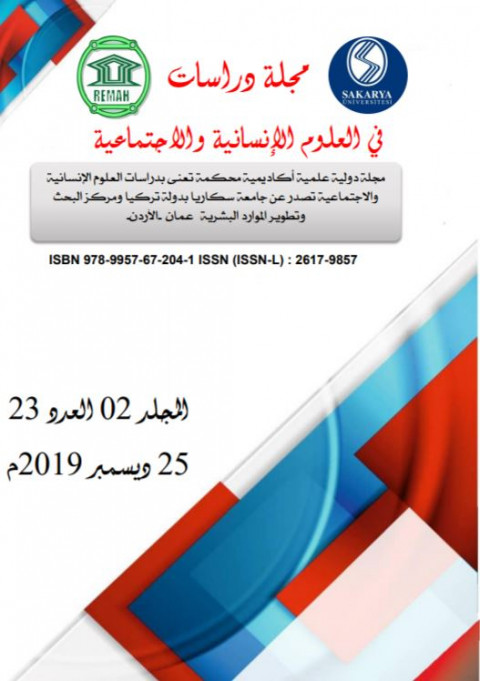 The Role of Education Towards Enhancing the Peaceful Coexistence Culture and Devoting the Citizenship Values of Postmodern Society سنة النشر: 2019 المؤلف: Lilia Bensouilah المؤلف المؤسسي: Research & Development of Human Resources Center REMAH This study aims to examine the role of education in creation the peaceful coexistence culture, promote opportunities for cosmopolitan openness to the other, preserve mutual respect and legitimize culture of difference, tolerance and pluralism of religions, beliefs and ideologies away from all manifestations of intolerance, hatred and destructive conflicts that violate human rights. دور التعليم في تعزيز ثقافة التعايش السلمي وتكريس قيم المواطنة في سياق مجتمع ما بعد الحداثة سنة النشر: 2019 المؤلف: Lilia Bensouilah المؤلف المؤسسي: Research & Development of Human Resources Center REMAH تركز الورقة على تحليل دور التعليم وبحث المجهودات العالمية والمساعي الدولية في سياق مجتمعي لما بعد الحداثة نحو تعزيز ثقافة التعايش السلمي وتكريس قيم المواطنة بما يتوافق مع المنظور الحقوقي الإنساني، وما ينبثق عنه من احترام وتقبل لتعددية واختلاف المذاهب والأديان والأيديول وجيات والثقافات بعيدا عن كل مظاهر التعصب الفكري المذهبي والعرقي والذي يمكن أن يهيأ بيئة محفزة لنشوب النزاعات المسلحة والصراعات المدمرة المنتهكة الكيان الحقوقي للبشرية قاطبة.
 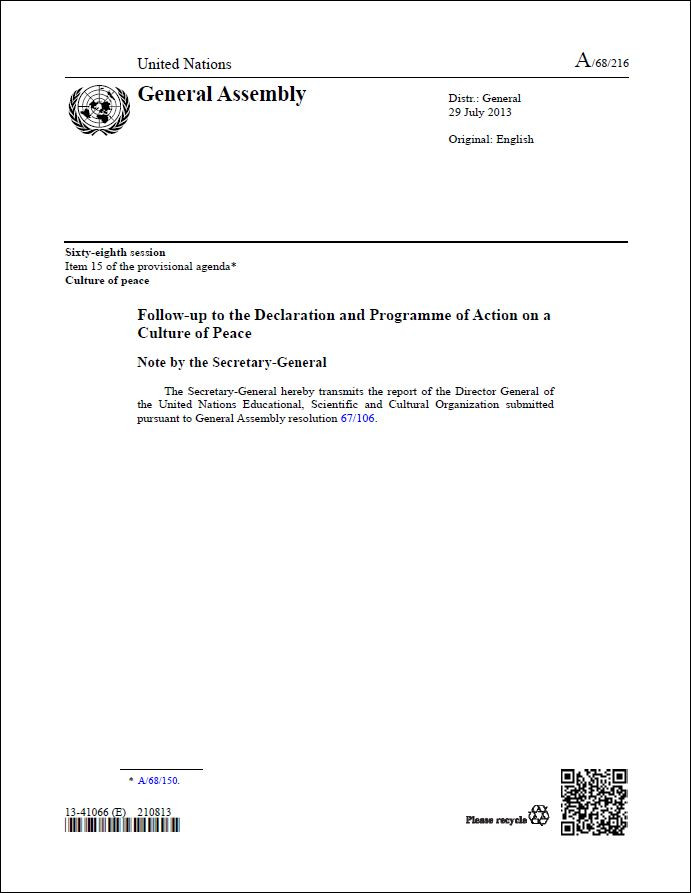 Report of the Director-General of the United Nations Educational, Scientific and Cultural Organization on the follow-up to the implementation of the Declaration and Program of Action on a Culture of Peace سنة النشر: 2013 المؤلف المؤسسي: United Nations. Secretary-General, 2007-2016 (Ban, Ki-moon) | UNESCO. Director-General, 2009-2017 (Bokova, I.G.) This is a report submitted by the Director-General of the United Nations Educational, Scientific and Cultural Organization, pursuant to General Assembly resolution 67/1, to follow up on the implementation of the Declaration and Program of Action on a Culture of Peace. The Director-General has reviewed an overview of the activities carried out to promote a culture of peace and non-violence, jointly with the United Nations Educational, Scientific and Cultural Organization (UNESCO) as the lead agency in the United Nations system on this subject. تقرير المديرة العامة لمنظمة الأمم المتحدة للتربية والعلم والثقافة عن متابعة تنفيذ الإعلان وبرنامج العمل المتعلقين بثقافة السلام سنة النشر: 2013 المؤلف المؤسسي: United Nations. Secretary-General, 2007-2016 (Ban, Ki-moon) | UNESCO. Director-General, 2009-2017 (Bokova, I.G.) هذا هو تقريـر مقـدم مـن المـديرة العامـة لمنظمـة الأمـم المتحـدة للتربيـة والعلم والثقافة عملاً بقرار الجمعية العامة ٦٧/١، لمتابعة تنفيذ الإعلان وبرنامج العمل المتعلقين بثقافة السلام. وقد استعرضت المديرة العامة لمحة عامة عن الأنشطة المنفذة لترويج ثقافة السلام واللاعنف، بالاشتراك مع منظمة الأمم المتحدة للتربية والعلم والثقافة (اليونيسكو) باعتبارها الوكالة الرائدة في منظومة الأمم المتحدة المعنية بهذا الموضوع.
 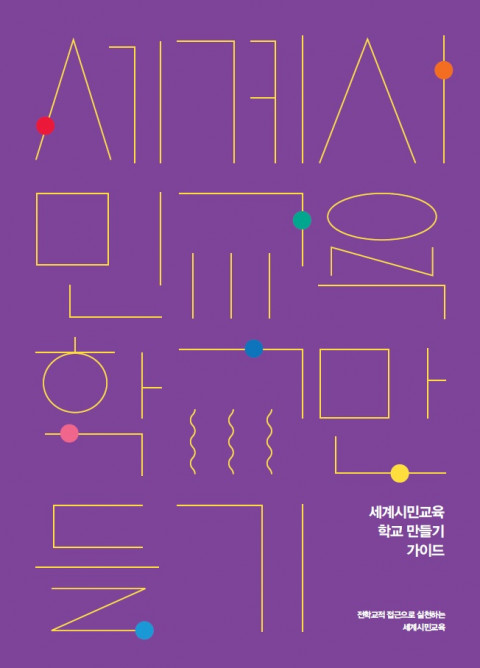 세계시민교육 학교 만들기 가이드 -전학교적 접근으로 실천하는 세계시민교육 سنة النشر: 2018 المؤلف المؤسسي: 유네스코 아시아태평양 국제이해교육원 '전학교적 접근으로 실천하는 세계시민교육'이라는 부제를 갖고 있는 본 도서는 학교 차원에서 세계시민교육을 실천할 때 참고할 수 있는 유용한 가이드를 제공한다. 세계시민교육은 지식뿐 아니라 가치관, 태도, 행동의 변화까지 아우르기 때문에 교실을 넘어 학교, 가정, 지역사회까지 그 실천 범위가 확장되었을 때 더욱 효과적이다. 본 도서는 세계시민교육의 범위를 확장시켜 전학교적으로 실천하기 위한 전략과 활동 계획 구축에 대한 가이드를 구체적으로 제공하고 있다. 또한, 현장의 목소리를 담아 세계시민교육을 실천하며 겪었던 어려움, 고민, 극복 방안, 참고 사례 등을 나누고자 하였다. 여는 글PART I. 함께 그려보는 세계시민교육 학교의 비전Step 1_세계시민교육 학교, 왜 필요한가요?Step 2_세계시민교육 학교, 누가 만들 수 있나요?Step 3_세계시민교육 학교, 어떻게 만들 수 있나요?Step 4_세계시민교육 학교, 무엇을 하면 되나요? PART II. 학교에 부는 변화의 바람Story 1_아이들을 위한 변화를 만드는 교사 Story 2_학교 변화의 디자이너, 교장Story 3_다시 생각하는 학교의 역할
 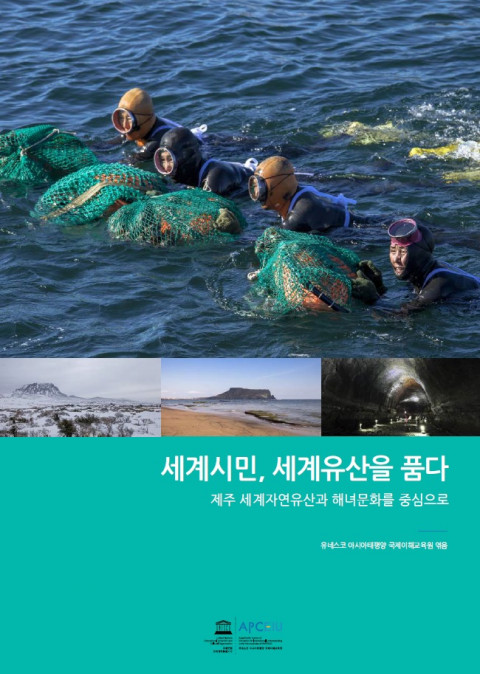 세계시민, 세계유산을 품다 - 제주 세계자연유산과 해녀문화를 중심으로 سنة النشر: 2018 المؤلف المؤسسي: 유네스코 아시아태평양 국제이해교육원 유네스코 아시아태평양 국제이해교육원은 세계유산을 활용한 세계시민교육 교재개발 사업으로 “세계시민, 세계유산을 품다”를 출간하였다. 이 책은 세계유산을 단순한 관광의 대상으로 소개하는 것이 아니라, 현장체험, 토론, 조사 등의 다양한 활동을 통해 세계유산이 가진 가치와 의미를 깨달아 세계시민으로 성장하도록 하는 내용으로 구성했다. 세계유산을 통해 국제이해, 평화, 인권, 문화다양성, 지속가능한 발전 등의 보편적 가치를 배우고 내재화하도록 돕는 교재이다.한국의 세계유산을 활용한 이번 세계시민교육 자료는 제주를 중심으로 구성하였다. 제주도는 현재 유네스코 세계자연유산과 인류무형문화유산을 가지고 있다. 이 책은 세계자연유산 ‘제주 화산섬과 용암동굴’과 인류무형문화유산 ‘제주 해녀문화’의 가치를 세계시민교육으로 연계하여 교육함으로써 세계시민의식 함양의 길잡이가 되고자 한다. 특히 유형유산과 무형유산을 통합적으로 연계하여 소개하는 시도를 하였다.이 책의 세계시민교육은 제주세계자연유산과 더불어 제주 해녀문화의 공동체 의식에 주목하고 이를 소개했다. 또한 이 책은 학교 현장의 교사가 세계유산 교육과 세계시민교육을 동시에 하고자 할 때 학습자료로서 도움이 될 것이다. 또한 학생이 세계유산을 통하여 지속가능성을 이해하고, 이를 통하여 세계시민으로 성장하는데 기여할 것이다.
 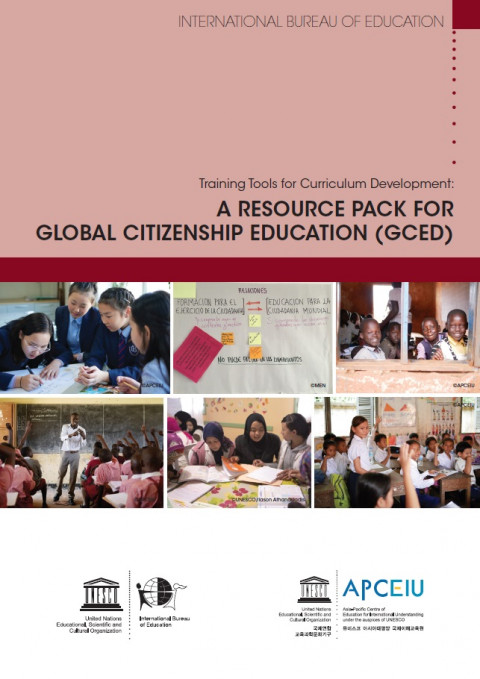 Training Tools for Curriculum Development: A Resource Pack for Global Citizenship Education (GCED) سنة النشر: 2018 المؤلف المؤسسي: UNESCO International Bureau of Education (IBE) | APCEIU The overarching objective of ‘A Resource Pack for Global Citizenship Education (GCED)’ is to share a broader understanding of GCED theory and practice, in order to support its effective development and implementation at the policy, school and classroom levels. The Resource Pack provides comprehensive guidance for national policymakers, curriculum specialists and developers, teacher educators, teachers, school leaders and district level administrators.The key topics covered are:Module 1: IntroductionModule 2: National PoliciesModule 3: CurriculumModule 4: Teaching, Learning and AssessmentModule 5: Teaching and Learning ResourcesModule 6: Whole School ApproachModule 7: Teacher Education and Professional Development
 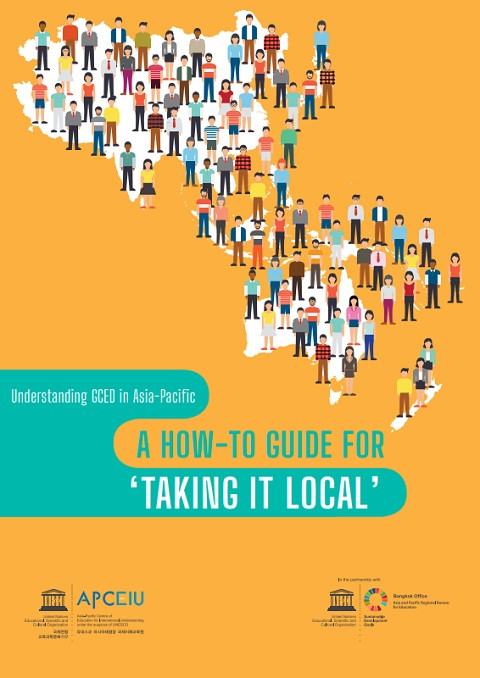 Understanding GCED in Asia-Pacific: A How-to Guide for ‘Taking It Local’ سنة النشر: 2020 المؤلف المؤسسي: APCEIU | UNESCO Bangkok The Asia-Pacific Centre of Education for International Understanding (APCEIU), in partnership with UNESCO Bangkok, has published “Understanding GCED in Asia-Pacific: A How-To Guide for ‘Taking It Local’”, a guidebook for GCED-themed workshop organizations in the region. The publication is developed by UNESCO Asia-Pacific Regional Bureau for Education under the framework of the Asia-Pacific Regional GCED Network that is coordinated by UNESCO Bangkok and APCEIU. Taking stock of the key data from the 2019 publication titled “GCED: Taking it Local in Asia-Pacific”, the guidebook presents full-detailed guidelines on preparing and conducting a ‘Taking it Local’ workshop on GCED with particular focuses on the three core notions of GCED – respect for diversity, solidarity and a shared sense of humanity. The purpose of the publication is to promote GCED in local contexts and support active GCED practitioners on the ground to design and carry out GCED workshops that are translated and designed fully within the local context of the Asia-Pacific region. <Contents>Chapter 1: Introduction1.1 What is GCED?1.2 Purpose of the Guidebook1.3 Pedagogical ApproachChapter 2: Preparing a ‘Taking it Local’ Workshop on GCED2.1 Workshop Objectives2.2 Target Audiences2.3 Workshop Preparation2.4 Tips for a Successful Workshop2.5 Sample Agenda for the WorkshopChapter 3: Conducting a ‘Taking it Local’ Workshop on GCED3.1 Welcome, Overview, and Agreements3.2 Introduction Exercise: Story Circles3.3 GCED in AsiaPacific Exercise3.4 Optional Activities for the Workshop 3.5 Application Exercise 3.6 Closing 3.7 Final Reflection and Workshop Evaluation 3.8 Sharing Reflections 3.9 FollowUp of the WorkshopReferences
 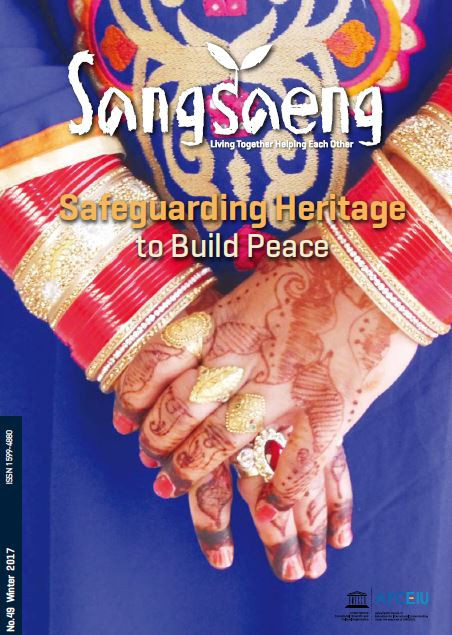 Safeguarding Heritage to Build Peace (SangSaeng no. 49 Winter 2017) سنة النشر: 2017 المؤلف المؤسسي: APCEIU The 49h issue of SangSaeng, “Safeguarding Heritage to Build Peace,” has been published. All ancient civilizations have contributed in some way to the development of modern society. Therefore, all are equally deserving of study. This edition of SangSaeng aims to examine heritage in its different contexts and to help identify our responsibilities as a global community to understand and tolerate other people’s heritages. 3 Director’s Message4 Special Column4 Taking Stewardship of Our Planet8 Focus: Heritage8 Heritage for Peace and Prosperity12 Heritage Education: Opportunity to Enhance Cultural Literacy17 Photo Essay: World Heritage Sites of 2017 21 Special ReportUNAI Impacts Scholarship, Research for Greater Good24 Best Practices24 Frontier Education on the Frontier for Life29 Encouraging the Heart of the Matter33 InterviewGCED Challenge Issued36 Youth NetworkYouth Building Peace 40 LetterJourney to the Heart of Peace42 Peace in My MemoryPeace in a World of Violence46 Understanding the Asia-Pacific RegionEgg, Tambourine and Commemoration49 APCEIU in Action Sauvegarder le patrimoine pour consolider la paix (SangSaeng no. 49 Hiver 2017) سنة النشر: 2017 المؤلف المؤسسي: Centre Asie-Pacifique d'éducation pour la compréhension internationale (APCEIU) 03 MESSAGE DU DIRECTEUR04 RUBRIQUE SPECIALEPrendresoin de notreplanète08 LE PATRIMOINE POUR LA PAIX ET LA PROSPÉRITÉApporter de la valeurajoutée avec uneéducationappropriéeet des services d’interprétation sur les sites de tourisme patrimonial12 EDUCATION AU PATRIMOINE: UNE OPPORTUNITÉ POUR ACCROITRE L'ALPHABÉTISATION CULTURELLEReconnaître la valeur de la communautécommeespaced’apprentissage17 REPORTAGE PHOTOSites du patrimoinemondial 2017 21 REPORTAGE SPÉCIALL’UNAI influence l’enseignementet la recherche pour le biencommun24 BONNES PRATIQUES24 Éducationen zone frontalière: à la frontière de la vie29 Encourager le coeur du sujet33 ENTRETIENLe défi de l’ECMestlancé !36 RÉSEAU DE JEUNESLes jeunes édifient la paix 40 LETTRE42 LA PAIX DANS MA MÉMOIRELa paixdansun monde de violence46 COMPRENDRE LA REGION ASIE-PACIFIQUEOEuf, tambourinetcélébration49 APCEIU EN ACTION