
الموارد
استكشف مجموعة واسعة من الموارد القيمة حول تعليم المواطنة العالمية لتعميق فهمك وتعزيز البحث والمناصرة والتعليم والتعلم.
تم العثور على 1,329 نتيجة
 Localización de la agenda 2030 y la educación para la ciudadanía global: Un diálogo imprescindible سنة النشر: 2020 المؤلف المؤسسي: Diputació de Barcelona Este documento pretende contribuir al diálogo entre los procesos de localización de la Agenda 2030 y la ECG, así como ofrecer orientaciones concretas para la acción local.
 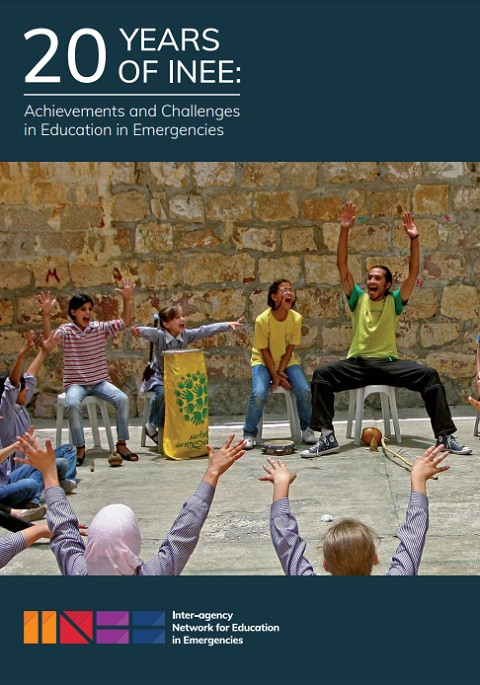 20 Years of INEE: Achievements and Challenges in Education in Emergencies سنة النشر: 2020 المؤلف المؤسسي: Inter-agency Network for Education in Emergencies (INEE) This report highlights the continued relevance of INEE 20 years on. It presents new data that shows 127 million primary and secondary school-age children and young people living in crisis-affected countries were out of school in 2019. This is equivalent to almost half of the global out-of-school population, even though only around 29% of children and young people in this age group globally live in crisis-affected countries. These figures are based on new data provided by the UNESCO Institute for Statistics (UIS). The report also demonstrates the still urgent need to prioritize education and financing of education in emergencies, particularly in ‘forgotten’ crises. 20 ans de l’INEE : Réalisations et Défis dans l’Éducation en Situations d’Urgence سنة النشر: 2020 المؤلف المؤسسي: Inter-agency Network for Education in Emergencies (INEE) Ce rapport, qui marque le 20e anniversaire de l’INEE, souligne les réalisations dans le domaine de l’ESU au cours des deux dernières décennies et identifie les défis permanents. Il retrace les changements qui ont amené l’ESU dans les programmes mondiaux de planification et d’action et note les étapes clés du développement de l’ESU en tant que domaine reconnu. Reconnaissant également les engagements énoncés dans l’Agenda 2030 pour le développement durable, notamment la promesse de veiller à ce que « personne ne soit laissé de côté » (ONU, 2015), ce rapport se tourne vers l’avenir en recommandant des actions immédiates et durables pour atteindre l’Objectif de Développement Durable 4 (ODD 4), une éducation de qualité et des possibilités de formations permanente inclusives et équitables pour tous - incluant les enfants et les jeunes dans les contextes de crise (ONU, 2015). 20º aniversario de la INEE: Logros y desafíos en la educación en situaciones de emergencia سنة النشر: 2020 المؤلف المؤسسي: Inter-agency Network for Education in Emergencies (INEE) Este informe, con motivo del 20.º aniversario de la INEE, enfatiza los logros alcanzados en el ámbito de la EeE en las últimas dos décadas y señala los desafíos que siguen existiendo. Explora los cambios que facilitaron la inclusión de la EeE en los programas globales de planificación y acción, y señala los hitos principales en el desarrollo de la EeE como un campo reconocido. Asimismo, este informe reconoce los compromisos establecidos en la Agenda de Desarrollo Sostenible de 2030, incluido el compromiso de «no dejar a nadie atrás» (ONU, 2015), y enfrenta el futuro con la recomendación de acciones inmediatas y sostenidas para alcanzar el Objetivo de Desarrollo Sostenible 4 (ODS 4),una educación de calidad inclusiva y equitativa, y oportunidades de aprendizaje durante toda la vida para todos; incluidos los niños, niñas y jóvenes en contextos de crisis (UN, 2015).
  Building Healthy Relationships With Media: A Parent’s Guide to Media Literacy سنة النشر: 2020 المؤلف المؤسسي: National Association for Media Literacy Education (NAMLE) | Trend Micro This guide gives a few examples of how to incorporate questions into the conversation when discussing media and related topics with your children. It is vital for parents to model curiosity and skepticism in their discussions with their children. Teaching the next generation to be critical thinkers allows them to hone this important skill for navigating life in a digital world. Construyendo relaciones saludables con los medios de comunicación: Guía para los padres sobre la alfabetización mediática سنة النشر: 2020 المؤلف المؤسسي: National Association for Media Literacy Education (NAMLE) | Trend Micro Esta guía ofrece ejemplos de cómo incorporar en una conversación con sus hijos preguntas sobre los medios de comunicación y otros temas relacionados. Es vital que en conversaciones con sus hijos los padres sean modelos de curiosidad y precaución. Enseñar a la próxima generación de jóvenes a hacer preguntas y ser pensadores críticos les permite desarrollar esta importante habilidad para navegar la vida en un mundo digital.
  Media and Information Literacy: A Practical Guidebook for Trainers سنة النشر: 2021 المؤلف: Sylvia Braesel | Thorsten Karg المؤلف المؤسسي: DW Akademie Literacy is the ability to read and write. Media and information literacy (MIL) is the ability to understand how the media work and can be used to participate in public debate. MIL includes social media like Facebook, as well as traditional media like books, newspapers, radio and television.Media and information literacy - A practical guidebook for trainers provides MIL trainers with background information, training ideas, methods and worksheets. The book also provides sample training schedules to help you determine the length of time needed to teach individual aspects of media and information literacy.Download the Media and information literacy guidebook for trainers as well as the worksheets and guidelines.DW Akademie defines MIL as a composite of five core competencies:Access: The ability to find and access relevant media and information sources.Analyze: The ability to evaluate the credibility, accuracy and objectivity of media content, for example a news story.Create: The ability to create and produce media and information content, such as photos, texts, or videos.Reflect: The ability to think critically about media habits, experiences, trends, and technologies, and how they impact individuals and society.Act: The ability to use media to achieve specific goals, for example launching a social media campaign about health.Read more about DW Akademie's approach to Media and Information Literacy here.
  Envision 4.7 Event and Roadmap سنة النشر: 2021 المؤلف المؤسسي: Bridge 47 Envision 4.7 took place in Helsinki in 2019, bringing together 200 education practitioners, civil society representatives and decision makes to create the Envision 4.7 Roadmap, a policy guideline to the future implementation of SDG Target 4.7 in Europe.
  Global Media and Information Literacy Assessment Framework: Country Readiness and Competencies سنة النشر: 2013 المؤلف المؤسسي: UNESCO The MIL Assessment Framework can foster lifelong learning initiatives by building on the relationship between information, media, digital, and ICT literacies, along with societal transformations, education, workforce, policy and decision making processes, economic growth and democracy. The overall goal of the publication is to guide UNESCO’s Member States throughout the assessment of country readiness and competencies regarding the media and information literacy of citizens, in particular teachers in service and in training. The document is particularly aimed at the following stakeholders: policy makers and decision makers; national officers responsible for statistical data collection and analysis; educational policy makers and planners working in formal and informal education settings; teacher training institutions and teachers. It is also of relevance to the professional information and communication community, and has wide applicability for civil society at large.
  Leveraging Artificial Intelligence to Enhance Early Action towards the Kunming-Montreal Global Biodiversity Framework سنة النشر: 2024 المؤلف: Nicole DeSantis | Lea Phillips | Christina Supples | Julien Pigot | Jamison Ervin | Doley Tshering | Juan Calles Lopez | Dharshani Seneviratne | Enrique Paniagua | Monica Mora المؤلف المؤسسي: United Nations Development Programme (UNDP) This publication releases the methodology behind the National Biodiversity Strategies and Action Plans (NBSAP) Target Similarity Assessments and identifies key lessons learned and opportunities for future applications.