
الموارد
استكشف مجموعة واسعة من الموارد القيمة حول تعليم المواطنة العالمية لتعميق فهمك وتعزيز البحث والمناصرة والتعليم والتعلم.
تم العثور على 1,329 نتيجة
 The Role of Education on Moral Values in Advancing Society (Al-Ihda Journal; Vol. 9, No. 2) سنة النشر: 2021 المؤلف: Abdel-Rahman Sayed Abdel-Ghaffar The research deals with Islamic values and morals, explains their concept, identifies the most important components, sources, and characteristics of valuable Islam. It also examines the importance of the Islamic education curriculum and the importance of Islamic human values and morals in society, and explains the Islamic education approach in building and forming a Muslim on the basis of comprehensiveness, perfection, and achieving all that is unthinkable, which is not limited to a specific period or gender, but rather extends over time and generations.
  دور رياض الأطفال في تعزيز ثقافة التعايش السلمي لدى طفل الروضة من وجهة نظر المعلمات (مجلة العميد; Vol. 12, No. 47) سنة النشر: 2023 المؤلف: Insaf Kamal Mansour المؤلف المؤسسي: Department of Cultural and Intellectual Affairs in the Holy Al-Abbas Shrine يهدف البحث الحالي إلى تعرف دور رياض الأطفال في تعزيز ثقافة التعايش السلمي لدى طفل الروضة من وجهة نظر معلمات رياض الأطفال، وقد اعتمد البحث المنهج الوصفي، وتكون مجتمع البحث من (273) معلمة في رياض الأطفال الحكومية في المديرية العامة لتربية بغداد الكرخ الثانية للعام الدراسي(2019-2020) اما عينة البحث فتكونت من (160) معلمة، ولتحقيق هدف البحث قامت الباحثة ببناء استبانة تضم (47) فقرة موزعة على ثلاثة مجالات (منهج وحدة الخبرة التفاعلي، الأنشطة التربوية، والمعلمة) وبخمسة بدائل إجابة هي (كبير جدا وكبير ومتوسط ومنخفض ومنخفض جدا) وبأوزان (5،4،3،2،1) على التوالي، وقد توصل البحث الى أن لرياض الأطفال دوراً كبيراً في تعزيز ثقافة التعايش السلمي لدى طفل الروضة من وجهة نظر معلمات رياض الأطفال، تتصل بمجالات دور المعلمة ودور الأنشطة التربوية ودور منهج وحدة الخبرة التفاعلي، إذ حصل كل من مجالات (دور المعلمة والأنشطة التربوية) على درجة تقدير كبير مع وجود ضعف في مفردات منهج وحدة الخبرة التفاعلي جعل من دوره (متوسطا). Role of Kindergarten in Solidifying Peaceful Coexistence for Children from the Perspectives of Teachers (Al-Ameed Journal; Vol.12, No.47) سنة النشر: 2023 المؤلف: Insaf Kamal Mansour المؤلف المؤسسي: Department of Cultural and Intellectual Affairs in the Holy Al-Abbas Shrine The current research aims to identify the role of kindergartens in promoting the culture of peaceful coexistence among kindergarten children from the point of view of kindergarten teachers. The research adopted the descriptive methodology, and the research community consists of (273) teachers in government kindergartens in the Directorate General of Education Baghdad Karkh II for the academic year (2019-2020), while the research was appointed by (160) teachers, To achieve the goal of the research, the researcher built a questionnaire comprising (47) paragraphs spread over three areas (interactive experience unit curriculum, educational activities, and teacher) and five alternatives to the answer are (very large, large, medium, low, very low) and weights (1, 2,3,4,5) respectively, the research found that kindergartens play a major role in promoting the culture of peaceful coexistence of kindergarten children from the point of view of kindergarten teachers, related to the areas of the role of the teacher, the role of educational activities and the role of the interactive experience unit curriculum, If each of the areas (the role of the teacher and educational activities) was highly appreciated with a weakness in the vocabulary of the interactive experience unit curriculum made its role (average)
 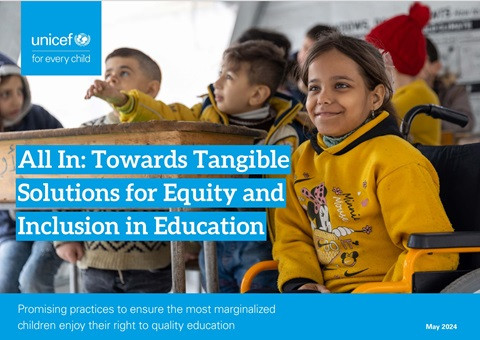 All In: Towards Tangible Solutions for Equity and Inclusion in Education سنة النشر: 2024 المؤلف المؤسسي: United Nations Children's Fund (UNICEF) All In: Towards Tangible Solutions for Equity and Inclusion in Education showcases promising practices that were successfully implemented to ensure that inclusive education really does include all children, so that the most marginalized learners – including children with disabilities, children who are out of school, children living in poverty, marginalized girls, and refugee children – have access to quality education. While many of the promising practices were initiated in response to the COVID-19 crisis, or draw upon the pandemic experience, they go beyond the immediate focus of pre- or post-COVID-19 education systems to an overall view of child well-being and the need to focus on skills for the 21st century. Many of these practices have the potential to be applied more widely within education systems and can be adapted and replicated by stakeholders in any context where innovative and inclusive approaches are needed to protect and promote children’s right to education. Ingenuity, flexibility and a commitment to true inclusion and forward-looking policies are the common thread of promising practices in this document. This publication is a complementary resource to the 2021 report: Reimagining Girls’ Education: Solutions to Keep Girls Learning in Emergencies.
  دور رياض الأطفال في تنمية المسئولية الاجتماعية لدى طفل الروضة (المجلة العلمية لكلية رياض الأطفال ببورسعيد; Vol. 2020, Issue 16) سنة النشر: 2020 المؤلف: Zainab Mousa Al Samahi | Eman Gamal Fickry | Manar Mohammed Al Zanati المؤلف المؤسسي: Port Said University. Faculty of Kindergarten هدف البحث الحالي إلى تقصي دور رياض الأطفال في تنمية المسئولية الاجتماعية لدى طفل الروضة تكونت عينة البحث من (98) معلمة رياض أطفال تم اختيارهن بطريقة عشوائية من إدارة دمياط التعليمية بمحافظة دمياط و اعتمدت الباحثة على المنهج الوصفي و لتطبيق أهداف البحث تم استخدام استبانة من إعداد الباحثة و تطبيقها على عينة البحث وقد توصلت نتائج البحث إلى مجموعة من العوامل التي تحول دون قيام رياض الأطفال بدورها في تنمية المسئولية الاجتماعية لدى طفل الروضة منها: الإثابة القليلة من المعلمة للطفل عندما يتعاون مع زملائه قلة الإمكانات المادية التي توفرها إدارة الروضة لتطوير الأنشطة التي تعزز تحمل الطفل المسئولية- قصور إدارة الروضة في توظيف إمكاناتها المادية المتاحة لخدمة المجتمع المحلي. The Role of Kindergarten in the Development of Social Responsibility of the Kindergarten Child (Scientific Journal of the Faculty of Kindergarten in Port Said; Vol. 2020, Issue.16) سنة النشر: 2020 المؤلف: Zainab Mousa Al Samahi | Eman Gamal Fickry | Manar Mohammed Al Zanati المؤلف المؤسسي: Port Said University. Faculty of Kindergarten The research aimed to investigate the role of kindergartens in developing social responsibility for the kindergarten child. The research sample consisted of (98) kindergarten teachers, chosen randomly from the Damietta Educational Administration in Damietta Governorate, and the researcher relied on the descriptive approach. To apply the research goals, a questionnaire was used from the researcher's preparation and application to the research sample, The results of the research found a set of factors that prevent kindergartens from playing their role in developing social responsibility of the kindergarten child, including: The small reward of the teacher for the child when he cooperates with his colleagues, a lack of training the teacher for the child to wear his clothes himself, the lack of material resources provided by the kindergarten to develop activities that enhance the child’s responsibility - the kindergarten’s failure to use its financial possbilities to serve the local community.
 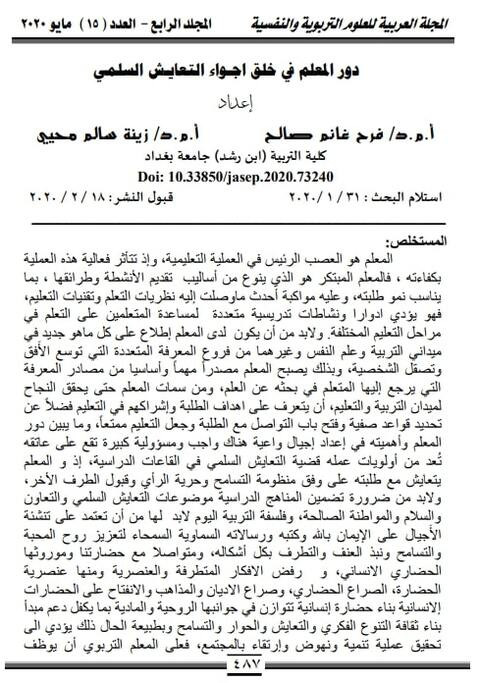 دور المعلم في خلق اجـواء التعايـش السلمي (المجلة العربية للعلوم التربوية والنفسية; Vol. 4, No. 15) سنة النشر: 2020 المؤلف: Farah Ghanem Saleh | Zeina Salem Mohy المؤلف المؤسسي: Ibn Rushd College of Education المعلم هو العصب الرئيس في العملية التعليمية، وإذ تتأثر فعالية هذه العملية بکفاءته ، فالمعلم المبتکر هو الذي ينوع من أساليب تقديم الأنشطة وطرائقها ، بما يناسب نمو طلبته، وعليه مواکبة أحدث ماوصلت إليه نظريات التعلم وتقنيات التعليم، فهو يؤدي ادوارا ونشاطات تدريسية متعددة لمساعدة المتعلمين على التعلم في مراحل التعليم المختلفة. ولابد من أن يکون لدى المعلم إطلاع على کل ماهو جديد في ميداني التربية وعلم النفس وغيرهما من فروع المعرفة المتعددة التي توسع الأَفق وتصقل الشخصية، وبذلک يصبح المعلم مصدراً مهماً وأساسيا من مصادر المعرفة التي يرجع إليها المتعلم في بحثه عن العلم، ومن سمات المعلم حتى يحقق النجاح لميدان التربية والتعليم، أن يتعرف على اهداف الطلبة وإشراکهم في التعليم فضلاً عن تحديد قواعد صفية وفتح باب التواصل مع الطلبة وجعل التعليم ممتعاً، وما يبين دور المعلم وأهميته في إعداد إجيال واعية هناک واجب ومسؤولية کبيرة تقع على عاتقه تُعد من أولويات عمله قضية التعايش السلمي في القاعات الدراسية، إذ و المعلم يتعايش مع طلبته على وفق منظومة التسامح وحرية الرأي وقبول الطرف الأخر، ولابد من ضرورة تضمين المناهج الدراسية موضوعات التعايش السلمي والتعاون والسلام والمواطنة الصالحة The Role of the Teacher in Creating an Atmosphere of Peaceful Coexistence (Arab Journal of Educational and Psychological Sciences; Vol.4, No.15) سنة النشر: 2020 المؤلف: Farah Ghanem Saleh | Zeina Salem Mohy المؤلف المؤسسي: Ibn Rushd College of Education The teacher is the main nerve in the educational process, and the effectiveness of this process is affected by his competence. The innovative teacher is the one who diversifies the approaches and methods of presenting activities to suit the growth of his students. He must keep up with the latest developments in learning theories and teaching techniques. He performs multiple teaching roles and activities to help learners achieve Learning at different stages of education. The teacher must have knowledge of everything new in the fields of education, psychology, and other multiple branches of knowledge that broaden the horizon and refine the personality. Thus, the teacher becomes an important and essential source of knowledge that the learner returns to in his search for knowledge. One of the characteristics of a teacher, in order to achieve success in the field of education, is to know the goals of students and involve them in education, in addition to setting classroom rules, opening the door to communication with students, and making education enjoyable. What shows the role of the teacher and his importance in preparing conscious generations is that there is a great duty and responsibility that falls on his shoulders, which is considered one of the priorities of his work are the issue of peaceful coexistence in the classrooms, as the teacher coexists with his students according to the system of tolerance, freedom of opinion, and acceptance of the other party, and it is necessary to include in the school curricula the topics of peaceful coexistence, cooperation, peace, and good citizenship.
  Strengthening Social and Emotional Learning in Hybrid Modes of Education: Building Support for Students, Teachers, Schools and Families; A UNESCO-IBE Discussion Paper سنة النشر: 2024 المؤلف المؤسسي: UNESCO International Bureau of Education (IBE) The COVID-19 pandemic intensified existing educational disparities globally, prompting a reevaluation of school curricula to include Social and Emotional Learning (SEL). This shift recognized the holistic needs of learners, teachers, and families, emphasizing competencies beyond traditional knowledge acquisition. Despite SEL's increasing global recognition, it is often absent from formal curricula, prompting the UNESCO-IBE to address this gap. This Discussion Paper explores the crucial role of SEL in the broader transformation of global education, particularly in the post-COVID-19 era. It highlights six key topics, presenting diverse experiences in integrating SEL into education. Experts from various fields contribute insights, focusing on socio-emotional and hybrid learning advancements worldwide. The report aims to inspire global change-makers, advocating for robust policies aligned with UNESCO's Futures of Education framework. This call to action aligns with the UNESCO-IBE's HELA initiative, promoting flexible hybrid learning models for crisis response and sustainable educational strategies in line with the UN Transforming Education Summit's vision.
  أدوات التقييم الخاصة بتطبيق أداة تعليم المهارات الحياتية والمواطنة: قياس المهارات الحياتية بناءً على إطار العمل الإقليمي لتعليم المهارات الحياتية والمواطنة في منطقة الشرق الأوسط وشمال أفريقيا; امللخص التنفيذي سنة النشر: 2021 المؤلف المؤسسي: UNICEF Middle East and North Africa "إن تعليم المهارات الحياتية مُهم للغاية لتمكين الأطفال والشباب من تحقيق النجاح في التعليم والعمل والأهداف الشخصية. ومع ذلك، قد أدرجت القليل من الأنظمة التعليمية المهارات الحياتية في نظامها التعليمي. ومن أسباب ذلك هو التحديات المتعلقة بنقص المعرفة الخاصة بكيفية قياس المهارات الحياتية وتقييمها. وبناءً على إطار العمل الإقليمي لتعليم المهارات الحياتية والمواطنة في الشرق الأوسط وشمال أفريقيا، فإن منظمة اليونيسف والبنك الدولي قد طورا أداة تعليم المهارات الحياتية والمواطنة لقياس المستوى الوطني لنتائج طلبة الصف السابع في ثماني مهارات حياتية بوصفه تقييم وطني واسع النطاق. يرجى أيضًا الاطلاع على منشور قياس المهارات الحياتية."