
الموارد
استكشف مجموعة واسعة من الموارد القيمة حول تعليم المواطنة العالمية لتعميق فهمك وتعزيز البحث والمناصرة والتعليم والتعلم.
تم العثور على 1,329 نتيجة
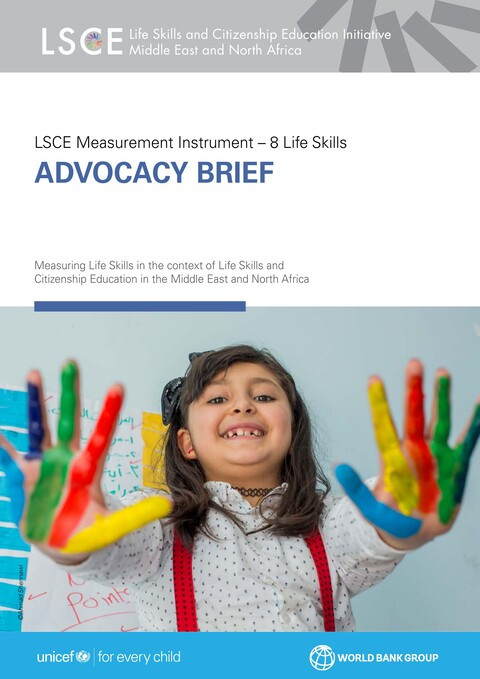 LSCE Measurement Instrument: Measuring Life Skills in the Context of Life Skills and Citizenship Education in the Middle East and North Africal; Advocacy Brief سنة النشر: 2021 المؤلف المؤسسي: UNICEF Middle East and North Africa Teaching and learning life skills is incredibly important for empowering children and young people to achieve success in education, employment, and personal goals. Nevertheless, few education systems have integrated life skills into their education systems. One of the reasons for this is challenges concerning the lack of knowledge as to how life skills can be measured, assessed, and evaluated. Building on the regional Life Skills and Citizenship Education (LSCE) framework in the Middle East and North Africa (MENA), UNICEF and The World Bank have developed this LSCE Measurement Instrument, to measure the national level of grade 7 students’ scores in eight life skills as national large-scale assessment.
 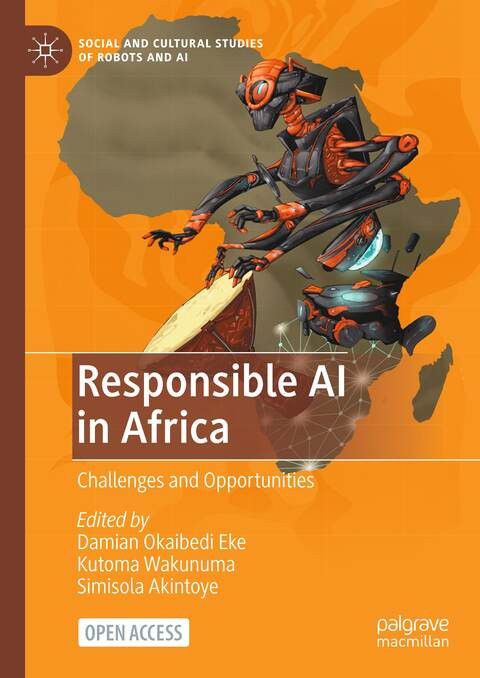 Responsible AI in Africa: Challenges and Opportunities سنة النشر: 2023 المؤلف المؤسسي: Palgrave Macmillan This open access book contributes to the discourse of Responsible Artificial Intelligence (AI) from an African perspective. It is a unique collection that brings together prominent AI scholars to discuss AI ethics from theoretical and practical African perspectives and makes a case for African values, interests, expectations and principles to underpin the design, development and deployment (DDD) of AI in Africa. The book is a first in that it pays attention to the socio-cultural contexts of Responsible AI that is sensitive to African cultures and societies. It makes an important contribution to the global AI ethics discourse that often neglects AI narratives from Africa despite growing evidence of DDD in many domains. Nine original contributions provide useful insights to advance the understanding and implementation of Responsible AI in Africa, including discussions on epistemic injustice of global AI ethics, opportunities and challenges, an examination of AI co-bots and chatbots in anAfrican work space, gender and AI, a consideration of African philosophies such as Ubuntu in the application of AI, African AI policy, and a look towards a future of Responsible AI in Africa.
  The UNESCO Recommendation on the Ethics of AI: Shaping the Future of Our Societies سنة النشر: 2023 المؤلف المؤسسي: German Commission for UNESCO | Netherlands National Commission for UNESCO | Slovenian National Commission for UNESCO The UNESCO commissions of Germany, the Netherlands and Slovenia with the support of IRCAI have jointly published a brochure on the UNESCO recommendation on the ethics of artificial intelligence. It summarizes the most important content in a compact manner and presents the central demands from the areas of health, culture, the environment, gender equality as well as education and research. The recommendation with its diverse topics is not only relevant for political experts, but it offers one for various areas of application of the ethical framework and thus serves as an orientation for dealing with AI in general. The brochure is available for the wider public in a number of formats including the original Adobe InDesign file that allows translations to be inserted and format pages, resulting in new versions of the brochure. Therefore, we strongly encourage all UNESCO Commissions from across all UNESCO regions Africa, Arab States, Asia and the Pacific, Europe and North America, Latin America and the Caribbean to use the text in the basic files and translate the content into their own languages, including using the graphic file to setup their own designs of the brochure.
  [Summary] Education Under Attack 2024 سنة النشر: 2024 المؤلف: Jerome Marston | Felicity Pearce المؤلف المؤسسي: Global Coalition to Protect Education from Attack (GCPEA) This study is published by the Global Coalition to Protect Education from Attack (GCPEA), formed in 2010 by organizations working in the areas of education in emergencies and conflict, higher education, protection, international human rights law and international humanitarian law, in response to the persistence of attacks on educational institutions, their students and staff in countries affected by conflict and insecurity. Attacks on Education 2024 was developed based on independent research conducted by GCPEA. The report was carried out separately from and does not necessarily reflect the views of the various member organizations that make up the GCPEA Steering Committee. [Resumen] Ataques a la educación 2024 سنة النشر: 2024 المؤلف: Jerome Marston | Felicity Pearce المؤلف المؤسسي: Global Coalition to Protect Education from Attack (GCPEA) Este estudio es publicado por la Coalición Global para Proteger la Educación de Ataques (Global Coalición to Protect Education from Attack, GCPEA), formada en 2010 por organizaciones dedicadas a las áreas de educación en emergencias y en contextos de conflicto, educación superior, protección, derecho internacional de los derechos humanos y derecho internacional humanitario, en respuesta ante la persistencia de los ataques contra instituciones educativas, sus estudiantes y su personal en países afectados por conflictos e inseguridad. Ataques a la educación 2024 se elaboró a partir de investigaciones independientes realizadas por GCPEA. El informe se llevó a cabo separadamente de las distintas organizaciones miembros que integran el Comité Directivo de GCPEA y no refleja necesariamente la opinión de estas.
  The “Hate Speech” Policies of Major Platforms during the COVID-19 Pandemic سنة النشر: 2021 المؤلف المؤسسي: UNESCO Montevideo This document reports an increase in so-called “hate speech” posts on Facebook, Twitter, and YouTube after the onset of the COVID-19 pandemic. Although dissimilar, such an increase can be observed in the transparency reports of the different platforms and the surge in content moderation since March 2020.During the same period—as a result of the lockdown measures adopted in most countries around the world—platforms increased the use of AI tools for content moderation. Therefore, we can’t fully say whether the interannual growth is linked to increased posts or changes in monitoring systems. Las políticas de las grandes plataformas sobre discurso de odio durante el Covid-19 سنة النشر: 2021 المؤلف المؤسسي: UNESCO Montevideo Este documento da cuenta de un aumento de posteos considerados discurso de odio a partir de la llegada de la pandemia COVID-19 en Facebook, Twitter y YouTube. Aunque dispar, ese aumento puede establecerse a partir de los informes de transparencia de las distintas plataformas y los crecimientos registrados en la moderación de esos contenidos a partir de marzo de 2020.Dado que en ese mismo período, y como consecuencia de las medidas de aislamiento tomadas ven la mayoría de los países del mundo, las plataformas tomaron la decisión de aumentar el uso de herramientas de inteligencia artificial en sus procesos de moderación no es posible asegurar a ciencia cierta que ese crecimiento se haya registrado por un aumento en la creación y publicación de mensajes o a partir de un cambio en los sistemas de detección que afectó los resultados entre un año y otro.
 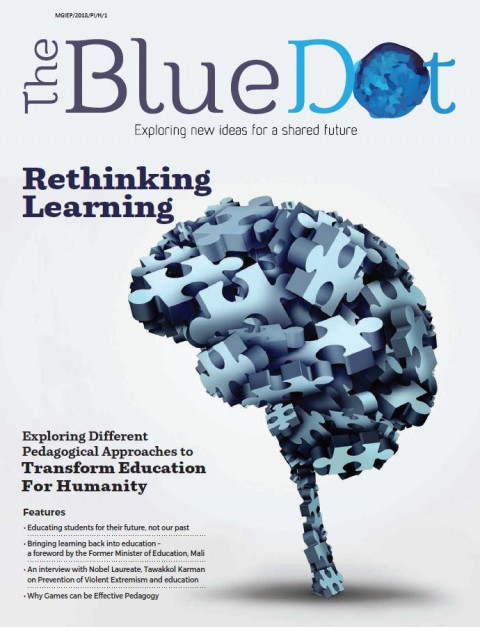 Rethinking Learning: Exploring Different Pedagogical Approaches to Transform Education for Humanity (The Blue Dot Issue 7, 2018) سنة النشر: 2018 المؤلف المؤسسي: Mahatma Gandhi Institute of Education for Peace and Sustainable Development (MGIEP) In the seventh issue of the Blue Dot, we focus on Rethinking Learning. The Issue includes a foreword by the Former Minister of Education of Mali, H.E. Adama Samassékou on how education systems need to be re-looked at to incorporate personalised learning and technology as an enabler and our Cover Story, which focuses on the importance of socio-emotional learning.Additionally, we feature opinions by specialists from academia, research, policymaking and the industry on the need to relook at education systems for the future. Amongst various experts, we hear from Andreas Schleicher, Director of Education and Skills and Special Advisor on Education Policy to the Secretary-General at the Organisation for Economic Co-operation and Development (OECD); Anneli Rautiainen from the Finnish National Agency for Education as well as Pratik Mehta, Head of Education & Skills, Microsoft India.Further, we present short blogs from the youth about what future education systems mean to them and we hear from Nobel Laureate, Ms Tawakkol Karman on the importance of education for peace.
  دراسة تحليلية لمكونات ثقافة السلام في قصص الاطفال التي تصدرها الهيئة العامة للاستعلامات والمقدمة للطفل المصري سنة النشر: 2010 المؤلف: السعيد، نفيسة صلاح الدين محمود المؤلف المؤسسي: Ain Shams University نحن نعيش في عصر يتسم بعولمة المشكلات الإنسانية بمعنى أن أية مشكلة تحدث داخل قطر أو إقليم معين هي مشكلة عالمية في الوقت نفسه. ومن المشكلات التي تهدد العالم مشكلة الصراع والعنف بأشكاله المختلفة. ولذلك كان من الطبيعي أن يهتم العالم بنشر ثقافة السلام في العالم ومن الجهود التي قامت بها الأمم المتحدة في اطلاق العقد الدولي لثقافة السلام ونبذ العنف. وقد استجابت مصر للعقد وشاركت بالعديد من الأنشطة... ومنها: إصدار سلسلة "الثقافة لغة السلام" وهي سلسلة من 41 قصة في 11 كتيب أصدرتها الهيئة العامة للاستعلامات عام 2006، وأرادت الباحثة في هذه الدراسة تحليل مضمونها ...والتعرف على مفاهيم ثقافة السلام فيها... وعلى نسبة تلك المفاهيم وأكثرها حضورا في القصص.. وطريقة عرضها... وتحديد اللغة التي استخدمت...والتعرف على الشخصيات المحورية التي قدمت لتلك المفاهيم. تنتمي هذه الدراسة إلى الدراسات الوصفية وتعتمد على منهج المسح الإعلامي. تعتمد هذه الدراسة على أسلوب تحليل المضمون وقد تم تصميم استمارة تحليل لمضمون وتطبيقها على جميع القصص. الدراسة توصلت إلى أن القصص احتوت على تسعة مفاهيم تشكل في مجملها مفهوم ثقافة السلام. Analytic Study of Culture of Peace in Children's Stories Issued by State Information Service (SIS) in Egypt سنة النشر: 2010 المؤلف: السعيد، نفيسة صلاح الدين محمود المؤلف المؤسسي: Ain Shams University The study investigates the contents of a series of 41 stories in 11 booklets that were published in Cairo by a governmental publishing house as a contribution to the UN's Decade of Culture of Peace and Non-Violence. The study concludes that the stories include the nine concepts (and subconcepts) which together constitute the concept of culture of peace. The nine concepts are: Dialogue, tolerance, coexistence, peace glorification and renouncing of violence, preservation of the environment, peace-building, solidarity, democracy and human rights. Method of the study: descriptive and media survey.