
الموارد
استكشف مجموعة واسعة من الموارد القيمة حول تعليم المواطنة العالمية لتعميق فهمك وتعزيز البحث والمناصرة والتعليم والتعلم.
تم العثور على 1,329 نتيجة
 Гражданское образование в зоне региональных конфликтов سنة النشر: 2020 المؤلف: Nazarii Boiarskyi | Aleksey Telichkin | Nikolay Nazarov | Yuriy Petrushenko | Alexandru Postica | Sasha Delemenchuk | Valery Balaian | Oleksandr Voitenko | Rauf Rajabov المؤلف المؤسسي: Human Rights Vector Данная публикация — результат деятельности рабочей группы EENCE «Гражданское образование в зоне региональных конфликтов» в 2020 году. Стоит участь, что эксперты, вовлеченные в подготовку данного издания, работали над содержанием конкретных подразделов, где они указаны как авторы материала. Поэтому они могут не разделять мнения, высказанные авторами других подразделов.Эта публикация является едва ли не первой попыткой общественности посмотреть на ситуацию с образованием (и гражданским образованием в частности) в зонах региональных конфликтов, сравнить опыт различных организаций и институций в этой сфере, предоставить практические рекомендации. Поэтому не стоит рассматривать его как исчерпывающий материал. Скорее это приглашение к диалогу и раздумьям о том, как мирным путем через гражданское образование способствовать решению конфликтов.
  بناء مجتمعات المعرفة في المنطقة العربية: اللغة العربية بوابة للمعرفة سنة النشر: 2019 المؤلف المؤسسي: UNESCO Cairo بناء اقتصادات ومجتمعات المعرفة هدف معلن في المنطقة العربية. فمعظم الخطط التنموية في الدول العربية تدعو وبوضوح للعمل على إنتاج، ونقل، وتوطين، وتسخير المعرفة في مختلف الحقول خدمة لمآرب التنمية ا إ لنسانية المستدامة.وللغة العربية دور مهم في هذه العملية التنموية ا أ لساسية، حيث إن إنتاج المعارف واستيعابها ونقلها يكون أكثر فاعلية وأوسع انتشارًا باستخدام اللغة ا أ لم. ولا بد لنا هنا من الوقوف على السؤال ا أ لساسي التالي: إلى أي مدى تشكّل اللغة العربية اليوم بوابة حقيقية للمعرفة في المنطقة العربية؟يسعى هذا التقرير، الذي أعدّته ثلة من الخبراء العرب المميزين وبإدارة وتنسيق من مكتب اليونسكو ا إ لقليمي للعلوم في الدول العربية، إلى البحث في هذا السؤال المركزي من خلال مراجعة وتقييم حال المعرفة في المنطقة العربية من جهة، وإلى تحليل دور اللغة العربية في عمليات إقامة مجتمعات واقتصادات المعرفة في المنطقة العربية من جهة أخرى. ويتناول القسم العام من التقرير قضية المعرفة واللغة على المستوى ا إ لقليمي العربي. كما يتميّز التقرير ببحوث ميدانية تمّت في ثلاث دول عربية )هي السعودية ومصر والمغرب( تدرس حال المعرفة واللغة العربية في تلك البلدان، وتعكس، إلى حد ما، الحال في المناطق العربية الفرعية التي تنتمي إليها." Building Knowledge Societies in the Arab Region: Arabic Language as a Gateway to Knowledge سنة النشر: 2019 المؤلف المؤسسي: UNESCO Cairo Building knowledge economies and societies is a professed objective in the Arab region. Most of the development plans in the Arab states clearly call for action to produce, transfer, localise and harness knowledge in various fields, in service of the sustainable human development goals. The Arabic language has an important role to play in this key development process, as the production, assimilation and dissemination of knowledge is more effective and more widely spread when the mother tongue is used. Hereupon, a fundamental question must be addressed: To what extent does the Arabic language today constitute a true gateway to knowledge in the Arab region?This report, prepared by a group of distinguished Arab experts, under supervision and coordination of the UNESCO Regional Bureau for Sciences in the Arab States, seeks to research this central question by reviewing and evaluating the state of knowledge in the Arab region on the one hand, and analysing the role of the Arabic language in the processes of establishing knowledge societies and economies in the Arab region on the other. The general section of the report addresses the question of knowledge and language at the Arab regional level. It also features field research conducted in three Arab states (Saudi Arabia, Egypt and Morocco), that examines the state of knowledge and the Arabic language in those states, and to a certain extent, reflects the situation in the Arab sub-regions to which they belong. Construire les sociétés du savoir dans la région arabe: le rôle de la langue arabe en tant que portail du savoir سنة النشر: 2019 المؤلف المؤسسي: UNESCO Cairo La construction des économies et des sociétés du savoir est un objectif déclaré dans la région arabe. La plupart des plans de développement dans les pays arabes appellent clairement à des actions pour produire, transférer, localiser et exploiter des connaissances dans divers domaines au service des objectifs de développement humain durable. La langue arabe a un rôle important à jouer dans ce processus fondamental de développement, car la production, l’assimilation et la diffusion de connaissances sont plus efficaces et plus répandues lorsque la langue maternelle est utilisée. Là-dessus, une question fondamentale devrait être posée : dans quelle mesure la langue arabe constitue-t-elle aujourd’hui un vrai point d’accès au savoir dans la région arabe ?Ce rapport, préparé par un groupe d’éminents experts arabes, sous la supervision et la coordination du Bureau régional de l’UNESCO pour les sciences dans les États arabes, cherche à étudier cette question centrale en examinant et en évaluant la situation de connaissances dans la région arabe d’une part, et en analysant le rôle de la langue arabe dans les processus d’instauration des sociétés et d’économies du savoir dans la région arabe, d’autre part. La section générale du rapport aborde la question de connaissances et de la langue dans la région arabe. Il présente également des recherches de terrain menées dans trois pays arabes (l’Arabie saoudite, l’Égypte et le Maroc), ces recherches examinent la situation de connaissances et de la langue arabe dans ces États et reflètant, en quelque sorte, la situation dans les sous-régions arabes dans lesquelles elles étaient menées.
  Tout savoir sur le référundum d'initiative citoyenne سنة النشر: 2021 المؤلف المؤسسي: RIC France Cette page présente le réferundum d'initiative citoyenne en détaillant son fonctinnement. Vous trouverez : la définition du réferundum d'initiative citoyenne, les différentes formes de réferundum d'initiative citoyenne, ses étapes, ses effets bénéfiques, les points de vigilances et pleins de vidéos diverses explicatives This page introduces the citizens' initiative referendum and explains how it works. You'll find: the definition of the citizens' initiative referendum, the different forms of the citizens' initiative referendum, its stages, its beneficial effects, points to watch out for, and lots of different explanatory videos.
 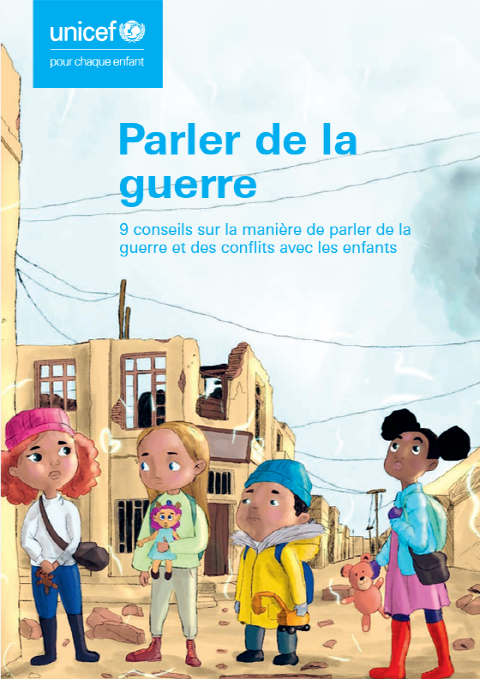 Parler de la guerre: 9 conseils sur la manière de parler de la guerre et des conflits avec les enfants سنة النشر: 2023 المؤلف المؤسسي: United Nations Children's Fund (UNICEF) La guerre est un sujet difficile, souvent lié à des images ou informations perturbantes, en particulier pour les enfants. Comment les parents, les proches et les enseignants doivent-ils/elles se comporter et comment peuvent-ils/elles apaiser les craintes des enfants ?Peur, tristesse, colère, nervosité : ces sentiments ainsi que d’autres peuvent survenir lorsqu’une guerre ou un conflit fait les gros titres. Dès que les enfants ont besoin de sécurité et de protection, ils/elles se tournent vers leurs parents, proches et enseignants - encore plus en périodes de crise. Vous trouverez ici neuf conseils sur la manière de communiquer avec les enfants, les soutenir et leur apporter du réconfort.
  Advancing Digital Equity for All: Community-Based Recommendations for Developing Effective Digital Equity Plans to Close the Digital Divide and Enable Technology-Empowered Learning سنة النشر: 2022 المؤلف المؤسسي: USA. Department of Education. Office of Educational Technology In spring 2022, the U.S. Department of Education’s Office of Educational Technology (OET) committed to advancing digital equity through the Digital Equity Education Roundtables (DEER) Initiative. Through DEER, OET hosted a series of national conversations with leaders from community-based organizations, as well as families and learners furthest from digital opportunities. The “Advancing Digital Equity for All” resource illuminates insights from these conversation to highlight the barriers faced by learner communities and promising solutions for increasing access to technology for learning.The historic federal investments authorized by the Infrastructure Investment and Jobs Act offer critical opportunities for broadband planning that can identify and equitably address the various availability, affordability, and adoption challenges described. Using this guidance resource as a starting point, it is essential that leaders collaborate with those most impacted by the digital divide to develop comprehensive digital equity plans that outline strategies to meet the needs of learners, their families/caregivers, and communities effectively and sustainably.
  Strengthening Social and Emotional Learning in Hybrid Modes of Education: Building Support for Students, Teachers, Schools and Families سنة النشر: 2024 المؤلف المؤسسي: UNESCO International Bureau of Education (IBE) This Discussion Paper focuses on the essential role of social and emotional learning (SEL) in the global movement to transform education and amplify its social, economic, environmental and personal impacts in a rapidly changing world. It explores how the mainstreaming of SEL into educational policies and practices can contribute to realizing future visions of education that are flexible, reflective, innovative, and impactful. Specifically, the Paper focuses on six topics that, as a whole, reflect global experiences in integrating and implementing SEL in its various forms both during and in the wake of the COVID-19 pandemic. Its main objective is to animate discussion on how to integrate a SEL dimension in hybrid modes of teaching and learning. This introductory overview presents the overall purpose and scope of the Paper, defines its underlying concepts and introduces the topics brought to this forum through the lenses of a diverse group of educators from Africa, the Arab States, Asia, Europe, and Latin America.
  être citoyen numérique, ça te dit ? سنة النشر: 2022 المؤلف المؤسسي: TRALALERE Vinz est très excité, il a été sélectionné pour participer au concours du meilleur citoyen numérique ! En effet, dans les vidéos qu’il a déjà réalisées, il respecte, sans le savoir, la Charte pour l’éducation à la culture et à la citoyenneté numériques. Une belle occasion pour Vinz de nous expliquer les notions de charte et de citoyenneté numérique. Vinz is very excited - he's been selected to take part in the best digital citizen competition! In fact, in the videos he's already made, he unknowingly respects the Charter for Education in Digital Culture and Citizenship. This is a great opportunity for Vinz to explain the concepts of the Charter and of digital citizenship.
 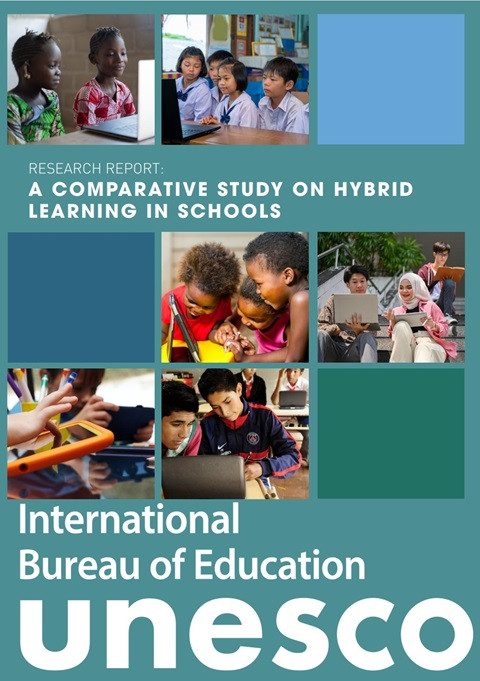 Research Report: A Comparative Study on Hybrid Learning in Schools سنة النشر: 2024 المؤلف المؤسسي: UNESCO International Bureau of Education (IBE) During the COVID-19 lockdown, policymakers and educators faced an unprecedented challenge disrupting all levels of education. The initial optimism about replacing physical classes with virtual lessons diminished as complex interconnected issues emerged. To address the need for continuous and sustainable learning, school systems implemented variations of hybrid learning during the pandemic, seeking to integrate physical and virtual classes. These approaches prompted this comparative study led by UNESCO-IBE. The initial phase of this study involved collecting and analysing data on hybrid strategies from six countries. The research aimed to examine factors influencing hybrid learning implementation during the lockdown, with a subsequent focus on developing and validating a practical Hybrid Learning Framework for Schools. The cross-case analysis was designed not to rank or compare, but to understand and connect different scenarios and contexts. Phase I focuses on current hybrid learning practices and influencing factors, while Phases II and III will concentrate on using the information gathered to create and validate a Hybrid Learning Framework for Schools. Aligned with UNESCO-IBE’s overarching vision of a comprehensive, personalized, and democratized curriculum accessible to all, hybrid learning facilitates inclusive education across diverse regions, overcoming geographical and temporal limitations. The approach aims to unlock the unique potential of every learner, fostering a more flexible educational environment.