
الموارد
استكشف مجموعة واسعة من الموارد القيمة حول تعليم المواطنة العالمية لتعميق فهمك وتعزيز البحث والمناصرة والتعليم والتعلم.
تم العثور على 1,330 نتيجة
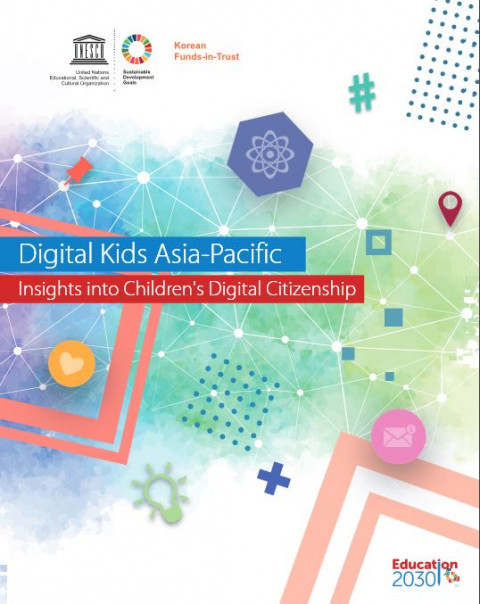 Digital kids Asia-Pacific: insights into children’s digital citizenship سنة النشر: 2019 المؤلف: Taeseob Shin | Hyeyoung Hwang | Jonghwi Park | Jian Xi Teng | Toan Dang المؤلف المؤسسي: UNESCO Bangkok This report responds to the growing needs of Member States in the Asia-Pacific region to understand children’s knowledge, behaviour and attitudes in a hyper-connected digital world. It aims to create a data-driven, conducive educational and policy environment that maximizes opportunities that Information and Communications Technology (ICT) offers, while minimizing potential threats that the same may pose. The report was also developed in the context of the Education 2030 Agenda identifying digital skills as one of the key competencies for youth and adults to achieve and monitor until 2030.
 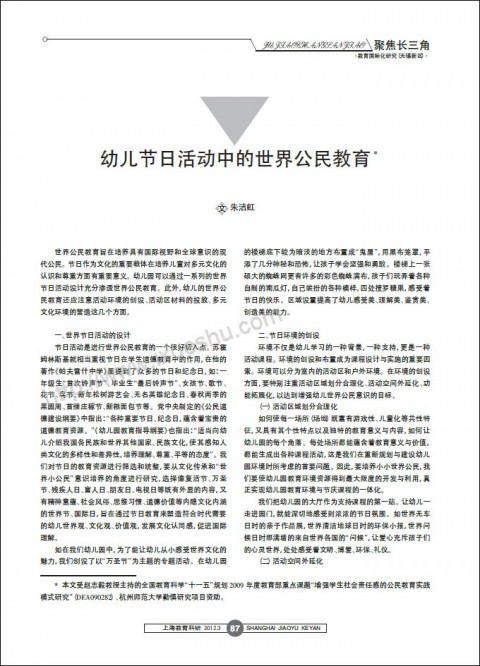 Global Citizenship Education in Children's Festivals سنة النشر: 2012 المؤلف: zhu jiehong Global citizenship education aims at cultivating modern citizens with an international outlook and global awareness. As an important carrier of culture, festivals play an important role in cultivating children's understanding and respect for multiculturalism. Kindergarten can fully pass the idea of global citizenship education through a series of world festival activities. In addition, global citizenship education of young children should pay attention to the creation of the activity environment, the use of materials in the activity area, and the creation of a multicultural environment. 幼儿节日活动中的世界公民教育 سنة النشر: 2012 المؤلف: zhu jiehong 世界公民教育旨在培养具有国际视野和全球意识的现代公民。节日作为文化的重要载体在培养儿童对多元文化的认识和尊重方面有重要意义。幼儿园可以通过一系列的世界节日活动设计充分渗透世界公民教育。此外,幼儿的世界公民教育还应注意活动环境的创设、活动区材料的投放、多元文化环境的营造这几个方面。
 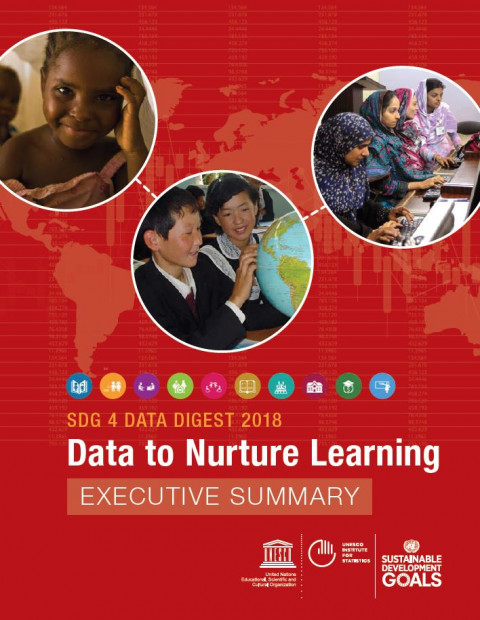 [Summary] SDG 4 Data Digest 2018: Data to Nurture Learning; Executive Summary سنة النشر: 2018 المؤلف المؤسسي: UNESCO Institute for Statistics (UIS) The 2018 edition of the SDG 4 Data Digest: Data to Nurture Learning builds on last year’s report, which proposed a conceptual framework and tools to help countries improve the quality of their data and fulfil their reporting requirements. In this report, we present the wide range of national and cross-national learning assessments currently underway and the assessment experiences of practitioners in the field. The report draws on these experiences to present pragmatic approaches that can help countries monitor progress and make the best possible use of data for policymaking purposes. [Resumen] Compendio 2018 de Datos sobre el ODS 4: Estadísticas para Fomentar el Aprendizaje; resumen سنة النشر: 2018 المؤلف المؤسسي: UNESCO Institute for Statistics (UIS) La edición del Compendio 2018 de Datos sobre el ODS 4: Estadísticas para Fomentar el Aprendizaje apoya y expande el contenido del informe del año precedente, que proponía a los países un marco conceptual y un conjunto de herramientas para mejorar la calidad de sus estadísticas y cumplir con las obligaciones en materia de informes. En este documento, presentamos una amplia gama de evaluaciones de aprendizaje nacionales e internacionales que se realizan actualmente, así como las experiencias en evaluaciones de expertos en la materia. En el informe se elabora sobre esas experiencias para ofrecer soluciones pragmáticas que ayuden a monitorear el progreso y a lograr el mejor uso posible de los datos con miras a la formulación de políticas.
 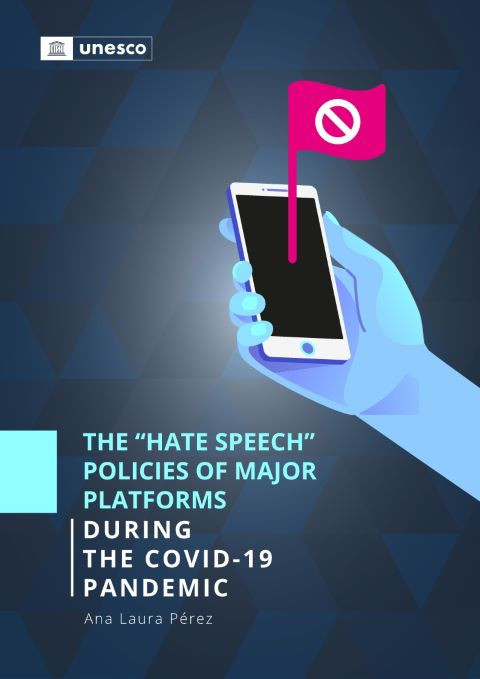 Les politiques des grandes plateformes sur le discours de haine pendant la COVID-19 سنة النشر: 2021 المؤلف المؤسسي: UNESCO Montevideo Ce document fait état d’une augmentation des messages considérés comme des discours de haine sur Facebook, Twitter et YouTube, depuis l’avènement de la pandémie de COVID-19. Bien qu’inégale, cette augmentation peut être établie à partir des rapports de transparence des différentes plateformes et de la croissance enregistrée dans la modération de ces contenus à partir de mars 2020. Étant donné qu’au cours de la même période, et en conséquence des mesures d’isolement prises dans la plupart des pays du monde, les plateformes ont décidé d’accroître l’utilisation d’outils d’intelligence artificielle dans leurs processus de modération, il n’est pas possible d’être certain que cette croissance est due à une augmentation de la création et de la publication de messages ou à un changement dans les systèmes de détection qui a affecté les résultats d’une année à l’autre.
 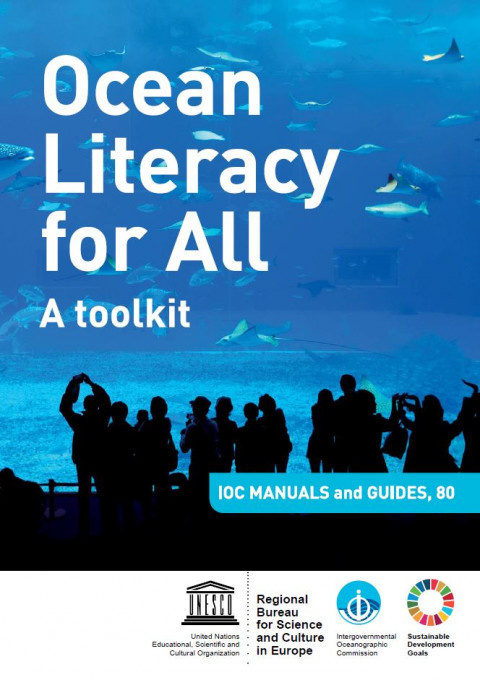 Ocean Literacy for All: A Toolkit (IOC Manuals and Guides, 80) سنة النشر: 2017 المؤلف: Francesca Santoro | Selvaggia Santin | Gail Scowcroft | Géraldine Fauville | Peter Tuddenham المؤلف المؤسسي: UNESCO Venice Ocean literacy programs and projects, until now, have been mainly focusing on developing resources, lesson plans and activities targeting Science, Technology, Engineering and Mathematics (STEM) education. Currently, and in particular after the adoption of the Sustainable Development Goal (SDG) 14, we have assisted to a shift in the focus towards the inclusion of approaches closer to those developed under the UNESCO framework of Education for Sustainable Development (ESD).ESD aims to improve access to quality education on sustainable development at all levels and in all social contexts, to transform society by reorienting education and help people develop knowledge, skills, values and behaviors needed for sustainable development. Individuals are encouraged to be responsible actors who resolve challenges, respect cultural diversity and contribute to creating a more sustainable world. This publication is made of two parts. The first part presents the history of ocean literacy, and describes its framework made of 7 essential principles, and connects them to international ocean science programs that contributes to enhancing ocean knowledge and observations. Moreover, marine scientists and educators were interviewed to share their professional experiences on ocean literacy as well as their views on its future. The last chapter of part 1 describes the existing challenges to marine education, as well as the path for the development of successful ocean literacy activities in the context of the 2030 Agenda. One of the most important factors identified is related to the creation of multi-sector partnerships among the education, government, and private sector that have jointly built ocean literacy programs for all formal educational levels from the primary school to the university level as well as for non-formal learners. Worldwide examples of such programs are presented. The second part, after introducing the methodological approach based on the multi-perspective framework for ESD developed by UNESCO, presents 14 activities that could provide tested examples and support for the implementation of marine education initiatives. The aim is not to provide a one size-fits-all ready to use collection, but rather to offer support and examples of what could be then adapted for different geographical and cultural contexts. The resources are designed to be relevant for all learners of all ages worldwide and to find their application in many learning settings, while in their concrete implementation they will, naturally, have to be adapted to the national or local context. Cultura oceánica para todos: kit pedagógico (COI Manuales y guías, 80) سنة النشر: 2017 المؤلف: Francesca Santoro | Selvaggia Santin | Gail Scowcroft | Géraldine Fauville | Peter Tuddenham المؤلف المؤسسي: UNESCO Venice Más que un concepto, la cultura oceánica es una herramienta fundamental para mejorar el conocimiento sobre el océano y estimular la participación activa de los ciudadanos y de las partes interesadas en la implementación de acciones sostenibles. Es también una manera de promover prácticas de producción sostenible, formular sólidas políticas públicas marinas, promover una ciudadanía más responsable, y animar a los jóvenes a iniciar una carrera en la economía azul o en las ciencias oceánicas. Esta publicación pretende describir y revisar los actuales enfoques, iniciativas, programas y proyectos sobre cultura oceánica. La primera parte ilustra los principios esenciales de la cultura oceánica y evidencia el conocimiento científico subyacente a través de estudios de casos, datos históricos e información cultural. Asimismo, muestra los esfuerzos actuales que realiza la cultura oceánica desde una perspectiva multidisciplinaria mediante entrevistas a expertos, educadores y científicos que trabajan y estudian en todo el mundo. La segunda parte presenta catorce actividades que proporcionan herramientas y buenas prácticas basadas en las competencias clave necesarias para que alumnos de todas las edades conozcan y se comprometan activamente con los temas sobre el desarrollo sostenible. Estas actividades pueden ser adaptadas a las necesidades y a los recursos disponibles. Las referencias adicionales que se proporcionan sirven para ampliar la información de los temas propuestos. Con este manual, la UNESCO y su Comisión Oceanográfica Intergubernamental (COI) pretenden que los países y las partes interesadas participen en el desarrollo de actividades interdisciplinarias y culturalmente diversas sobre cultura oceánica a escala mundial.
 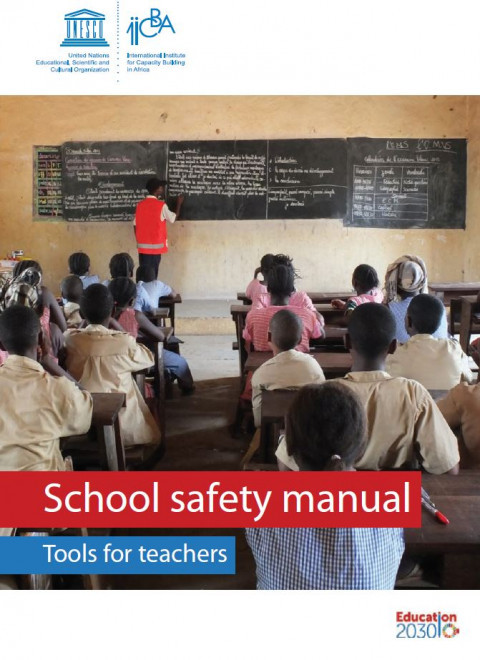 School Safety Manual: Tools for Teachers سنة النشر: 2017 المؤلف المؤسسي: UNESCO International Institute for Capacity-Building in Africa (IICBA) This manual was produced as part of the Teacher Training and Development for Peace-building in the Horn of Africa and Surrounding Countries project and aims to introduce teachers to the knowledge and skills needed for the establishment, maintenance and sustainment of basic school safety. As more children are enrolling in school in Africa, creating a safe and peaceful environment must be a top priority of teachers and educational institutions.The responsibility of schools to provide a safe environment for their students has been affirmed in the United Nations (UN) Sustainable Development Goal (SDG) four on Education.
  Metadata for the Global and Thematic Indicators for the Follow-up and Review of SDG 4 and Education 2030 سنة النشر: 2017 المؤلف المؤسسي: UNESCO Institute for Statistics (UIS) This document contains standardised metadata for each of the proposed global and thematic indicators for monitoring Sustainable Development Goal 4 (SDG 4) and the Education 2030 Agenda.The metadata included in this document have been developed by the UIS and are based on the set of thematic indicators approved by the Technical Cooperation Group on SDG 4–Education 2030 Indicators, a group set up in 2016 to provide the technical platform to support the implementation of the thematic indicator framework for the follow-up and review of SDG 4 and the Education 2030 Agenda.