
الموارد
استكشف مجموعة واسعة من الموارد القيمة حول تعليم المواطنة العالمية لتعميق فهمك وتعزيز البحث والمناصرة والتعليم والتعلم.
تم العثور على 3,128 نتيجة
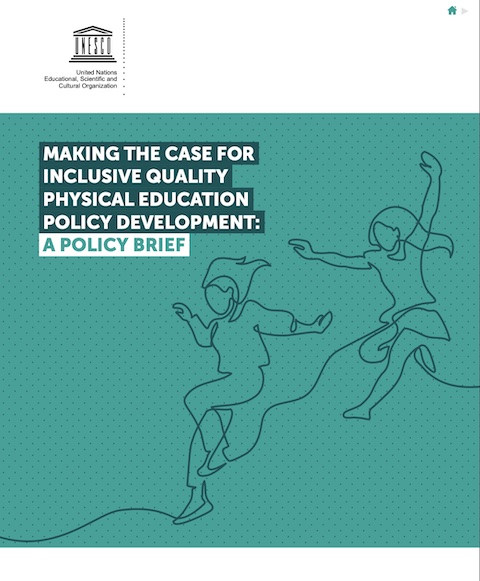 S’engager en faveur de l’élaboration inclusive de politiques d’éducation physique de qualité: Note de politique سنة النشر: 2021 المؤلف: Nancy McLennan المؤلف المؤسسي: Organisation des Nations Unies pour l'éducation, la science et la culture (UNESCO) Cette note de politique, fondée sur des faits, présente les avantages à investir dans l’élaboration inclusive de politiques d’Éducation Physique de Qualité (EPQ). Le contenu s’inspire directement des résultats issus d’interventions menées dans quatre pays, qui démontrent l’intérêt des partenariats intersectoriels dans le développement des politiques d’EPQ et de la mise en œuvre de programmes d’EPQ à faible coût/à fort impact qui devraient accélérer les efforts de rétablissement post-COVID. Cette note contient une sélection de recommandations pratiques à destination des acteurs publics et privés de l’écosystème sport-éducation, ainsi que des ressources pour soutenir la mise en œuvre de ces recommandations.
  Media Literacy in Finland: National Media Education Policy سنة النشر: 2019 المؤلف المؤسسي: European Training and Research Centre for Human Rights and Democracy (Austria) | UNESCO Media literacy in Finland is the media literacy policy and the national media education policy document, published by the Ministry of Education and Culture in 2019. The document updates and extends the cultural policy guidelines for media literacy published in 2013. The need to update the policy arose from the changes that have taken place in media culture and the broader than before target groups of media education in particular. The Program of the Government also highlights the need for media skills for all age groups, from children to seniors. The vision of the policy is to improve everyone’s opportunities to develop their media literacy. 핀란드의 미디어 리터러시: 국가 미디어교육 정책 سنة النشر: 2019 المؤلف المؤسسي: Finand. Ministry of Education and Culture 《핀란드의 미디어 리터러시》는 교육문화부에서 2019년 발간한 미디어 리터러시 정책 및 국가 미디어교육 정책 문서를 한국어로 번역한 자료이다. 이 문서는 2013년에 발간된 미디어 리터러시 가이드라인을 개정하고 확장한 것이다. 미디어 문화가 변화하고 미디어교육 대상 집단이 이전보다 확대되면서 정책 개정의 필요성이 대두됐다. 정부 정책 프로그램(The Program of the Government) 역시 아동에서부터 노년까지 모든 연령 집단에서 미디어 기량(media skills)이 필요함을 강조했다. 이 정책의 목표는 모든 사람이 미디어 리터러시를 개발할 기회를 늘리는 것이다.
 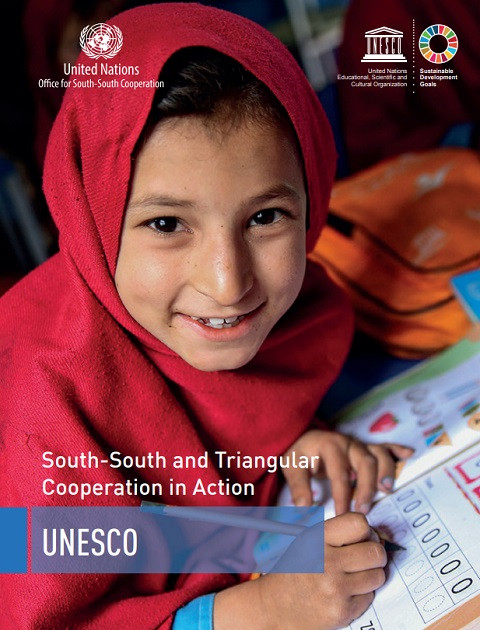 South-South and Triangular Cooperation in Action سنة النشر: 2018 المؤلف المؤسسي: UNESCO | UN. Office for South-South Cooperation (UNOSSC) This publication is UNESCO’s first dedicated report on South-South cooperation and triangular cooperation. It presents an overall picture of the progress achieved to support technical cooperation, capacity building and knowledge sharing through South-South and triangular cooperation in UNESCO’s areas of competence with highlights of specific examples. It paves the way for deepening future cooperation in this area.
 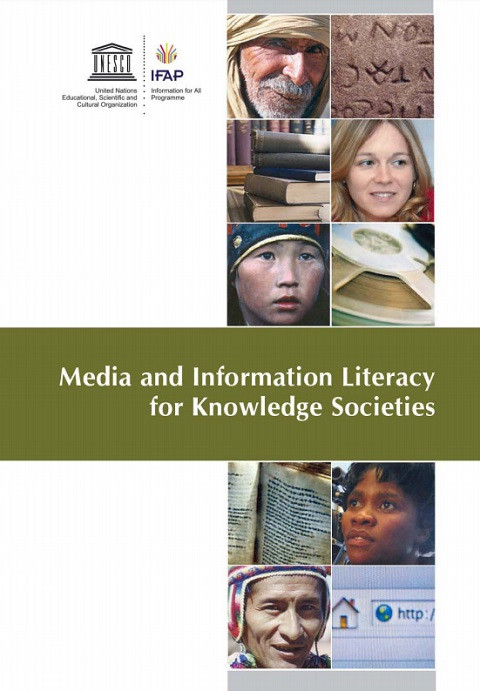 Медиа- и информационная грамотность в обществах знания سنة النشر: 2013 المؤلف المؤسسي: Interregional Library Cooperation Centre | UNESCO Издание подготовлено на основе материалов Международной конференции «Медиа- и информационная грамотность в обществах знания», состоявшейся в Москве 24–28 июня 2012 г. в рамках председательства России в Межправительственном совете Программы ЮНЕСКО «Информация для всех».
  Background Document: National Media and Information Literacy (MIL) Policies and Strategies in Albania; 2020-2021 سنة النشر: 2021 المؤلف المؤسسي: Albanian Media Institute | European Union (EU) | UNESCO This background study was conducted in the framework of the project "Building trust in the media in Southeast Europe and Turkey, phase II" supported by UNESCO and the European Union and implemented by the Albanian Media Institute. The project, at this stage of implementation, aims to increase the skills of young people for media and information literacy (MIL) through the integration of the MIL curriculum in the formal education system in Albania. The implementation of the project started in June 2020 and will last until 2022. This document suggests objectives for MIL policies and strategy, which should be extended to formal education (university and pre-university level); in non-formal and informal education thus affecting all members of society with the aim of increasing the level of education on media and information in Albania.
 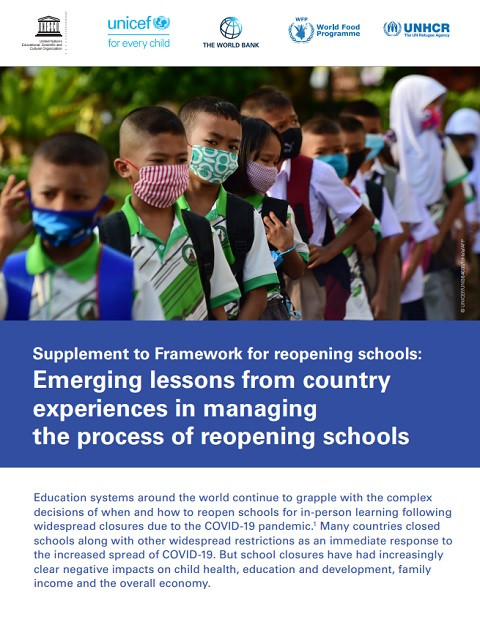 Supplement to Framework for Reopening Schools: Emerging Lessons From Country Experiences in Managing the Process of Reopening Schools سنة النشر: 2020 المؤلف المؤسسي: UNESCO | United Nations Children's Fund (UNICEF) | World Bank | World Food Programme | UN. Office of the United Nations High Commissioner for Refugees (UNHCR) Education systems around the world continue to grapple with the complex decisions of when and how to reopen schools for in-person learning following widespread closures due to the COVID 19 pandemic. This supplement to the Framework for reopening schools, originally published jointly by UNICEF, UNESCO, the World Bank, the World Food Programme, and the UN Refugee Agency (UNHCR) in April 2020, summarizes emerging lessons learnt over the past months.The supplement follows the four main dimensions of the Framework (safe operations, focus on learning, wellbeing & protection, and reaching the most marginalized) and highlighting a number of country examples.
 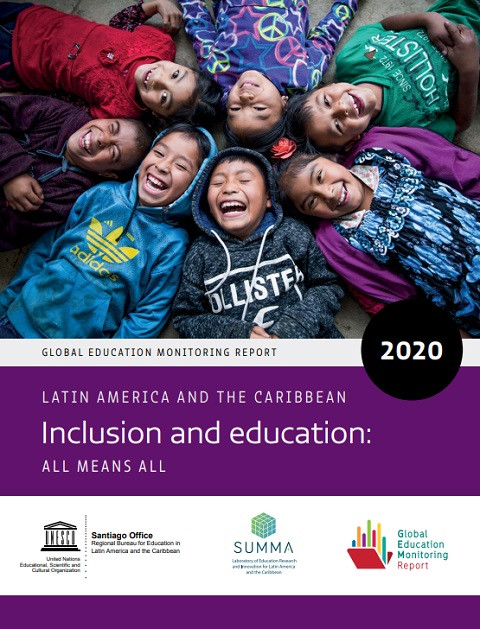 Latin America and the Caribbean 2020: Inclusion and Education; All Means All (Global Education Monitoring Report) سنة النشر: 2020 المؤلف المؤسسي: Global Education Monitoring Report Team | UNESCO | Laboratory of Education Research and Innovation for Latin America and the Caribbean (SUMMA) Latin America and the Caribbean has the largest and most challenging socio-economic inequalities in the world, which have shaped its education systems over the decades. This report looks at everyone both in and excluded from education in the region, pinpointing barriers facing learners, especially when multiple disadvantages intersect. The report also explores challenges in education posed by COVID-19 and the need for urgent action to prevent an exacerbation of inequalities. Produced by the Global Education Monitoring (GEM) Report team, in partnership with the UNESCO Regional Bureau for Education in Latin America and the Caribbean (OREALC) and the Laboratory of Education Research and Innovation for Latin America and the Caribbean (SUMMA), the report assesses key solutions for greater inclusion through several case studies from the region. It provides in-depth analysis on challenges to inclusion in education arising from migration and displacement in Colombia and Costa Rica; remoteness in Brazil and Suriname; disability in Cuba and Nicaragua; gender in Peru and Jamaica; sexual orientation, gender identity and expression in Chile and Mexico; poverty in the Dominican Republic and Honduras; ethnicity in Bolivia and Ecuador; and incarceration in El Salvador and Uruguay. Building on the 2020 Global Education Monitoring Report, this regional edition concludes that strong laws and policies in Latin America and the Caribbean demonstrate a commitment to inclusion, but that the daily realities faced by learners suggest implementation is lagging. Recommendations are aimed at promoting more inclusive education systems to benefit all children and youth, no matter their background, identity or ability. The recommendations provide a systematic framework for identifying and dismantling barriers for vulnerable populations, according to the principle that ‘every learner matters and matters equally’. América Latina y el Caribe 2020: Inclusión y educación; Todos y todas sin excepción (Informe de seguimiento de la educación en el mundo) سنة النشر: 2020 المؤلف المؤسسي: Global Education Monitoring Report Team | UNESCO | Laboratory of Education Research and Innovation for Latin America and the Caribbean (SUMMA) América Latina y el Caribe es la región con las mayores y más tenaces desigualdades socioeconómicas del mundo. Durante decenios estas desigualdades se han reflejado en sus sistemas educativos. El presente informe examina a quiénes incluyen y a quiénes excluyen estos sistemas y llama la atención sobre las barreras que enfrentan los educandos, especialmente cuando están expuestos a múltiples desventajas. El informe también explora los nuevos retos educativos que plantea la pandemia de la Covid-19 y la necesidad de actuar sin dilación para evitar que se agraven las desigualdades. El informe, elaborado por el equipo del Informe de Seguimiento de la Educación en el Mundo (Informe GEM), en colaboración con la Oficina Regional de Educación para América Latina y el Caribe (OREALC/ UNESCO Santiago) y el Laboratorio de Investigación e Innovación en Educación para América Latina y el Caribe -SUMMA, evalúa algunas de las principales iniciativas emprendidas para mejorar la inclusión, basándose en varios estudios de casos de la región. Analiza en profundidad algunos ejemplos de los grandes desafíos que amenazan la inclusión en la educación: migración y desplazamiento en Colombia y Costa Rica; aislamiento rural en el Brasil y Suriname; discapacidad en Cuba y Nicaragua; discriminación de género en el Perú y Jamaica; orientación sexual e identidad y expresión de género en Chile y México; pobreza en la República Dominicana y Honduras; etnicidad en Bolivia y el Ecuador; y jóvenes en situación de privación de libertad en El Salvador y el Uruguay. Esta edición regional del Informe de Seguimiento de la Educación en el Mundo 2020 concluye que, si bien las leyes y políticas de América Latina y el Caribe demuestran la firme determinación de promover la inclusión, la realidad cotidiana de los alumnos y las alumnas sugiere que la aplicación práctica lleva retraso. Se formulan recomendaciones con el objeto de promover sistemas de educación más inclusivos en beneficio de todos los niños, niñas y jóvenes, sin distinción de origen, identidad o capacidad. Las recomendaciones brindan un marco sistemático que permite identificar y eliminar barreras para las poblaciones marginadas, conforme al principio de que “cada alumno es importante y todos los alumnos importan por igual”.
  Education for Sustainable Development: A Roadmap سنة النشر: 2022 المؤلف المؤسسي: UNESCO This roadmap sets out the urgent challenges facing the planet and underlines the implementation of the new Education for Sustainable Development: Towards achieving the SDGs (ESD for 2030) framework, which was adopted with the aim of increasing the contribution of education to building a more just and sustainable world. ESD for 2030 will step up actions on five priority action areas on policy, education environments, building capacities of educators, youth and local level action, stressing further ESD’s key role for the successful achievement of the 17 SDGs and the great individual and societal transformation required to address the urgent sustainability challenges. The roadmap also underlines the key areas of implementation of the ESD for 2030 framework. ESD is widely recognized as an integral element of Agenda 2030, in particular Sustainable Development Goal 4 (SDG 4), and a key enabler of all the other SDGs.