
الموارد
استكشف مجموعة واسعة من الموارد القيمة حول تعليم المواطنة العالمية لتعميق فهمك وتعزيز البحث والمناصرة والتعليم والتعلم.
تم العثور على 3,559 نتيجة
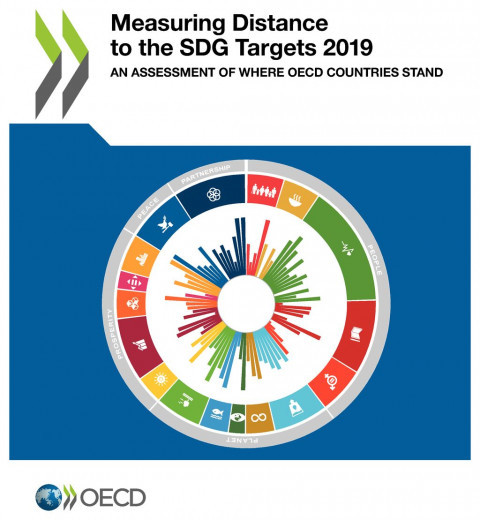 Measuring Distance to the SDG Targets 2019 - An Assessment of Where OECD Countries Stand سنة النشر: 2019 المؤلف المؤسسي: Organisation for Economic Co-operation and Development (OECD) The Sustainable Development Goals (SDGs) set a broad and ambitious programme for the world to achieve by 2030. With 17 Goals, underpinned by 169 Targets, the complex and integrated nature of the 2030 Agenda presents national governments with huge challenges for implementation. To assist countries, the OECD has developed a unique methodology allowing comparison of progress across SDG goals and targets. Based on the UN Global List of 244 indicators, this study evaluates the distance that OECD countries need to travel to meet SDG targets for which data is currently available. This 2019 edition of the study presents the latest results for OECD countries, both on average and individually, as well as new exploratory approaches to assessing progress over time and transboundary aspects of the SDGs. By providing a high-level overview of countries’ strengths and weaknesses in performance across the SDGs, this study aims to support member countries in navigating the SDGs and in setting their own priorities for action within the broad 2030 Agenda.
  HARNESSING THE POWER OF DATA FOR GENDER EQUALITY: Introducing the 2019 EM2030 SDG Gender Index سنة النشر: 2019 المؤلف المؤسسي: Equal Measures 2030 In the 2019 Global Report “Harnessing the power of data for gender equality: Introducing the 2019 EM2030 SDG Gender Index”, the Equal Measures 2030 (EM2030) introduces the 2019 SDG Gender Index. The index is a comprehensive tool available to explore the state of gender equality across 129 countries (covering 95% of the world’s girls and women), 14 of the 17 Sustainable Development Goals (SDGs), and 51 targets linked to issues inherent in the SDGs. The 2019 SDG Gender Index finds that, with just 11 years to go until 2030, nearly 40% of the world’s girls and women – 1.4 billion – live in countries failing on gender equality. Another 1.4 billion live in countries that “barely pass”. Even the highest-scoring countries have more to do, particularly on complex issues such as climate change, gender budgeting and public services, equal representation in powerful positions, gender pay gaps, and gender-based violence. No country in the world has reached the “last mile” on gender equality. 2019 Global Report overview: Section 1: A foreword from Equal Measures 2030’s partners: The African Women’s Development and Communication Network (FEMNET), The Asian-Pacific Resource & Research Centre for Women (ARROW), Bill & Melinda Gates Foundation, the Committee for Latin America and the Caribbean for the Defense of Women’s Rights (CLADEM), Data2X, International Women’s Health Coalition (IWHC), KPMG, ONE Campaign, Plan International, Women Deliver. Section 2: Key findings from the 2019 SDG Gender Index. Section 3: Introducing the 2019 SDG Gender Index, the approach, what makes this index unique and how the findings should be interpreted. Section 4: Key global findings, patterns and comparisons of index scores between and within the different regions: Asia and the Pacific, Europe and North America, Latin America and the Caribbean, the Middle East and North Africa, Sub-Saharan Africa. Section 5: Regional overviews of index scores and gender equality context, and thematic deep drives on 1) inequalities in girls’ education, 2) women in science and technology research positions, 3) girls’ and women’s physical safety, 4) legal barriers for women, 5) women in government. Section 6: Leaving no one behind: multiple and intersecting forms of discrimination of girls and women. Section 7: Recommendations for action.
  Trends Shaping Education 2019 سنة النشر: 2019 المؤلف المؤسسي: Organisation for Economic Co-operation and Development (OECD) This book, published every two to three years, is designed to give policy makers, researchers, educational leaders, administrators and teachers a robust, non-specialist source to inform strategic thinking and stimulate reflection on the challenges facing education, whether in schools, universities or programmes for older adults. Trends Shaping Education 2019 is designed to support long-term strategic thinking in education. It provides an overview of key economic, social, demographic and technological trends and raises pertinent questions about their impact on education. This book fills an important need: decision makers and practitioners in education often have only anecdotal or local information on the megatrends that play out in their context; too often they do not have solid facts in front of them, especially about trends.` Les grandes mutations qui transforment l'éducation 2019 سنة النشر: 2019 المؤلف المؤسسي: Organisation for Economic Co-operation and Development (OECD) Vous êtes-vous déjà demandé si l’éducation avait un rôle à jouer dans la préparation de nos sociétés à l’ère de l’intelligence artificielle ? Ou quel peut être l’impact du réchauffement climatique sur nos établissements scolaires, nos familles et collectivités ? La publication Les grandes mutations qui transforment l’éducation 2019 donne un aperçu des principales tendances économiques, politiques, sociales et technologiques qui affectent l’éducation. Si les mesures sont robustes, les questions soulevées dans ce recueil sont suggestives et ont pour objet d’informer la pensée stratégique et de stimuler une réflexion sur les défis de l’éducation – et montrer si et comment l’éducation peut influencer ces tendances. L’ouvrage couvre une riche variété de sujets liés à la mondialisation, la démocratie, la sécurité, le vieillissement et les cultures modernes. Le contenu pour l’édition 2019 a été révisé et étendu avec une large sélection d’indicateurs. En plus des différentes tendances et de leur interaction avec l’éducation, la publication inclut également une nouvelle section dédiée à la réflexion sur le futur, inspirée par des méthodologies de la prospective stratégique. Cet ouvrage a pour objet de fournir aux décideurs politiques, aux chercheurs, aux chefs d’établissements, aux administrateurs scolaires et aux enseignants, une source non spécialisée de tendances qui affectent l’éducation comparables à l’échelle internationale, dans les écoles, les universités ou encore dans les programmes de formation pour adultes. Cet ouvrage s’adresse également aux élèves/ étudiants et à la société dans son ensemble, notamment aux parents.
  서울교육 2018년 겨울호 (제60권 통권 233호) سنة النشر: 2018 المؤلف المؤسسي: 서울특별시교육청 교육연구정보원 권두칼럼:통일교육 패러다임 전환 키워드: #평화특별기획:평화시대를 여는 새로운 통일교육 – 평화와 민주시민교육을 담는 통일교육으로 –화해로 나아가는 평화와 공존의 통일교육한반도 대변혁기의 학교 평화·통일교육 방향 – 통일교육연구학교 운영사례를 중심으로 –해외교육:독일 통일교육이 한국 통일교육에 주는 시사점통일독일의 동독청소년 사회통합을 통해 보는 21세기 통일한국의 청소년 사회통합 정책연구:평화에 대한 비판적 공부: 평화학 출처 URL:http://www.serii.re.kr/photo/viw.do?method=getView&mcode=S029a&seq=1081
 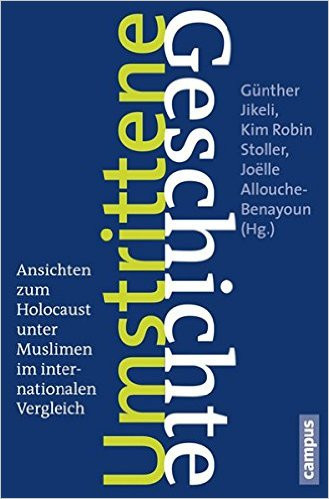 Umstrittene Geschichte: Ansichten zum Holocaust unter Muslimen im internationalen Vergleich The article relates a qualitative study carried out alongside an educational project for multiplicators. It is an experimental encounter programme between Israeli Jews and Palestinians from Israel, dealing together with the history and the memory of the Holocaust, and also with the Israeli-Palestinian conflict and the Nakba. The programme can be considered an experience located at the intersection of Peace Education and Holocaust Education; it lasted over a year and included a study trip to Berlin. The research is based on three series of interviews with the participants, including during the study-trip to Berlin. The findings point to questions of identity-building during the process, recognizing victims’ experiences rather than victims’ identities, processes of inclusion and distancing, and dilemmas faced by the participants when dealing together with the history and the memory of the Holocaust. The contribution shows possible objectives and limits of such a project, as well as the necessary conditions for the emergence of a culture of mutual recognition, without negating the asymmetrical character of the prevailing situation, nor comparing sufferings, nor equating historical facts. It shows that focusing on perpetrators and bystanders, rather than only on victims, can bring common insights for both sides. (By the author)
  Las actividades nazis en la Argentina: reflexiones en torno a un texto de estudio para EGB 3 y Polimodal This article approaches the question of teaching history through students´ books or school manuals. Recognizing the importance of the role of history as a builder of collective memory, the study analyses specifically the proposal of a manual (designed by the authors of this article) created for teachers and students about the Holocaust problematic and its treatment in Argentinean classrooms. Based on the material elaborated by CEANA (Comisión para el Esclarecimiento de las Actividades Nazis en la Argentina / Commission for the clarification of the Nazi activities in Argentina,) the Manual gives a new meaning to the Shoah´s history and memory and offers a new proposal of transference of this knowledge in the classroom to make it possible to teach a living and critical history that is in a permanent relationship with the present. (By the author)
  Education for Global Citizenship in a Postcolony: Lessons from Cameroon سنة النشر: 2015 المؤلف: Michael Foaleng المؤلف المؤسسي: Éducation des Adultes et Développement Global citizenship is only possible where individuals are able to engage locally in the identification and solution of their basic problems. The postcolonial education system of Cameroon, with its outdated teaching methods, produces poor scholars, who identify with the adult world through attitudes of hesitancy. We have not yet learned to be a citizen here. This is why citizenship education is currently recognised as a necessity. But its effectiveness presupposes that it is addressed not only to young people but to adults as well. One of the major challenges is to create an appropriate pedagogy for this purpose. Educación para la ciudadanía mundial en una nación postcolonial: lecciones de Camerún سنة النشر: 2015 المؤلف: Michael Foaleng المؤلف المؤسسي: Éducation des Adultes et Développement La ciudadanía mundial solo puede ejercerse allí donde las personas son capaces de participar a nivel local en la identifi cación y la solución de sus problemas básicos. El sistema postcolonial de educación de Camerún, cuyos métodos pedagógicos están obsoletos, forma estudiantes deficientes, que se identifi can con el mundo de los adultos mediante actitudes de vacilación. Aún no hemos aprendido a ser ciudadanos en este país. Por eso en la actualidad se reconoce la necesidad de impartir educación para la ciudadanía. Sin embargo, para que resulte efi caz es preciso que no solo esté orientada a los jóvenes, sino también a los adultos. Uno de los principales desafíos consiste en crear una pedagogía adecuada para alcanzar este objetivo. Éducation à la citoyenneté mondiale à l’ère postcoloniale : leçons du Cameroun سنة النشر: 2015 المؤلف: Michael Foaleng المؤلف المؤسسي: Éducation des Adultes et Développement Une citoyenneté mondiale n’est possible que là où localement les individus sont capables de s’engager dans l’identification et la résolution de leurs problèmes élémentaires. Le système éducatif du Cameroun postcolonial, avec ses méthodes pédagogiques désuètes, produit des déchets scolaires, qui se reconnaissent dans le monde des adultes par des attitudes attentistes. On n’a pas encore appris ici à être citoyen. C’est pourquoi l’éducation à la citoyenneté est actuellement reconnue comme une nécessité. Mais son efficacité présuppose qu’elle s’adresse non seulement aux jeunes, mais aussi adultes. L’un des défis majeurs reste alors d’imaginer une pédagogie appropriée à cet effet.