
الموارد
استكشف مجموعة واسعة من الموارد القيمة حول تعليم المواطنة العالمية لتعميق فهمك وتعزيز البحث والمناصرة والتعليم والتعلم.
تم العثور على 3,500 نتيجة
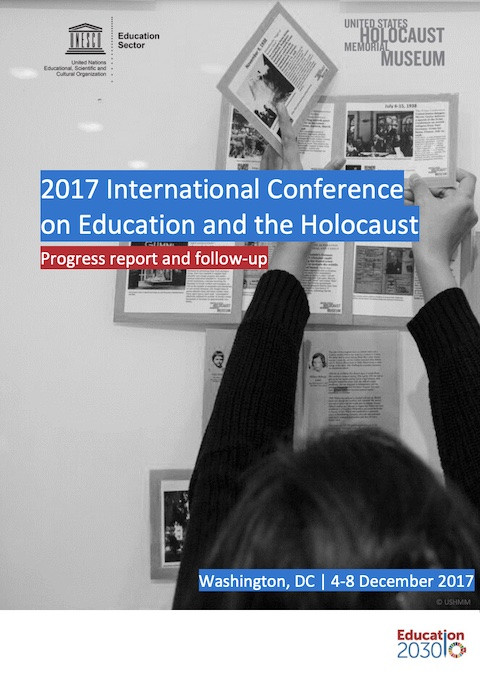 2017 International Conference on Education and the Holocaust: Progress Report and Follow-up سنة النشر: 2018 المؤلف المؤسسي: UNESCO | United States Holocaust Memorial Museum (USHMM) From December 4-8 2017, UNESCO and the United States Holocaust Memorial Museum (USHMM) jointly organized the second International Conference on Education and the Holocaust (ICEH) in Washington, DC. The conference brought together 26 participants from 10 countries with the goal of strengthening their capacities to advance education about the Holocaust and genocide in their respective countries. Of great importance was the relevance of this education within the teams’ national contexts. The conference ultimately led to the development of 10 country-specific initiatives. The 2017 ICEH cohort comprises representatives of institutions from Argentina, Colombia, India, Indonesia, Kenya, Mexico, Namibia, South Africa, Tunisia and Ukraine.
 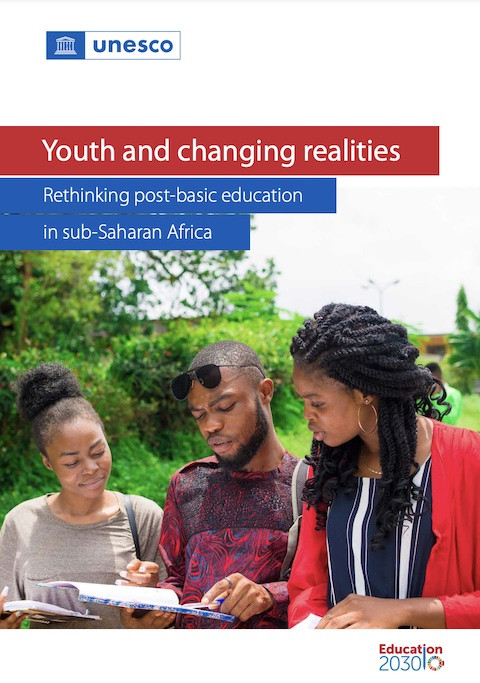 Youth and Changing Realities: Rethinking Post-basic Education in Sub-Saharan Africa سنة النشر: 2022 المؤلف المؤسسي: Организация Объединенных Наций по вопросам образования, науки и культуры (UNESCO) Education should empower young people for full participation in their societies and education systems should be responsive to their voices, aspirations and actions. At this time of upheaval, it is more important than ever that youth voices are heard. This synthesis report analyses the perspectives of post-basic education of some young people from 20 countries in sub-Saharan Africa. Their voices express diverse experiences, aspirations and expectations. They describe ‘changing realities’ in which education and training opportunities often seem unable to meet their aspirations and new demands of the world of work and society. It focusses on four crucial themes for post-basic education, with reference to youth’s experiences: financing, socio-cultural barriers, skills for work and life, and educators’ capacities.The Education 2030 Framework for Action calls for youth, learners and their organizations to be full partners in the realization of SDG4; to encourage governments and other stakeholders to develop education programmes in consultation with young people; and to help shape policies for relevant and responsive education systems. This synthesis report makes an important contribution towards rethinking post-basic education in sub-Saharan Africa.
 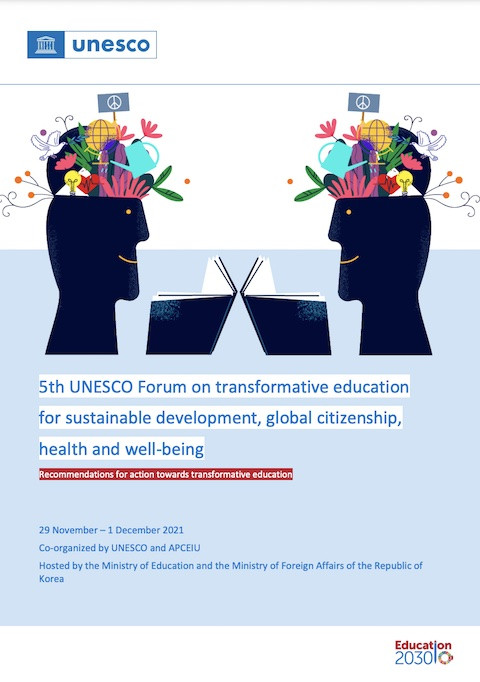 5th UNESCO Forum on Transformative Education for Sustainable Development, Global Citizenship, Health and Well-Being: Recommendations for Action Towards Transformative Education سنة النشر: 2022 المؤلف المؤسسي: UNESCO In light of contemporary and emerging challenges such as climate change, violent and hateful ideologies, conflicts and risks of global pandemics, education must teach young people the knowledge, skills, values and attitudes to live cooperatively, be flexible, think critically, respect diversity, care for the environment, and be actively involved in finding solutions, both locally and globally. Transformative education – as enshrined in Target 4.7 of Sustainable Development Goal 4 – is critical in supporting individuals to develop these competencies. Transformative education involves teaching and learning that motivates and empowers learners to make informed decisions and actions at the individual, community and global levels. With a focus on sustainability, global citizenship, health and well-being for all, transformative education implies ensuring that curriculum, pedagogy, learning materials, schools and learning environments are meaningful for the social, political, economic, cultural and environmental contexts. To better understand concrete progress in transformative education, UNESCO and the Asia Pacific Centre of Education for International Understanding (APCEIU) co-organized the 5th UNESCO Forum on Transformative Education for Sustainable Development, Global Citizenship, Health and Well-being (29 November – 1 December 2021).The conference enabled a productive dialogue among a diverse range of actors from the fields of education for sustainable development (ESD), global citizenship education (GCED), education for health and wellbeing under the broader “banner” of transformative education. 5ème Forum de l’UNESCO sur l’éducation transformatrice pour le développement durable, la citoyenneté mondiale, la santé et le bien-être: Recommandations pour l’action en vue d’une éducation transformatrice سنة النشر: 2022 المؤلف المؤسسي: UNESCO À la lumière des défis contemporains et émergents tels que le changement climatique, les idéologies violentes et haineuses, les conflits et les risques de pandémies mondiales, l'éducation doit enseigner aux jeunes les connaissances, les compétences, les valeurs et les attitudes nécessaires pour vivre en coopération, être flexibles, penser de manière critique, respecter la diversité, prendre soin de l'environnement et participer activement à la recherche de solutions, tant au niveau local que mondial.L'éducation transformatrice - telle qu'énoncée dans la cible 4.7 de l'objectif de développement durable 4 - est essentielle pour aider les individus à développer ces compétences. L'éducation transformatrice implique un enseignement et un apprentissage qui motivent et habilitent les apprenants à prendre des décisions et des actions éclairées aux niveaux individuel, communautaire et mondial. En mettant l'accent sur la durabilité, la citoyenneté mondiale, la santé et le bien-être pour tous, l'éducation transformatrice implique de veiller à ce que les programmes, la pédagogie, le matériel d'apprentissage, les écoles et les environnements d'apprentissage soient significatifs pour les contextes social, politique, économique, culturel et environnemental.Pour mieux comprendre les progrès concrets de l'éducation transformatrice, l'UNESCO et le Centre Asie-Pacifique d'éducation pour la compréhension internationale (APCEIU) ont co-organisé le 5e Forum de l'UNESCO sur l'éducation transformatrice pour le développement durable, la citoyenneté mondiale, la santé et le bien-être (29 novembre - 1er décembre 2021).La conférence a permis un dialogue productif entre un large éventail d'acteurs des domaines de l'éducation au développement durable (EDD), de l'éducation à la citoyenneté mondiale (ECM), de l'éducation pour la santé et le bien-être sous la « bannière » plus large de l'éducation transformatrice.
 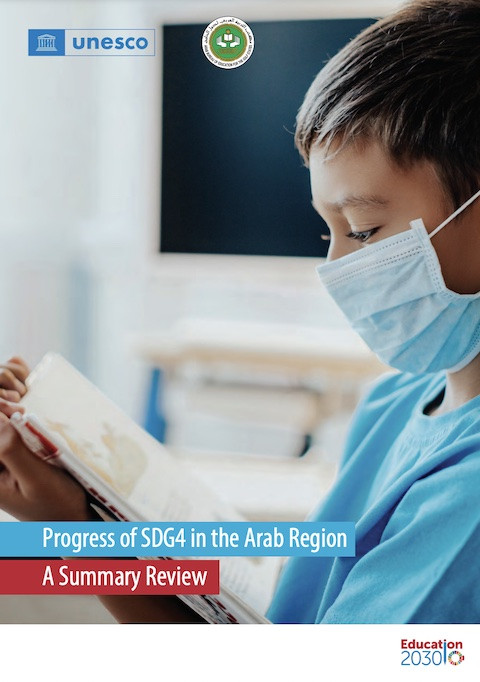 Progress of SDG4 in the Arab Region: A Summary Review سنة النشر: 2022 المؤلف المؤسسي: UNESCO This report is a snapshot review of the progress of SDG 4 in the Arab region, based upon the national reports of the countries of the region and the valuable inputs from the regional education institutes of the region. In this review, SDG 4 is looked at as an essential part of an interconnected whole of all SDGs. However, it focuses on selected targets and indicators of SDG 4 because of difficulties of accessing consistent data pertaining to the region covering the period from 2010 to 2020. Therefore, internationally comparable data from various sources have been taken into consideration, highlighting at the same time the overall pictures as revealed by the country reports and flagging their selected best practices.
  Leave No Child Behind: Boys’ Disengagement From Education; Lesotho Case Study سنة النشر: 2022 المؤلف: Paseka A. Mosia المؤلف المؤسسي: 유네스코 In the framework of its work gender equality in and through education better understand boys’ disengagement from education, UNESCO commissioned five country case studies to inform the publication “Leave no child behind: Global report on boys’ disengagement from education”. National research teams examined the situation in five countries – Fiji, Kuwait, Lesotho, Peru and the United Arab Emirates.This case study presents the results from Lesotho.
  School Violence and Bullying of Children With Disabilities in the Eastern and Southern African Region: A Needs Assessment سنة النشر: 2022 المؤلف: Thesandree Padayachee | Nithya Srinivasan | Mark Carew | Marcella Deluca | Amyn Lalji المؤلف المؤسسي: Leonard Cheshire (UK) | 联合国教科文组织 (UNESCO) This study looked at the robustness of policy and legal frameworks and the needs of teachers and learners with disabilities in regard to addressing school violence and bullying within the Eastern and Southern African region. The study comprised both a policy analysis and primary qualitative research within five countries in the Eastern and Southern African region (Botswana, Kenya, Lesotho, South Africa and Zambia).
  UNESCO’s Efforts to Achieve Gender Equality in and Through Education: 2020 Highlights سنة النشر: 2022 المؤلف المؤسسي: UNESCO This report presents highlights of UNESCO’s work in 2020 to advance gender equality in and through education.UNESCO's work in this area is guided by the UNESCO strategy for gender equality in and through education 2019–2025, and supported by Her Education, Our Future, which was launched in parallel with the strategy, to leverage political and financial commitments, cooperation and joint action for girls’ and women’s education.
  UNESCO in Action for Gender Equality: 2020-2021 سنة النشر: 2022 المؤلف المؤسسي: 유네스코 UNESCO’s global priority gender equality took on new meaning over the past biennium. The years 2020 and 2021 have been marked by dramatic social, political, environmental, and economic changes across countries resulting from an unprecedented pandemic: COVID-19. The COVID-19 pandemic magnified deep rooted structural gender inequalities across societies and forced the world to question the degree to which advances towards achieving gender equality had been made since the first UN World Conference on Women held in Beijing. This publication shows how a collective work by all structures of UNESCO has mobilized an extraordinary effort to go beyond a necessary adaptation to a multi-faceted crisis and counter backlashes and strengthen the resilience of women and girls and the systems which protect and empower them around the world through education, sciences, culture, communication, and information.
  Evidence on the Gendered Impacts of Extended School Closures: A Systematic Review سنة النشر: 2022 المؤلف المؤسسي: UNESCO School closures to mitigate the spread of COVID-19 have affected nearly 1.6 billion learners across the globe. While the scale of these closures is unprecedented, in recent decades children in many contexts have been out of school for long periods due to other pandemics, disruptions and disasters such as floods, earthquake and conflicts – with marked gender effects.Building on the findings of 154 studies from every region of the world, this study investigates the evidence on the gendered impacts of extended school closures and periods out of school. Through a systematic review of the evidence, it highlights how these can deepen gendered exclusions and vulnerabilities – with the poorest children being the most affected.Undertaken by a team of leading academic experts on gender equality and education, Evidence on the gendered impacts of extended school closures: A systematic review aims to prevent and mitigate adverse outcomes arising from extended periods of time out of school, by ensuring that responses to current and future crises are informed by a solid understanding of their effects on children’s education, health, well-being and protection.