
الموارد
استكشف مجموعة واسعة من الموارد القيمة حول تعليم المواطنة العالمية لتعميق فهمك وتعزيز البحث والمناصرة والتعليم والتعلم.
تم العثور على 3,500 نتيجة
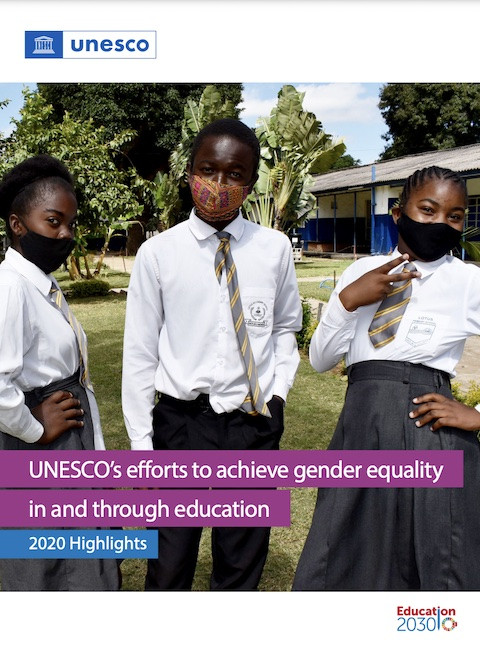 L’action de l’UNESCO en faveur de l’égalité des genres dans et par l’éducation: Points majeurs de l’année 2020 سنة النشر: 2022 المؤلف المؤسسي: UNESCO Ce rapport présente les points majeurs de l’action menée en 2020 par l’UNESCO pour faire progresser l’égalité des genres dans et par l’éducation.L’action menée par l’UNESCO dans le domaine de l’éducation et du genre est ancrée dans la stratégie de l’UNESCO pour l’égalité des genres dans et par l’éducation 2019-2025. Cette stratégie repose aussi sur l’initiative Son éducation, notre avenir, lancée en parallèle afin de mobiliser les engagements politiques et financiers et de faciliterla coopération et l’action conjointe en faveur de l’éducation des filles et des femmes.
 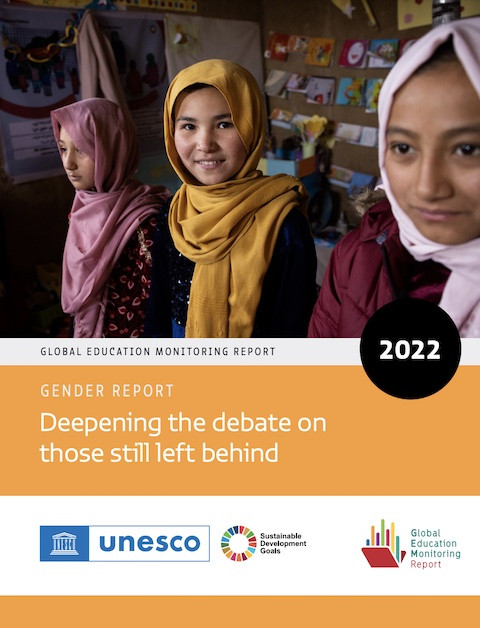 Global Education Monitoring Report 2022: Gender Report; Deepening the Debate on Those Still Left Behind سنة النشر: 2022 المؤلف المؤسسي: Global Education Monitoring Report Team | UNESCO The 2022 Gender Report presents fresh insights on progress towards gender parity in education with respect to access, attainment and learning. It showcases the results of new models that provide coherent estimates, combining multiple sources of information, on out-of-school and completion rates. It also reviews the results of learning assessments released over the past 18 months, which present an almost global picture of the gender gap in reading, mathematics and science achievement in lower and upper primary and lower secondary grades. They provide a baseline against which to assess the impact of COVID-19 on inequality when post-pandemic data start being released next year.A companion to the 2021/2 GEM Report, it emphasizes the role of non-state actors in influencing gender inequality in and through education. Non-state actors have filled in provision gaps left by the public education system. The 2022 Gender Report presents evidence on gender gaps in the share of students enrolled in private institutions by sex and what drives these gaps in the various regions. It also provides case studies on the privatization of childcare in high-income countries, the impact of non-state faith-based schools in Asia on gender norms and the role of women’s universities around the world.Some non-state actors have pushed the gender equality agenda forward, while others have undermined progress in order to maintain the status quo. Some have been at the front line for girls’ education in emergencies. Some have lobbied against comprehensive sexuality education. Some champion inclusion of marginalized girls, while others maintain discriminatory gender norms. Depending on the context, it is important not to make assumptions but to look carefully at the data and work together to eliminate all forces that prevent anyone on the basis of gender from fulfilling their potential through education.
 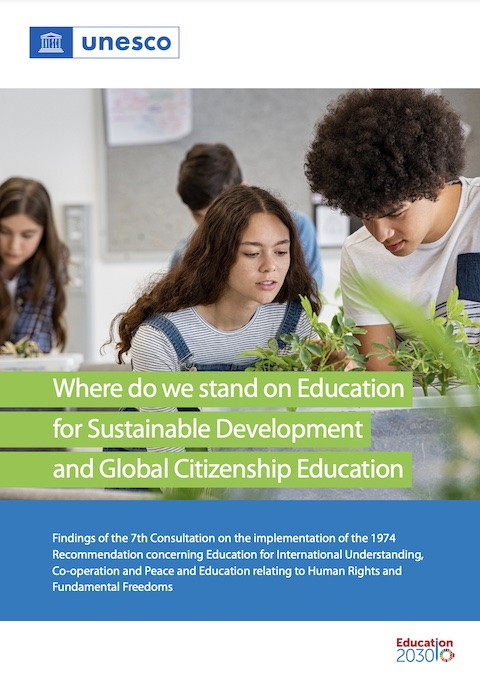 Where Do We Stand on Education for Sustainable Development and Global Citizenship Education: Findings of the 7th Consultation on the Implementation of the 1974 Recommendation Concerning Education for International Understanding, Co-operation and Peace and Education Relating to Human Rights and Fundamental Freedoms سنة النشر: 2022 المؤلف المؤسسي: UNESCO The Recommendation concerning Education for International Understanding, Co-operation and Peace and Education relating to Human Rights and Fundamental Freedoms was adopted by the 18th session of UNESCO’s General Conference in November 1974. Every four years, Member States are invited to report on the measures they have taken to implement the Recommendation in all levels and types of education from pre-primary to tertiary, formal, non-formal and adult education. This document summarizes the results of the 7th consultation on the implementation of the 1974 Recommendation, covering the period 2017-2020. It also contains, for the first time, data for the global indicator adopted by the UN Statistical Commission and the UN General Assembly for the monitoring of Target 4.7 of Sustainable Development Goal for Education.
 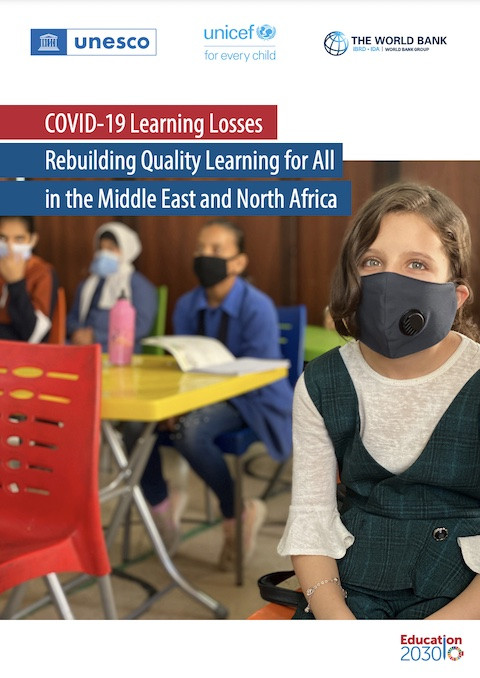 COVID-19 Learning Losses: Rebuilding Quality Learning for All in the Middle East and North Africa سنة النشر: 2021 المؤلف: Hana Yoshimoto | Jeannette Vogelaar | Brenda Haiplik المؤلف المؤسسي: UNESCO | United Nations Children's Fund (UNICEF) | World Bank An entire generation of children in the Middle East and North Africa (MENA) is estimated to be affected by the education crisis determined by the COVID-19 pandemic, with potential impacts that are going beyond the immediate/short term and also well beyond the education domain itself, with consequences on children’s socialisation, mental well-being, and future perspective of being active members of their society, including in the labor market. More information on the impact of the crisis would help countries to put in place strategies to mitigate the impacts. Timely investment and action to prevent extreme impacts of this crisis on education are of paramount importance in MENA, which already tackling a learning crisis before the COVID-19 outbreak.This publication delineates the overall education status in MENA after the breakout of COVID-19 pandemic, by presenting the education responses in MENA, and assessing the potential learning loss through a simulation analysis, recommendations are provided on how to build back better and enhance access and quality learning for all.
  Sub-Education Policy Review Report: Inclusive Education سنة النشر: 2021 المؤلف المؤسسي: UNESCO Inclusion highlights opportunities for an equal involvement of individuals with disabilities (physical, social, and emotional) when possible into typical education, but leaves accessible the probability of individual selections and possibilities for special aid and accommodations for persons who need it. This review was initiated by UNESCO to inform the ongoing discourse about inclusive education within Malaysia, Indonesia, Brunei, Philippine and Timur-Leste. Sustainable Development Goal 4 (SDG 4) reinforces the importance of inclusive education which adheres nations to adopt the framework of action in providing inclusion and equity through education of children with perceived differences. The review contributes to the body of literature on inclusive education by synthesizing policy recommendations and evaluations and identifying contradictions and overlaps in those policies. This review draws upon UNESCO reports pertaining to inclusive education policies and initiatives. In addition, a systematic review of empirical studies on inclusive education policy (2010-2020) identified from related and major databases (Eric) is conducted. Both the UNSECO reports and empirical studies are analyzed based on the SDG4 and its targets pertaining to inclusion policy.
 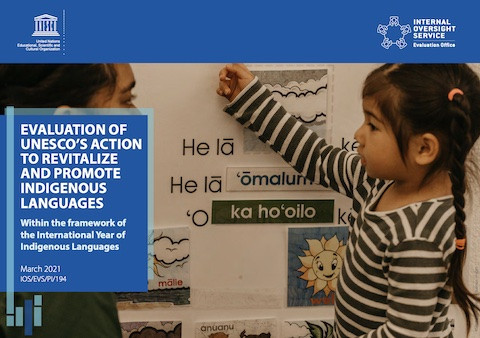 Evaluation of UNESCO’s Action to Revitalize and Promote Indigenous Languages: Within the Framework of the International Year of Indigenous Languages سنة النشر: 2021 المؤلف: Claire Thomas | Lydia van de Fliert | Oliver Loode | Silvia Quattrini | Mihaela Cojocaru المؤلف المؤسسي: UNESCO To draw attention to the critical loss of indigenous languages and the urgent need to preserve, revitalize and promote them and to take further urgent steps at the national and international levels, in 2016 the United Nations General Assembly in its resolution 71/178 proclaimed the year beginning on 1 January 2019 the International Year of Indigenous Languages (hereafter the IYIL2019). UNESCO was invited to serve as the lead agency for the Year and the coordination role was internally assigned to the Communication and Information Sector. UNESCO requested an evaluation of its action within the IYIL2019 with a view to learning from its experience during 2019 and further strengthening its coordination and implementation role during the upcoming Decade of Indigenous Languages (2022-2032).As the lead agency for the IYIL2019, UNESCO played a key role raising awareness of not only the critical loss of indigenous languages, but also the positive value and meanings that indigenous languages provide to Indigenous Peoples and humanity at large. The evaluation found that UNESCO led the development of an ambitious and relevant Action Plan for the Year. It also succeeded in setting up an 18-member Steering Committee composed of representatives of Member States, Indigenous Peoples and the UN three-party indigenous mechanisms. UNESCO staff implemented more than 80 activities around the world, with three-quarters of these at the global level and the majority of national events in Latin America and the Caribbean region. It also maintained an interactive website, which registered more than 880 events around the world.Leading and coordinating the IYIL2019 was not without its challenges, particularly as UNESCO was asked to lead this effort within existing resources and relying on a very small core team. Its programme sectors found creative solutions for indigenous language programming, but without a budget for intersectoral activities, collaboration between sectors was limited to information sharing and activities in Africa and the Arab States were few. The evaluation also found that the Action Plan lacked a meaningful results framework and thereby did not facilitate the monitoring of the IYIL2019. Partnerships with UNESCO networks and the wider UN system were underutilized and many opportunities for future collaboration have been highlighted for the upcoming Decade.
 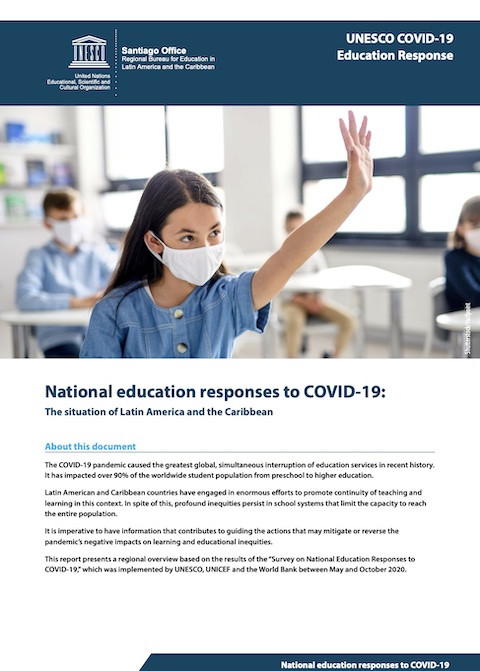 National Education Responses to COVID-19: The Situation of Latin America and the Caribbean سنة النشر: 2021 المؤلف المؤسسي: UNESCO The COVID-19 pandemic caused the greatest global, simultaneous interruption of education services in recent history. It has impacted over 90% of the worldwide student population from preschool to higher education.Latin American and Caribbean countries have engaged in enormous efforts to promote continuity of teaching and learning in this context. In spite of this, profound inequities persist in school systems that limit the capacity to reach the entire population.It is imperative to have information that contributes to guiding the actions that may mitigate or reverse the pandemic’s negative impacts on learning and educational inequities.This report presents a regional overview based on the results of the “Survey on National Education Responses to COVID-19,” which was implemented by UNESCO, UNICEF and the World Bank between May and October 2020. Las respuestas educativas nacionales frente a la COVID-19: El panorama de América Latina y el Caribe سنة النشر: 2021 المؤلف المؤسسي: UNESCO La pandemia de la COVID-19 provocó la mayor interrupción de servicios educativos, de forma global y simultánea, de la historia reciente y ha afectado a más del 90% de la población mundial de estudiantes, desde la educación preprimaria hasta la educación superior.Los países de América Latina y el Caribe han llevado adelante enormes esfuerzos para promover la continuidad de la enseñanza y el aprendizaje en este contexto. A pesar de ello, persisten en los sistemas escolares profundas inequidades que limitan la capacidad de alcanzar a toda la población.Es imperativo contar con información que contribuya a orientar las acciones que permitan atenuar o revertir los impactos negativos que ha provocado la pandemia en los aprendizajes y en las desigualdades educativas.Para ello este reporte presenta un panorama regional a partir de los resultados de la “Encuesta sobre las respuestas nacionales en materia de educación frente a la COVID-19", implementada por la UNESCO, UNICEF y el Banco Mundial entre mayo y octubre de 2020.
 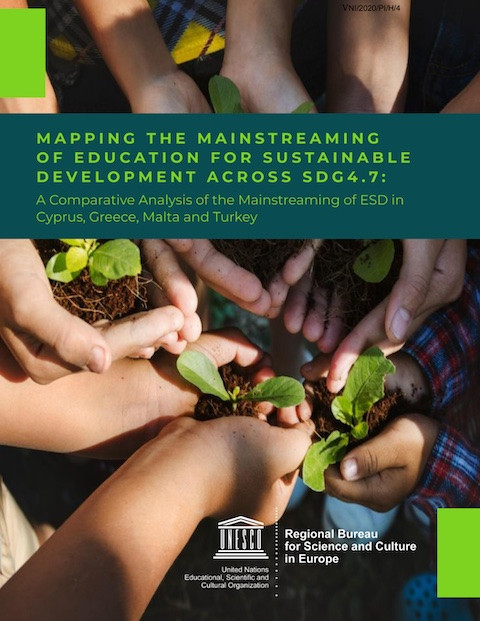 Mapping the Mainstreaming of Education for Sustainable Development Across SDG 4.7: A Comparative Analysis of the Mainstreaming of ESD in Cyprus, Greece, Malta and Turkey سنة النشر: 2020 المؤلف: Devonne Goad المؤلف المؤسسي: UNESCO The objective of the present report is to summarize the state of ESD implementation in Cyprus, Greece, Malta and Turkey. This report summarizes and shares the successes and challenges highlighted within National Implementation Reports, as such a summary could be an important contribution to UNESCO, as the organization is currently facilitating dialogues to establish the direction of the new global programme for ESD. For that reason, these four countries within the regional scope of the UNESCO Regional Bureau in Venice, Italy, were chosen for the preliminary study. For the purpose of this study, the binary data contained within the National Implementation reports of Cyprus, Greece, Malta and Turkey were extracted to summarize the state of ESD implementation.
  COVID 19, Technology-Based Education and Disability: The Case of Bangladesh; Emerging Practices in Inclusive Digital Learning for Students With Disabilities سنة النشر: 2021 المؤلف: Vashkar Bhattacharjee | Shahriar Mohammad Shiblee المؤلف المؤسسي: UNESCO This study sheds light on Bangladesh’s initiatives in the area of disability-inclusive education. The particu- lar focus is on the role of its Accessible Reading Materials (ARM) initiative and how this has contributed to ensuring disability-inclusive and accessible education during the COVID-19 pandemic in Bangladesh. ARM is a government-led initiative that was launched in 2014 by the then Access to Information (a2i) programme of the Prime Minister’s Office, now the Aspire to Innovate Programme of the Information and Communica- tion Technology (ICT) Division of the Government of Bangladesh. It was launched in recognition of the need for solutions to ensure virtual, as well as regular reading access for all students, including children and young people with barriers to reading. ARM is aimed at satisfying the educational needs of all students including students with print and learning disabilities.