
الموارد
استكشف مجموعة واسعة من الموارد القيمة حول تعليم المواطنة العالمية لتعميق فهمك وتعزيز البحث والمناصرة والتعليم والتعلم.
تم العثور على 948 نتيجة
 Commission Canadienne des Droits de la Personne المؤلف المؤسسي: Commission Canadienne des Droits de la Personne La Commission canadienne des droits de la personne est l'organisme de surveillance des droits de la personne à l'échelon fédéral. La Commission est indépendante du gouvernement et agit dans l'intérêt public. Elle contribue à ce que chaque personne au Canada soit traitée équitablement, peu importe son identité. Elle est responsable de représenter l'intérêt public et de demander des comptes au gouvernement du Canada quant aux enjeux de droits de la personne. Sur cette page, vous trouverez des ressources pour mettre en place une politique inclusive dans vos secteurs de travail notamment sur la prévention du racisme, de l'intolérance religieuse et des droits aux travailleurs en situation de handicap The Canadian Human Rights Commission is Canada's human rights watchdog. We work for the people of Canada and operate independently from the Government. The Commission helps ensure that everyone in Canada is treated fairly, no matter who they are. We are responsible for representing the public interest and holding the Government of Canada to account on matters related to human rights. On this page, you'll find resources to help you implement an inclusive policy in your areas of work, including the prevention of racism, religious intolerance and the rights of workers with disabilities.
 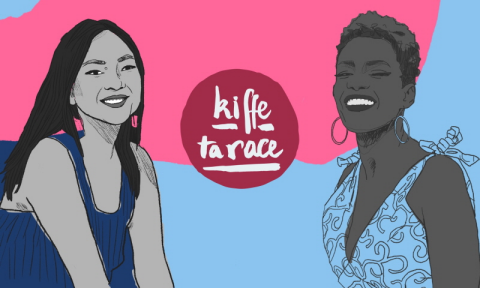 Kiffe Ta Race سنة النشر: 2018 المؤلف المؤسسي: Binge Audio Pourquoi le mot « race » est-il tabou ? Qu’en est-il quand on est, à la fois, victime de discriminations raciales et sexuelles ? Comment assumer son identité plurielle ? Un mardi sur deux, Rokhaya Diallo et Grace Ly reçoivent un·e invité·e pour explorer les questions raciales sur le mode de la conversation et du vécu. Why is the word "race" taboo? What happens when you are both a victim of racial and sexual discrimination? How do you come to terms with your plural identity? Every other Tuesday, Rokhaya Diallo and Grace Ly welcome a guest to explore racial issues in a conversational, real-life setting.
  Qui a peur des Juifs ? Antisémitisme, la tentation perpétuelle سنة النشر: 2023 المؤلف المؤسسي: Illana Weizman Dans cette série podcast, la sociologue Illana Weizman questionne les expériences juives et l’hostilité subie par cette population en compagnie d’intellectuel-les, d’artistes, de chercheurs-euses, de militant-es ou de politiques rencontré·es des deux côtés de la frontière franco-suisse.Où en est la lutte contre l’antisémitisme aujourd’hui? Quand les courants antiracistes prônent l’écoute des concernés, n’est-il pas temps de l’appliquer pleinement aux Juifs? In this podcast series, sociologist Illana Weizman discusses the Jewish experience and the hostility suffered by this population in the company of intellectuals, artists, researchers, activists and politicians from both sides of the Franco-Swiss border. When anti-racist currents advocate listening to those concerned, isn't it time to apply this fully to Jews?
  Les transformations des droits sociaux dans la globalisation سنة النشر: 2019 المؤلف: Jérôme Porta المؤلف المؤسسي: La Revue des Droits de l'Homme La globalisation des droits se manifeste par des phénomènes souvent décrits en termes de circulation ou transfert de droits. Parmi ces phénomènes, il en est un dont l’importance paraît croissante en matière sociale. Il s’agit du dépôt de droits sociaux sur des supports n’ayant pas pour objet de réglementer les rapports de travail, mais, d’encadrer les échanges commerciaux, de réguler la production de biens ou de produits, de promouvoir certaines politiques sociales ou encore de coordonner des politiques publiques nationales. Les clauses sociales présentes de manière croissante dans les accords de libre-échange ou l’adossement du socle européen des droits sociaux à un tableau d’indicateurs en sont des illustrations. Ces pratiques d’inclusion des droits du travailleur au sein de support économique, technique ou politique ne font pas véritablement objet d’attention pour elles-mêmes et sont trop souvent interprétés à partir de la normativité juridique. Cette extension de l’analyse juridique à de tels objets aboutit à ne commenter ces instruments qu’en terme d’écart au droit : ces droits sont-ils objets de sanction efficace ? Peuvent-ils être justiciables et invoqués devant un juge ? Ces préoccupations laissent dans l’ombre une question plus fondamentale, celle du changement qu’opère le passage d’une forme normative à une autre. Ces hybridations impliquent en effet une traduction, mieux une transformation. Tel est l’objet de la présente contribution. The globalization of rights is manifested by phenomena often described as the circulation or transfer of rights. Among these phenomena, there is one category, whose importance seems to be growing in international and european social matters. It is manifested by the filing of social rights on instruments not intended to regulate labour relations, but to regulate international trade, regulate the production of goods or products, promote certain social policies or even coordinate national public policies. The social clauses increasingly present in free trade agreements or the linking of the European social rights Pillar to a scoreboard of indicators are examples among many others of this. These practices of including workers' rights in economic, technical or political support do not really attract attention for themselves and are too often interpreted on the basis of legal normativity. This extension of the legal analysis to such objects leads to commenting on these instruments only in terms of deviation from the law : are these rights subject to effective sanctions ? Can they be justiciable and invoked before a judge ? These concerns leave a more fundamental question in the shadows, that of the changes brought about by the passage from one normative form to another. These hybridizations imply a translation, better a transformation. This is the purpose of this contribution to descriptib such a process and its implications.
  Sub-Regional Study on Transforming TVET in Ensuring Learning and Skills to Support School-to Work Transitions in Southeast Asian Countries سنة النشر: 2023 المؤلف: Jann Hidajat Tjakraatmadja | Hary Febriansyah | Yorga Permana | Lala Nurfitria | Farenza Fadil المؤلف المؤسسي: UNESCO Jakarta Technical and Vocational Education and Training (TVET) and the transition from school to work are critical for young individuals to be prepared for entering the job market. The school-to-work transition signifies the transition from education to professional work and involves stages such as finding a job, applying theoretical knowledge and adapting to work expectations. In line with SDG-4, there is a need to improve the relevance of TVET systems, equipping individuals with the necessary skills for employment, entrepreneurship and lifelong learning. Three strategic priorities include promoting lifelong learning opportunities, fostering skills for an inclusive and sustainable economy, and ensuring inclusive and resilient communities. UNESCO supports Member States to address current and future challenges in the field of TVET, including the transition from school to work. Recognising the significant role of TVET in achieving SDG-4, UNESCO works closely with countries like Brunei Darussalam, Indonesia, Malaysia, the Philippines, and Timor-Leste to enhance the relevance and effectiveness of their TVET systems. These countries have demonstrated a strong commitment to improving the quality of education and equipping individuals with the necessary skills for employment, entrepreneurship, and lifelong learning. In the discussion of innovations and trends in TVET systems, there is a need to respond to rapidly changing labour markets through leveraging labour market data, tracer studies, and employer insights, expanding work-based learning to support the transition from school to work, modernising TVET curricula with new skills and competencies, strengthening TVET through private sector and community engagement. TVET is important for the transition from school to work in the sub-region of Southeast Asia, in line with SDG-4. Standardised practices are needed for better employability and mobility. Challenges include labour market mismatches and negative perceptions, but there are opportunities to partner with industry, update curricula, promote inclusivity and gender equality, and adapt to changing labour markets. Using labour market data, expanding work-based learning, and engaging the private sector and local communities are critical. TVET can transform individuals and contribute to sustainable development in the subregion of South-East Asia, creating prosperous and inclusive societies.
  Toolbox for Educational Institutions: Lines of Action of Socio-Emotional Skills Vocational and Professional Orientation سنة النشر: 2017 المؤلف المؤسسي: ENEL Foundation | Organization of Ibero-American States for Education, Science and Culture (OEI) This toolbox is aimed at educational agents who are motivated to articulate in their pedagogical work actions aimed at facilitating the decision-making of young people during their life path, by strengthening socio-emotional skills and vocational and professional guidance, in order to enable transformations, whether personal, family or social, and with a view to sustainable development. Caja de herramientas para instituciones educativas: Líneas de acción de Habilidades socioemocionales orientación vocacional y profesional سنة النشر: 2017 المؤلف المؤسسي: ENEL Foundation | Organización de Estados Iberoamericanos para la Educación, la Ciencia y la Cultura (OEI) Esta caja de herramientas está dirigida a agentes educativos que se encuentren motivados en articular a su quehacer pedagógico acciones encaminadas a facilitar la toma de decisiones de los jóvenes durante su trayectoria de vida, mediante el fortalecimiento de las habilidades socioemocionales y la orientación vocacional y profesional, con el fin de posibilitar transformaciones ya sea de tipo personal, familiar o social y en miras al desarrollo sostenible.
 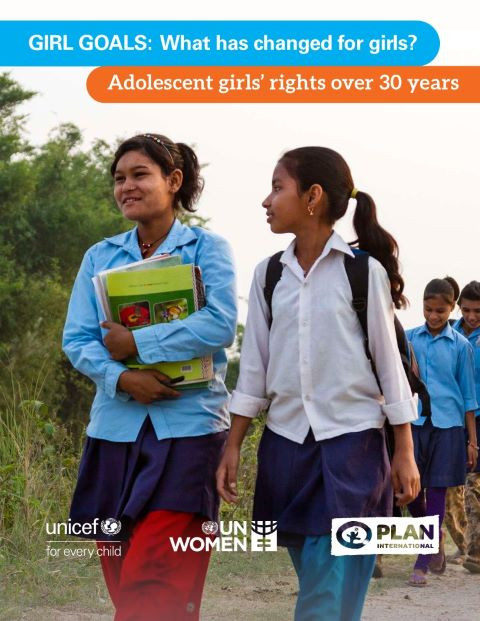 Girl Goals: What has Changed for Girls? Adolescent Girls’ Rights over 30 Years سنة النشر: 2025 المؤلف المؤسسي: United Nations Children's Fund (UNICEF) | United Nations Entity for Gender Equality and the Empowerment of Women (UN Women) | Plan International This report makes three key recommendations on action we can take now to advance adolescent girls’ rights at scale, in ways that account for fiscally constrained contexts and multiple competing priorities: 1. Ensure tangible and actionable support for adolescent girls’ voices, advocacy and action. The current generation of girls are raising their voices to be heard and are already at the forefront of making change around the world. With the right support, resources and seats at the table, adolescent girls can help transform the world for the better, shaping better policy outcomes for themselves and everyone. This is not about girls’ voices above all others, or endless consultation, but about specific, meaningful actions that ensure girls get the support they need and are heard on policy issues that matter to them. 2. Establish and track explicit targets for change for adolescent girls, who are too often invisible and sidelined Setting explicit targets to monitor outcomes for adolescent girls is key to making progress. Context-specific prioritization will be necessary, but there are some issues that stand out globally. Gaps in progress (such as child marriage gains accruing disproportionately to wealthier households) demonstrate the need forprogrammes that address poverty and economic realities alongside harmful social norms. The disproportionate number of adolescent girls not in education, employment or training, not entering the labour market as young women, and left behind when it comes to digital skills, is a threat to the gains made for girls and to economic growth that will benefit everyone. Stagnation on issues like underweight also stand out. Country- specific priorities supported by data- driven accountability mechanisms and investments are needed to translate policy commitments into change on the ground. 3. Resource and deliver smartly to unlock the social and economic dividend Governments and partners should invest in solutions proven to change outcomes across multiple SDGs at scale – for example, investing in education and skills, cash transfers and economic empowerment programmes designed to support girls. Existing systems, from maternal health care to school curricula, should be adapted to meet girls’ needs rather than creating small- scale, separate projects. Streamlined, evidence-based ‘add-ons’ – such as adding parenting support to existing maternal health-care programmes – can be cost effective and accelerate outcomes if well designed. Change is possible, and this report shows that great gains have been made. Smart investments now can transform the world for girls, families, communities and national economies. It is time to act.
  Schools for Conflict or for Peace in Afghanistan سنة النشر: 2015 المؤلف: Dana Burde The publication provides a systematic analysis of the relationship between education and conflict, tracing how different approaches have been applied in Afghanistan as the rationale for aid has shifted from a policy of benign neglect, to an effort to support war, to an effort to mitigate conflict. Using this history as a case study, the book explores how foreign intervention in education can contribute either to conflict or to peace.. Schools for Conflict or for Peace in Afghanistan سنة النشر: 2015 المؤلف: Dana Burde Cette publication est une analyse de la relation entre l'éducation et les conflits, retraçant l’évolution des motifs mobilisés pour justifier le recours à une aide extérieure en Afghanistan, et le passage d’une politique du laissez faire à celle de soutien à l’effort de guerre, puis aux tentatives d’apaisement du conflit. En s’appuyant sur cet exemple, cet ouvrage analyse comment l'intervention étrangère en matière d'éducation peut aussi bien contribuer à la guerre qu’à la paix.