
الموارد
استكشف مجموعة واسعة من الموارد القيمة حول تعليم المواطنة العالمية لتعميق فهمك وتعزيز البحث والمناصرة والتعليم والتعلم.
تم العثور على 948 نتيجة
 United Nations Decade on Education for Sustainable Development (2005-2014): Education for Sustainable Development سنة النشر: 2005 المؤلف المؤسسي: UNESCO The Declaration of the International Conference on Ecology and Development, held in Rio de Janeiro in 1992, begins with the following words: "People are the main concern for sustainable development. They have the right to a healthy and productive life in harmony with nature. "The Declaration adopted at the World Summit on Sustainable Development, held in Johannesburg in 2002, reflected the commitment of world leaders to "create a humane, equitable and attentive to civil society, recognizing that each member of this society has its own human dignity". Education is the foundation of sustainable development, as discussed in chapter 36 of the Program-21 of the summit that was held in Rio de Janeiro in 1992. This idea was reiterated at the Johannesburg summit. The implementation plan foresees a link between the Millennium Development Goals for universal primary education for both boys and girls, with special attention paid to girls, and the Dakar Plan of Action on Education for All. The creation of a gender-sensitive educational system at all levels and in all types of education - formal, informal and informal - to reach those who are not involved in the educational process is an essential component of education for sustainable development. Education is considered a tool to address such important issues as rural development, health, the prevention of the spread of HIV / AIDS, the environment, as well as broader ethical and legal issues (for example, human values and human rights).There is no universal model of education for sustainable development. Despite the countries' agreement on the overall concept, the approaches to education in each country will differ due to local characteristics and priorities. Each country should define its priorities and actions, as well as goals, accents and processes, based on environmental, social, economic conditions and appropriate ways of solving the problem. Education for sustainable development is equally critical for both developed and developing countries. ОБРАЗОВАНИЕ ДЛЯ УСТОЙЧИВОГО РАЗВИТИЯ: Декада ООН по образованию для устойчивого развития (2005 – 2014) سنة النشر: 2005 المؤلف المؤسسي: Организация Объединенных Наций по вопросам образования, науки и культуры (UNESCO) Декларация Международной конференции по экологии и развитию, прошедшей в Рио-де-Жанейро в 1992 г., начи-нается следующими словами: “Люди являются главной за-ботой устойчивого развития. Они имеют право на здоровую и продуктивную жизнь в гармонии с природой”. Декларация, принятая на Всемирном саммите по устойчи-вому развитию, состоявшемся в Йоханнесбурге в 2002 г., отразила обязательства лидеров мировых держав “создать гуманное, равноправное и внимательное к проблемам че-ловека общество, признающее то, что каждый член этого общества имеет свое человеческое достоинство”. Образование является фундаментом устойчивого развития, об этом говорится в главе 36 Программы–21 саммита, про-шедшего в Рио-де-Жанейро в 1992 г. Еще раз эта мысль была подтверждена на саммите в Йоханнесбурге. План реализации предусматривает установление связи между Целями развития тысячелетия в отношении всеобщего на-чального образования как для мальчиков, так и для девочек, где девочкам уделяется особое внимание, и Дакарским пла-ном действий по Образованию для всех. Создание гендер-но–чувствительной системы образования на всех уровнях и во всех типах образования – формальном, неформальном и неофициальном – в целях охвата тех, кто не принимает участия в образовательном процессе, – важнейший компо-нент образования для устойчивого развития. Образование считается инструментом, направленным на решение таких важных вопросов, как развитие сельских регионов, здраво-охранение, предотвращение распространения ВИЧ/СПИД, экология, а также более широких вопросов этического и правового характера (например, общечеловеческие цен-ности и права человека).Универсальной модели образования для устойчивого разви-тия не существует. Несмотря на согласие стран в отношении общей концепции, подходы к образованию в каждой стране будут различаться в силу местных особенностей и приори-тетов. Каждая страна должна определить свои приоритеты и действия, а также цели, акценты и процессы, исходя из экологических, социальных, экономических условий и со-ответствующих путей решения проблемы. Образование для устойчивого развития в равной степени является критиче-ски важным как для развитых, так и для развивающихся стран.
 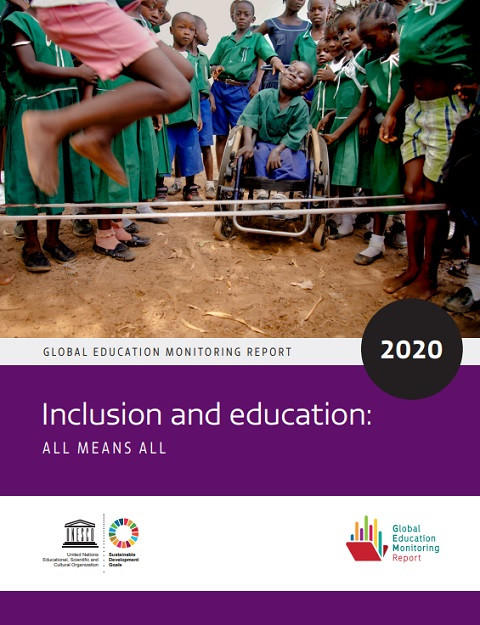 Informe de seguimiento de la educación en el mundo 2020: Inclusión y educación: Todos y todas sin excepción سنة النشر: 2020 المؤلف المؤسسي: Global Education Monitoring Report Team | UNESCO En el Informe de Seguimiento de la Educación en el Mundo 2020 se examinan los mecanismos sociales, económicos y culturales que discriminan a niños, jóvenes y adultos desprotegidos, manteniéndolos excluidos de la educación o marginados dentro de ella. Estimulados por su compromiso de hacer realidad el derecho a la educación inclusiva, los países están ampliando su visión de la inclusión en la educación y otorgando a la diversidad un lugar central en sus sistemas. Sin embargo, la aplicación de leyes y políticas bienintencionadas suele flaquear. El informe, publicado a principios del decenio de acción que culmina en 2030 y en el contexto de la crisis de Covid-19 que ha exacerbado las desigualdades subyacentes, sostiene que la resistencia a atender las necesidades de todos los educandos es una verdadera amenaza para el logro de los objetivos mundiales de educación.En Inclusión y educación: todos y todas sin excepción se definen prácticas en materia de gobernanza y finanzas; planes de estudios, manuales escolares y evaluaciones; formación de los docentes; infraestructura escolar; y relaciones con los alumnos, los padres y las comunidades que pueden desbloquear el proceso hacia la inclusión. Se formulan recomendaciones de política para que la diversidad de los educandos sea una fuerza que se valora, una fuerza de cohesión social.Dos nuevos sitios web complementan la cuarta edición del Informe de Seguimiento de la Educación en el Mundo. Education Profiles (Perfiles educativos) describe la manera en que los países abordan la inclusión, y constituye un medio útil para el diálogo sobre políticas. Education Progress (El Progreso de la educación) brinda la oportunidad de interactuar con los datos y explorar una serie de indicadores del ODS 4.
  [요약문] 세계 교육 현황 보고서 요약본 2020: 포용과 교육; 모두는 모든 이를 의미한다 (All Means All) سنة النشر: 2020 المؤلف المؤسسي: 유네스코 | 세계교육현황보고서팀 『2020 세계 교육 현황 보고서』는 취약계층 아동, 청소년 및 청년을 차별하여 교육에서 배제시키거나 소외시키는 사회적, 경제적, 문화적 메커니즘을 살펴본다. 포용적 교육에 대한 권리를 실현하겠다는 약속에 힘입어 모든 국가는 다양성을 교육제도의 핵심에 두기 위해 포용에 대한 비전을 확대하고 있다. 그러나 선의의 법과 정책의 시행은 종종 비틀거리곤 한다. 2030년까지 10년간의 실행이 시작되는 시점이자 근본적인 불평등을 악화시킨 코로나19 위기의 중간에 발표된 이 보고서는 모든 학습자의 요구를 해결하는 것에 대한 저항이 세계 교육 목표를 달성하는데 실질적인 위협이라고 주장한다. 『포용과 교육: 모두는 모든 이를 의미한다(ALL MEANS ALL)』는 거버넌스와 재정, 교육과정, 교과서 및 평가, 교사 교육, 학교 인프라, 그리고 포용의 과정을 밝힐 수 있는 학생, 학부모, 지역사회와의 관계 등에서 많은 실천들을 확인할 수 있다. 이 보고서는 학습자의 다양성을 사회적 응집력으로 만들기 위한 정책 권고안을 제공한다.
 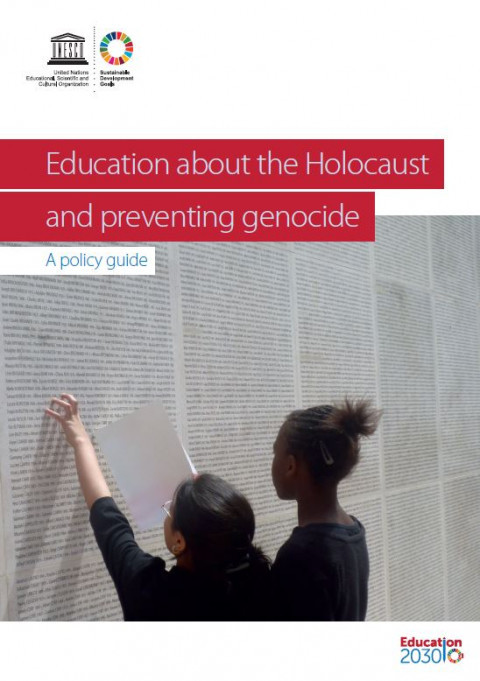 Education about the Holocaust and Preventing Genocide: A Policy Guide سنة النشر: 2017 المؤلف المؤسسي: UNESCO This Guide provides policy-makers with solutions to introduce education about the Holocaust, and possibly broader education about genocide and mass atrocities, into education systems and curricula. It is the first of its kind, focusing on matters that are relevant to policy, rather than on teaching practices alone.The publication addresses a wide range of essential questions, including: Why teach about the Holocaust? What learning outcomes can be expected from such educational endeavours? How do they relate to global education priorities? How to introduce the subject in the curriculum, train teachers, promote the most relevant pedagogies, and work with the non-formal sector of education?Based on UNESCO’s Global Citizenship Education work, the Guide draws on years of research and experience in the fields of Holocaust and genocide education. Numerous academics, educators and other experts offered insights and suggestions throughout the process. Multiple Holocaust and genocide related organizations – including the United States Holocaust Memorial Museum – contributed to the content. This creation benefited from the time and expertise of many. This Guide raises challenging questions for education stakeholders. It also provides concrete solutions regarding how educators can deal with deeply troubling histories, to build a better future for all. Enseignement de l'Holocauste et prévention du genocide: guide à l'intention des décideurs politiques سنة النشر: 2017 المؤلف المؤسسي: UNESCO Le present document a pour objectif de guider les responsables politiques qui souhaitent organiser ou renforcer l’etude de l’Holocauste et, plus generalement, du genocide et des crimes de masse, dans le systeme educatif de leur pays. Il y est explique pourquoi et comment l’enseignement et l’apprentissage relatifs a l’Holocauste peuvent contribuer a la realisation des priorites strategiques mondiales par l’education, notamment en cultivant la citoyennete mondiale, en promouvant les droits de l’homme et en instaurant une culture de paix et de prevention du genocide.Le document est principalement axe sur l’enseignement de l’Holocauste, et s’appuie sur des decennies de recherches, d’allocations de ressources et de pratiques pedagogiques qui en demontrent l’efficacite. Il prodigue des conseils sur la maniere de fixer des objectifs d’apprentissage clairs, realistes et adaptes au contexte, afin de promouvoir un enseignement de qualite dans ce domaine. Educación sobre el Holocausto y la prevención del genocidio: Una guía para la formulación de políticas سنة النشر: 2017 المؤلف المؤسسي: UNESCO La presente guía proporciona a los responsables de la formulación de políticas diversas soluciones para la introducción de la educación sobre el Holocausto, y posiblemente una educación más amplia sobre el genocidio y las atrocidades masivas, en los sistemas educativos y los planes de estudios. Es la primera obra de este tipo, al hacer hincapié en asuntos que atañen a las políticas, más que en la mera enseñanza de las prácticas. En la publicación se aborda una amplia gama de cuestiones, entre las que figuran: ¿Por qué conviene impartir enseñanza sobre el Holocausto? ¿Qué resultados de aprendizaje cabe esperar de estas iniciativas educativas? ¿Cuál es su relación con las prioridades educativas a escala global? ¿Cómo introducir el tema en los planes de estudios, formar a los profesores, promover las pedagogías más pertinentes, y trabajar con el sector no formal de la educación? ملخص التقرير العالمي لرصد التعليم 2020: التعليم الشامل للجميع; الجميع بال استثناء سنة النشر: 2020 المؤلف المؤسسي: UNESCO | Global Education Monitoring Report Team ينظر التقرير العالمي لرصد التعليم لعام 2020 في اآلليات االجتماعية واالقتصادية والثقافية التي تميز ضد األطفال والشباب والبالغين المحرومين، مما يحرمهم من التعليم أو يجعلهم مهمشين فيه. وبفضل حافز التزامها بإعمال الحق في التعليم الشامل، تعمل البلدان على توسيع نطاق رؤيتها للتعليم الشامل بإدراج التنوع في صلب ً ما يتعثر تنفيذ القوانين والسياسات الهادفة التي تنطوي نظمها التعليمية. لكن غالبا على نوايا حسنة. ويرى التقرير الذي صدر في بداية عقد العمل حتى عام 2030 ، وفي خضم األزمة الناجمة عن جائحة كوفيد-19 ،التي أسفرت عن تفاقم أوجه عدم ً أمام ً حقيقيا المساواة الكامنة، أن مقاومة تلبية احتياجات كل متعلم تشكل تهديدا تحقيق أهداف التعليم العالمية. 全球教育监测报告摘要 2020: 包容与教育; 覆盖全民,缺一不可 سنة النشر: 2020 المؤلف المؤسسي: UNESCO | Global Education Monitoring Report Team 2020年《全球教育监测报告》分析了歧视弱势儿童、青年和成人、将 其排除在教育之外或是在教育领域内使其边缘化的社会、经济和文化机 制。各国承诺落实民众享有包容性教育的权利,并以此为鞭策,努力拓 展对于教育包容性的认识,将多样性作为教育系统的核心。然而,出于 良好意愿的法律和政策在实施过程中往往举步维艰。本报告发布于迈向 2030年目标的十年行动之初,仍在肆虐的2019冠状病毒病危机加剧了深 层次的不平等问题,报告认为对满足每名学习者需求的抵触,是对实现 全球教育目标的真正威胁。
 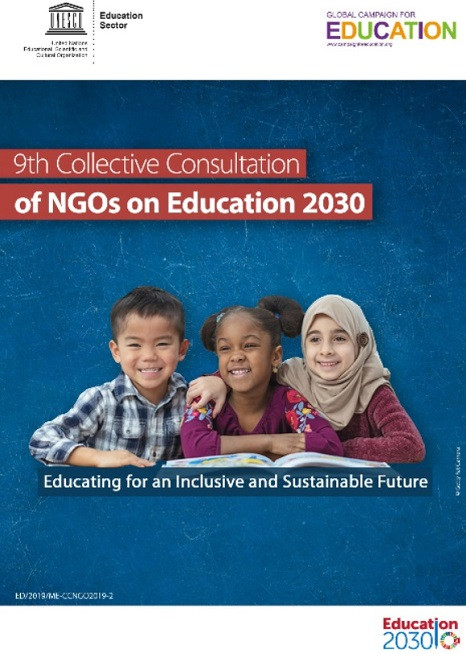 9th Collective Consultation of NGOs on Education 2030: Educating for an Inclusive and Sustainable Future سنة النشر: 2020 المؤلف المؤسسي: UNESCO | Global Campaign for Education (GCE) This includes proceedings and key messages of the 9th Global meeting of the Collective Consultation of NGOs on Education 2030 (CCNGO 2019) organized by UNESCO from 2-5 December 2019 in Hammamet, Tunisia and generously hosted by the Global Campaign for Education (GCE), alongside the Arab Campaign for Education for All (ACEA) and the National Association of the Right to Education (ANDET). The CCNGO 2019 aimed to build on CSOs(Civil Society Organisations) experiences and strong commitments to strengthen collective initiatives towards the realisation of the SDGs and education related targets. The focus and major theme of the Meeting was the role and engagement of civil society organizations in supporting equity and inclusion in the implementation of SDG4-Education 2030 at national, regional and global level.