
الموارد
استكشف مجموعة واسعة من الموارد القيمة حول تعليم المواطنة العالمية لتعميق فهمك وتعزيز البحث والمناصرة والتعليم والتعلم.
تم العثور على 2,275 نتيجة
 Centre commémoratif de l'Holocauste à Montréal Le Centre commémoratif de Montréal informe et sensibilise chaque type de public sur l'Holocauste, l'antisémitisme, le racisme, la haine et l'indifférence. Grâce à son site Web, les enseignants ont accès à des guides pratiques et des activités pour les élèves du primaire et du secondaire. Vancouver Holocaust Education Centre The Vancouver Holocaust Centre Society was founded in 1983 by survivors of the Holocaust. The founders’ goal was to leave a permanent legacy in the form of the Vancouver Holocaust Education Centre devoted to the Holocaust and based on anti-racism education. Online, teachers have access to practical guides for teachers and activities with discovery kits for primary and secondary pupils. Lesson Components from Echoes and Reflections Prepared by the Anti-Defamation League, the USC Shoah Foundation and Yad Vashem, Echoes and Reflections provides educators with the professional development and resources necessary to acquire the necessary knowledge, capacity, and practice to responsibly and effectively teach the Holocaust. The ten multipart lessons in the Teacher's Resource Guide, along with additional supplementary material provided here, can enhance both teachers' and students' experiences with Echoes and Reflections.
  Quick Guide to Education Indicators for SDG 4 سنة النشر: 2018 المؤلف المؤسسي: UNESCO Institute for Statistics (UIS) This guide serves as a quick reference on how to monitor progress towards Sustainable Development Goal 4 (SDG 4) on quality education. It provides basic explanations of SDG 4 targets, their indicators, how they are created and where to find the information needed for these indicators.
  Dakar Office: Annual Report 2017 سنة النشر: 2018 المؤلف المؤسسي: UNESCO Dakar Across the globe, the 2030 Agenda remains the unifying tool of the international community in the construction of a prosperous, peaceful, and sustainable world for all. The 17 Sustainable Development Goals are the expression of a shared global and transformative vision to change the world and improve the well-being of all peoples. UNESCO plays a transformative role in the implementation of this agenda, thanks to its education, culture, sciences and communication and information programmes.This annual report underlines the drive and spirit of our team in promoting innovation to uphold the 2030 and 2063 Agendas. It is a resounding testament to the unwavering forts of our team in 2017, and the depth of their commitment to advance the ideals and objectives of UNESCO.The 2017 Annual Report of the UNESCO Regional Office covers seven countries in the region: Burkina Faso, Cabo Verde, Guinea-Bissau, Niger, Senegal, The Gambia as well as Mali, supported by the national office in Bamako. What can we learn from the dark chapters in our history? Education about the Holocaust in Poland in a comparative perspective The article investigates what research tells us about the dynamics of educational practice in both formal and informal education about the Holocaust. It poses such questions as whether it is possible to identify good practices on a political and/or educational level, whether there are links between education about the Holocaust and human rights education, and how education about the Holocaust relates to attitudes toward Jews. Examples of both international studies (such as those by the Fundamental Rights Agency of the EU and the American Jewish Committee) and some national surveys on education about the Holocaust are discussed, followed by an analysis of empirical studies from Poland based on focus group interviews and individual interviews with educators. The choice of case study was based on the historical fact that occupied Poland was the site of the murder of almost 5 million Jews, including 3 million Polish Jews. In many cases a strong association with a Polish sense of victimhood based on the memory of the terror and the murder of almost 2 million ethnic Poles during WWII creates conflictingapproaches and generates obstacles to providing education about Jewish victims. Nevertheless, following the fall of communism, the number of educational initiatives designed to teach and learn about the Shoah is steadily increasing. The article presents tips for successful programmes of education about the Holocaust which can be generalized for any type of quality education, but are primarily significant for education about tolerance and education aimed at reducing prejudice, counteracting negative stereotypes and preventing discrimination. (By the author)
 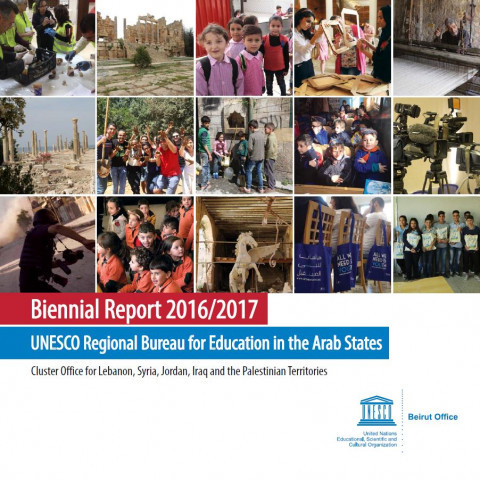 Biennial Report 2016/2017: UNESCO Regional Bureau for Education in the Arab States سنة النشر: 2018 المؤلف المؤسسي: UNESCO Beirut As Regional Bureau for Education, UNESCO Beirut is the lead coordinator for SDG 4 in the Arab Region. We strive to provide tangible support for each Member State in the region, taking into account national needs and priorities, thereby employing nationally relevant approaches. More specifically, our work aims to address both the humanitarian and development aspects brought about by the protracted crisis in Syria through bridging the learning gaps for the youth, both for Syrian refugees and vulnerable youth in host communities. Our response also targets teachers, mentors and facilitators as well as Ministries’ technical officials. The crisis in Syria has created a need for specific support in education in emergencies and quality education to which we actively engage from both, upstream analytical and capacity building and downstream operational levels. UNESCO Beirut has also strengthened its leadership to respond to the deliberate destruction of cultural heritage, illicit trafficking, and attacks against individuals on religious or cultural grounds. We raise the alarm to protect heritage in danger, assessing damages to World Heritage sites in conflict. We also raise awareness among the public about the values of cultural heritage and the need to protect it for future generations. In today’s diverse societies, the Organization’s fundamental humanist mission guides us to support people, especially the youth, in understanding each other and working together to build lasting peace and enables people to create and use knowledge for just and inclusive societies. We continue to advocate free, independent and pluralistic media in print, broadcast and online to enhance freedom of expression as a contributor to peace, sustainability, poverty eradication and human rights. This biennial report summarizes the work and achievements accomplished between 2016 and 2017 by our office.
 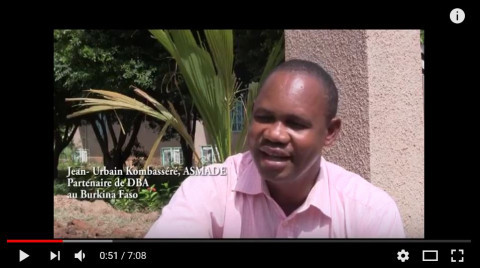 [Vidéo] L'éducation à la citoyenneté au Sud سنة النشر: 2016 المؤلف المؤسسي: ONG Défi Belgique Afrique (DBA) Un projet d'éducation au développement de la jeuness africaine
 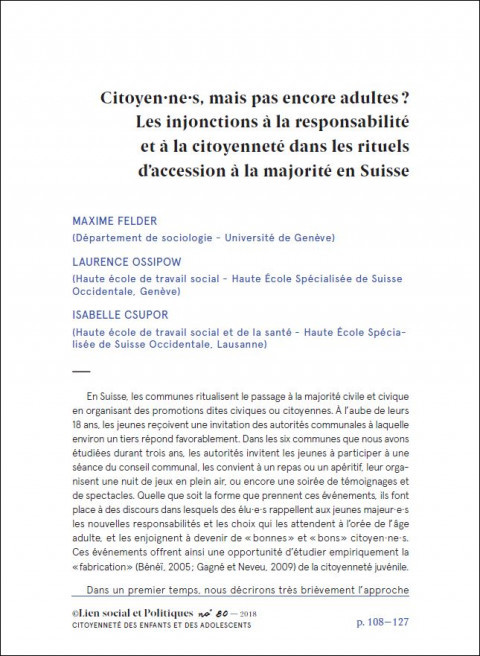 Citizens but not Adults? Injunction to be Responsible and Citizens in Official Coming of Age Rituals in Switzerland سنة النشر: 2018 المؤلف: Maxime Felder | Laurence Ossipow | Isabelle Csupor المؤلف المؤسسي: Lien social et Politiques Swiss municipalities organize ceremonies for their residents reaching the official age of full citizenship. In the six studied municipalities, local authorities invite them to a municipal council’s meeting, offer them a dinner or an aperitif, or organize them a show and a debate with role models. Speeches are central to these ceremonies, and authority representatives encourage their audience to be “good” citizens. Call to vote is the leitmotiv, but discourses reveal broader definitions of citizenship, insisting sometimes on a local commitment and volunteering, and sometimes on the necessity to fight climate change and inequalities. Comparing officials’ speeches to statements of young people participating in these events reveals “tensions”. Indeed, authority representatives address young citizens without considering them as fully adult, and they do not consider themselves as such neither. However, some of them are already involved in forms of vernacular citizenship, and are progressively leaving the municipality to study, work or travel. Ultimately, these ceremonies allow officials to stage their interest in the youth, which they consider as both uncompleted and essential to the renewal of democracy. Citoyen·ne·s, mais pas encore adultes ? Les injonctions à la responsabilité et à la citoyenneté dans les rituels d’accession à la majorité en Suisse سنة النشر: 2018 المؤلف: Maxime Felder | Laurence Ossipow | Isabelle Csupor المؤلف المؤسسي: Lien social et Politiques Les communes suisses organisent un rituel pour célébrer l’accession à la majorité civile et civique de leurs résident·e·s qui atteignent l’âge de dix-huit ans. Dans les six communes que nous avons étudiées, les autorités invitent les jeunes à participer à une séance du conseil communal, les convient à un repas ou un apéritif, ou leur organisent une soirée de témoignages, de spectacle ou encore de jeux en plein air. Ces événements font place à des discours dans lesquels des représentant·e·s des autorités enjoignent les jeunes à être de « bonnes » et « bons » citoyens. Si l’appel au vote est toujours le leitmotiv, les discours se centrent aussi sur des définitions plus larges de la citoyenneté, insistant tantôt sur l’engagement associatif et local, tantôt sur la nécessité d’agir pour l’écologie ou contre les inégalités. Le croisement de ces analyses avec celles des entretiens menés avec de jeunes participant·e·s fait émerger des tensions. En effet, les autorités s’adressent à des jeunes qu’elles ne considèrent pas tout à fait comme des adultes (et qui ne se considèrent pas non plus comme tel·le·s), qui sont pour certain·e·s déjà engagé·e·s dans ces formes de citoyenneté vernaculaire, et qui s’apprêtent à quitter leur commune pour étudier ou voyager. Ces promotions citoyennes permettent ainsi de mettre en scène l’intérêt des élu·e·s pour les jeunes, considéré·e·s comme des citoyen·ne·s en apprentissage dont dépend le renouvellement de la démocratie.