
الموارد
استكشف مجموعة واسعة من الموارد القيمة حول تعليم المواطنة العالمية لتعميق فهمك وتعزيز البحث والمناصرة والتعليم والتعلم.
تم العثور على 2,275 نتيجة
 주요 외국의 환경교육 비교 연구 سنة النشر: 2018 المؤلف: 김찬국 | 이선경 | 김남수 | 민경석 | 황세영 | 이은주 | 김태연 | 강진영 المؤلف المؤسسي: 대한민국 환경부 | 한국환경교육학회 이 연구는 유엔 지속가능발전교육 10년(UN DESD: 2005~2014)이 종료된 시점에서 국제기구와 주요 외국의 환경교육 분야에서 최근 나타나는 변화에 대한 종합적인 이해가 필요한 상황에서 시작되었다.특히 최근 환경교육 분야의 축적된 경험과 논의를 바탕으로 각국의 환경 및 교육상황에 부합하여 환경교육 법·제도 등을 정비하려는 노력이 국제 사회에서 이루어지고 있다는 점에 주목하였다. 이 조사 연구는 아시아, 유럽, 북미와 남미에 위치한 10개국(일본, 중국, 대만, 싱가포르, 호주, 영국, 독일, 미국, 캐나다, 브라질)을 대상으로 환경교육 현황을 조사하고 비교분석과 발전방향을 제시한다. 아울러 국제기구인 UNEP와 UNESCO의 환경교육 정책과 실행 방식도 함께 살펴보았다. Part I에는 주요 외국 10개국의 환경교육 상황과 UNESCO, UNEP의 환경교육 정책을 수록하였고, Part II에서는 각국의 환경교육을 비교 분석하고 있다.
  SDG 4 - Policies for flexible learning pathways in higher education: Taking stock of good practices internationally (IIEP-UNESCO Working Papers) سنة النشر: 2020 المؤلف: Michaela Martin | Ana Godonoga المؤلف المؤسسي: UNESCO International Institute for Educational Planning (IIEP) This paper draws on country examples across different UNESCO regions to illustrate policy-relevant as well as practical approaches to developing flexible learning pathways in higher education. It shows that policies can facilitate flexible learning pathways include legislative and regulatory frameworks, articulation and transfer policies, and lifelong learning policies. It also presents a number of supportive policy instruments that can serve to bridge policy and practice, such as national qualifications frameworks, quality assurance and accreditation, credit accumulation and transfer systems, and information and guidance services. Finally, apart from discussing system-wide approaches, this paper also gives examples of more decentralized, institution-led practices that contribute to flexible learning pathways. This paper concludes that well-designed policy frameworks and instruments and targeted measures can create an enabling environment for flexible learning pathways, but their effectiveness requires strong administrative capacity and coordination, as well as the involvement of all relevant stakeholders, including those who design, implement, and benefit from policies. It is also essential that policies, instruments, and practices are in alignment with one another and work towards a common objective. Therefore, a holistic approach, comprising an adequate and well-coordinated mix of policies, instruments, and targeted measures, is required, in order to translate flexible learning pathways from a national priority into an institutionalized practice that reaches its intended beneficiaries.
  다문화시대 평생교육 관점에서의 세계·민주시민교육 과제 및 실천 방향 سنة النشر: 2018 المؤلف: 옥일남 المؤلف المؤسسي: 국가교육회의 | 서원대학교 산학협력단 본 연구는 이제까지의 국내외 민주시민교육의 정책 동향을 검토하고, 다문화사회의 특수성과 평생교육의 관점에서 새롭게 요청되는 민주시민교육의 정책 방향과 주요 과제를 제시하는데 목적이 있다. 이러한 연구 목적을 달성하기 위해 현재 우리 사회가 처해있는 세계화·다문화 맥락을 이해하고, 해외의 주요 정책 사례들을 살펴보고자 한다. 그리고 거버넌스 개념을 활용하여 민주시민교육을 세계시민교육과 연계해 세계화·다문화 시대의 시민교육을 위한 정책 방향과 실천 방안을 제시할 것이다.
 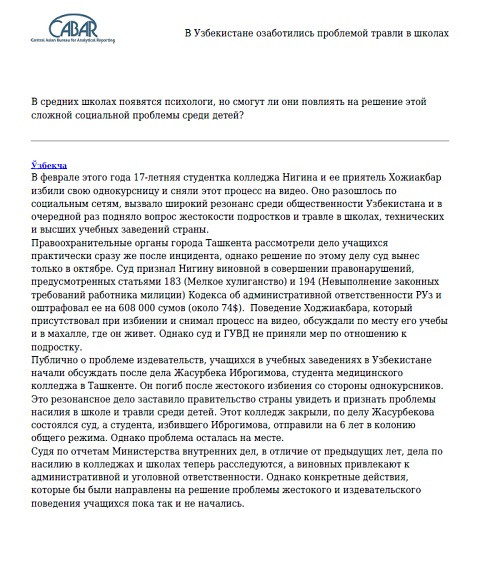 Uzbekistan Expresses Concerns about School Bullying سنة النشر: 2018 المؤلف: Дарина Солод المؤلف المؤسسي: Central Asian Bureau for Analytical Reporting (CABAR) Psychologists will appear in secondary schools in Uzbekistan. The author asks if they will be able to influence the solution of this complex social problem among children. В Узбекистане озаботились проблемой травли в школах سنة النشر: 2018 المؤلف: Дарина Солод المؤلف المؤسسي: Central Asian Bureau for Analytical Reporting (CABAR) В средних школах в Узбекистане появятся психологи. Автор задается вопросом, смогут ли они повлиять на решение этой сложной социальной проблемы среди детей.
 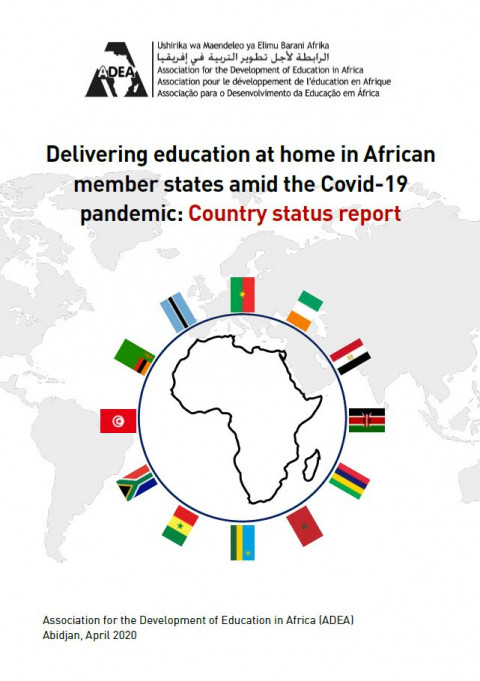 Delivering Education at Home in African Member States Amid the Covid-19 Pandemic: Country Status Report سنة النشر: 2020 المؤلف المؤسسي: Association for the Development of Education in Africa (ADEA) Since its emergence in late 2019, the coronavirus disease 2019 (COVID-19) has evolved into a pandemic, heavily affecting the lives of billions of people across the world with an anticipated huge impact on the global economy and Africa in particular. Education is one of the sectors heavily affected, with the closure of learning institutions in many African countries likely to negatively affect the education quality.In order to obtain a clearer view of the status of learning during this period, and to better support countries in the immediate, short and long term, ADEA engaged some of the most affected African countries in March 2020 to map the national situation in the education sector. The foregoing is a synopsis of the feedback from Burkina Faso, Côte d’Ivoire, Egypt, Ghana, Kenya, Mauritius, Morocco, Rwanda, Senegal, South Africa, Tunisia, and Zambia in terms of national strategies, platforms and tools or applications, gaps and challenges, partner engagement, good practices and lessons learnt with some recommendations.
  Lifelong Education: Continuous Education for Sustainable Development; The Collection of the 15th International Conference سنة النشر: 2017 المؤلف المؤسسي: National Academy for Education (NAE) This edition of the proceedings of international cooperation presents the reports of the participants of the first stage of the 15th (anniversary) international conference “Education Throughout Life: Continuing Education for Sustainable Development”, which was held in Astana, Republic of Kazakhstan. The conference participants focused on the issues of training competent specialists, models, methods, technologies and organizational forms of continuing education used in pedagogical practice. The authors paid special attention to new pedagogical and organizational strategies for continuing education of adults, people with disabilities and the "third age", as well as spiritual, moral, ethical and democratic values in the context of upbringing in continuing education. Образование через всю жизнь: непрерывное образование в интересах устойчивого развития; Сборник материалов 15-й международной конференции سنة النشر: 2017 المؤلف المؤسسي: National Academy for Education (NAE) В настоящем выпуске трудов международного сотрудничества представлены доклады участников первого этапа 15-й (юбилейной) международной конференции «Образование через всю жизнь: Непрерывное образование в интересах устойчивого развития», которая проходила в Астане, Республика Казахстан. В центре внимания участников конференции были вопросы подготовки компетентных специалистов, применяемые в педагогической практике модели, методики, технологии и организационные формы непрерывного образования. Особое внимание авторы уделили новым педагогическим и организационным стратегиям непрерывного образования взрослых, людей с ограниченными возможностями и «третьего возраста», а также вопросам духовно-нравственных, этических и демократических ценностей в контексте воспитания в непрерывном образовании.
  Advantages and Risks of Introducing the “Multilingual and Multicultural Education” Program in Kyrgyzstan سنة النشر: 2019 المؤلف: Kanzada Zayirbekova المؤلف المؤسسي: Central Asian Bureau for Analytical Reporting (CABAR) According to the author, multilingual education makes it possible to simultaneously master the state, official and one of the foreign languages, and also creates cohesion in society and enhances the culture of interethnic communication, and all this strengthens interethnic relations.
  What Makes a Good Global Citizenship Resource? المؤلف المؤسسي: Reading International Solidarity Centre (RISC) This guidance document provides tips, ideas and a criteria of do's and don'ts for selecting a good Global Citizenship resource, from story books, to holiday photos and maps. With advice on how to evaluate resources, improve and add to existing ones, and suggestions for creating new ones, this is an invaluable starting point for any educator and any age group.