
الموارد
استكشف مجموعة واسعة من الموارد القيمة حول تعليم المواطنة العالمية لتعميق فهمك وتعزيز البحث والمناصرة والتعليم والتعلم.
تم العثور على 2,275 نتيجة
 Ministerial Forum: Global Dialogue on ICT and Education Innovation – Towards Sustainable Development Goal for Education (SDG 4); Proceedings سنة النشر: 2019 المؤلف المؤسسي: UNESCO Institute for Information Technologies in Education (IITE) The present publication contains articles based on the outcomes of the Ministerial Forum “Global Dialogue on ICT and Education Innovation – Towards Sustainable Development Goal for Education (SDG 4)”, organized by UNESCO IITE in cooperation with the Ministry of Education and Science of the Russian Federation in Moscow (Russia) on 18-19 March, within the Moscow International Education Fair 2018 (MIEF 2018).The publication covers the flagship topics such as ICT potential for future teachers and future schools, digital pedagogy and OER, collaboration between public and private sectors in the use of ICT in education, digital technologies for quality and equity in education.
  민주시민이 미래다 سنة النشر: 2017 المؤلف المؤسسي: 중앙선거관리위원회 선거연수원 이 책자에 실린 내용은 중앙선거관리위원회 선거연수원의 「이종희 정치살롱」 (http://blog.naver.com/jongheesalon)에 지난 1여 년간 블로그에 축적된 다양한 선거·정치이야기 등을 모아서 제작한 것이다.
  Materiales para eliminar el castigo físico y humillante y promover la disciplina positiva سنة النشر: 2014 المؤلف المؤسسي: Save the Children Es una caja de herramientas que busca promover la disciplina positiva para eliminar el castigo físico y humillante. Presenta diferentes tipos de materiales: sistematización de experiencias, guías prácticas para familias y docentes, documentos de investigación y materiales de incidencia.
 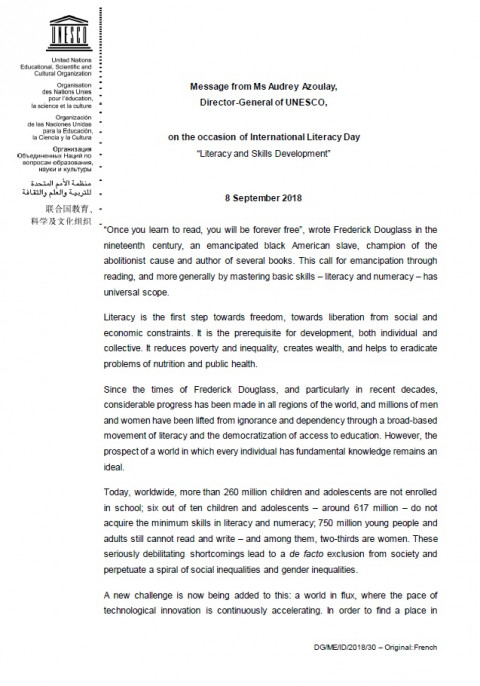 Message from Ms Audrey Azoulay, Director-General of UNESCO, on the occasion of International Literacy Day, 8 September 2018 سنة النشر: 2018 المؤلف المؤسسي: UNESCO. Director-General, 2017-2025 (Azoulay, A.) This message was delivered by Audrey Azoulay, Director-General of UNESCO, on the occasion of the International Day of Literacy, on 8 September 2018. 联合国教科文组织总干事奥德蕾·阿祖莱 国际扫盲日致辞:扫盲与能力开发 سنة النشر: 2018 المؤلف المؤسسي: UNESCO. Director-General, 2017-2025 (Azoulay, A.) 2018年9月8日,联合国教科文组织总干事奥德蕾·阿祖莱国际扫盲日致辞
 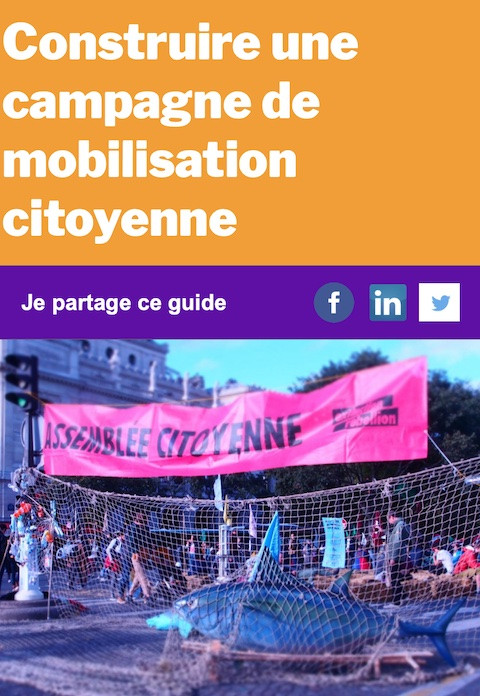 Construire une campagne de mobilisation citoyenne: Je partage ce guide المؤلف المؤسسي: L'accélérateur de la mobilisation (France) Ce kit est pour partager les bases de la création de campagnes de mobilisation citoyenne, générer de l’inspiration et donner l’envie à des groupes de citoyen.ne.s d’aller gagner des victoires concrètes.
 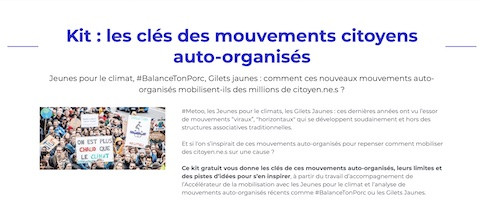 Kit: Les clés des mouvements citoyens auto-organisés المؤلف المؤسسي: L'accélérateur de la mobilisation (France) Ce kit gratuit vous donne les clés de ces mouvements auto-organisés, leurs limites et des pistes d’idées pour s’en inspirer, à partir du travail d’accompagnement de l’Accélérateur de la mobilisation avec les Jeunes pour le climat et l’analyse de mouvements auto-organisés récents comme #BalanceTonPorc ou les Gilets Jaunes.
  C'est quoi une information? سنة النشر: 2015 المؤلف: Olivier Marquézi | Mathieu Decarli المؤلف المؤسسي: Radio France | Réseau Canopé | France Télévisions | La Generale de Production Un film d’animation qui aborde des questions telles que « Qu’est-ce qu’un média », « Qu’est-ce qu’une information », « Qu’est-ce qu’une source ?... ». Autant de sujets pour amener les élèves à une pratique raisonnée autour des écrans, de l’information, du métier de journaliste.
 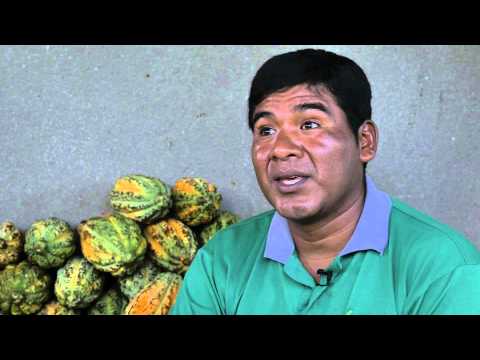 Changeons le commerce, pas le climat سنة النشر: 2015 المؤلف المؤسسي: Artisans du Monde Cette vidéo donne la parole aux producteurs, premières victimes des conséquences de la hausse des températures.Cette vidéo est un des supports: de la mallette pédagogique "Le grand voyage d'un chocolat équitable" du kit "Consommer responsable, l'alimentation" co-édité avec CANOPE
 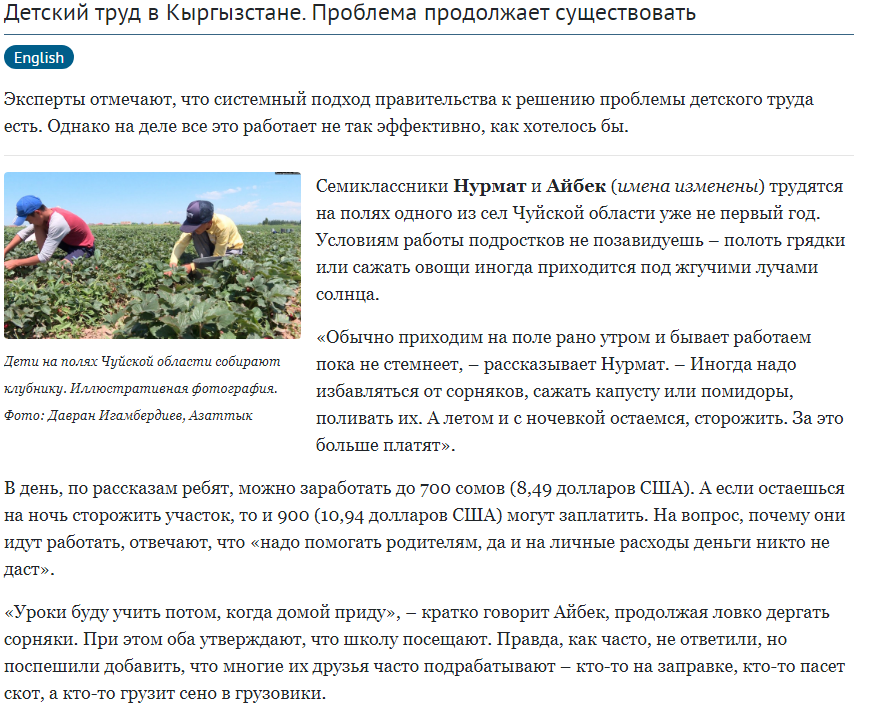 Child Labour in Kyrgyzstan: A Persisting Problem سنة النشر: 2022 المؤلف المؤسسي: Central Asian Bureau for Analytical Reporting (CABAR) Experts note that in the presence of a systematic approach of the Kyrgyz Government to solve the problem of child labor, a number of challenges remain in practice. This article examines some of the reasons for the involvement of children in the labor market, including economic instability, mass migration of the population, rising poverty levels, the influence of local customs and traditions. The article also provides an overview of relevant statistical data and some national initiatives aimed at eliminating child labor.