
الموارد
استكشف مجموعة واسعة من الموارد القيمة حول تعليم المواطنة العالمية لتعميق فهمك وتعزيز البحث والمناصرة والتعليم والتعلم.
تم العثور على 2,275 نتيجة
 The ABCs of Global Citizenship Education سنة النشر: 2016 المؤلف المؤسسي: UNESCO UNESCO's FAQ flyers on GCED L’ABC de l’éducation à la citoyenneté mondiale سنة النشر: 2016 المؤلف المؤسسي: Organisation des Nations Unies pour l'éducation, la science et la culture (UNESCO) Les progrès considérables des technologies de l’information et de la communication (TIC) ont permis aux individus de se rapprocher et d’interagir les uns avec les autres, où que ce soit et à tout moment. Cela a contribué à intensifier le sentiment et le fait d’être interconnectés et de vivre au-delà des frontières. En outre, l’augmentation des migrations transnationales rend les communautés locales inévitablement plus hétérogènes et accroît la nécessité d’apprendre à vivre ensemble. De plus, les tensions et les conflits entre populations, ainsi que les défis liés au développement durable, tel que le changement climatique ont des origines et des conséquences qui dépassent les frontières nationales. Cela et, exige plus de coopération et à la mise en œuvre d’actions collectives aux niveaux local et mondial.
  Non-formal and Informal Programs and Activities that Promote the Acquisition of Knowledge and Skills in Areas of Global Citizenship Education (GCED) and Education for Sustainable Development (ESD) سنة النشر: 2016 المؤلف: Ashley Stepanek Lockhart المؤلف المؤسسي: UNESCO This study will examine the nature of, and how, non-formal and informal programs and activities contribute to the acquisition of knowledge and skills for children, adolescents, youth and adults in precise areas of Target 4.7. This will be done by highlighting different definitions, conceptual approaches and history, along with policies of GCED and ESD and non-formal education and informal learning, comparing attempts to operationalize GCED and ESD to indicators for measurement and monitoring and challenges therein, and by identifying relevant sample programs and activities from around the world to analyze and consider using as data sources. How non-formal and informal provision related to GCED and ESD links to formal education will be considered, along with its connection to the larger notion of lifelong learning.
  How Does Education About the Holocaust Advance Global Citizenship Education? سنة النشر: 2018 المؤلف: E. Doyle Stevick المؤلف المؤسسي: UNESCO Can education about past genocides shape our understanding of how violence occur in today’s world? Can it foster a sense of belonging to a common humanity and empower young people to become active citizens who work globally for peace and human rights? How does learning about such crimes, which profoundly affect the core dignity of human beings, support the objectives of Global Citizenship Education (GCED), a priority of the 2030 Education Agenda?This paper, commissioned by UNESCO, offers an overview of empirical research on teaching and learning about the Holocaust and how such education may impact leaners’ cognitive, socio-emotional and behavioural skills and competencies. It provides insights for educators on how effective lessons about the Holocaust can meet some of the key expected outcomes of Global Citizenship Education (GCED), such as critical thinking skills, attitudes of empathy and solidarity, and motivation to take action to prevent human rights abuses.
 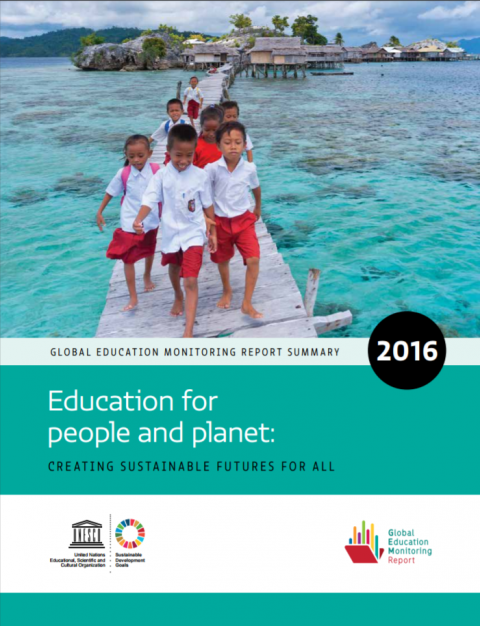 L'Education pour les peuples et la planète: créer des avenirs durables pour tous, résumé du rapport mondial de suivi sur l'éducation, 2016 سنة النشر: 2016 المؤلف المؤسسي: Organisation des Nations Unies pour l'éducation, la science et la culture (UNESCO) The GEM Report provides an authoritative account of how education is the most vital input for every dimension of sustainable development. Better education leads to greater prosperity, improved agriculture, better health outcomes, less violence, more gender equality, higher social capital and an improved natural environment. Education is key to helping people around the world understand why sustainable development is such a vital concept for our common future. Education gives us the key tools – economic, social, technological, even ethical – to take on the SDGs and to achieve them. These facts are spelled out in exquisite and unusual detail throughout the report. Yet the report also emphasizes the remarkable gaps between where the world stands today on education and where it has promised to arrive as of 2030. La Educación al servicio de los pueblos y el planeta: creación de futuros sostenibles para todos, resumen del informe de seguimiento de la educación en el mundo 2016; سنة النشر: 2016 المؤلف المؤسسي: Organización de las Naciones Unidas para la Educación, la Ciencia y la Cultura (UNESCO) The GEM Report provides an authoritative account of how education is the most vital input for every dimension of sustainable development. Better education leads to greater prosperity, improved agriculture, better health outcomes, less violence, more gender equality, higher social capital and an improved natural environment. Education is key to helping people around the world understand why sustainable development is such a vital concept for our common future. Education gives us the key tools – economic, social, technological, even ethical – to take on the SDGs and to achieve them. These facts are spelled out in exquisite and unusual detail throughout the report. Yet the report also emphasizes the remarkable gaps between where the world stands today on education and where it has promised to arrive as of 2030. Образование в интересах людей и планеты: ПОСТОЕНИЕ УСТОЙЧИВОГО БУДУЩЕГО ДЛЯВСЕХ, РЕЗЮМЕ ВСЕМИРНОГО ДОКЛАДА ПО МОНИТОРИНГУ ОБРАЗОВАНИЯ, 2016 سنة النشر: 2016 المؤلف المؤسسي: Организация Объединенных Наций по вопросам образования, науки и культуры (UNESCO) The GEM Report provides an authoritative account of how education is the most vital input for every dimension of sustainable development. Better education leads to greater prosperity, improved agriculture, better health outcomes, less violence, more gender equality, higher social capital and an improved natural environment. Education is key to helping people around the world understand why sustainable development is such a vital concept for our common future. Education gives us the key tools – economic, social, technological, even ethical – to take on the SDGs and to achieve them. These facts are spelled out in exquisite and unusual detail throughout the report. Yet the report also emphasizes the remarkable gaps between where the world stands today on education and where it has promised to arrive as of 2030.
  Developing a Monitoring Instrument to Measure Extracurricular and Non-formal Activities which Promote Global Citizenship Education (GCED) and Education for Sustainable Development (ESD) سنة النشر: 2016 المؤلف: Bassel Akar المؤلف المؤسسي: UNESCO The goal on Education is 1 of 17 Sustainable Development Goals that comprises a target to ensure all learners around the world have an opportunity to develop the competencies to promote sustainable approaches to living, including appreciating of cultural diversity, non-violence, and gender equality. Extracurricular activities and non-formal education (ENA) provides a non-traditional space for learning global citizenship and sustainable development. Around the world, communities have organized education programs and activities for youth outside school to learn the values and practices of being global citizens. Research shows, however, that most efforts to review and improve ENA for global citizenship and sustainable development have focused on summative evaluations with little attention to formative approaches of monitoring. Drawing on basic principles of action research, sustainable professional development, and education quality enhancement, a monitoring framework emerges to support organizations around the world in measuring progress towards education for global citizenship and sustainable development. This framework also suggests (1) inclusive monitoring spaces like internal reviews and online social networking platforms, (2) roles of stakeholders like donor agencies in institutionalizing monitoring practices, (3) instruments and measurable scales to facilitate dialogues that review program objectives and action plans, and (4) challenges in inclusive and sustainable monitoring tools and approaches.
 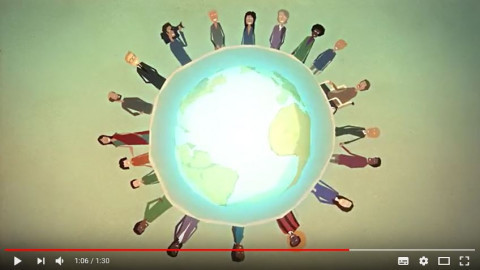 [Video] Global Citizenship Education to Prevent Violent Extremism سنة النشر: 2016 المؤلف المؤسسي: UNESCO The UNESCO video on “Global Citizenship Education to prevent violent extremism” explains how education can prevent violent extremism through equipping young people with the skills to dialogue and think critically, and engage meaningfully with others and their communities in order to build peaceful societies. 教育造福 人类与地球:为全民创造可持续的未来, 2016 全球教育监测报告; 摘要 سنة النشر: 2016 المؤلف المؤسسي: 联合国教科文组织 (UNESCO) The GEM Report provides an authoritative account of how education is the most vital input for every dimension of sustainable development. Better education leads to greater prosperity, improved agriculture, better health outcomes, less violence, more gender equality, higher social capital and an improved natural environment. Education is key to helping people around the world understand why sustainable development is such a vital concept for our common future. Education gives us the key tools – economic, social, technological, even ethical – to take on the SDGs and to achieve them. These facts are spelled out in exquisite and unusual detail throughout the report. Yet the report also emphasizes the remarkable gaps between where the world stands today on education and where it has promised to arrive as of 2030.