
الموارد
استكشف مجموعة واسعة من الموارد القيمة حول تعليم المواطنة العالمية لتعميق فهمك وتعزيز البحث والمناصرة والتعليم والتعلم.
تم العثور على 2,255 نتيجة
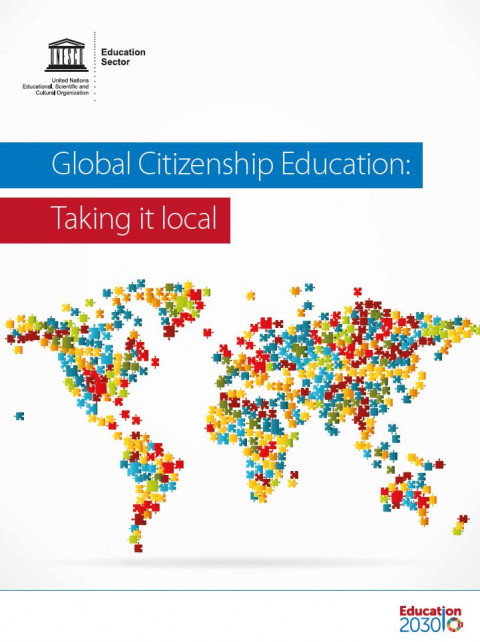 Education à la citoyenneté mondiale: pour une approche locale سنة النشر: 2018 المؤلف المؤسسي: Organisation des Nations Unies pour l'éducation, la science et la culture (UNESCO) L’UNESCO mène les efforts mondiaux portant sur l’éducation à la citoyenneté mondiale, qui est au coeur de la cible 4.7 de l’Objectif 4 de développement durable sur l’éducation. Afin de clarifier la perception selon laquelle le concept de l’éducation à la citoyenneté mondiale concerne principalement des questions mondiales et qu’il est peut-être dissocié des réalités et des besoins locaux, l’UNESCO a identifié des préceptes et des concepts locaux/nationaux/traditionnels qui sont comparables à la compréhension qu’a l’UNESCO de la citoyenneté mondiale. En tant qu’expressions culturellement pertinentes de l’éducation à la citoyenneté mondiale, et dans le but de contribuer à l’édification de la paix grâce à la mise en oeuvre de l’éducation à la citoyenneté mondiale, les concepts identifiés dans ce document peuvent servir de points d’entrée pour enseigner l’éducation à la citoyenneté mondiale et pour l’apprendre, de manière plus pertinente au niveau local.
 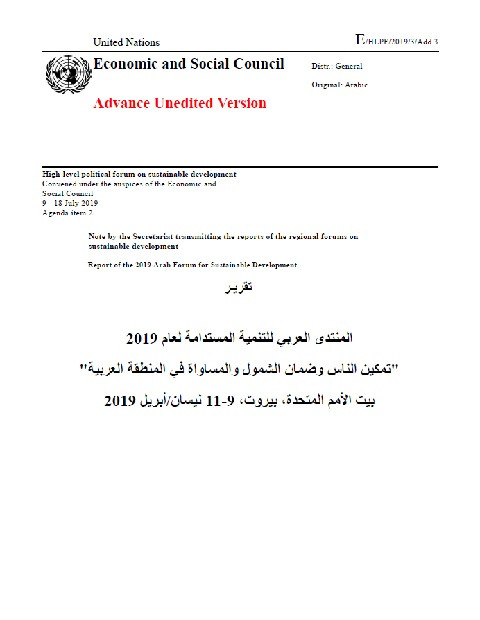 Report of the 2019 Arab Forum for Sustainable Development "Empowering people and ensuring inclusion and equality in the Arab region" سنة النشر: 2019 المؤلف: United Nations (UN) المؤلف المؤسسي: United Nations (UN) The Economic and Social Commission for Western Asia (ESCWA), in partnership with the League of Arab States and the United Nations system working in the Arab region, organized the 2019 Arab Forum on Sustainable Development under the theme 'Empowering People and Ensuring Inclusion and Equality in the Arab Region', in Beirut, from 9 to 11 April 2019. تقرير المنتدى العربيللتنمية المستدامة لعام 2019تمكين الناس وضمان الشمول والمساواة في المنطقة العربية" بيت الأمم المتحدة،بيروت، سنة النشر: 2019 المؤلف المؤسسي: United Nations (UN) نظمت اللجنة الاقتصادية والاجتماعية لغربي آسيا (الإسكوا)، وبالشراكة مع جامعة الدول العربية ومنظومة الأمم المتحدة العاملة في المنطقة العربية، المنتدى العربي للتنمية المستدامة لعام 2019 تحت عنوان "تمكين الناس وضمان الشمول والمساواة في المنطقة العربية"، في بيروت، في الفترة من 9 إلى 11 نيسان/أبريل 2019 برئاسة جمهورية العراق.
 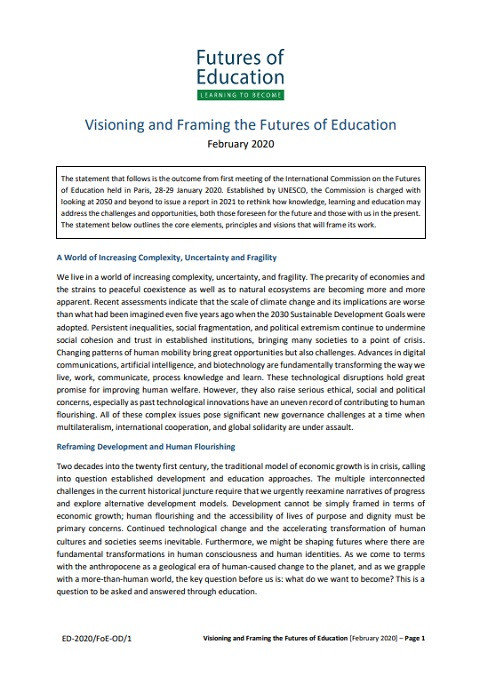 Visioning and Framing the Futures of Education: February 2020 سنة النشر: 2020 المؤلف المؤسسي: UNESCO This statement is the outcome from first meeting of the International Commission on the Futures of Education held in Paris, 28-29 January 2020. Established by UNESCO, the Commission is charged with looking at 2050 and beyond to issue a report in 2021 to rethink how knowledge, learning and education may address the challenges and opportunities, both those foreseen for the future and those with us in the present. Note de cadrage sur les Futurs de l'éducation: Février 2020 سنة النشر: 2020 المؤلف المؤسسي: UNESCO Cette note est le fruit de la première réunion de la Commission internationale sur les futurs de l’éducation qui s’est tenue à Paris les 28 et 29 janvier 2020. Etablie par l’UNESCO, la Commission est chargée de repenser lessavoirs, l’apprentissage et l’éducationface aux défis et auxopportunités, tant ceux envisagés à l’horizon2050 et au-delà, que ceux duprésent. Visióny marco de los futuros de la educación: Febrero de 2020 سنة النشر: 2020 المؤلف المؤسسي: UNESCO La declaración es el resultado de la primera reunión de la Comisión Internacional sobre los Futuros de la Educación, celebrada en París los días 28 y 29 de enero de 2020. La Comisión, establecida por la UNESCO, se encarga de mirarhacia 2050 y más allá para publicar en 2021 un informe con el fin de repensar el modo en que el conocimiento, el aprendizaje y la educación pueden ayudar a abordar los desafíos y las oportunidades, tanto los previstos para el futuro como los que nos acompañan en el presente. Концептуальное осмысление и определение перспектив развития образования: Февраль 2020года سنة النشر: 2020 المؤلف المؤسسي: Организация Объединенных Наций по вопросам образования, науки и культуры (UNESCO) Представленное ниже заявление является итоговым документом первого заседания Международной комиссии по перспективам развития образования, состоявшегося 28-29 января 2020 года в Париже. Ко-миссия была создана решением ЮНЕСКО с задачей проанализировать перспективы развития образо-вания до 2050 года и в последующий период с целью подготовки к публикации в 2021 году доклада, в котором будет по-новому осмыслено то, каким образом знания, обучение и образование могли бы со-действовать использованию возможностей и решению сложных проблем, причем не только прогнози-руемых, но и уже существующих. رؤية مستقبل التعليم وتأطيره: فبراير 2020 سنة النشر: 2020 المؤلف المؤسسي: منظمة الأمم المتحدة للتربية والعلم والثقافة (UNESCO) نورد فيما أييت البيان الصادر عن االجتماع األول للجنة الدولية ملستقبل الرتبية و التعليم الذي قد ُ ع يف ابريس يف ُ ُون الفرتة من 28 إىل 29 َكان لثَّ ِان ٱ ُ ر ِ اي َ ن َ / ي 2020 .وذلك يف إطار عمل اللجنة املكلفة من قبل اليونسكو للنظر ً وأييت هذا البيان متهيدا إلصدار تقرير اللجنة يف عام 2021 إلعادة التفكري يف املستقبل إىل عام 2050 وما بعده، يف كيف ميكن للمعرفة والتعلم والتعليم مواجهة التحدايت والفرص، سواء تلك املتوقعة للمستقبل أو تلك املوجودة 展望并构筑教育的未来: 2020年2月 سنة النشر: 2020 المؤلف المؤسسي: 联合国教科文组织 (UNESCO) 以下是关于教育的未来国际委员会第一次会议(2020年1月28–29日,巴黎)成果的声明。该委员会由教科文组织创设,其任务是展望2050年及以后,在2021年发布一份报告,重新思考知识、学习和教育可如何应对挑战、把握机遇,包括未来可预见的以及当前存在的挑战和机遇。
 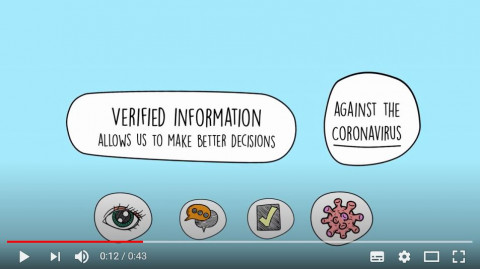 How to Stop Misinformation in Times of Coronavirus? سنة النشر: 2020 المؤلف المؤسسي: United Nations Development Programme (UNDP) | UNESCO Learn how to identify unverified content you receive on your cell phone and avoid spreading information on social media that has not been checked by credible sources. Caring for reliable information is everyone's responsibility, and helps us make better decisions.Learn more about this campaign by UNESCO and UNDP at:https://en.unesco.org/news/disinformation-silent-weapon-times-pandemic