
الموارد
استكشف مجموعة واسعة من الموارد القيمة حول تعليم المواطنة العالمية لتعميق فهمك وتعزيز البحث والمناصرة والتعليم والتعلم.
تم العثور على 1,828 نتيجة
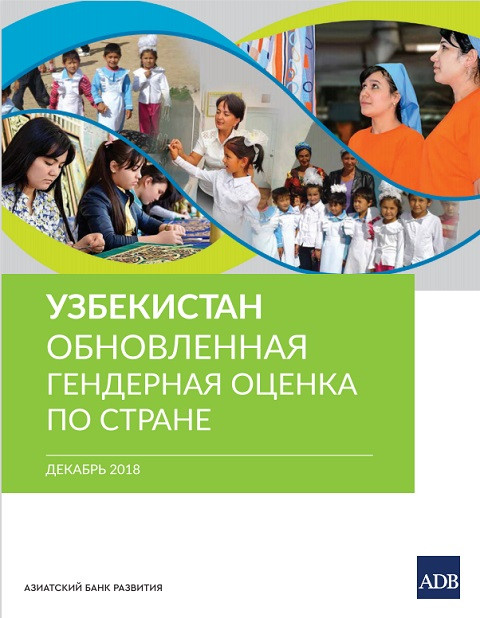 Узбекистан: Обновленная гендерная оценка по стране سنة النشر: 2018 المؤلف المؤسسي: Asian Development Bank (ADB) Настоящий отчет по Обновленной гендерной оценке по стране, подготовленный АБР в тесном сотрудничестве с Комитетом женщин Узбекистана (КЖУ), содержит анализ социально-экономических аспектов гендерного равенства в Узбекистане. В нем охвачен широкий круг вопросов, связанных с расширением возможностей женщин путем повышения их экономической активности в различных секторах. Рекомендации, выработанные по результатам проведенной оценки, могут быть использованы при разработке долгосрочной стратегии КЖУ и АБР, включая программы, направленные на повышение уровня занятости и доходов женщин, поддержку их предпринимательских инициатив, борьбу с традиционными гендерными стереотипами для дальнейшего повышения роли и статуса женщин в целом по стране.
 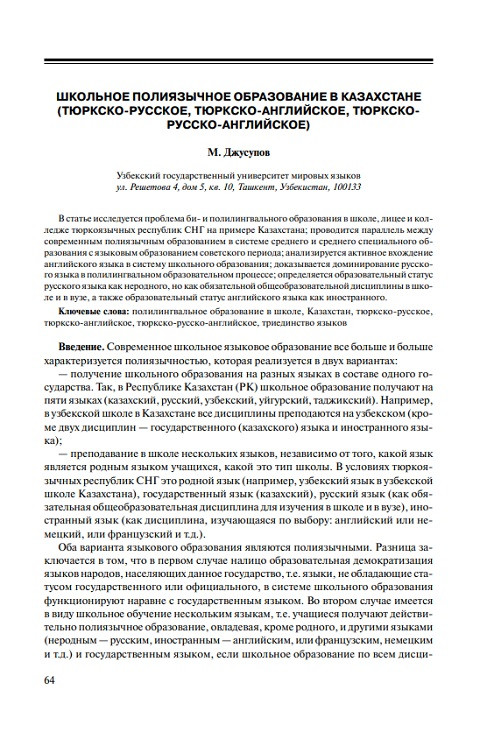 School Polylingual Education in Kazakhstan (Turkic-Russian, Turkic-English, Turkis-Russian-English) سنة النشر: 2015 المؤلف: Dzhusupov M. This article deals with a problem of bilingual and polylingual education at school, lyceum and college of Turkic Republic of CIS on the illustration of Kazakhstan; it is drawn an analogy (parallel) between modern polylingual education of — Soviet period; active ingress of English language in a system of school polylingual education has been analyzed; the domination of Russian language in polylingual educational process has been proved, it is determined an educational status of Russian language not as adoptive, but as obligatory general subject at school and in the institute of higher education and educational status of English language as foreign, i.e. as an alternative (optional) subject. Школьное полиязычное образование в Казахстане (тюркско-русское, тюркско-английское, тюркско-русско-английское) سنة النشر: 2015 المؤلف: Dzhusupov M. В статье исследуется проблема би- и полилингвального образования в школе, лицее и колледже тюркоязычных республик СНГ на примере Казахстана; проводится параллель между современным полиязычным образованием в системе среднего и среднего специального образования с языковым образованием советского периода; анализируется активное вхождение английского языка в систему школьного образования; доказывается доминирование русского языка в полилингвальном образовательном процессе; определяется образовательный статус русского языка как неродного, но как обязательной общеобразовательной дисциплины в школе и в вузе, а также образовательный статус английского языка как иностранного.
 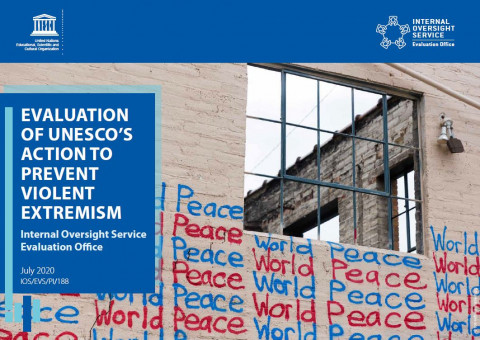 Evaluation of UNESCO’s Action to Prevent Violent Extremism سنة النشر: 2020 المؤلف المؤسسي: UNESCO Internal Oversight Service (IOS) The purpose of this evaluation was twofold. To provide evidence, ideas and insights on how UNESCO’s efforts on PVE in the period from 2015-2018 have contributed to enhancing UNESCO’s action and position in the PVE sphere in light of the decisions of Member States. And to provide evidence and formulate lessons learned and good practices on the intersectoral approach with the aim of informing what works and what does not work in intersectoral cooperation.The evaluation found that UNESCO’s work on PVE was context specific and adjusted to respond to the needs of the countries and sub-regions where the work was being implemented.UNESCO’s work is aligned with the agency’s mandate and expertise and makes the most of its strong relationships with government bodies and civil society actors. UNESCO’s work on PVE has led to positive results around the quality, use and effectiveness of guidance documents, around capacity building of UNESCO partners and stakeholders, and around the provision of expertise and policy advice both at national and global level. Using an intersectoral approach led to an increase in information sharing and coordination. However, this was not always translated to intersectoral implementation or delivery of PVE initiatives.
 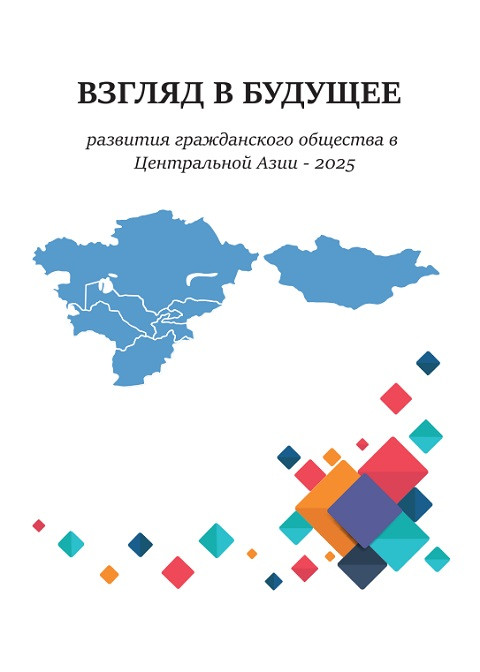 Looking into the Future Development of Central Asian Civil Society 2025 سنة النشر: 2020 المؤلف المؤسسي: Civil Society Development Association (ARGO) “Looking into the future Development of Central Asian Civil Society - 2025” is a vision that reflects the role, trends and prospects for the development of civil society in Central Asia for 5 years. The Vision represents an image of civil society (‘We are the ones who’) and defines strategic priorities for the development of civil society in Central Asia. Взгляд в будущее развития гражданского общества в Центральной Азии 2025 سنة النشر: 2020 المؤلف المؤسسي: Civil Society Development Association (ARGO) «Взгляд в будущее развитие гражданского общества Центральной Азии – 2025» — это видение, в котором отражены роль, тренды и перспективы развития гражданского общества в Центральной Азии на 5 лет. Видение представляет собой портрет гражданского общества в образе «Я» и определяет приоритеты развития гражданского общества в Центральной Азии.
 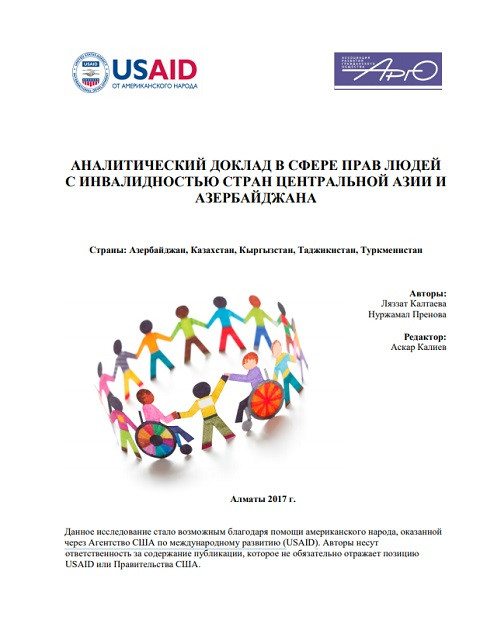 Analytical Report on the Rights of People With Disabilities in Central Asia and Azerbaijan سنة النشر: 2017 المؤلف: Lyazzat Kaltayeva | Nurzhamal Prenova المؤلف المؤسسي: Civil Society Development Association (ARGO) | United States Agency for International Development (USAID) This analytical report is the culmination of a research study conducted in four countries of Central Asia (Kazakhstan, Kyrgyzstan, Tajikistan, and Turkmenistan) and Azerbaijan in spring 2017. The primary focus of the study was disability rights, which have a direct impact on the quality of life experienced by people with disabilities, and analysis of potential strategies and opportunities for civil society organizations to improve disability rights in target countries.Through the study, the research team followed the latest legislative and policy changes relevant to disability rights, and identified and documented best practices, lessons learned, and key challenges related to the promotion and protection of disability rights in the region. Аналитический доклад в сфере прав людей с инвалидностью стран Центральной Азии и Азербайджана سنة النشر: 2017 المؤلف: Lyazzat Kaltayeva | Nurzhamal Prenova المؤلف المؤسسي: Civil Society Development Association (ARGO) | United States Agency for International Development (USAID) Данный аналитический доклад выпущен по результатам экспертного исследования, проведенного в странах ЦА и Азербайджан весной 2017 года. В фокусе исследования - права людей с инвалидностью, которые напрямую влияют на качество жизни людей с инвалидностью и анализ подходов, потенциал и возможности организации гражданского общества для улучшения положения с правами людей с инвалидностью в выбранных странах.Исследование позволило отследить последние изменения в области политики и законодательства по правам людей с инвалидностью, выявить и зафиксировать лучшие практики, уроки и вызовы, связанные с продвижением прав людей с инвалидностью в регионе.
 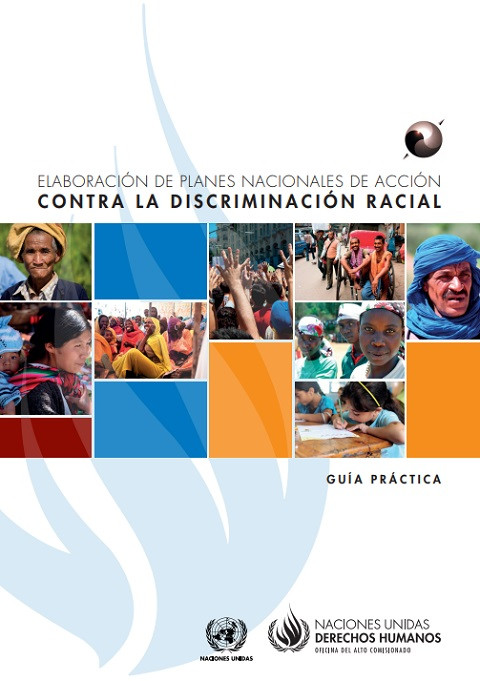 Elaboración de planes nacionales de acción contra la discriminación racial: Guía práctica سنة النشر: 2014 المؤلف المؤسسي: United Nations (UN) Esta publicación es una guía práctica para la elaboración de planes nacionales de acción contra la discriminación racial. Los planes nacionales de acción son la base para el desarrollo de una política pública integral contra la discriminación racial y por lo tanto pueden ayudar a los Estados a dar cumplimiento a sus obligaciones internacionales de derechos humanos relacionadas con la eliminación de la discriminación racial.
  公民的三重属性及其层次性培养策略 (当代教育科学; No. 7) سنة النشر: 2019 المؤلف: Liu Yi المؤلف المؤسسي: Shandong Educational Science Institute | Shandong Educational Society 随着公民社会的日渐崛起,公共生活的渐趋完善,公民教育也顺势勃兴。然而,当前教育学 研究者对公民概念的理解和应用还处于浅层化和混合化阶段。这种认识无助于通过学校教育系统地培 养公民。因此,对公民概念的理解应该进一步深化,以历史为线索提取公民的平等、公共和参与属性,并 梳清属性之间的逻辑关系。在此基础之上,公民教育才能获得相应的层次性培养策略,最终孵育出“完全 公民”。