
الموارد
استكشف مجموعة واسعة من الموارد القيمة حول تعليم المواطنة العالمية لتعميق فهمك وتعزيز البحث والمناصرة والتعليم والتعلم.
تم العثور على 1,828 نتيجة
 COVID-19: How to Include Marginalized and Vulnerable People in Risk Communication and Community Engagement سنة النشر: 2020 المؤلف المؤسسي: United Nations Entity for Gender Equality and the Empowerment of Women (UN Women) | Regional Risk Communication and Community Engagement (RCCE) Women, the elderly, adolescents, youth, and children, persons with disabilities, indigenous populations, refugees, migrants, and minorities experience the highest degree of socio-economic marginalization. Marginalized people become even more vulnerable in emergencies. This is due to factors such as their lack of access to effective surveillance and early-warning systems, and health services. The COVID-19 outbreak is predicted to have significant impacts on various sectors. The development of this guide was led by UN Women and Translators without Borders on behalf of the Risk Communication and Community Engagement Working Group on COVID-19 Preparedness and Response in Asia and the Pacific, co-chaired by WHO, IFRC and OCHA.
 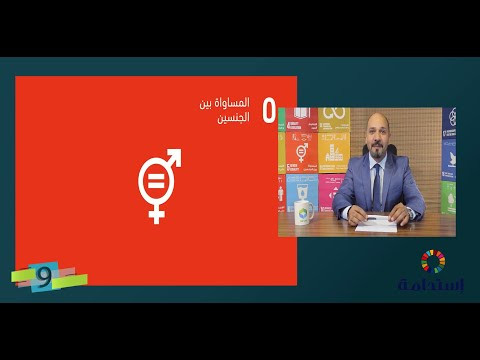 Sustainability: Gender Equality سنة النشر: 2019 المؤلف المؤسسي: CSR Egypt This video deals with the concept of the fifth goal of the sustainable development goals (gender equality) and that women have a fundamental role to achieve the goals of sustainable development, and that is why they must be given the opportunity and support to obtain all their rights and effective participation in the advancement of Arab societies. الاستدامة: المساواة بين الجنسين سنة النشر: 2019 المؤلف المؤسسي: CSR Egypt الفيديو يتطرق لمفهوم الهدف الخامس من اهداف التنمية المستدامة (المساواة بين الجنسين) و ان المرأة لها دور اساسى لتحقيق اهداف التنمية المستدامة و لذلك يجب ان يتم اتاحة الفرصة لها و دعمها للحصول على كافة حقوقها و مشاركتها الفعاله للنهوض بالمجتمعات العربية.
  Generation Equality Accountability Report 2022 سنة النشر: 2022 المؤلف المؤسسي: United Nations Entity for Gender Equality and the Empowerment of Women (UN Women) In the UN Decade for Action on Gender Equality, people around the world have pledged to move from rhetoric to action and to work together to drive lasting change, starting now. Through the 2021 Generation Equality Forum in Mexico and France, world leaders and partners committed to eliminating gender inequalities and to financing and implementing laws, policies, and programmes to meet priority actions and targets in a Global Acceleration Plan for Gender Equality. The aim is simple but profound: deliver irreversible, quantifiable results for women and girls in all their diversity.Together, commitment makers and signatories of a series of Action Coalitions, along with the Compact for Women, Peace and Security and Humanitarian Action have begun to build an ambitious global movement. It unites diverse partners committed to collective accountability for women and girls. This accountability is the driving force of this report, which takes stock of the bold commitments made at the Forum one year into implementation. Through a survey of commitment-makers, the report sheds light on the nature of the commitments and assesses measurable progress. It highlights trends and notes where more work is needed.Generation Equality was born from the idea that the world could make catalytic progress on gender equality if a wide range of stakeholders united around a transformative vision and worked together to achieve it. These preliminary findings demonstrate that, while more remains to be done, collective action is powerful in making commitments real in the lives of women and girls.
  SDG Pulse 2024: The Pulse of Progress Towards the Sustainable Development Goals سنة النشر: 2024 المؤلف المؤسسي: United Nations Conference on Trade and Development (UNCTAD) The SDG Pulse reveals progress in various areas, but setbacks continue to undermine momentum. Economic and social distress, particularly for those most in need, is exacerbated by the war in Ukraine, and in Gaza, leading to longer and more expensive trade routes, increased hunger and food insecurity, and rising CO2 emissions, impacting developing countries’ ability to meet the SDGs, and the need for reliable information becomes even more critical. SDG Pulse serves three main purposes: firstly, to update on the evolution of selected official SDG indicators and complementary data and statistics; second, to report on progress in developing new concepts and methodologies for SDG indicators for which UNCTAD is a global custodian; and third, to showcase UNCTAD’s support to member States in implementing the 2030 Agenda. Building on the previous edition, SDG Pulse continues to track progress according to four transformations identified at UNCTAD’s intergovernmental meeting in Bridgetown (UNCTAD, 2021). The report also delves into thematic issues relevant to the 2030 Agenda bringing to the forefront key messages related to trade and multilateralism, development finance, economic diversification, and sustainability and resilience. This year’s In-Focus topic explores gender equality in trade. Despite global advancements, gender inequality persists, affecting women's lives through economic participation, education, health, and political empowerment worldwide. UNCTAD’s new gender equality in trade indicator set helps illuminate gender gaps in trade to inform effective policy actions and accelerate just and equal development. This overview provides a glance at recent developments and analysis related to sustainable development.
  For every child, a fair chance: The promise of equity سنة النشر: 2015 المؤلف المؤسسي: United Nations Children's Fund (UNICEF) This report is based on an in-depth paper that was the centrepiece of discussions at the UNICEF Executive Board’s Special Session on Equity held in New York, in June 2015.The principle of equity guides UNICEF’s work with a sharp focus on the world’s most vulnerable children: those from the poorest households, girls, children with disabilities, migrant and refugee children, those living in remote areas, and children from ethnic or religious groups facing discrimination. The following pages build on evidence and experience from this work to make two main arguments for closing persistent gaps in equity. It examines seven sectors that are critical to progress for children: health; HIV and AIDS; water, sanitation and hygiene; nutrition; education; child protection; and social inclusion. In each sector, there are stark contrasts between global advances on one hand and the urgent, unmet needs of the world’s most vulnerable children on the other. Равные возможности Обещание равенства для всех детей: Обещание равенства سنة النشر: 2015 المؤلف المؤسسي: United Nations Children's Fund (UNICEF) Настоящий отчет основан на подробном документе, который обсуждался на специальной сессии Исполнительного комитета ЮНИСЕФ, посвященной вопросам равенства и справедливости, в Нью-Йорке в июне 2015 года. Работа ЮНИСЕФ строится на принципе равенства и справедливости, при этом основное внимание уделяется наиболее уязвимым группам детей во всем мире: детям из наиболее бедных семей и девочкам, детям с ограниченными возможностями, детям, живущим в удаленных районах, и детям из этнических или религиозных групп, сталкивающимся с дискриминацией. Представленный доклад, основываясь на фактах и опыте такой работы, приводит два основных довода в пользу устранения укоренившихся диспропорций, касающихся равенства и справедливости. В ней рассмотрены семь сфер, имеющих решающее значение для развития детеи: здоровье; ВИЧ и СПИД, вода, санитария и гигиена; питание, образование: защита ребенка; социальная интеграция. В каждой сфере наблюдаются резкие контрасты между глобальными улучшениями, с одной стороны, и неотложными неудовлетворенными потребностями наиболее уязвимых детей во всем мире - с другой.
  UNDP Support for the Implementation of Sustainable Development Goal 6: Sustainable Management of Water and Sanitation سنة النشر: 2016 المؤلف المؤسسي: United Nations Development Programme (UNDP) This document provides a summary report on UNDP support for the implementation of SDG 6. The report focuses specifically on the sustainable management of water and sanitation services. This report is a micro-reference to these efforts in the field of water and sanitation services. دعم برنامج الأمم المتحدة الإنمائي لتنفيذ الهدف 6 من أهداف التنمية المستدامة: الإدارة المستدامة للمياه وخدمات الصرف الصحي سنة النشر: 2016 المؤلف المؤسسي: United Nations Development Programme (UNDP) يقدم المستند تقرير ملخصا عن دعم برنامج الأمم المتحدة الإنمائي لتنفيذ الهدف 6 من أهداف التنمية المستدامة. ويركز التقرير بالتحديد على الإدارة المستدامة للمياه وخدمات الصرف الصحي. يعتبر هذا التقرير مرجع مصغر لهذه الجهود في مجال خدمة المياه والصرف الصحي.
  SDG4 High-Level Steering Committee Input Paper for the 2024 High-Level Political Forum on Sustainable Development سنة النشر: 2024 المؤلف المؤسسي: SDG4 High-Level Steering Committee In alignment with theHigh-level Political Forum on Sustainable Development (HLPF)’s focus for 2024, this SDG4 High-Level Steering Committee paper provides specific inputs as they relate to the following Sustainable Development Goals: Goal 1. End poverty in all its forms everywhere; Goal 2. End hunger, achieve food security and improved nutrition and promote sustainable agriculture; Goal 13. Take urgent action to combat climate change and its impacts; Goal 16. Promote peaceful and inclusive societies for sustainable development, provide access to justice for all and build effective, accountable and inclusive institutions at all levels; and Goal 17. Strengthen the means of implementation and revitalize the Global Partnership for Sustainable Development.