
الموارد
استكشف مجموعة واسعة من الموارد القيمة حول تعليم المواطنة العالمية لتعميق فهمك وتعزيز البحث والمناصرة والتعليم والتعلم.
تم العثور على 1,828 نتيجة
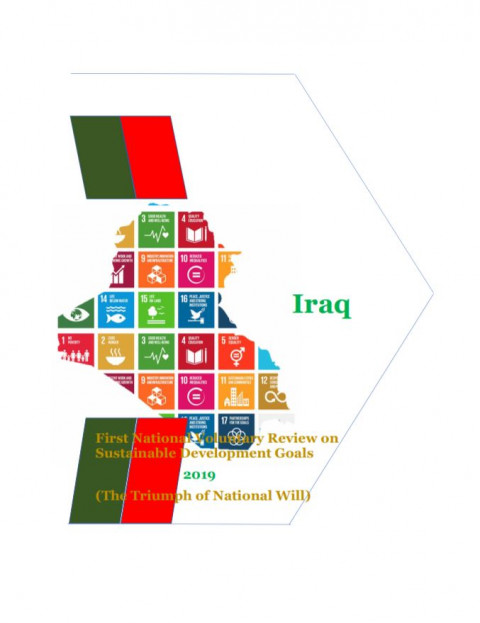 First National Voluntary Review on Sustainable Development Goals 2019: Iraq (The Triumph of National Will) سنة النشر: 2019 المؤلف المؤسسي: Iraq. Ministry of Planning This national review is part of the first National Voluntary Report (NVR) as a national effort and a necessary step to monitor the progress toward the SDFs, using a participatory approach and assisted by national consultations (workshops and forums) organized in various Iraqi areas to discuss the development challenges facing Iraq in the upcoming stages. The Voluntary National Reviews (VNRs) constitute a key tool to monitor the progress of the National Development Plan (NDP) and promote it locally. The VNRs also contribute to presenting the country’s experience, expertise and lessons to be shared with other countries. التقرير الطوعي الأول حول أهداف التنمية المستدامة ٢٠١٩: العراق (انتصار إرادة وطن) سنة النشر: 2019 المؤلف المؤسسي: Iraq. Ministry of Planning اداةً مهمةً في رصد التقدم المحرز على (VNRs) وتُعدُّ التقارير الوطنية الطوعية طريق تحقيق خطة التنمية الوطنية والترويج لها محلياً، فضلاً عن انها تسهم في عرض خبرة البلد والدروس التي يمكن ان يقدمها للعالم انطلاقاً من تجربته الذاتية وأنْ توفر هذه الخبرات فرصاً ودروساً للتعلم من الاخرين والافادة من تجاربه.
  SDGs in the Arab States سنة النشر: 2020 المؤلف المؤسسي: Alaraby TV Evaluation plays a fundamental role in monitoring and achieving the sustainable development goals that we seek in Arab countries, so what are these goals? How is it assessed? أهداف التنمية المستدامة في الوطن العربي سنة النشر: 2020 المؤلف المؤسسي: Alaraby TV يلعب التقييم دورا أساسيا في المراقبة وتحقيق أهداف التنمية المستدامة التي ننشدها الدول العربية، فماهي هذه الأهداف؟ وكيف يجري تقييمها؟
  The Sustainable Development Goals Report 2024 سنة النشر: 2024 المؤلف المؤسسي: United Nations (UN) The Sustainable Development Goals Report 2024 details the significant challenges the world is facing in making substantial strides towards achieving the SDGs based on the latest data and estimates. It features areas with setbacks while also showcasing where tangible progress has been made, for instance, in reducing global child mortality, preventing HIV infection, and access to energy and mobile broadband. The report also highlights where action must accelerate, particularly in critical areas undermining SDG progress - climate change, peace and security, inequalities among and between countries, among others. According to the report, with just six years remaining, current progress falls far short of what is required to meet the SDGs. Without massive investment and scaled up action, the achievement of the SDGs — the blueprint for a more resilient and prosperous world and the roadmap out of current global crises — will remain elusive. The lingering impacts of the COVID-19 pandemic, escalating conflicts, geopolitical tensions and growing climate chaos have severely hindered progress. The report details the urgent priorities and areas needed for stronger and more effective action to ensure the 2030 promise to end poverty, protect the planet and leave no one behind.
  World Public Sector Report 2023: Transforming Institutions to Achieve the Sustainable Development Goals After the Pandemic سنة النشر: 2023 المؤلف المؤسسي: United Nations (UN) The World Public Sector Report 2023 examines the role that national institutional and governance innovations and changes that emerged during the COVID-19 pandemic can play in advancing progress towards the 2030 Agenda for Sustainable Development. The report focuses on three main questions: How can Governments reshape their relationship with people and other actors to enhance trust and promote the changes required for more sustainable and peaceful societies? How can Governments assess competing priorities and address difficult policy trade-offs that have emerged since 2020? What assets and innovations can Governments mobilize to transform the public sector and achieve the SDGs? The report addresses them in chapters composed of short overviews followed by a set of in-depth contributions from a wide range of experts which examine institutional changes observed in different contexts, sectors and policy processes and explore the potential of those with a positive impact on the achievement of the SDGs to be sustained beyond the pandemic. The report aims to draw attention to institutional change as a key component of the societal transformations required to realize the 2030 Agenda for Sustainable Development.
 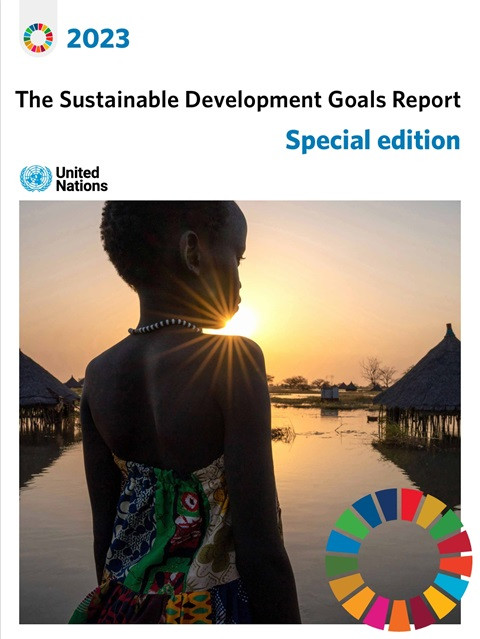 The Sustainable Development Goals Report 2023: Special Edition سنة النشر: 2023 المؤلف المؤسسي: UN. Department of Economic and Social Affairs (UN. DESA) The annual report, a joint effort of the global statistical community, was launched during the UN High-level Political Forum on Sustainable Development as leaders from governments and different sectors of society gathered to chart strategies and efforts to fully implement the SDGs. The report provides essential data that allows decision-makers to guide efforts toward a sustainable recovery.
 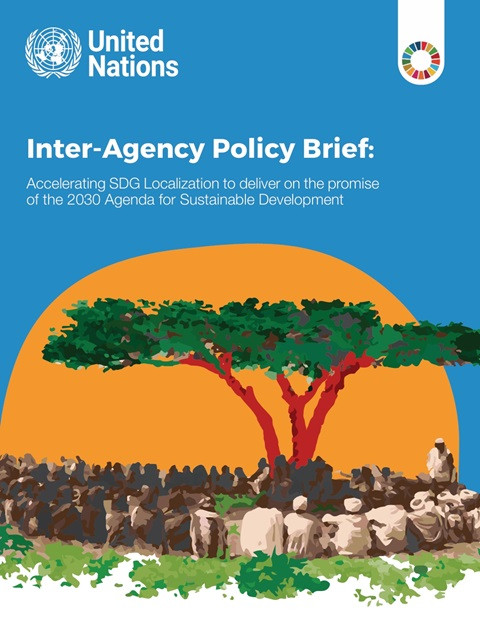 Inter-Agency Policy Brief: Accelerating SDG Localization to Deliver on the Promise of the 2030 Agenda for Sustainable Development سنة النشر: 2024 المؤلف المؤسسي: United Nations Centre for Human Settlement Programme (UN Habitat) | UN. Department of Economic and Social Affairs (UN. DESA) | United Nations Development Programme (UNDP) SDG localization is the process of adapting and customizing the SDGs and translating them into local development plans and strategies that fit the needs, context, and priorities of a particular region or locality, in coherence with national frameworks. It means placing local communities at the center of sustainable development and anchoring development action on the principles of inclusion, partnership, and multilevel governance, with adequate data and financing availability at the local level. This inter-agency policy brief examines the critical role of local and regional governments in accelerating achievement of the 2030 Agenda and provides policy recommendations to help advance the essential work of localizing SDG action. This policy brief was prepared by UNDESA, UN Habitat and UNDP in close collaboration with the Global Taskforce of Local and Regional Governments and United Cities and Local Governments, with input from the United Nations Regional Commissions: UNECA, UNECE, UNECLAC, UNESCAP, and UNESCWA.
 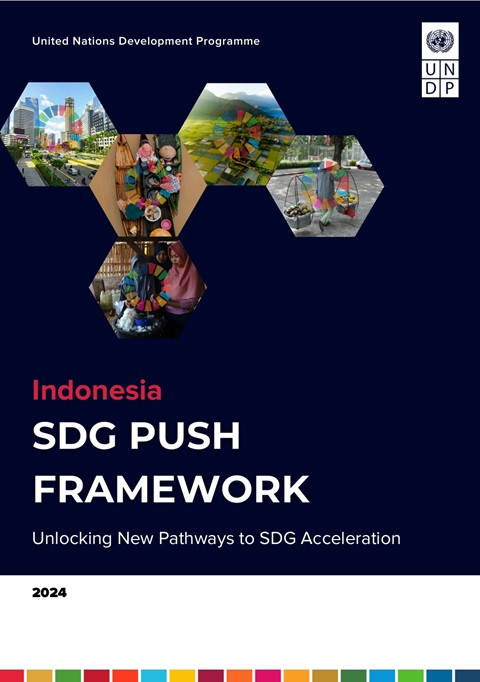 Indonesia SDG Push Framework: Unlocking New Pathways to SDG Acceleration سنة النشر: 2024 المؤلف المؤسسي: United Nations Development Programme (UNDP) SDG Push is about realizing development ambition and redefining how we build acceleration pathways. It helps pinpoint policy choices that ‘move the needle’ towards the achievement of the Sustainable Development Goals. A UNDP flagship initiative, SDG Push uses digital and data innovation, systems thinking, and futures approaches to provide a comprehensive and country-specific tool to plan and implement SDG breakthroughs in a variety of development contexts. SDG Acceleration Pathways, specific to context and need, were co-created in collaboration with Indonesia, Moldova, Namibia, Peru and South Africa. These pilots helped to refine the SDG Push approach and the digital SDG Push Diagnostic and formed the foundation of the Integrated SDG Insights Reports, presented at the 2023 SDG Summit. This integrated, modular approach includes the analysis of development trends and priorities with data visualization, integrating generative dialogue, foresight methods and economic modelling to assess the impact of potential accelerators.
 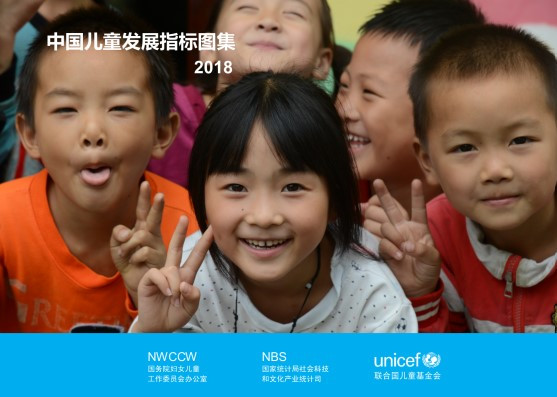 An Atlas of Social Indicators of Children in China 2018 سنة النشر: 2018 المؤلف المؤسسي: United Nations Children's Fund (UNICEF) | National Working Committee on Children and Women (NWCCW) | National Bureau of Statistics (NBS). Department of Social, Science, Technology and Cultural Statistics By bringing together the latest authoritative, official data on the main indicators of child survival, development and protection and presenting them in a visual manner, the Atlas has faithfully reflected the achievements, as well as issues and challenges in realizing children’s rights in China.