
الموارد
استكشف مجموعة واسعة من الموارد القيمة حول تعليم المواطنة العالمية لتعميق فهمك وتعزيز البحث والمناصرة والتعليم والتعلم.
تم العثور على 1,828 نتيجة
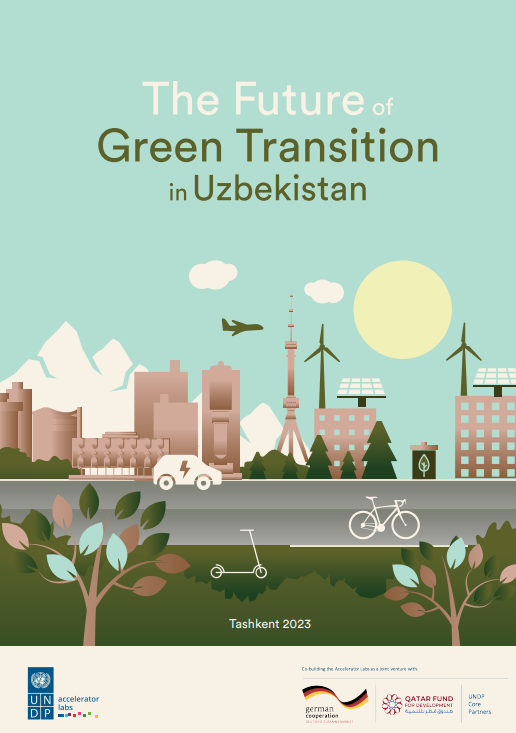 The Future of Green Transition in Uzbekistan سنة النشر: 2023 المؤلف المؤسسي: UNDP Kazakhstan In support of the government, UNDP Uzbekistan applied participatory futures and foresight tools to explore possibilities for a Green Transition in Uzbekistan. The process produced a range of outputs, including a signals database, drivers, narrative scenarios, and a custom scenario exploration system. They were used to develop policy ideas, which outline innovative approaches.
  Research Trends in Global Citizenship Education in South Korea: An Analysis and Its Implications (The Journal of Korean Education; Vol.45, No.3) سنة النشر: 2018 المؤلف: HeeJung Raina Sim | Chanmi Kim المؤلف المؤسسي: Korean Educational Development Institute (KEDI) Purpose: Global citizenship education(GCED) has drawn the attention of researchers in the last decade; yet, the number of systematic reviews is still not enough. This study therefore aims to examine general research trends in GCED published in the Korean Citation Index(KCI) journals from January 2000 to July 2018.Design/ Methods: The study implemented a systematic review following the Preferred Reporting Items for Systematic Reviews and Meta-Analyses(PRISMA) statement guidelines. As a result, 218 relevant articles have been identified and this study employed a classification form to categorize the characteristics of the studies during meta analyses.Findings/ Results: The results showed that the number of published articles has significantly increased since 2016. Social science was the most common subject. The most frequently used keywords were multicultural education and global citizenship. while glocal and ecological citizenship has recently emerged. Most studies equally cover all education levels. A literature review was most often employed as a research method. Values: In conclusion, many studies have been published on GCED in South Korea in the last decade, but their general consensus is that most of the studies are too often based on a Western school of thought. The findings from the current study direct future studies on the subject. 세계시민교육 국내 연구동향 분석: 2000년부터 2018년 등재학술지 게재 논문을 중심으로 (한국교육; Vol.45, No.3) سنة النشر: 2018 المؤلف: 심희진 | 김찬미 المؤلف المؤسسي: 한국교육개발원 본 연구는 세계시민교육과 관련된 국내 논문을 체계적으로 고찰하여 이에 대한 학문적 성과 및 한계 점을 파악하고 나아가 후속 연구의 과제와 방향을 제시하고자 하였다. 이를 위해 2000년부터 2018년까 지 출간된 국내 등재 학술지(KCI)를 대상으로 체계적 문헌고찰 연구방법을 수행하였다. 이를 위해 본고는 PRISMA 모형 흐름도 및 COSI 모델을 이용하여 KISS, RISS, DBpia 세 종류의 국내학술데이터베 이스에서 검색을 실시하였다. 최초 검색된 논문은 900편이었으나 절차에 따라 논문 선정을 진행한 바 최종 218편이 분석 대상으로 도출되었다. 세계시민교육 관련 국내 연구는 총 73개 학술지에 출판되 었는데 그 중 ‘사회과교육’이 가장 큰 비중(24편, 11%)을 차지했다. 연구영역은 실천방안연구가 171편 으로 가장 높았고 주제별로는 교육과정 개발 및 적용이, 주제어 분석에서는 다문화교육과 세계시민성 이 가장 많이 사용되었다. 교육단계에서는 초・중・고등 대상 연구가 비교적 균등하게 이뤄졌고 연구 방법으로는 문헌연구가 가장 많이 사용되었다(43.3%). 한편, 세계시민교육 분야 국내연구는 영미권을 중심으로 논의되어온 단편적 이론 및 담론 재해석 등 대부분 기술적인 면에 치중되어 있는 것으로 나타났다. 따라서 앞으로 세계시민교육의 연구논문 활성화를 위해 보다 한국적・동양적 관점에서의 대안적 담론과 실증적 근거에 기반한 다양한 연구 논문의 필요성이 제기된다.
  2030 지속가능개발목표(SDGs)실천 방안 연구: 교육 분야를 중심으로 سنة النشر: 2016 المؤلف: 안혜정 | 서예원 | 윤종혁 | 김은영 | 염후남 | 박환보 | 최동주 | 김명진 | 이정화 المؤلف المؤسسي: 한국교육개발원 이 연구는 새천년개발목표(MDGs)의 이행종료와 더불어 향후 2030년까지 국제사회가 함께 성취해야 할 개발목표로 채택된 지속가능개발목표(SDGs) 중 네 번째 목표인 교육 목표(SDG 4)의 전략적 실천방안을 마련하기 위하여 수행되었다. 현 정부는 “ODA 지속 확대 및 모범적・통합적 개발협력 추진”을 국정과제로 삼고, 개도국 소녀교육 및 아프리카 직업/ICT 교육을 포함한 4대 구상을 선정하는 등 교육 분야 개발협력의 중요성과 필요성을 강조한 바 있다. 이에 본 연구에서는 우리나라 교육개발협력 사업의 현황과 수행주체별 참여 실태 및 인식 조사를 토대로 실효성 있는 정책방안을 도출하고 SDG 4의 실천 방안을 제시하였다.
  동양사상을 통한 세계시민성의 재구성 (국제이해교육연구; Vol. 18, No. 1) سنة النشر: 2023 المؤلف: 김형렬 | 김재중 | 김병환 المؤلف المؤسسي: 한국국제이해교육학회 본 논문은 세계시민성에 내재한 서구중심주의에 대한 비판을 토대로 동양사상의 맥락에서 대안적 세계시민성을 구성하는 것을 목적으로 한다. 날로 가속화되고 있는 세계화의 추세는 전 세계 구성원 간의 상호의존성, 인간으로서 갖는 보편적 권리와 책임, 다양성에 대한 존중 등을 지향하는 세계시민성을 현대적 삶의 불가피한 조건으로 이해할 것을 요청한다. 세계시민성의 필요성에 대한 폭넓은 공감대를 배경으로 세계시민성에 대한 다양한 접근들이 제안되어 왔지만, 이들은 공통적으로 서구중심적인 인식론에 근거한다는 한계를 노정한다. 이에 본 연구는 존재론적 변화를 수반한 세계시민성을 기존의 세계시민성 관련 담론에서 포착되지 않았던 ‘다른(other)’ 목소리로 규정하고, 이 다른 목소리 중 하나로 동양의 전통 철학에 주목한다. 특히 동양사상을 통한 세계시민성의 가능성을 생기주의적 자연관과 동양적 세계시민주의의 시원으로 볼 수 있는 천하주의의 관점에서 살펴본다. 궁극적으로 본 연구는 동양사상을 통해 재구성되는 세계시민성이 기존의 세계시민성의 척도를 대체하는 다른 척도가 되기를 주장하는 것이 아니라, 삶의 터전과 역사에 뿌리를 내린 맥락화된 많은 세계시민성 중의 하나가 될 수 있음을 논한다.
 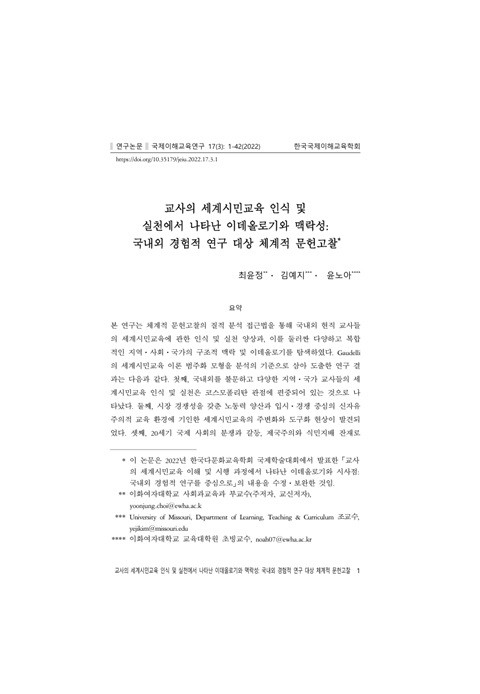 교사의 세계시민교육 인식 및 실천에서 나타난 이데올로기와 맥락성: 국내외 경험적 연구 대상 체계적 문헌고찰 (국제이해교육연구; Vol. 17, No. 3) سنة النشر: 2022 المؤلف: 최윤정 | 김예지 | 윤노아 المؤلف المؤسسي: 한국국제이해교육학회 본 연구는 체계적 문헌고찰의 질적 분석 접근법을 통해 국내외 현직 교사들의 세계시민교육에 관한 인식 및 실천 양상과, 이를 둘러싼 다양하고 복합적인 지역․사회․국가의 구조적 맥락 및 이데올로기를 탐색하였다. Gaudelli의 세계시민교육 이론 범주화 모형을 분석의 기준으로 삼아 도출한 연구 결과는 다음과 같다. 첫째, 국내외를 불문하고 다양한 지역․국가 교사들의 세계시민교육 인식 및 실천은 코스모폴리탄 관점에 편중되어 있는 것으로 나타났다. 둘째, 시장 경쟁성을 갖춘 노동력 양산과 입시․경쟁 중심의 신자유주의적 교육 환경에 기인한 세계시민교육의 주변화와 도구화 현상이 발견되었다. 셋째, 20세기 국제 사회의 분쟁과 갈등, 제국주의와 식민지배 잔재로 남은 국가주의 시민성 담론에 따라 세계시민교육이 외면, 축소 또는 침묵되기도 하였다. 연구 결과는 특수한 시대적․사회구조적 맥락과 다양한 이데올로기의 영향을 받는 교사들의 세계시민교육 실천 양상에 대한 함의를 제시하고, 이를 바탕으로 보다 성찰적, 비판적 차원의 교사교육 및 세계시민교육 연구와 실제를 위한 시사점을 제공한다.
 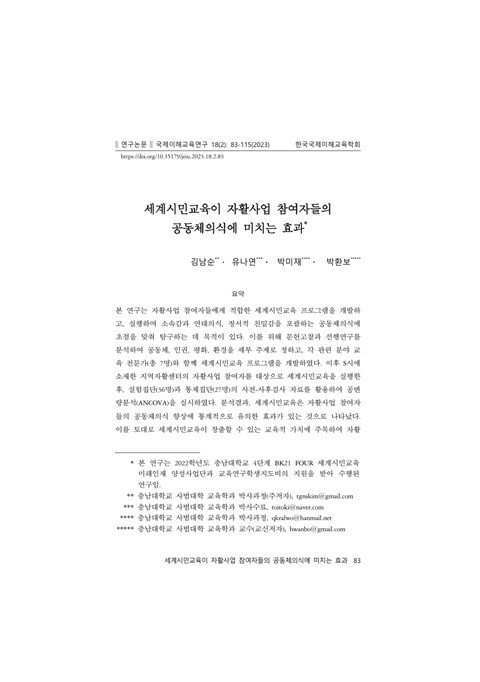 세계시민교육이 자활사업 참여자들의 공동체의식에 미치는 효과 (국제이해교육연구; Vol. 18, No. 2) سنة النشر: 2023 المؤلف: 김남순 | 유나연 | 박미재 | 박환보 المؤلف المؤسسي: 한국국제이해교육학회 본 연구는 자활사업 참여자들에게 적합한 세계시민교육 프로그램을 개발하고, 실행하여 소속감과 연대의식, 정서적 친밀감을 포괄하는 공동체의식에 초점을 맞춰 탐구하는 데 목적이 있다. 이를 위해 문헌고찰과 선행연구를 분석하여 공동체, 인권, 평화, 환경을 세부 주제로 정하고, 각 관련 분야 교육 전문가(총 7명)와 함께 세계시민교육 프로그램을 개발하였다. 이후 S시에 소재한 지역자활센터의 자활사업 참여자를 대상으로 세계시민교육을 실행한 후, 실험집단(36명)과 통제집단(27명)의 사전-사후검사 자료를 활용하여 공변량분석(ANCOVA)을 실시하였다. 분석결과, 세계시민교육은 자활사업 참여자들의 공동체의식 향상에 통계적으로 유의한 효과가 있는 것으로 나타났다. 이를 토대로 세계시민교육이 창출할 수 있는 교육적 가치에 주목하여 자활사업이 추구하는 사회적 가치 실현에 적극적으로 활용할 필요가 있음을 제언하였다.
 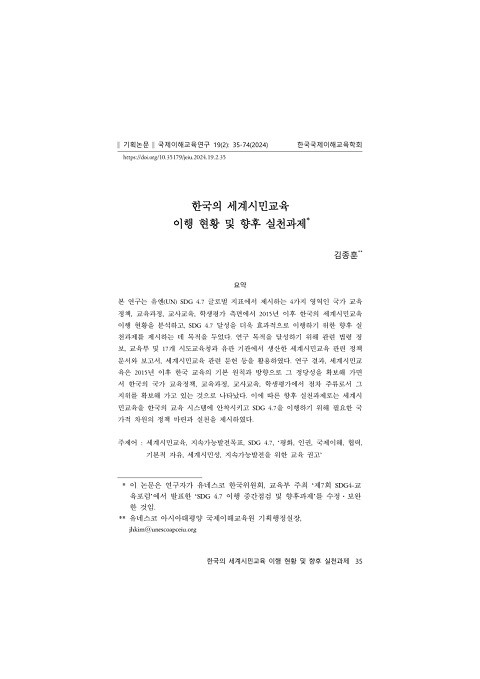 한국의 세계시민교육 이행 현황 및 향후 실천과제 (국제이해교육연구; Vol. 19, No. 2) سنة النشر: 2024 المؤلف: 김종훈 المؤلف المؤسسي: 한국국제이해교육학회 본 연구는 유엔(UN) SDG 4.7 글로벌 지표에서 제시하는 4가지 영역인 국가 교육정책, 교육과정, 교사교육, 학생평가 측면에서 2015년 이후 한국의 세계시민교육 이행 현황을 분석하고, SDG 4.7 달성을 더욱 효과적으로 이행하기 위한 향후 실천과제를 제시하는 데 목적을 두었다. 연구 목적을 달성하기 위해 관련 법령 정보, 교육부 및 17개 시도교육청과 유관 기관에서 생산한 세계시민교육 관련 정책 문서와 보고서, 세계시민교육 관련 문헌 등을 활용하였다. 연구 결과, 세계시민교육은 2015년 이후 한국 교육의 기본 원칙과 방향으로 그 정당성을 확보해 가면서 한국의 국가 교육정책, 교육과정, 교사교육, 학생평가에서 점차 주류로서 그 지위를 확보해 가고 있는 것으로 나타났다. 이에 따른 향후 실천과제로는 세계시민교육을 한국의 교육 시스템에 안착시키고 SDG 4.7을 이행하기 위해 필요한 국가적 차원의 정책 마련과 실천을 제시하였다.
 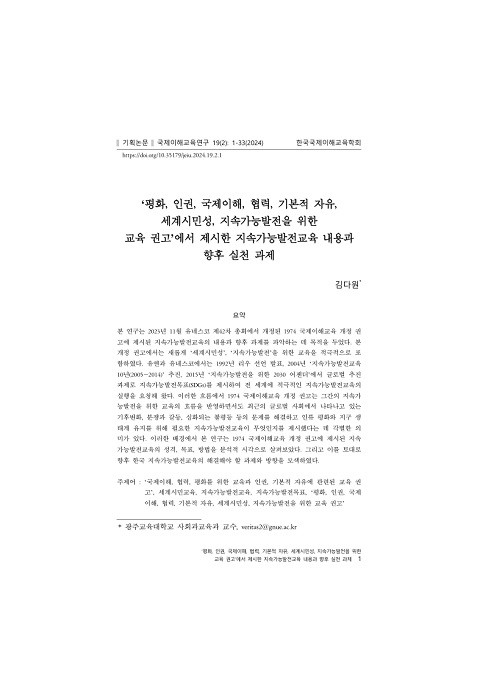 ‘평화, 인권, 국제이해, 협력, 기본적 자유, 세계시민성, 지속가능발전을 위한 교육 권고’에서 제시한 지속가능발전교육 내용과 향후 실천 과제 (국제이해교육연구; Vol. 19, No. 2) سنة النشر: 2024 المؤلف: 김다원 المؤلف المؤسسي: 한국국제이해교육학회 본 연구는 2023년 11월 유네스코 제42차 총회에서 개정된 1974 국제이해교육 개정 권고에 제시된 지속가능발전교육의 내용과 향후 과제를 파악하는 데 목적을 두었다. 본 개정 권고에서는 새롭게 ‘세계시민성’, ‘지속가능발전’을 위한 교육을 적극적으로 포함하였다. 유엔과 유네스코에서는 1992년 리우 선언 발표, 2004년 ‘지속가능발전교육 10년(2005~2014)’ 추진, 2015년 ‘지속가능발전을 위한 2030 어젠더’에서 글로벌 추진 과제로 지속가능발전목표(SDGs)를 제시하여 전 세계에 적극적인 지속가능발전교육의 실행을 요청해 왔다. 이러한 흐름에서 1974 국제이해교육 개정 권고는 그간의 지속가능발전을 위한 교육의 흐름을 반영하면서도 최근의 글로벌 사회에서 나타나고 있는 기후변화, 분쟁과 갈등, 심화되는 불평등 등의 문제를 해결하고 인류 평화와 지구 생태계 유지를 위해 필요한 지속가능발전교육이 무엇인지를 제시했다는 데 각별한 의미가 있다. 이러한 배경에서 본 연구는 1974 국제이해교육 개정 권고에 제시된 지속가능발전교육의 성격, 목표, 방법을 분석적 시각으로 살펴보았다. 그리고 이를 토대로 향후 한국 지속가능발전교육의 해결해야 할 과제와 방향을 모색하였다.
 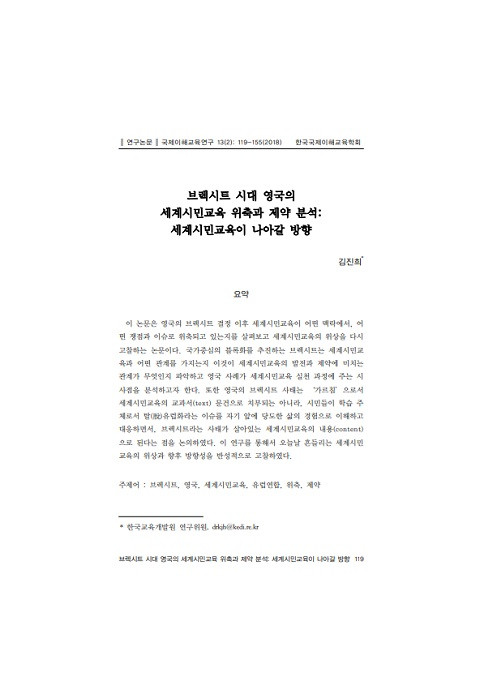 Critical Understanding on Shrinkage and Limitation of UK’s Global Citizenship Education in the Era of Brexit (Journal of Education for International Understanding; Vol. 13, No. 2) سنة النشر: 2018 المؤلف: Jinhee Kim المؤلف المؤسسي: Korean Society of Education for International Understanding (KOSEIU) This study aims to analyze the shrinkage and limitation of Global Citizenship Education in the epoch of Brexit. It also attempts to examine a feature of positioning and direction of Global Citizenship Education which is confronted with a sceptical criticism of its' educational impact. In this vein, the major findings and arguments showed the practice and implementation of Global Citizenship Education under the pressure of Brexit faces complicated challenges across Europe including UK, since Brexit highly pursues national centred hegemony and nationalistic bloc. It could hinder the structural restriction of implementing of Global Citizenship Education in UK. Apparently, this study indicated that the phenomenon of Brexit and it's impact is functioning as dynamic learning contents, not for a teaching-learning resource. It has been discussed that Citizens of UK have strived to deal Brexit as a learning experience in life-world. Finally, this study suggests a direction to move forward of Global Citizenship Education in an ever-shrinking world of Brexit.