
الموارد
استكشف مجموعة واسعة من الموارد القيمة حول تعليم المواطنة العالمية لتعميق فهمك وتعزيز البحث والمناصرة والتعليم والتعلم.
تم العثور على 1,851 نتيجة
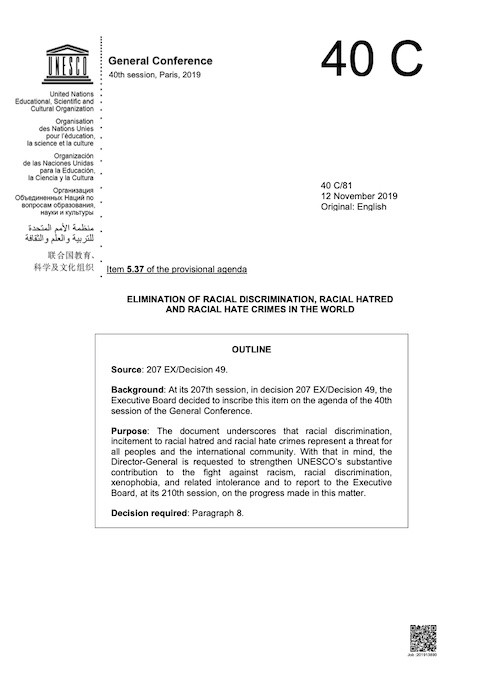 القضاء على التمييز العنصري والكراهية العنصرية والجرائم الناجمة عن الكراهية العنصرية في العالم سنة النشر: 2019 المؤلف المؤسسي: منظمة الأمم المتحدة للتربية والعلم والثقافة (UNESCO) تؤكد الوثيقة أنأشكالالتمييز العنصري والتحريض على الكراهية العنصرية والجرائم الناجمة عن الكراهية العنصرية تمثلًﺗﻬديدالكلالشعوب واﻟﻤﺠتمع الدوليبرمتهطلب ُ. ومن هذا المنطلق، يمن المديرة العامة تعزيز مساهمة اليونسكو الجوهرية في مكافحة العنصرية والتمييز العنصريوكراهية الأجانبان دور ّوما يتعلق ﺑﻬا من تعصب، وموافاة اﻟﻤﺠلس التنفيذي، إبته العاشرة بعد المائتين، بمعلوماتعن التقدم المحرز في هذا الصدد. Elimination of Racial Discrimination, Racial Hatred and Racial Hate Crimes In the World (General Conference; 40th session) سنة النشر: 2019 المؤلف المؤسسي: UNESCO At its 207th session, in decision 207 EX/Decision 49, the Executive Board decided to inscribe this item on the agenda of the 40th session of the General Conference. The document underscores that racial discrimination, incitement to racial hatred and racial hate crimes represent a threat for all peoples and the international community. With that in mind, the Director-General is requested to strengthen UNESCO’s substantive contribution to the fight against racism, racial discrimination, xenophobia, and related intolerance and to report to the Executive Board, at its 210th session, on the progress made in this matter. Eliminación de la discriminación racial, el odio racial y los crímenes de odio racial en el mundo (Conferencia general; 40a reunión) سنة النشر: 2019 المؤلف المؤسسي: Organización de las Naciones Unidas para la Educación, la Ciencia y la Cultura (UNESCO) En su decisión 207 EX/49, adoptada en su 207a reunión, el Consejo Ejecutivo decidió incluir este punto en el orden del día de la 40a reunión de la Conferencia General. El presente documento pone de relieve que la discriminación racial, la incitación al odio racial y los crímenes de odio racial constituyen una amenaza para todos los pueblos y para la comunidad internacional. Teniendo esto presente, se pide a la Directora General que refuerce la contribución sustantiva de la UNESCO a la lucha contra el racismo, la discriminación racial, la xenofobia y las formas conexas de intolerancia, y que informe al Consejo Ejecutivo, en su 210a reunión, sobre los progresos realizados al respecto.
 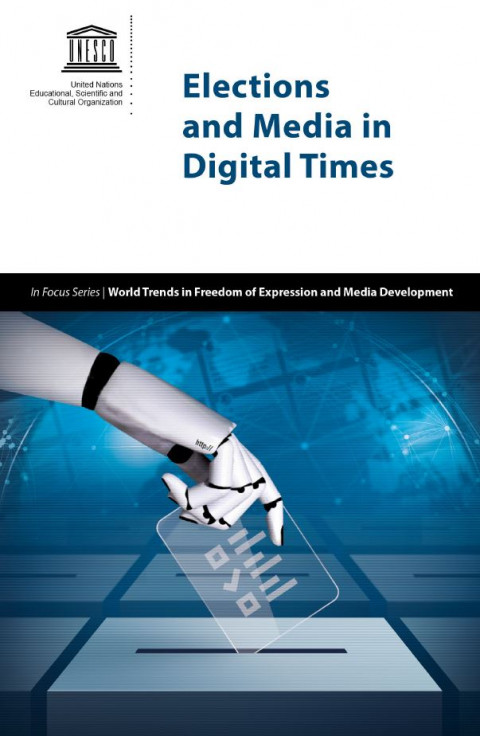 Elections and Media in Digital Times (In Focus Series: Global Trends in Freedom of Expression and Media Development) سنة النشر: 2019 المؤلف: Tarlach McGonagle | Maciek Bednarski | Mariana Francese Coutinho | Arthur Zimin المؤلف المؤسسي: UNESCO Digital companies are enabling politicians, political parties and voters to communicate in unprecedented ways, and expanding opportunities for seeking, receiving and imparting political information and ideas. Alongside positive developments, there also growing concerns about emerging and increasing threats to the integrity and credibility of elections, as well as the media's contribution to free, fair, transparent and peaceful electoral processes.This report highlights three converging trends in media and elections in digital times: the rise of disinformation, intensifying attacks on journalists, and disruptions linked to the use of information and communication technology in electoral arrangements. Offering possible responses to the challenges at hand, this study is a tool for governments, election practitioners, media organizations, journalists, civil society, the private sector, academia and individuals. Выборы и СМИ в цифровую эпоху (Серия в фокусе: Мировые тенденции в области свободы выражения мнений и развития СМИ) سنة النشر: 2019 المؤلف: Tarlach McGonagle | Maciek Bednarski | Mariana Francese Coutinho | Arthur Zimin المؤلف المؤسسي: UNESCO ИТ компании дают возможность политикам, политическим партиям и избирателям общаться беспрецедентными способами, расширяют возможности для поиска, получения и распространения политической информации и идей. Наряду с позитивными сторонами растет озабоченность по поводу вырисовывающихся и усиливающихся угроз целостности и авторитету выборов, а также вкладу средств массовой информации в свободные, справедливые, транспарентные и мирные избирательные процессы.В настоящем докладе освещаются три сходящиеся тенденции, связанные со СМИ и выборами в цифровую эпоху: рост дезинформации, усиление нападений на журналистов и перебои в предоставлении информационно-коммуникационных технологий в период выборов. Это исследование, предлагая возможные ответы на стоящие перед нами проблемы, является своего рода инструментом для правительств, специалистов по проведению выборов, организаций средств массовой информации, журналистов, гражданского общества, частного сектора, научных кругов и отдельных лиц.
 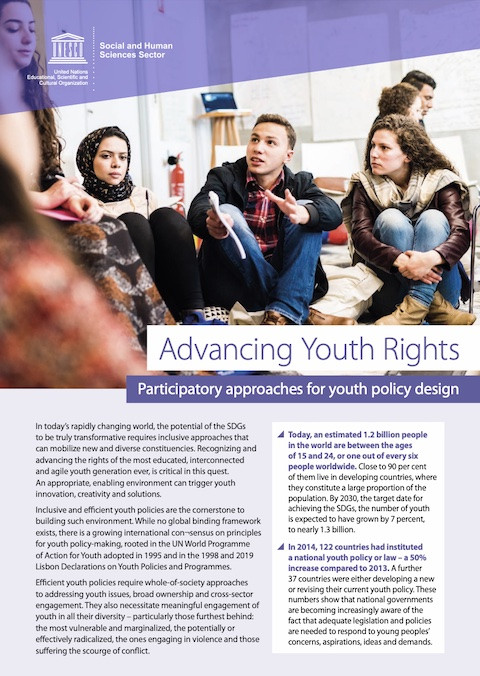 Advancing Youth Rights: Participatory Approaches for Youth Policy Design سنة النشر: 2019 المؤلف المؤسسي: UNESCO Inclusive and efficient youth policies are the cornerstone to building such environment. While no global binding framework exists, there is a growing international con¬sensus on principles for youth policy-making, rooted in the UN World Programme of Action for Youth adopted in 1995 and in the 1998 and 2019 Lisbon Declarations on Youth Policies and Programmes. Efficient youth policies require whole-of-society approaches to addressing youth issues, broad ownership and cross-sector engagement. They also necessitate meaningful engagement of youth in all their diversity – particularly those furthest behind: the most vulnerable and marginalized, the potentially or effectively radicalized, the ones engaging in violence and those suffering the scourge of conflict. Promover los derechos de las personas jóvenes: Enfoques participativos para diseñar políticas de juventud سنة النشر: 2019 المؤلف المؤسسي: Organización de las Naciones Unidas para la Educación, la Ciencia y la Cultura (UNESCO) Para crear este entorno, es esencial contar con políticas públicas de juventud inclusivas y eficientes. Si bien no existe un marco vinculante a nivel mundial, existe un consenso internacional cada vez mayor en lo que respecta a los principios que deben guiar la formulación de políticas de juventud. Dicho consenso dimana del Programa de Acción Mundial de las Naciones Unidas para los Jóvenes, aprobado en 1995, y de las Declaraciones de Lisboa sobre Políticas y Programas relativos a la Juventud de 1998 y 2019. Para que las políticas públicas de juventud sean eficientes, los enfoques deben englobar a toda la sociedad para abordar los problemas de la juventud y contar con una colaboración intersectorial. También se requiere la verdadera participación e inclusión las juventudes en toda su diversidad incluyendo quienes que han quedado atrás: jóvenes en situación de vulnerabilidad, marginado/as, que podrían radicalizarse o ya lo han hecho, que cometen actos violentos y quienes sufren el flagelo de los conflictos. Faire progresser les droits des jeunes: Approches participatives pour la conception des politiques de jeunesse سنة النشر: 2019 المؤلف المؤسسي: Organisation des Nations Unies pour l'éducation, la science et la culture (UNESCO) Des politiques de jeunesse inclusives et efficaces sont la pierre angulaire du développement d’un tel environnement. Bien qu’il n’existe pas de cadre mondial contraignant, il y a un consensus international grandissant sur les principes de l’élaboration des politiques de jeunesse, enracinés dans le Programme d’action mondial des Nations Unies pour la jeunesse, adopté en 1995 et dans les Déclarations de Lisbonne de 1998 et 2019 sur les politiques et programmes en faveur de la jeunesse. Pour être efficaces, les politiques en faveur de la jeunesse doivent s’appuyer sur une approche globale de la société pour traiter les problèmes des jeunes, une large appropriation et un engagement intersectoriel. Elles nécessitent également un engagement significatif envers les jeunes dans toute leur diversité - en particulier envers les plus démunis : les plus vulnérables et marginalisés, ceux qui sont potentiellement ou effectivement radicalisés, ceux qui s’engagent dans la violence et ceux qui souffrent des situations de conflit.
 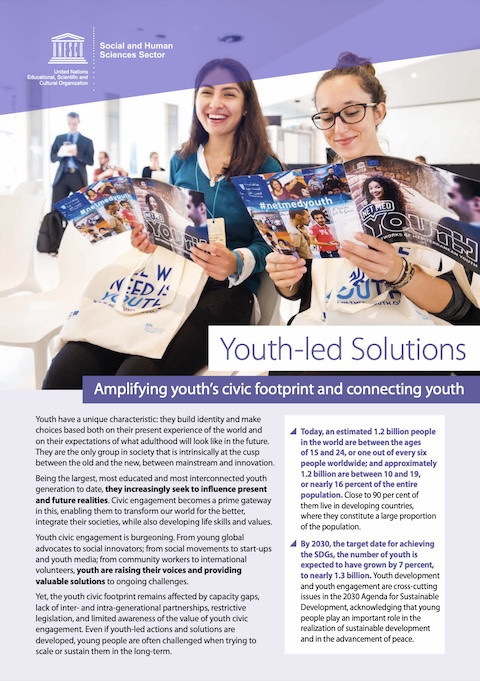 Youth-Led Solutions: Amplifying Youth’s Civic Footprint and Connecting Youth سنة النشر: 2019 المؤلف المؤسسي: UNESCO UNESCO believes in the value of youth civic engagement and youth‐led solutions. In line with our Operational Strategy on Youth (2014‐2021), our approach to meaningfully engaging with youth entails working with youth as change‐makers and partners, and not solely as beneficiaries. We apply cutting‐edge approaches and programmes that contribute to shaping an enabling ecosystem for meaningful, effective and sustainable youth civic engagement. Élimination de la discrimination raciale, de la haine raciale et des crimes motivés par la haine raciale dans le monde (Conférence générale; 40e session) سنة النشر: 2019 المؤلف المؤسسي: Organisation des Nations Unies pour l'éducation, la science et la culture (UNESCO) À sa 207e session, par sa décision 207 EX/49, le Conseil exécutif a décidé d’inscrire ce point à l’ordre du jour de la 40e session de la Conférence générale. Le document souligne le fait que la discrimination raciale, l’incitation à la haine raciale et les crimes motivés par la haine raciale constituent une menace pour tous les peuples et pour la communauté internationale. Dans cette perspective, la Directrice générale est appelée à renforcer la contribution réelle de l’UNESCO à la lutte contre le racisme, la discrimination raciale, la xénophobie et l’intolérance qui y est associée, et de faire rapport au Conseil exécutif, à sa 210e session, des progrès accomplis à cet égard.