
الموارد
استكشف مجموعة واسعة من الموارد القيمة حول تعليم المواطنة العالمية لتعميق فهمك وتعزيز البحث والمناصرة والتعليم والتعلم.
تم العثور على 3,433 نتيجة
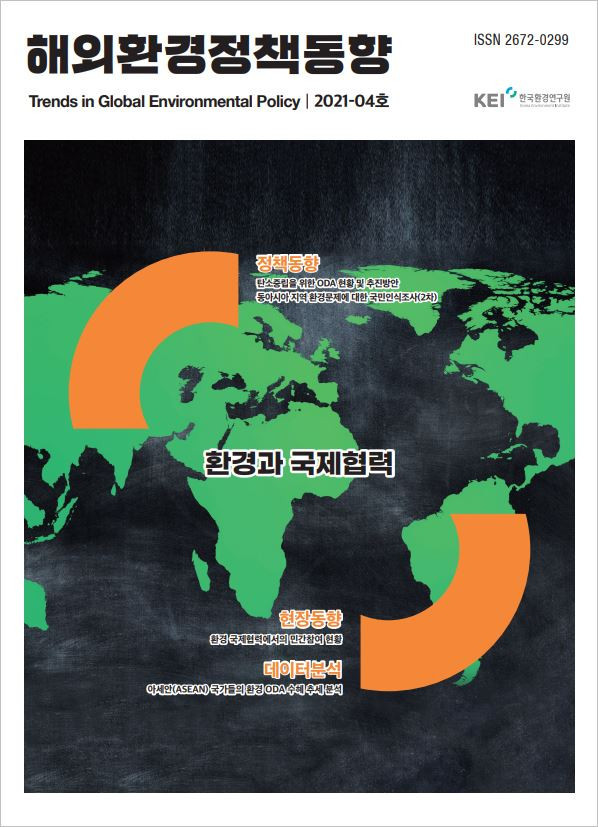 환경과 국제협력 (해외환경정책동향 2021-04호) سنة النشر: 2021 المؤلف المؤسسي: 한국환경연구원 국제사회는 개발도상국의 재정·기술·역량개발에 지원함으로써 개발도상국이 더욱 적극적으로 저탄소 전환과 넷제로(Net-Zero) 달성에 동참하도록 협조할 필요가 있다. 어떤 국가의 탄소저감 노력으로 얻게 되는 혜택은 모든 국가가 함께 누릴 수 있다. 반대로 어떤 국가가 탄소저감 노력을 외면했을 때, 그로 인한 비용 또한 모든 국가가 같이 짊어져야 한다. 그래서 국제협력은 글로벌 넷제로 달성을 위해 필수적이며 공적개발원조(ODA: Official Development Assistance) 또한 필요한 역할을 해야만 한다. ODA, 특히 무상원조는 인도주의적인 목적으로 시행되기도 하지만 산업·경제협력 측면에서 ODA 외에 공적·민간 투자를 촉진할 수 있다는 점에서 중요하다. 본고에서는 현재 글로벌 탄소중립 ODA와 우리나라의 탄소중립 ODA 추진 현황을 살펴보고, 마지막으로 향후 탄소중립 ODA가 나아가야 할 방향에 대해 고찰해 보고자 한다. 본 저작물은 한국환경연구원에서 2021년 작성하여 공공누리 제4유형으로 개방한 '환경과 국제협력 (해외환경정책동향 2021-04호)'을 이용하였으며, 해당 저작물은 한국환경연구원 홈페이지(https://www.kei.re.kr/)에서 무료로 내려받으실 수 있습니다.
 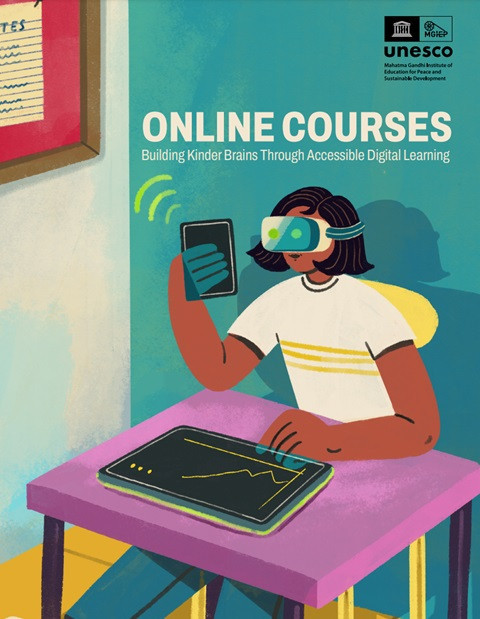 Online Courses: Building Kinder Brains Through Accessible Digital Learning Course Brochure سنة النشر: 2023 المؤلف المؤسسي: Mahatma Gandhi Institute of Education for Peace and Sustainable Development (MGIEP) UNESCO MGIEP focuses on achieving the United Nations (UN) Sustainable Development Goal (SDG) 4, Target 7 towards education for building peaceful and sustainable societies across the world by developing programmes that promote social and emotional learning, innovate digital pedagogies and empower the youth. UNESCO MGIEP‘s Social Emotional Learning (SEL) courses are research and evidence based with built-in assessments. The courses are multi-modal, interactive and self-paced, and are designed to build intellectual and emotional intelligence among learners. Currently the courses are available in English and are being adapted to Hindi, Spanish and Russian.
  Girls’ Education and Climate Change: Investing in Education for Resilience سنة النشر: 2021 المؤلف المؤسسي: Inter-agency Network for Education in Emergencies (INEE) This brief was developed to support dissemination of key messages in Mind the Gap 2: Seeking Safe and Sustainable Solutions for Girls’ Education in Crises. It provides an overview of evidence and gaps on the relationship between girls’ education and climate crises, and recommends actions to mitigate the impacts of climate change on girls’ education and promote resilience. تعليم الفتيات وتغيّر المناخ: الاستثمار في التعليم من أجل القدرة على التأقلم سنة النشر: 2021 المؤلف: Inter-agency Network for Education in Emergencies (INEE) المؤلف المؤسسي: Inter-agency Network for Education in Emergencies (INEE) تم تطوير هذا الملّخص لدعم نشر الرسائل الرئيسية في إدراك الفجوة 2: البحث عن حلول آمنة ومستدامة لتعليم الفتيات في الأزمات. يقدم نظرة عامة على الأدلة والثغرات في العلاقة بين تعليم الفتيات وأزمات المناخ ، ويوصي باتخاذ إجراءات للتخفيف من آثار تغيّر المناخ على تعليم الفتيات وتعزيز المرونة.
 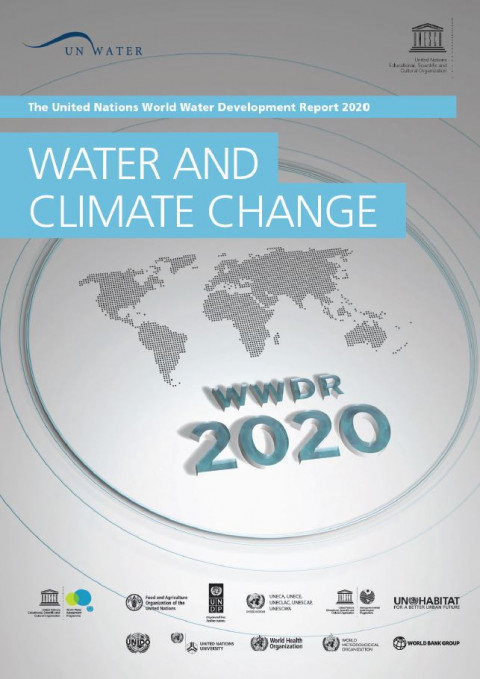 The United Nations World Water Development Report 2020: Water and Climate Change سنة النشر: 2020 المؤلف المؤسسي: UNESCO World Water Assessment Programme (WWAP) The 2020 edition of the UN World Water Development Report addresses the critical linkages between water and climate change in the context of sustainable development. It also serves as a guide for concrete actions to address these challenges. It outlines actions, supported by examples from across the world, in three areas: first, enabling people to adapt to the impacts of climate change; second, improving the resilience of livelihoods; and, third, reducing the drivers of climate change. Critically, measures to improve the efficiency of water use in agriculture is inextricably linked to multiple SDGs. These include those related to zero hunger (SDG 2), availability and access to water (SDG 6), climate action (SDG 13), and promoting the sustainable use of ecosystem services (SDG 15).The Report concludes that reducing both the impacts and drivers of climate change will require substantial changes in the way we use and reuse the Earth’s limited water resources. The experience and expertise needed to achieve this goal are brought together in the Report through UN-Water’s Members and Partners. It will support policy makers in tackling the challenges of climate change by harnessing the wide-ranging opportunities that improved water management offers for adaptation, mitigation and resilience in a rapidly changing world. Rapport mondial des Nations Unies sur la mise en valeur des ressources en eau 2020: l'eau et les changements climatiques سنة النشر: 2020 المؤلف المؤسسي: UNESCO World Water Assessment Programme (WWAP) L’édition 2020 du Rapport mondial sur la mise en valeur des ressources en eau montre les liens essentiels entre l’eau et les changements climatiques dans le cadre du développement durable. Le rapport sert également de guide pour prendre des mesures concrètes et relever ces défis. Il présente des actions, illustrées par des exemples provenant du monde entier, liées à trois domaines : premièrement, permettre aux personnes de s’adapter aux effets des changements climatiques ; deuxièmement, renforcer la résilience des moyens de subsistance ; enfin, réduire les moteurs des changements climatiques. Les mesures visant à accroître l’efficacité de l’utilisation de l’eau dans le domaine agricole – tout en garantissant l’accès à l’eau de groupes vulnérables tels que les petits exploitants agricoles – sont incontestablement liées à de multiples ODD. Il s’agit de ceux liés à l’objectif zéro faim (ODD 2), à la disponibilité et l’accès à l’eau (ODD 6), à l’action climatique (ODD 13) et à la promotion de l’utilisation durable des services écosystémiques (ODD 15).Le rapport conclut sur le fait que réduire tant les effets que les facteurs des changements climatiques exigera des transformations importantes dans la manière dont nous utilisons et réutilisons les ressources en eau limitées de la planète. L’expérience et l’expertise nécessaires pour atteindre cet objectif sont rassemblées dans ce rapport par les membres et partenaires d’ONU-Eau. Il contribuera à aider les dirigeants à lutter contre les difficultés liées aux changements climatiques en saisissant les vastes opportunités qu’offrent l’amélioration de la gestion de l’eau pour l’adaptation, la mitigation et la résilience dans un monde en rapide évolution.
  [Summary] The United Nations World Water Development Report 2020: Water and Climate Change; Executive Summary سنة النشر: 2020 المؤلف المؤسسي: UNESCO World Water Assessment Programme (WWAP) The 2020 edition of the United Nations World Water Development Report (WWDR) addresses the critical linkages between water and climate change in the context of the broader sustainable development agenda. The report is not meant to be a purely technical examination of the impacts of climate change on the hydrological cycle. Rather, the report focuses on the challenges, opportunities and potential responses to climate change – in terms of adaptation, mitigation and improved resilience – that can be addressed through improving how water resources are management and used, while providing water supply and sanitation services for all in a sustainable manner. In doing so, the report tackles two of the most critical crises the world will continue facing over the next several decades: Water (in)security and climate change. [Résumé] Rapport mondial des Nations Unies sur la mise en valeur des ressources en eau 2020: l'eau et les changements climatiques; résumé سنة النشر: 2020 المؤلف المؤسسي: UNESCO World Water Assessment Programme (WWAP) L’édition 2020 du Rapport mondial sur la mise en valeur des ressources en eau (WWDR) montre les liens essentiels entre l’eau et les changements climatiques dans le cadre plus large du programme de développement durable. Le rapport n’est pas un examen purement technique des effets des changements climatiques sur le cycle de l’eau. Il s’agit plutôt d’énoncer les difficultés, les possibilités et les réponses potentielles aux changements climatiques – adaptation, atténuation et résilience renforcée – pouvant être abordées en améliorant la gestion et l’utilisation des ressources en eau et en offrant des services d’approvisionnement en eau et d’assainissement pour tous et de manière durable. Ce faisant, le rapport s’adresse à deux des plus graves crises que le monde continuera de subir au cours des prochaines décennies : la sécurité (ou insécurité) de l’eau et les changements climatiques. [Резюме] Всемирный доклад Организации Объединенных Наций о состоянии водных ресурсов, 2020 г.: водные ресурсы и изменение климата, Рабочее резюме سنة النشر: 2020 المؤلف المؤسسي: UNESCO World Water Assessment Programme (WWAP) В Докладе Организации Объединенных Наций о состоянии водных ресурсов мира (WWDR) за 2020 год рассматриваются критически важные связи между водными ресурсами и изменением климата в контексте более широкой повестки дня в области устойчивого развития. Отчет не предназначен для чисто технического изучения воздействия изменения климата на гидрологический цикл. Скорее, в докладе основное внимание уделяется проблемам, возможностям и потенциальным ответным мерам на изменение климата — с точки зрения адаптации, смягчения последствий и повышения устойчивости, — которые можно решить путем улучшения управления и использования водных ресурсов при обеспечении услуг водоснабжения и санитарии для всех. устойчивым образом. При этом в отчете рассматриваются два наиболее серьезных кризиса, с которыми мир будет сталкиваться в течение следующих нескольких десятилетий: водная (не)безопасность и изменение климата.
  [Facts and Figures] The United Nations World Water Development Report 2020: Water and Climate Change; Facts and Figures سنة النشر: 2020 المؤلف: Engin Koncagül | Michael Tran | Richard Connor المؤلف المؤسسي: UNESCO World Water Assessment Programme (WWAP) Since the mid-20th century, changes in the intensity and frequency of extreme weather and climate events have been observed, including a decrease in cold temperature extremes, an increase in warm temperature extremes, an increase in extremely high sea levels and an increase in the number of heavy precipitation events in a number of regions (Min et al., 2011).Climate projections indicate with high confidence that extreme precipitation events will become more intense and frequent in many regions, but also that heatwaves will occur more often and last longer. The former will increase global flood risk (Hirabayashi et al., 2013), while the latter is expected to make droughts more intense (Trenberth et al., 2014). These risks are unevenly distributed geographically, and are generally larger for vulnerable people and communities in countries at all levels of development (IPCC, 2014a). Figure 1. Global water withdrawals throughout the previous centuryFigure 2. Climate change scenario trends in water availabilityFigure 3. Annual baseline water stressFigure 4. Seasonal variabilityFigure 5. World weather-related natural catastrophes by peril, 1980–2018Figure 6. Spatial distribution of water-related disasters (droughts, floods, landslides and storms), 2001–2018Figure 7. Spatial distribution of floods, 2001–2018Figure 8. Spatial distribution of droughts, 2001–2018Figure 9. Electricity consumption in the water sector by process, 2014–2040Figure 10. Number of people living under water stress under the Baseline Scenario