
الموارد
استكشف مجموعة واسعة من الموارد القيمة حول تعليم المواطنة العالمية لتعميق فهمك وتعزيز البحث والمناصرة والتعليم والتعلم.
تم العثور على 2,781 نتيجة
 Discours de M. Koïchiro Matsuura, Directeur général de l'UNESCO, à l'occasion de la Conférence de Copenhague sur l'éducation pour la compréhension et le dialogue interculturels, Copenhague, 21 octobre 2008 سنة النشر: 2008 المؤلف المؤسسي: UNESCO. Director-General, 1999-2009 (Matsuura, K.) This address is given by Mr Koïchiro Matsuura, Director-General of UNESCO, on the occasion of the Copenhagen Conference: “Education for Intercultural Understanding and Dialogue”. Address by Mr Koïchiro Matsuura, Director-General of UNESCO, on the occasion of the Copenhagen Conference: Education for Intercultural Understanding and Dialogue; Copenhagen, 21 October 2008 سنة النشر: 2008 المؤلف المؤسسي: UNESCO. Director-General, 1999-2009 (Matsuura, K.) This address is given by Mr Koïchiro Matsuura, Director-General of UNESCO, on the occasion of the Copenhagen Conference: “Education for Intercultural Understanding and Dialogue”. Discours de M. Koïchiro Matsuura, Directeur général de l'UNESCO, à l'occasion de la Conférence de Copenhague: l'éducation pour la compréhension interculturelle et le dialogue; Copenhague, le 21 Octobre 2008 سنة النشر: 2008 المؤلف المؤسسي: UNESCO. Director-General, 1999-2009 (Matsuura, K.) Cette adresse est donnée par M. Koïchiro Matsuura, Directeur général de l'UNESCO, à l'occasion de la Conférence de Copenhague: «L'éducation pour la compréhension interculturelle et le dialogue ».
  Results Report 2019 سنة النشر: 2019 المؤلف المؤسسي: GPE The Global Partnership for Education (GPE) is a multi-stakeholder partnership and fund dedicated to improving education in the world’s poorest countries, and those with the most children out of school. Founded in 2002, the partnership is designed to harness the power of collaboration among developing countries, donor countries, civil society, foundations, the private sector and youth (represented through civil society organizations) to support inclusive and quality education for all.The partnership is now implementing GPE 2020, its strategic plan for the 2016-2020 period that outlines an ambitious course of action to achieve three strategic goals:Strategic Goal 1: Improved and more equitable student learning outcomes through quality teaching and learningStrategic Goal 2: Increased equity, gender equality and inclusion for all in a full cycle of quality education, targeting the poorest and most marginalized, including by gender, disability, ethnicity and conflict or fragilityStrategic Goal 3: Effective and efficient education systems delivering equitable, quality educational services for allThese efforts are aligned with and support Sustainable Development Goal 4, the world’s commitment to inclusive and equitable quality education for all. Rapport sur les résultats 2019 سنة النشر: 2019 المؤلف المؤسسي: GPE Le partenariat met en oeuvre le plan stratégique GPE 2020, son plan stratégique pour la période 2016-2020, qui définit une série de mesures ambitieuses pour la réalisation des trois buts stratégiques suivants: But stratégique 1: Des résultats d’apprentissage meilleurs et plus équitables grâce à un enseignement et un apprentissage de qualité But stratégique 2: Renforcement de l’équité, de l’égalité des sexes et de l’inclusion pour tous dans un cycle complet d’enseignement de qualité, en donnant la priorité aux plus démunis et aux plus marginalisés, notamment en raison de leur sexe, leur handicap, leur appartenance ethnique ou parce qu’ils se trouvent dans une situation de conflit ou de fragilité But stratégique 3: Des systèmes éducatifs efficaces et efficients offrant des services d’éducation équitables et de qualité pour tous Ces efforts sont alignés sur l’objectif de développement durable 4, l’engagement mondial en faveur d’une éducation inclusive et équitable de qualité pour tous.
 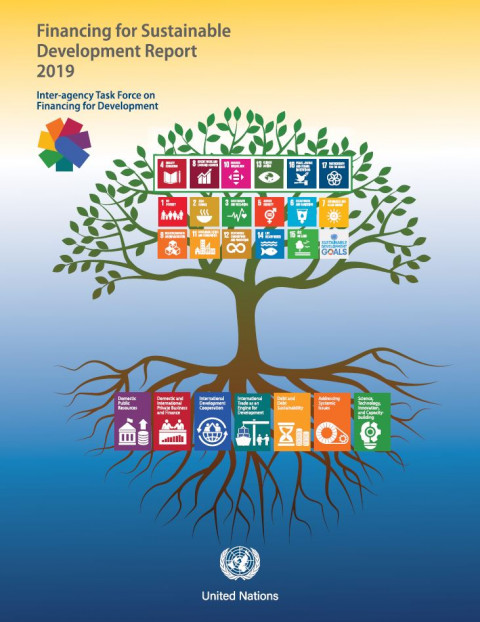 Financing for Sustainable Development Report 2019: Report of the Inter-agency Task Force on Financing for Development سنة النشر: 2019 المؤلف المؤسسي: United Nations (UN) This report provides a comprehensive assessment of the state of sustainable finance. Prepared by more than 60 UN agencies, programmes and offices and other relevant international organizations, the report puts forward a set of policy recommendations for achieving tangible progress on financing for sustainable development in 2019 and beyond.The report warns that creating favorable conditions is becoming more challenging. Rapid changes in technology, geopolitics, and climate are remaking our economies and societies, and existing national and multilateral institutions -- which had helped lift billions out of poverty -- are now struggling to adapt. Confidence in the multilateral system has been undermined, in part because it has failed to deliver returns equitably, with most people in the world living in countries with increasing inequality.
  إستراتيجية مكافحة التصحر لتحقيق التنمية المستدامة في الوطن العربي : دراسة برنامج الجزائر الوطني لمكافحة التصحر سنة النشر: 2019 المؤلف: Boshwait Qairouz إن البحث عن استراتيجيات مستدامة لمكافحة التصحر تحترم البيئة الطبيعية وتحقق العدالة الاجتماعية إضافة إلى تحقيق الفعالية الاقتصادية في المناطق المتضررة من العالم أصبحت من القضايا الهامة التي تخص كل الدول خاصة الدول العربية، لما لمشكلة التصحر من عواقب وخيمة تعود بالضرر على اتمعات البشرية من الناحية الاقتصادية والاجتماعية وكذا البيئية، وبالتالي عدم تحقق التنمية المستدامة التي أصبحت من متطلبات العصر والرامية إلى تحسين الجانب الاجتماعي والاقتصادي تحت إطار حماية البيئة. ومنه نطرح التساؤل التالي: هل تتبع الدول العربية إستراتيجية واحدة لمكافحة التصحر والتي تأخذ في الاعتبار مبادئ التنمية المستدامة؟ وما هو واقع ذلك في الجزائر من خلال البرنامج الوطني لمكافحة التصحر؟ Strategy to Combat Desertification to Achieve Sustainable Development in the Arab World: A Study of Algeria 's National Program to Combat Desertification سنة النشر: 2019 المؤلف: Boshwait Qairouz Regarding to its impacts on the economic, social and environnemental levels, desertification became one of critical environnemental issue that disturbs the international community. Especially in the dry land, semi dry land and semi humid dry lands. Desertification is the great durable development challenge based on three dimensions: economical efficiency, social justice and nature protection. Viewing the international trends towards achieving durable development, the Arab countries must create new durable strategies and methods, in order to face the phenomenon, these strategies should include the following dimensions: economical, social and environnemental one. Accounting the different reasons of desertification, its intensity and considering the financing capacity, it so difficult to expect one typical strategy that suits each Arab countries. To face such problem, Algeria like the other damaged countries takes needful procedures to combat this problem following a national programme which started in the sixteenth oh last century. To sum up, now days desertification till now a global issue, but the question which rest posing, If may we remove definitely such problem?
  مؤتمر ومعرض التنمية المستدامة سنة النشر: 2018 المؤلف المؤسسي: Arab Internatiional يأتي تنظيم المؤتمر دعماً لتوجيهات السيد الرئيس عبد الفتاح السيسي لتحقيق رؤية مصر 2030في إستراتيجية التنمية المستدامة بما يحقق إقتصاد تنافس متوازن ومتنوع للإرتقاء بجودة حياه المصريين عن طريق إستثمار عبقرية المكان والإنسان مع الأعتماد علي الإبتكار والمعرفه والعدالة الإجتماعية .
 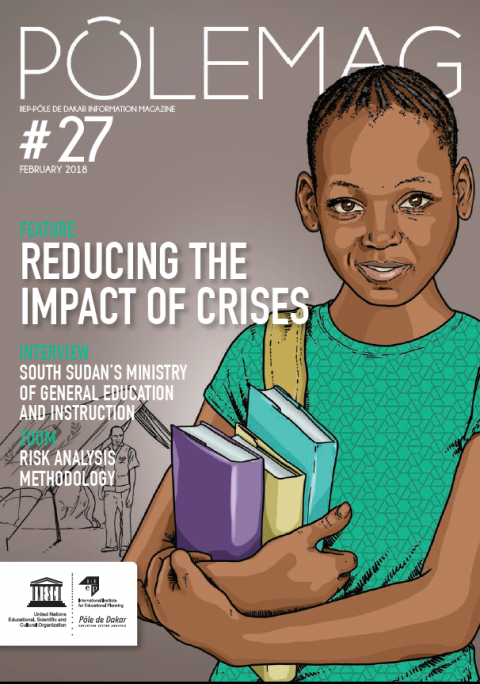 PôleMag n° 27: IIEP Pôle de Dakar information magazine, February 2018 سنة النشر: 2018 المؤلف المؤسسي: UNESCO IIEP Regional Office for Africa Strengthening the resilience of education systems through planning that is adapted for crisis situations is a priority for IIEP. Together with our main partners, the institute has developed strategic orientations and tools dedicated to educational planning that is adapted to crisis situations. Based on our experience on this theme in Africa, we are also working with UNICEF to develop a new methodology to analyse risks and vulnerabilities. Mitigating the impact of crises calls for strengthening relationships with partners. Planning adapted to vulnerabilities should facilitate dialogue between development and humanitarian actors so that intervention plans are coordinated and aligned with government priorities. A dollar invested in risk reduction could save up to seven dollars in rebuilding costs. Taking the risks into account in the analysis and planning of education systems is therefore a wise investment.