
الموارد
استكشف مجموعة واسعة من الموارد القيمة حول تعليم المواطنة العالمية لتعميق فهمك وتعزيز البحث والمناصرة والتعليم والتعلم.
تم العثور على 3,229 نتيجة
 UNESCO IICBA: strategic plan سنة النشر: 2019 المؤلف المؤسسي: UNESCO International Institute for Capacity-Building in Africa (IICBA) UNESCO IICBA’s Strategic Plan for 2018-2021 is guided by its mandate and mission to strengthen the capacity of Member States in Africa in teacher policy and development. This work is vital to realizing its vision of an integrated, prosperous and peaceful Africa where everyone has access to qualified, motivated and professionally supported teachers. This plan is supported by a vision for Strategic Partnerships, because UNESCO IICBA recognizes their value in promoting regional and national cooperation in teacher-related issues, and in fostering dialogue on teachers and education. Strategic partnerships have three objectives:Successfully implement UNESCO IICBA’s Strategic Plan 2018-2021 Ensure the efficiency and effectiveness of resource mobilizationStrengthen advocacy, cooperation and coordination mechanisms The Strategic Plan is also supported by a Communication Strategy that covers all of UNESCO IICBA’s programme areas and will support collaboration, coordination and institutional operations. The strategy aims to contribute to effective communication that will:Help to fulfill UNESCO IICBA’s strategic goals and objectivesAmplify the visibility of UNESCO IICBA to its stakeholdersInform partners and donors on implementation progress, and demonstrate UNESCO IICBA’s accountabilityEnsure people understand what UNESCO IICBA represents and doesImprove teachers’ professional image and raise awareness to address teachers’ issues in AfricaKeep UNESCO IICBA team members proud, motivated, innovative and accountable in their tasks
  Central Asia: struggle for the new future سنة النشر: 2018 المؤلف: A. Dankov The article discusses the social, economic and political prospects of Central Asia (2019-2024). Prognosis also covers the ethnic changes, migration, cultural and language diversity, urbanization, quality of life. Центральная Азия: борьба за новое будущее سنة النشر: 2018 المؤلف: A. Dankov В статье рассматриваются социальные, экономические и политические перспективы Центральной Азии (2019-2024). Прогноз также охватывает этнические изменения, миграцию, культурное и языковое разнообразие, урбанизацию, качество жизни.
  Global Citizenship Education in Latin America and the Caribbean: Towards a World without Walls: Global Citizenship Education in the SDG 4 - E2030 Agenda سنة النشر: 2018 المؤلف المؤسسي: UNESCO Santiago The Latin America and the Caribbean Regional Network Meeting on Global Citizenship Education “Towards a World without Walls: Global Citizenship Education in SDG 4 – Agenda E2030”, was organized by the UNESCO Regional Bureau for Education in Latin America and the Caribbean (OREALC / UNESCO Santiago) and the Asia – Pacific Centre of Education for International Understanding (APCEIU), in collaboration with the Chilean Observatory of Educational Policies (OPECH) of the University of Chile. The event, held on October 23 and 24, 2017, in Santiago, Chile, brought together regional researchers, members of civil society organizations and activists, educational communities, social movements, government educational authorities and universities. The objective of the meeting was to promote dialogue on the concept of Global Citizenship Education (GCED), deepen the regional perspective on the topic and create a network that helps strengthen the implementation of GCED in the context of the Latin America and the Caribbean region. This document summarizes the main topics addressed and issues discussed at the meeting. Subsequently, the founding document of the Regional Global Citizenship Education Network for Latin America and the Caribbean, which was elaborated in light of the meeting’s discussions, is presented. Educación para la Ciudadanía Mundial en América Latina y el Caribe: Hacia un mundo sin muros: educación para la ciudadanía mundial en el ODS4 - Agenda E2030 سنة النشر: 2018 المؤلف المؤسسي: UNESCO Santiago La Reunión Regional para América Latina y el Caribe de la Red de Educación para la Ciudadanía Mundial “Hacia un mundo sin muros: educación para la ciudadanía mundial en el ODS 4 – Agenda E2030”, fue organizada por la Oficina Regional de Educación para América Latina y el Caribe (OREALC / UNESCO Santiago) y el Centro de Educación para la Comprensión Internacional de Asia-Pacífico (APCEIU), en colaboración con el Observatorio Chileno de Políticas Educativas de la Universidad de Chile (OPECH). La cita se desarrolló el 23 y 24 de octubre de 2017 en Santiago de Chile, y a ella fueron convocados pensadores y activistas de la región, provenientes de organizaciones de la sociedad civil, comunidades educativas, movimientos sociales, organismos gubernamentales y universidades. El objetivo de la reunión fue promover el diálogo sobre el concepto de Educación para la Ciudadanía Mundial (ECM) y profundizar en una mirada regional para propiciar la conformación de una red que permita fortalecer la implementación de la ECM, situada en el contexto de América Latina y el Caribe. Se presenta este documento como síntesis de las principales temáticas que fueron abordadas y discutidas en el encuentro. A continuación, se presenta el documento fundacional que establece la Red Regional de Educación para la Ciudadanía Mundial para América Latina y el Caribe, que fue elaborada a raíz de las discusiones.
  Environment and Sustainable Development: Concept and Content سنة النشر: 2010 المؤلف: Ellah Murat There is no doubt that environmental problems have become increasingly important across all levels, where all countries have been preoccupied with, and held many conferences. The world has become the forefront of the concerns of the year, and the protection of the environment - without doubt - a necessity of life in order to preserve. Environmental and economic balance, through the rational management of natural resources to preserve their sustainability for future generations.Their link to sustainable development, which calls for a new pattern of development that preserves available natural resources and creates clean alternatives that do not destroy the environment. The environmental dimension is a deeper dimension in sustainable development.From the effects on the natural environment of the universe, we will try through our modest study these research into the implications of the environment on the one hand and sustainable development on the other.
 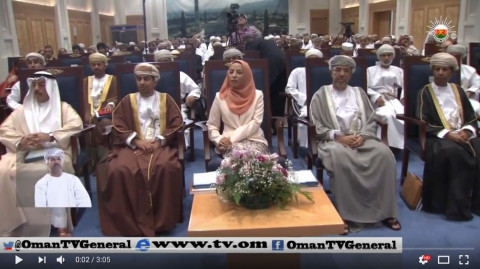 انطلاق ملتقى "المواطنة الإنسانية ودورها في التقارب والوئام الإنساني" سنة النشر: 2015 المؤلف المؤسسي: OmanTvGeneral أقام مركز السلطان قابوس العالي للثقافة والعلوم الملتقى العلمي المواطنة الإنسانية ودورها في التقارب والوئام الإنساني، وذلك في إطار فعاليات أسبوع التقارب والوئام الإنساني الرابع، حيث يعد الملتقىى فرصة سانحة لجميع المشاركين للاطلاع على تجربة السلطنة الرائدة في الحوار الحضاري ودعم قيم التسامح والتعاون والتعايش السلمي وفق الثوابت التي أرسى مبادئها حضرة صاحب الجلالة السلطان قابوس بن سعيد المعظم ـ حفظه الله ورعاه. Forum on "Human Citizenship and its Role in Convergence and Human Harmony" سنة النشر: 2015 المؤلف المؤسسي: OmanTvGeneral The Sultan Qaboos Higher Center for Culture and Science held the Scientific Forum on Human Citizenship and its Role in Convergence and Human Harmony, within the framework of the Fourth Week of Convergence and Human Harmony, where the forum is an opportunity for all participants to learn about the Sultanate's leading experience in civilizational dialogue and support the values of tolerance, cooperation and peaceful coexistence according to the constants. His principles were laid down by His Majesty Sultan Qaboos bin Said.
 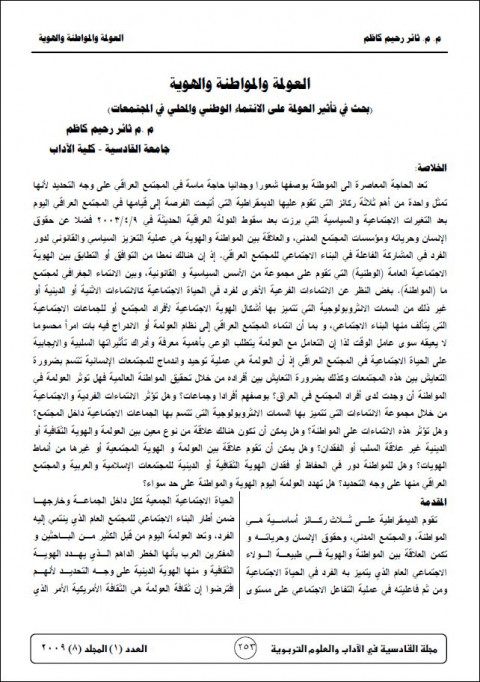 العولمة والمواطنة والهوية (بحث في تأثير العولمة على الانتماء الوطني والمحلي في المجتمعات) سنة النشر: 2009 المؤلف: Thaer Rahim Kazem المؤلف المؤسسي: Al-Qadisiyah University من أهم ثلاثة ركائز التي تقوم عليها الديمقراطية التي أتيحت الفرصة إلى قيامها في المجتمع العراقي اليوم بعد التغيرات الاجتماعية والسياسية التي برزت بعد سقوط الدولة العراقية الحديثة في 9/4/2003 فضلا عن حقوق الإنسان وحرياته ومؤسسات المجتمع المدني، والعلاقة بين المواطنة والهوية هي عملية التعزيز السياسي والقانوني لدور الفرد في المشاركة الفاعلة في البناء الاجتماعي للمجتمع العراقي. إذ إن هنالك نمطا من التوافق أو التطابق بين الهوية الاجتماعية العامة (الوطنية) التي تقوم على مجموعة من الأسس السياسية و القانونية، وبين الانتماء الجغرافي لمجتمع ما (المواطنة). بغض النظر عن الانتماءات الفرعية الأخرى لفرد في الحياة الاجتماعية كالانتماءات الاثنية أو الدينية أو غير ذلك من السمات الانثروبولوجية التي تتميز بها أشكال الهوية الاجتماعية لأفراد المجتمع أو للجماعات الاجتماعية التي يتألف منها البناء الاجتماعي، و بما أن انتماء المجتمع العراقي إلى نظام العولمة أو الاندراج فيه بات امرأ محسوما لا يعيقه سوى عامل الوقت لذا إن التعامل مع العولمة يتطلب الوعي بأهمية معرفة وأدراك تأثيراتها السلبية والايجابية على الحياة الاجتماعية في المجتمع العراقي إذ أن العولمة هي عملية توحيد واندماج للمجتمعات الإنسانية تتسم بضرورة التعايش بين هذه المجتمعات وكذلك بضرورة التعايش بين أفراده من خلال تحقيق المواطنة العالمية فهل توثر العولمة في المواطنة أن وجدت لدى أفراد المجتمع في العراق؟ بوصفهم أفرادا وجماعات؟ وهل تؤثر الانتماءات الفردية والاجتماعية من خلال مجموعة الانتماءات التي تتميز بها السمات الانثروبولوجية التي تتسم بها الجماعات الاجتماعية داخل المجتمع؟ وهل تؤثر هذه الانتماءات على المواطنة؟ وهل يمكن أن تكون هنالك علاقة من نوع معين بين العولمة والهوية الثقافية أو الدينية غير علاقة السلب أو الفقدان؟ وهل يمكن أن تقوم علاقة بين العولمة و الهوية المجتمعية أو غيرها من أنماط الهويات؟ وهل للمواطنة دور في الحفاظ أو فقدان الهوية الثقافية أو الدينية للمجتمعات الإسلامية والعربية والمجتمع العراقي منها على وجه التحديد؟ هل تهدد العولمة اليوم الهوية والمواطنة على حد سواء؟ Globalization, Citizenship and Identity (Research on the Impact of Globalization on National and Local Affiliation in Societies) سنة النشر: 2009 المؤلف: Thaer Rahim Kazem المؤلف المؤسسي: Al-Qadisiyah University There was a serious need to the citizenship as a psychological feeling in the Iraqi society. Because it represent the one of the most important three standards in the democratic operation as methods we must use in our social live. When we get a chance to build it in the Iraqi society. After the social and political changes that tack place after the 9 April 2003. The relationships between the citizenship and identity refer to the process by which we could strength the individual legal and political role to create the effective participate in the social live and social structure of the Iraqi society. Because there was an equalize between the general collective identity and the citizenship. We need these feelings when Iraqi society joins the globalization system under the pressure of the USA. And that required being aware in the negative effectiveness of the globalization and its positive ones. And the necessary of the living to gather in the global society. That makes the universal citizenship possible. This state creates many questions in the mind of the Arab and Moslemsre searchers. Such as could we keep our social and cultural identity? Are the citizenship help us to maintain the social and cultural identity? And other many questions that dealing with this objectives.