
الموارد
استكشف مجموعة واسعة من الموارد القيمة حول تعليم المواطنة العالمية لتعميق فهمك وتعزيز البحث والمناصرة والتعليم والتعلم.
تم العثور على 1,726 نتيجة
 Key Challenges of Youth in OIC Countries سنة النشر: 2015 المؤلف المؤسسي: Organization of Islamic Cooperation (OIC) | Statistical, Economic and Social Research and Training Centre for Islamic Countries (SESRIC) The report contains four main sections, with the exception of the introductory and concluding sections. The first section briefly reviews some of the main educational outcomes in OIC countries. Literacy and participation rates in tertiary schools and international student mobility are the main indicators reviewed in this section. The second section highlights some important labor market indicators related to the young population in order to identify the main challenges and obstacles in the OIC countries. The third section deals with some social problems of young people. The fourth section deals with mental health issues. The last section is devoted to recommendations. التحديات الرئيسية للشباب في دول منظمة التعاون اإلسالمي سنة النشر: 2015 المؤلف المؤسسي: Organization of Islamic Cooperation (OIC) | Statistical, Economic and Social Research and Training Centre for Islamic Countries (SESRIC) ويحتوي التقرير على أربعة أقسام رئيسية، باستثناء الأقسام التمهيدية والختامية. يستعرض القسم الأول بإيجاز بعض النتائج التعليمية الرئيسية في دول المنظمة. وتشكل معدلات الإلمام بالقراءة والكتابة والمشاركة في مدارس التعليم العالي والحراك الطلابي الدولي المؤشرات الرئيسية المستعرضة في هذا القسم. يبرز القسم الثاني بعض المؤشرات الهامة لسوق العمل المتعلقة بالسكان الشباب بهدف التعرف على التحديات والعقبات الرئيسية في دول المنظمة. ويتناول القسم الثالث بعض المشاكل الاجتماعية للشباب. أما القسم الرابع فيتناول قضايا الصحة النفسية. والقسم الأخير مخصص للتوصيات.
  Reimagining Life Skills and Citizenship Education in the Middle East and North Africa: A Four-Dimensional and Systems Approach to 21st Century Skills; Conceptual and Programmatic Framework سنة النشر: 2017 المؤلف المؤسسي: UNICEF Middle East and North Africa The situation of learning in MENA calls for a holistic, lifelong and rights-based vision of education that maximizes the potential of all children and youth in the region and better equips them to create meaning out of knowledge and to face the transitions from childhood to adulthood, from education to work, and from unreflective development to responsible and active citizenship. This is what drives the MENA Life Skills and Citizenship Education (LSCE) Initiative, kicked off in 2015 with the aim of supporting the countries of the region – conceptually, programmatically and technically – to improve learning and to better invest such learning in individual, social and economic development.The LSCE Conceptual and Programmatic Framework (CPF) puts forth a roadmap to guide policies, strategies and programmes on life skills and citizenship education supporting the region-wide efforts to provide children and youth with opportunities to learn, transition from childhood to adulthood, move from school to work settings, and become responsible and active citizens of their communities.A set of twelve core life skills for MENA has been identified using the four-dimensional learning model: ‘Learning to Know’ (Cognitive Dimension), ‘Learning to Do’ (Instrumental Dimension), ‘Learning to Be’ (Individual Dimension), and ‘Learning to Live Together’ (Social Dimension). The twelve core life skills are life-long, and they build on evidence that underlines the importance of skills acquisition from an early age. Furthermore, the twelve core life skills are acquired and sustained through all forms of learning in a systems approach that recognizes multiple pathways of learning, formal, non-formal and informal. Réimaginer l’éducation aux compétences de vie et à la citoyenneté au Moyen-Orient et en Afrique du Nord : Une approche à quatre dimensions et systémique des compétences pour le XXIe siècle ; Cadre programmatique et conceptuel سنة النشر: 2017 المؤلف المؤسسي: UNICEF Middle East and North Africa L’Initiative pour l’éducation aux compétences de vie et à la citoyenneté de la région MENA (LSCE) représente un effort de collaboration étatique et régional en faveur de la réalisation de l’objectif de développement durable (ODD) 4 – Assurer l’accès de tous à une éducation de qualité, sur un pied d’égalité, et promouvoir les possibilités d’apprentissage tout au long de la vie. Elle cherche à reformuler la compréhension traditionnelle de l’éducation aux compétences de vie et à la citoyenneté dans la région, tout en rappelant les questions fondamentales au sujet du but et du rôle de l’éducation dans le développement sociétal qui sont pertinentes dans le contexte actuel.L’Initiative LSCE se concentre sur trois défis interdépendants :Une société du savoir inaccessible, résultat de la mauvaise qualité de l’éducation, du bas niveau des résultats scolaires et d’une équité et inclusion limitées.Une croissance économique en déclin, résultat d’un manque d’aptitudes à l’employabilité, du haut taux de chômage chez les jeunes, de l’inégalité des sexes face à l’accès au marché du travail, du manque de création d’emplois, et d’un environnement économique faible.Une faible cohésion sociale, résultat de l’escalade de la violence et de la radicalisation tout autant que d’un faible engagement civique.
  IIEP-UNESCO 12th Medium-Term Strategy: 2026–2029 سنة النشر: 2026 المؤلف المؤسسي: UNESCO International Institute for Educational Planning (IIEP) The 2026-2029 Medium-Term Strategy of the UNESCO International Institute for Educational Planning provides a vision for transforming educational planning into tangible results for education systems across the globe. Building on more than 60 years of experience, the Strategy puts the focus not only on policy and plan design, but on collective and agile implementation.
  Development Strategy of Uzbekistan: Civil Society; Training and Methodology Complex سنة النشر: 2019 المؤلف: M.N. Primov | T. Norboev المؤلف المؤسسي: Uzbekistan. Ministry of Higher and Secondary-Specialized Education | Tashkent Institute of Finance The document is a collection of training materials on the conditions and prospects for the development of civil society in Uzbekistan, as well as the implementation of the main directions of the Action Strategy. The document also the role of local governments of citizens, non-governmental non-profit organizations in improving institutions civil society.A major role in this is played by new socio-political disciplines, which include the “Development Strategy of Uzbekistan. Civil society". This course reveals the basic scientific principles of the formation of civil society and the development strategy of Uzbekistan, analyzes the main stages of transformation, shows the irreversibility of the reforms carried out in the country, and helps to build the civic position of each member of the society. It is organically woven into the humanities system, forming a common logical chain with it; It helps to answer questions of modern policy of our state and to determine the place and role of each person in the grandiose transformations carried out in the country. Стратегия развития Узбекистана. Гражданское общество: Учебно-методический комплекс سنة النشر: 2019 المؤلف: M.N. Primov | T. Norboev المؤلف المؤسسي: Uzbekistan. Ministry of Higher and Secondary-Specialized Education | Tashkent Institute of Finance Документ является сборником учебных материалов, посвященных условиям и перспективам развития гражданского общества в Узбекистане, а также реализации основных направлений Стратегии действий. В документе также рассматривается роль органов местного самоуправления граждан, негосударственных некоммерческих организаций в совершенствовании институтов гражданского общества.Большую роль в этом играют новые социально-политические дисциплины, в число которых входит и «Стратегия развития Узбекистана. Гражданское общество». Данный курс раскрывает основные научные принципы формирования гражданского общества и стратегию развития Узбекистана, анализирует основные этапы преобразований, показывает необратимость проводимых в стране реформ, помогает формированию гражданской позиции каждого члена общества. Он органично вплетается в систему гуманитарных наук, образуя общую логическую цепь с ней; помогает ответить на вопросы современной политики нашего государства и определить место и роль каждого человека в грандиозных преобразованиях, проводимых в стране.
  The Implications of the COVID-19 Pandemic on Fundamental Rights and Civic Space سنة النشر: 2022 المؤلف: Filip Pazderski | Giada Negri | Chayma Khazzani | Ivana Rosenzweigova | Boglarka Szalma | Luben Panov | Carlotta Besozzi المؤلف المؤسسي: European Economic and Social Committee (EESC) This report was compiled for the European Economic and Social Committee at the request of the Diversity Europe Group by a consortium of four partners - European Civic Forum, Civil Society Europe, European Center for Not-for-Profit Law and the Institute of Public Affairs. It examines how the COVID-19 pandemic has affected the work of civil society organisations (CSOs) across Europe. It also focuses on how solutions implemented in individual EU Member States have impacted CSOs' ability to exercise their fundamental rights and freedoms.The report is based on in-depth analysis of existing studies and reports, a survey, 29 expert interviews and three focus groups. It showcases a number of ways in which the pandemic has affected the functioning of civil society organisations in the EU. The observations emerging from the different stages of the research were characterised by a high degree of consistency, validating the picture depicted.
 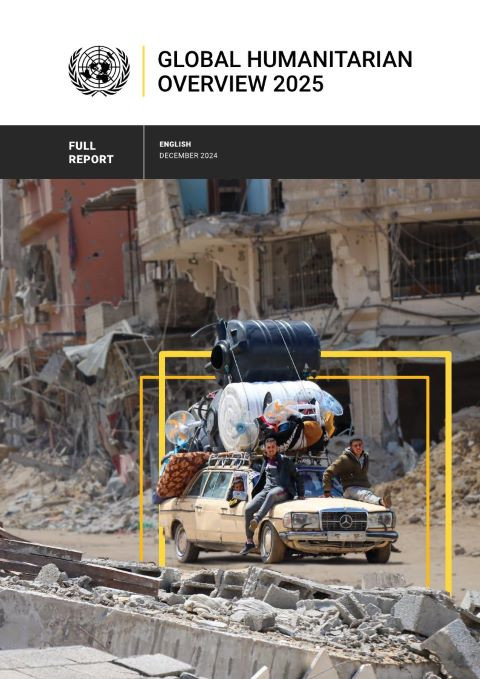 Global Humanitarian Overview 2025 سنة النشر: 2024 المؤلف المؤسسي: UN. Office for the Coordination of Humanitarian Affairs (UN. OCHA) A snapshot of the global trends driving increased humanitarian needs in 2025, analysis from 2024 and an overview of where the system is delivering better to help those affected by crises. The Global Humanitarian Overview (GHO) is the world’s most comprehensive, authoritative and evidence-based assessment of humanitarian need. Through plans that prioritize those most in need, it aims to fight hunger, killer diseases, gender-based violence and displacement. The GHO 2025 presents an analysis of global crises and needs and the humanitarian plans to address them. In 2025, humanitarian partners are appealing for over US$47 billion to assist nearly 190 million people facing life-threatening and urgent needs across 72 countries. The report looks at response trends to strengthen, such as localization, cash, accountability and the changes needed to deliver aid effectively: security and funding. The GHO presents a collective picture of humanitarians' achievements and, conversely, what happens when humanitarians are unable to deliver aid. Explore the full report and interactive content through humanitarianaction.info.
 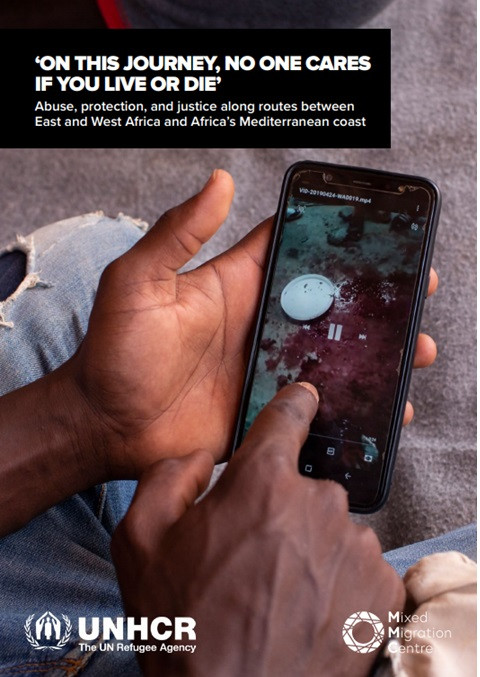 On This Journey, No One Cares If You Live or Die: Abuse, Protection, and Justice Along Routes Between East and West Africa and Africa’s Mediterranean Coast سنة النشر: 2020 المؤلف المؤسسي: UN. Office of the United Nations High Commissioner for Refugees (UNHCR) | Mixed Migration Centre This report draws on data collected by the Mixed Migration Centre’s 4Mi monitors along the route to map the places where refugees interviewed in 2018 and 2019 most frequently reported deaths, sexual and gender-based violence (SGBV), physical violence, and kidnappings occurred. It illustrates how refugees and migrants using the route face a series of risks including as they cross into eastern Sudan, and when crossing the Sahara Desert, and then again in multiple places in Libya. Similarly, those traveling through West Africa reported multiple incidents of physical violence, SGBV, as well as deaths at various points. Refugees and migrants have reported being subjected to brutal violence, including being burnt with hot oil, melted plastic, or heated metal objects, being electrocuted, tied in stress positions, and experiencing and witnessing repeated sexual violence, often in the context of ransom demands. UNHCR staff and partners continue to witness the severe impact these abuses have had on the mental health of many men, women, and children.