
الموارد
استكشف مجموعة واسعة من الموارد القيمة حول تعليم المواطنة العالمية لتعميق فهمك وتعزيز البحث والمناصرة والتعليم والتعلم.
تم العثور على 1,402 نتيجة
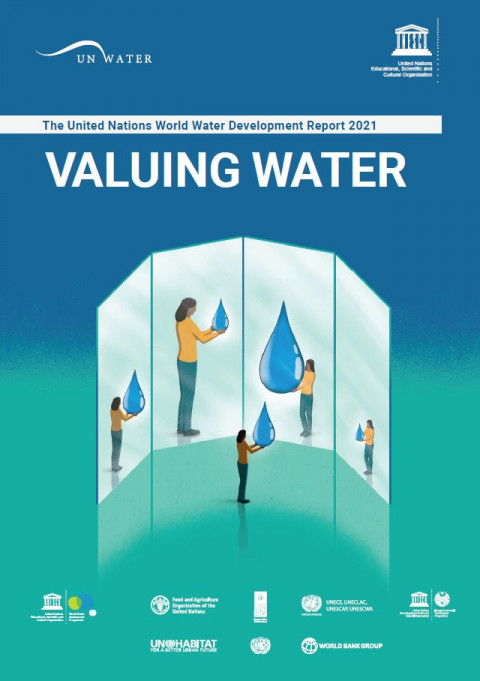 The United Nations World Water Development Report 2021: Valuing Water سنة النشر: 2021 المؤلف المؤسسي: UNESCO World Water Assessment Programme (WWAP) The 2021 edition of the United Nations World Water Development Report focuses on valuing water. There is enough water for all provided we use and manage it efficiently. But we don’t. We invest too little, and ineffectively. We use too much water, creating scarcities. Quality is suffering and so is the environment.The value we place on water varies, depending upon who is using it, and why. Value can be a guide to what our goals should be, what actions are needed, and where we should invest. Many of our problems arise because we don’t value water highly enough; all too often water is not valued at all.This report explains various approaches to valuing water for environmental considerations, water-related infrastructure, drinking water, sanitation and hygiene. It looks at valuation issues in food and agriculture, business, industry, energy and financing. And it highlights the perspectives of different value systems and cultures, and associated social and gender-based considerations.
  Greening Technical and Vocational Education and Training: A Practical Guide for Institutions سنة النشر: 2017 المؤلف المؤسسي: UNESCO International Centre for Technical and Vocational Education and Training (UNEVOC) This Guide describes the macro need for TVET reform in conformity with the Sustainable Development Goals, the Global Action Programme (GAP) on Education for Sustainable Development (ESD), and other United Nations, UNESCO and national initiatives. The Guide also provides specific practical help for institutional greening transition teams to plan and carry out the changes that are deemed necessary. It is essential that all such greening undertakings have a clear vision, are known to all those concerned, follow a strategic plan, set targets and milestones, and include a monitoring/assessment tool. The concept of shared vision and team reformation combined with the support of senior leaders is evident throughout this Guide. A major goal is that greening will grow into an ongoing process which is eventually infused into the culture of each institution.
  Address by Irina Bokova, Director-General of UNESCO, on the occasion of the conference: Creating Sustainable Society of Peace: A Legacy of King Bhumibol Adulyadej of Thailand سنة النشر: 2017 المؤلف المؤسسي: UNESCO. Director-General, 2009-2017 (Bokova, I.G.) This address was delivered by Irina Bokova, Director-General of UNESCO, on the occasion of the conference: Creating Sustainable Society of Peace: A Legacy of King Bhumibol Adulyadej of Thailand; UNESCO, 26 September 2017.
  Concept note for the 2020 Global education monitoring report on inclusion سنة النشر: 2018 In line with its mandate, the 2020 GEM Report will assess progress towards Sustainable Development Goal 4 (SDG 4) on education and its ten targets, as well as other related education targets in the SDG agenda.Echoing the overall orientation in the SDGs to “leave no one behind”, this year's Report will also take an in-depth look at inclusion and education. Inclusion is central in the formulation of SDG 4 but is also taken up in other targets in the goal, notably targets 4.5 on gender equality and 4.a on learning environments. Responding to this emphasis, the 2020 GEM Report will analyse policies the world over and present evidence on the different elements of education systems that can support inclusion, such as laws and policies, governance and finance, curricular and learning materials, teachers, school infrastructure, school selection and parental and community views.The Report will focus on the barriers faced by all learners, especially those with overlapping characteristics that make them particularly vulnerable to exclusion. It will also take an in-depth look at people with disabilities, a group whose particular challenges gave rise to the inclusion debate. The Report will look at a range of indicators measuring inclusion in education using both quantitative and qualitative data. The analysis will be based on geographically balanced evidence, and will pay special attention to contexts where disadvantaged children might be particularly at risk of exclusion from education, such as in situations of conflict.
  Artificial intelligence in education: challenges and opportunities for sustainable development سنة النشر: 2019 المؤلف: Pedró, Francesc | Subosa, Miguel | Rivas, Axel | Valverde, Paula Artificial Intelligence is a booming technological domain capable of altering every aspect of our social interactions. Ineducation, AI has begun producing new teaching and learning solutions that are now undergoing testing in differentcontexts. This working paper, written for education policymakers, anticipates the extent to which AI affects the education sector to allow for informed and appropriate policy responses. This paper gathers examples of the introduction of AI in education worldwide, particularly in developing countries, discussions in the context of the 2019 Mobile Learning Week and beyond, as part of the multiple ways to accomplish Sustainable Development Goal 4, which strives for equitable, quality education for all. First, this paper analyses how AI can be used to improve learning outcomes, presenting examples of how AI technology can help education systems use data to improve educational equity and quality in the developing world. Next, thepaper explores the different means by which governments and educational institutions are rethinking and reworking educational programmes to prepare learners for the increasing presence of AI in all aspects of human activity. Thepaper then addresses the challenges and policy implications that should be part of the global and local conversations regarding the possibilities and risks of introducing AI in education and preparing students for an AI-powered context. Finally, this paper reflects on future directions for AI in education, ending with an open invitation to create new discussions around the uses, possibilities and risks of AI in education for sustainable development.
 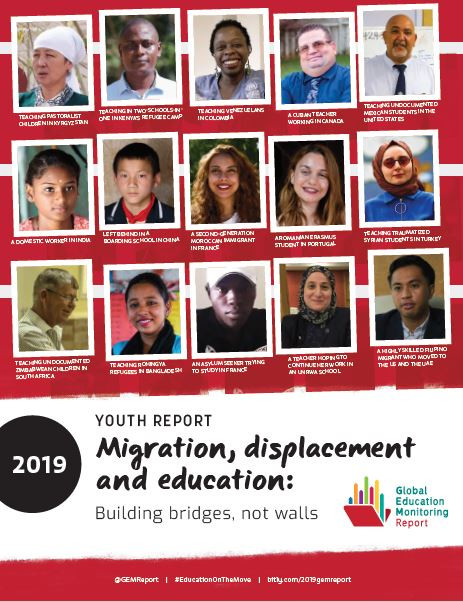 Migration, displacement and education: building bridges, not walls; Global education monitoring report, youth report, 2019 سنة النشر: 2018 المؤلف المؤسسي: Global Education Monitoring Report Team The Education 2030 Incheon Declaration and Framework for Action specifies that the mandate of the Global Education Monitoring Report is to be ‘the mechanism for monitoring and reporting on SDG 4 and on education in the other SDGs’ with the responsibility to ‘report on the implementation of national and international strategies to help hold all relevant partners to account for their commitments as part of the overall SDG follow-up and review’. It is prepared by an independent team hosted by UNESCO. This is among the most aspirational global commitments of the United Nations 2030 Agenda for Sustainable Development. Migration and displacement are two global challenges the agenda needs to address in achieving the 17 Sustainable Development Goals (SDGs), including SDG4: ‘Ensure inclusive and equitable quality education and promote lifelong learning opportunities for all’.
  Profile booklet: key partners of the Global Action Programme on Education for Sustainable Development (April 2018) سنة النشر: 2018 UNESCO’s Global Action Programme (GAP) was launched at the World Conference on Education for Sustainable Development (ESD) in November 2014 in Aichi-Nagoya, Japan as a follow-up programme to the Decade of ESD (2005-2014). This booklet contains profiles of the current 96 members (also called Key Partners) of the GAP Partner Networks. Each Key Partner is listed in alphabetical order within one of the five Partner Networks. Each profile presents the main objective of their work, their GAP launch commitment and specific activities that contribute to the GAP, as well as related website links and contact information for the organization’s focal point.
  Message from Ms Audrey Azoulay, Director-General of UNESCO, on the occasion of World Environment Day, 5 June 2018 سنة النشر: 2018 المؤلف المؤسسي: UNESCO. Director-General, 2017-2025 (Azoulay, A.) This message was delivered by Audrey Azoulay, Director-General of UNESCO, on the occasion of World Environment Day, on 5 June 2018. 联合国教科文组织总干事奥德蕾·阿祖莱 世界环境日致辞:“塑战速决” سنة النشر: 2018 المؤلف المؤسسي: UNESCO. Director-General, 2017-2025 (Azoulay, A.) 2018年6月5日, 联合国教科文组织总干事奥德蕾·阿祖莱世界环境日致辞
  Ré-inventer le Monde سنة النشر: 2023 المؤلف المؤسسي: L'Agence Française du Développement (AFD) Réinventer le Monde est un programme pédagogique créé par l’Agence française de développement pour sensibiliser les jeunes au développement durable et à la solidarité internationale et leur donner envie de s’engager. Conçu comme un voyage sonore, ce programme permet de découvrir à travers les histoires d’habitants de la planète, les Objectifs de développement durable et les interconnexions entre ici et là-bas. Il mêle éducation au développement durable (EDD) et éducation aux médias et à l’information (EMI) et propose une approche centrée sur l’apprentissage de la citoyenneté mondiale. Reinventing the World is an educational program created by the French Development Agency to raise young people's awareness of sustainable development and international solidarity, and inspire them to get involved. Conceived as an audio journey, the program uses the stories of the planet's inhabitants to discover the Sustainable Development Goals and the interconnections between here and there. It blends education for sustainable development (ESD) and media and information literacy (MIM), and offers an approach focused on learning about global citizenship.