
الموارد
استكشف مجموعة واسعة من الموارد القيمة حول تعليم المواطنة العالمية لتعميق فهمك وتعزيز البحث والمناصرة والتعليم والتعلم.
تم العثور على 3,454 نتيجة
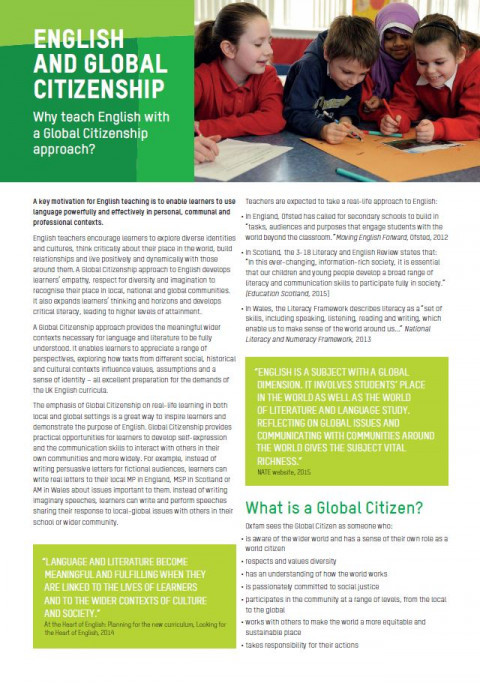 English and Global Citizenship المؤلف المؤسسي: Oxfam GB English lessons are an opportunity for your learners to explore new and diverse cultures, hone their language skills and develop empathy.This guide includes ideas for learning about the world whilst improving speaking and listening, reading, writing and media literacy skills. It also contains handy links to further resources and ideas for books which can help capture your learners' imaginations.
  Global Digital Citizenship: Quick Start Guide المؤلف المؤسسي: Global Digital Citizen Foundation What does it mean to be a Global Digital Citizen? Who is this person and what do they stand for? What makes them true global leaders and creators? The journey to understanding begins here, with the Global Digital Citizen Quickstart Guide.This is the final book in the GDCF's Fluency Quickstart series. This guide explores the skills and practices that make an exemplary Global Digital Citizen.With this Quickstart Guide you can: Explore the tenets of global citizenship Develop unique skills and mindsets Measure student progress Create challenging PBL lessons Become a great global digital citizen
  Project Based Learning Ideas Guide: K-12 Learners المؤلف المؤسسي: Global Digital Citizen Foundation Project-based learning is a big part of today’s modern learning environments. It takes students on a cool journey of creativity, exploration, and true real-world relevance. What does PBL look like in action in your classroom?Solution Fluency provides the building blocks for PBL. It’s a way for students to learn good problem-solving skills and to become successful with any challenge.This PBL Ideas Book will help them do exactly that. Inside are classroom project ideas for years K–12. There are 9 awesome projects to choose from with choices for primary, middle, and senior grades. But wait—what if the scenario idea you like isn’t for your specific grade?No problem at all. These PBL ideas are customizable and scalable for any grade level. They’re also cross-curricular in nature, and can be adapted to other subject areas.Explore these scenarios and think creatively about how you can bring them to life for your students.
  Solution Fluency Quickstart Skills Guide المؤلف المؤسسي: Global Digital Citizen Foundation What is Solution Fluency? What are the specific skills it develops? Why are they important? The answers are right here in the Solution Fluency Quickstart Skills Guide.In this free guide, we’ll introduce you to the basics of Solution Fluency. You'll learn about the 6Ds process, the skills each phase develops, and why Solution Fluency skills are a crucial part of modern learning.With this free Quickstarter Guide you can: Get to know Solution Fluency skillsets Develop them with students Cultivate critical thinking Give students problem-solving superpowers
 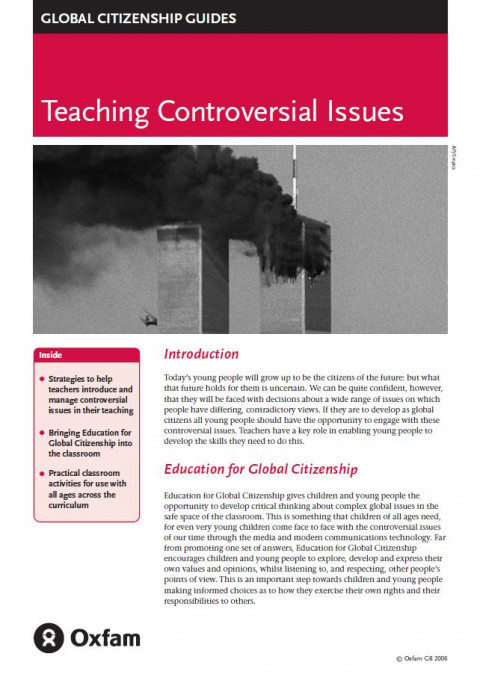 Global Citizenship Guides: Teaching Controversial Issues سنة النشر: 2006 المؤلف المؤسسي: Oxfam GB This guide aims to demonstrate how, by enhancing young people’s ability to handle controversial issues, teachers can support and develop them as global citizens.This guide explores:what controversial issues arewhy controversial issues should be taughtwhy some issues are, or can become, controversialwhat guidance exists for handling controversial issuesclassroom strategies for handling and exploring controversial issuessome practical activities for teaching controversial issues.
 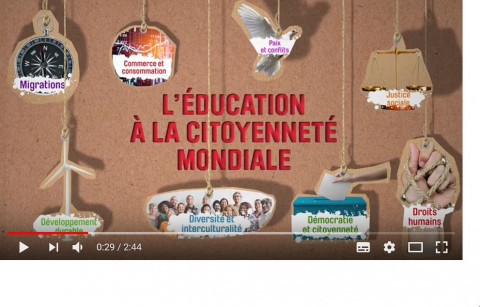 [Vidéo] Pédagogie du projet et éducation à la citoyenneté mondiale سنة النشر: 2018 المؤلف المؤسسي: Annoncer la Couleur (ALC) Quels sont les avantages de la pédagogie du projet ? En quoi cette pédagogie est particulièrement propice pour faire de l'éducation à la citoyenneté mondiale ?
  [Vidéo] L'école apprend la citoyenneté سنة النشر: 2016 المؤلف المؤسسي: Mission laïque française Organisé au Maroc en mai 2016, le congrès du réseau d'enseignement français à l'étranger mlfmonde a réuni 300 personnes autour du thème "l'école apprend la citoyenneté", élément central du projet éducatif de la Mission laïque française.
 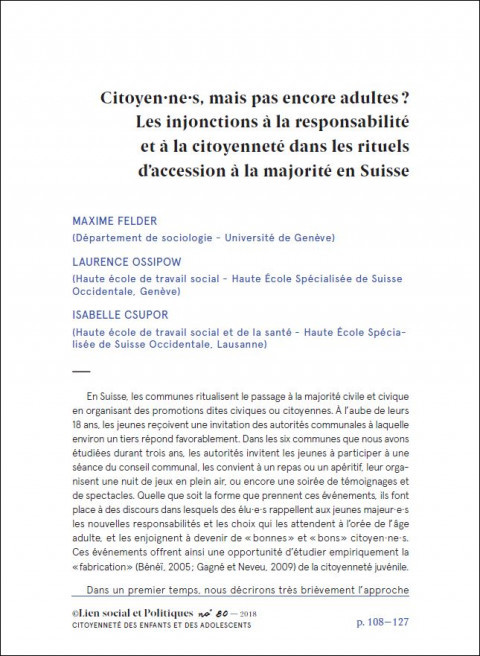 Citizens but not Adults? Injunction to be Responsible and Citizens in Official Coming of Age Rituals in Switzerland سنة النشر: 2018 المؤلف: Maxime Felder | Laurence Ossipow | Isabelle Csupor المؤلف المؤسسي: Lien social et Politiques Swiss municipalities organize ceremonies for their residents reaching the official age of full citizenship. In the six studied municipalities, local authorities invite them to a municipal council’s meeting, offer them a dinner or an aperitif, or organize them a show and a debate with role models. Speeches are central to these ceremonies, and authority representatives encourage their audience to be “good” citizens. Call to vote is the leitmotiv, but discourses reveal broader definitions of citizenship, insisting sometimes on a local commitment and volunteering, and sometimes on the necessity to fight climate change and inequalities. Comparing officials’ speeches to statements of young people participating in these events reveals “tensions”. Indeed, authority representatives address young citizens without considering them as fully adult, and they do not consider themselves as such neither. However, some of them are already involved in forms of vernacular citizenship, and are progressively leaving the municipality to study, work or travel. Ultimately, these ceremonies allow officials to stage their interest in the youth, which they consider as both uncompleted and essential to the renewal of democracy. Citoyen·ne·s, mais pas encore adultes ? Les injonctions à la responsabilité et à la citoyenneté dans les rituels d’accession à la majorité en Suisse سنة النشر: 2018 المؤلف: Maxime Felder | Laurence Ossipow | Isabelle Csupor المؤلف المؤسسي: Lien social et Politiques Les communes suisses organisent un rituel pour célébrer l’accession à la majorité civile et civique de leurs résident·e·s qui atteignent l’âge de dix-huit ans. Dans les six communes que nous avons étudiées, les autorités invitent les jeunes à participer à une séance du conseil communal, les convient à un repas ou un apéritif, ou leur organisent une soirée de témoignages, de spectacle ou encore de jeux en plein air. Ces événements font place à des discours dans lesquels des représentant·e·s des autorités enjoignent les jeunes à être de « bonnes » et « bons » citoyens. Si l’appel au vote est toujours le leitmotiv, les discours se centrent aussi sur des définitions plus larges de la citoyenneté, insistant tantôt sur l’engagement associatif et local, tantôt sur la nécessité d’agir pour l’écologie ou contre les inégalités. Le croisement de ces analyses avec celles des entretiens menés avec de jeunes participant·e·s fait émerger des tensions. En effet, les autorités s’adressent à des jeunes qu’elles ne considèrent pas tout à fait comme des adultes (et qui ne se considèrent pas non plus comme tel·le·s), qui sont pour certain·e·s déjà engagé·e·s dans ces formes de citoyenneté vernaculaire, et qui s’apprêtent à quitter leur commune pour étudier ou voyager. Ces promotions citoyennes permettent ainsi de mettre en scène l’intérêt des élu·e·s pour les jeunes, considéré·e·s comme des citoyen·ne·s en apprentissage dont dépend le renouvellement de la démocratie.
 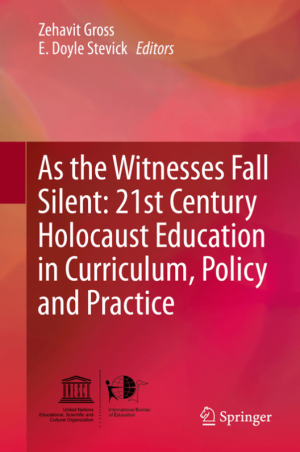 As the witnesses fall silent : 21st century Holocaust education in curriculum, policy and practice سنة النشر: 2015 المؤلف المؤسسي: UNESCO International Bureau of Education (IBE) This UNESCO/IBE publication represents the most comprehensive collection ever produced of empirical research on Holocaust education around the world. It comes at a critical time, as the world observes the 70th anniversary of the liberation of Auschwitz. The policies and practices of Holocaust education around the world are as diverse as the countries that grapple with its history and its meaning. Educators around the globe struggle to reconcile national histories and memories with the international realities of the Holocaust and its implications for the present. These efforts take place at a time when scholarship about the Holocaust itself has made great strides. In this book, these issues are framed by some of the leading voices in the field, including Elie Wiesel and Yehuda Bauer, and then explored by many distinguished scholars who represent a wide range of expertise. (By the publisher)