
الموارد
استكشف مجموعة واسعة من الموارد القيمة حول تعليم المواطنة العالمية لتعميق فهمك وتعزيز البحث والمناصرة والتعليم والتعلم.
تم العثور على 2,781 نتيجة
 Intelligence, Global Terrorism and Higher Education: Neutralising Threats or Alienating Allies? سنة النشر: 2016 المؤلف: Tania Saeed, David Johnson This article draws on narratives of Muslim students, their experiences of existing counterterrorism policies, to examine the effects of the new security framework. It asks whether there is another way – a broader framework in which intelligence agencies and academic institutions can pool resources, not to improve statecraft, but to respond more effectively to threats, both known and unknown. Intelligence, Global Terrorism and Higher Education: Neutralising Threats or Alienating Allies? سنة النشر: 2016 المؤلف: Tania Saeed, David Johnson Fondé sur les récits des étudiants musulmans et leurs expériences des politiques antiterroristes existantes, cet article a pour objectif d’examiner les impacts du nouveau cadre de sécurité. Selon l’article, il faudrait envisager un cadre élargi dans lequel les agences de renseignement et les institutions académiques peuvent mettre en commun des ressources non pas pour améliorer l'art de gouverner, mais plutôt pour répondre plus efficacement aux menaces, à la fois connues et inconnues.
 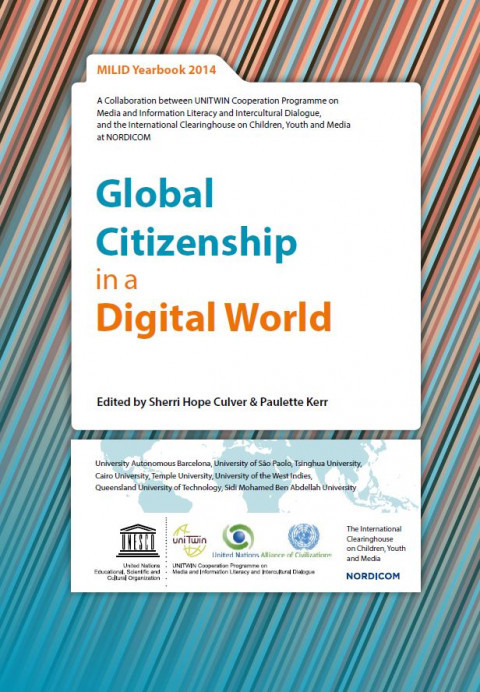 Global Citizenship in a Digital World (The MILID Yearbook, 2014) سنة النشر: 2014 المؤلف: Sherri Hope Culver | Paulette Kerr المؤلف المؤسسي: International Clearinghouse on Children, Youth and Media (Sweden) | NORDICOM | University of Gothenburg The theme of the 2014 Yearbook is Global Citizenship in a Digital World. Global citizenship assumes ease of participation in global spaces in which persons are media and information literate and are equipped with competencies and attitudes to deal with the multi-faceted nature of a mediated world in which information is no longer bound by space or time. The unprecedented access to and use of media and Internet technologies for communication and collaboration especially among youth, suggest that effective strategies must be found to enable active critical inquiry and effective media production. The proliferation of mediated spaces throughout education environments, as well as personal and professional environments, does not in itself guarantee that citizens will consider their role as global citizens as they create and consume media. This awareness must be cultivated, encouraged and taught.The 2014 MILID Yearbook brings together a range of reviewed articles, which articulate the theme of global citizenship from varied perspectives and regions of the world. The articles represent different expressions on media and information literacy from researchers and practitioners who offer bold new strategies, share research findings and best practices, and share musings and reflections.
  [فيديو] منع التطرف العنيف سنة النشر: 2017 المؤلف المؤسسي: INEE و لتوضيح دور التعليم في منع التطرف العنيف .ويتناول الفيديو الذي يستغرق مدته ٥ دقائق - وهو متاح باللغات الإنجليزية والعربية والفرنسية والإسبانية والبرتغالية - بعض التعريفات الخاصة ببرنامج التعليم والتدريب المهني ودور التعليم في تعزيز بيئات شاملة ومنصفة وتشجيع التفكير النقدي وتعزيز التسامح واحترام التنوع، مما يساهم في توسيع التماسك الاجتماعي والحد من العنف بجميع أشكاله.لمزيد من المعلومات حول التعليم و منع التطرف العنيف يرجى زيارة موقع الإيني، حيث يمكنكم/ن العثور على الأنشطة والموارد الرئيسية، بما في ذلك كتالوج المنسقين/ات لموارد منع التطرف العنيف. [Video] Preventing Violent Extremism (English w/subtitles) سنة النشر: 2017 المؤلف المؤسسي: Inter-agency Network for Education in Emergencies (INEE) The number of violent extremist attacks committed across the world has increased sharply in recent years. And there are more attacks on schools and students than ever before. So, why is this happening and what can be done to change this pattern?The Inter-Agency Network for Education in Emergencies (INEE) has developed a whiteboard video to illustrate education’s role in preventing violent extremism (PVE). The 5-minute video -- available in English, Arabic, French, Spanish, and Portuguese -- looks at some definitions of PVE and education’s role in fostering inclusive and equitable environments, encouraging critical thinking, promoting tolerance and respect for diversity, and thereby contributing to wider social cohesion and the reduction of violence in all forms.For further information on education and PVE, please visit the INEE website (www.ineesite.org/preventing-violent-extremism), where you can find key activities and resources, including a curated catalogue of PVE resources. [Vídeo] Previniendo el Extremismo Violento (subtítulos en español) سنة النشر: 2017 المؤلف المؤسسي: Inter-agency Network for Education in Emergencies (INEE) El número de ataques extremistas violentos cometidos en todo el mundo ha aumentado considerablemente en los últimos años. Y hay más ataques que nunca en las escuelas y hacia estudiantes. Entonces, ¿por qué está sucediendo esto y qué se puede hacer para cambiar este patrón?La Red Interinstitucional para la Educación en Situaciones de Emergencia (INEE) ha desarrollado un video de pizarra para ilustrar el papel de la educación en la prevención del extremismo violento (PVE). El video de 5 minutos - disponible con subtítulos en inglés, árabe, francés, español y portugués - examina algunas definiciones de PVE y el papel de la educación en fomentar ambientes inclusivos y equitativos, fomentar el pensamiento crítico, promover la tolerancia y el respeto a la diversidad, Contribuyendo así a una mayor cohesión social ya la reducción de la violencia en todas sus formas.Para más información sobre educación y PVE, visite el sitio web de la INEE (www.ineesite.org/preventing-violent-extremism), donde encontrará actividades clave y recursos, incluyendo un catálogo de recursos de PVE.
 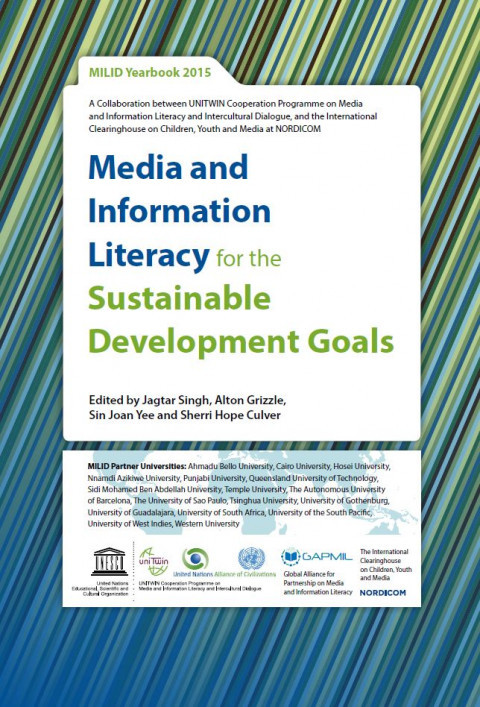 Media and Information Literacy for the Sustainable Development Goals (The MILID Yearbook 2015) سنة النشر: 2015 المؤلف: Jagtar Singh | Alton Grizzle | Sin Joan Yee | Sherri Hope Culver المؤلف المؤسسي: International Clearinghouse on Children, Youth and Media (Sweden) In the year 2000, governments and development partners all over the world agreed on eight global development targets called the Millennium Development Goals (MDGs). The year 2015 is a pivotal year as it marks the end of the period during which the MDGs were to be reached and the year in which new global development targets are to be set. These new targets are referred to as the Post-2015 Sustainable Development Goals (SDGs). This process is in its highest gear with ongoing debates and consultative meetings/initiatives globally both online and offline. While much progress has been made, achievement of the MDGs has been mixed across countries. The centrality of information and communication to development is irrefutable. The MILID Yearbook provides a case for media and information literacy (MIL) as a tool for open and inclusive sustainable development.The 2015 edition of the MILID Yearbook displays how media and information literacy can be helpful in facilitating progress and achievement of the sustainable development goals. It is sincerely hoped that the articles in this yearbook will go a long way to sensitize the stakeholders about the role and value of MIL in sustainable development of one and all across frontiers. [Vidéo] Prévention de l'extrémisme violent (sous-titres en français) سنة النشر: 2017 المؤلف المؤسسي: Inter-agency Network for Education in Emergencies (INEE) Le nombre d’attaques extrémistes violentes perpétrées dans le monde ces dernières années a gravement augmenté. Il y a de plus en plus d’attaques contre les écoles et les étudiants qu’avant. Pourquoi cela se passe-t-il et que pouvons nous faire pour changer ce schéma?Cette vidéo de 5 minutes-- disponible avec des sous-titres en anglais, français, espagnol et portugais-- présente des définitions de PVE et du rôle de l’éducation afin de promouvoir des environnements inclusifs et équitables, qui encouragent la pensée critique, la promotion de la tolérance et du respect pour la diversité et contribuent ainsi à une plus grande cohésion sociale et à la réduction de la violence sous toutes ses formes.Pour plus d’informations sur l’éducation et PVE, veuillez visiter la page web de l’INEE (www.ineesite.org/preventing-violent-extremism),où vous pourrez trouver des activités clés et des ressources, y compris un catalogue des ressources PVE.
  Promoting the culture of dialogue between cultures in the Arab world سنة النشر: 2013 المؤلف: Selim El Sayegh المؤلف المؤسسي: UNESCO Beirut The major challenge of the Arab uprisings resides in the youth drive. Accounting for 60 per cent of the Arab population, Youth have been calling for political and economic reforms. During the revolts, these claims have become more radical seeking a fundamental change. This gradual evolution, from a relatively partial change to a more absolute comprehensive one, ushers in a new era with a different intellectual construct. With the ousting of dictatorships, all civil society forces are unleashed with huge actual and potential resources mobilized to contribute to building up the new order. Groups of solidarity, communities, parties, associations, and organizations of all nature among many others put forward new ideas and adequate action plans. Liberty thus acclaimed becomes the outcry for dignity, honor and pride. Never before in the Arab world has the individual had such a central place as it does today. An individual fully grasping the possibilities of restored liberty and recognized dignity gives birth to a new citizen acting in a new paradigm; a new citizen that seeks a transcendence of the ego to relate the individual to the common good. This fresh paradigm empowers the individual as a citizen in the name of equality, while simultaneously recognizing the right of difference of each citizen when it comes to belonging to a culture or sub‐culture. The right to be different involves more than the right to differ and to dispute and by the same token, the obligation of peaceful settlement. The right to be different, by belonging to a culture or a sub‐culture means in a new era of liberty and dignity, the obligation to conduct a transformation of the patterns generating disputes and conflicts among cultures. Henceforth, the issue of promoting the culture of intercultural dialogue in the aftermath of the Arab revolts represents major characteristics that will be reflected hereafter. Promouvoir la culture du dialogue entre les cultures dans le monde Arabe سنة النشر: 2013 المؤلف: Selim El Sayegh المؤلف المؤسسي: UNESCO Beirut Le défi majeur des soulèvements arabes réside dans le lecteur de la jeunesse. Comptabilisation de 60 pour cent de la population arabe, de la jeunesse ont été réclame des réformes politiques et économiques. Pendant les révoltes, ces créances sont devenues plus radicales à la recherche d'un changement fondamental. Cette évolution progressive, d'un changement relativement partielle à l'une complète plus absolue, ouvre la voie à une nouvelle ère avec une construction intellectuelle différente. Avec l'éviction des dictatures, toutes les forces de la société civile se déchaînent avec d'énormes ressources réelles et potentielles mobilisées pour contribuer à l'édification du nouvel ordre. Des groupes de solidarité, les communautés, les partis, les associations et organisations de toute nature parmi beaucoup d'autres mettent en avant de nouvelles idées et plans d'action adéquats. Liberté ainsi acclamé devient le cri de la dignité, l'honneur et la fierté. Jamais auparavant dans le monde arabe a l'individu avait une telle place centrale comme il le fait aujourd'hui. Un individu de saisir pleinement les possibilités de la liberté restaurée et reconnue la dignité donne naissance à un nouveau citoyen agissant dans un nouveau paradigme; un nouveau citoyen qui cherche une transcendance de l'ego de relier l'individu au bien commun. Ce nouveau paradigme permet l'individu en tant que citoyen au nom de l'égalité, tout en reconnaissant en même temps le droit à la différence de chaque citoyen en ce qui concerne l'appartenance à une culture ou sous-culture. Le droit d'être différent implique plus que le droit à la différence et à contester et par le fait même, l'obligation de règlement pacifique. Le droit à la différence, par l'appartenance à une culture ou d'une sous-culture signifie une nouvelle ère de liberté et de dignité, l'obligation de procéder à une transformation des modèles de génération de différends et les conflits entre les cultures. Dès lors, la question de la promotion de la culture du dialogue interculturel dans la foulée des révoltes arabes représente les principales caractéristiques qui seront reflétées ci-après.