
الموارد
استكشف مجموعة واسعة من الموارد القيمة حول تعليم المواطنة العالمية لتعميق فهمك وتعزيز البحث والمناصرة والتعليم والتعلم.
تم العثور على 3,448 نتيجة
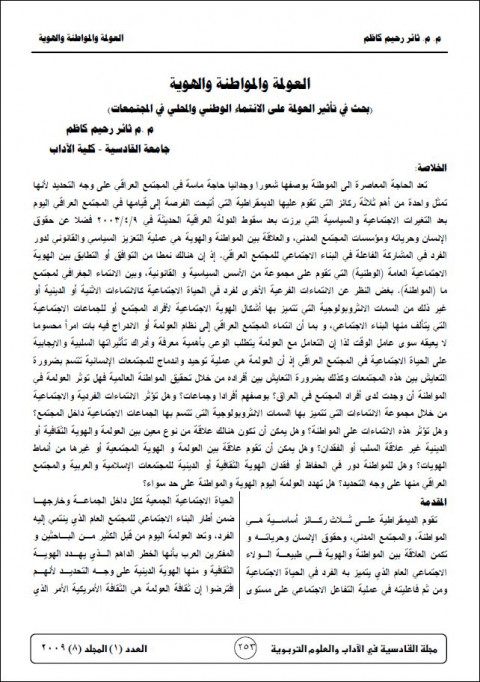 العولمة والمواطنة والهوية (بحث في تأثير العولمة على الانتماء الوطني والمحلي في المجتمعات) سنة النشر: 2009 المؤلف: Thaer Rahim Kazem المؤلف المؤسسي: Al-Qadisiyah University من أهم ثلاثة ركائز التي تقوم عليها الديمقراطية التي أتيحت الفرصة إلى قيامها في المجتمع العراقي اليوم بعد التغيرات الاجتماعية والسياسية التي برزت بعد سقوط الدولة العراقية الحديثة في 9/4/2003 فضلا عن حقوق الإنسان وحرياته ومؤسسات المجتمع المدني، والعلاقة بين المواطنة والهوية هي عملية التعزيز السياسي والقانوني لدور الفرد في المشاركة الفاعلة في البناء الاجتماعي للمجتمع العراقي. إذ إن هنالك نمطا من التوافق أو التطابق بين الهوية الاجتماعية العامة (الوطنية) التي تقوم على مجموعة من الأسس السياسية و القانونية، وبين الانتماء الجغرافي لمجتمع ما (المواطنة). بغض النظر عن الانتماءات الفرعية الأخرى لفرد في الحياة الاجتماعية كالانتماءات الاثنية أو الدينية أو غير ذلك من السمات الانثروبولوجية التي تتميز بها أشكال الهوية الاجتماعية لأفراد المجتمع أو للجماعات الاجتماعية التي يتألف منها البناء الاجتماعي، و بما أن انتماء المجتمع العراقي إلى نظام العولمة أو الاندراج فيه بات امرأ محسوما لا يعيقه سوى عامل الوقت لذا إن التعامل مع العولمة يتطلب الوعي بأهمية معرفة وأدراك تأثيراتها السلبية والايجابية على الحياة الاجتماعية في المجتمع العراقي إذ أن العولمة هي عملية توحيد واندماج للمجتمعات الإنسانية تتسم بضرورة التعايش بين هذه المجتمعات وكذلك بضرورة التعايش بين أفراده من خلال تحقيق المواطنة العالمية فهل توثر العولمة في المواطنة أن وجدت لدى أفراد المجتمع في العراق؟ بوصفهم أفرادا وجماعات؟ وهل تؤثر الانتماءات الفردية والاجتماعية من خلال مجموعة الانتماءات التي تتميز بها السمات الانثروبولوجية التي تتسم بها الجماعات الاجتماعية داخل المجتمع؟ وهل تؤثر هذه الانتماءات على المواطنة؟ وهل يمكن أن تكون هنالك علاقة من نوع معين بين العولمة والهوية الثقافية أو الدينية غير علاقة السلب أو الفقدان؟ وهل يمكن أن تقوم علاقة بين العولمة و الهوية المجتمعية أو غيرها من أنماط الهويات؟ وهل للمواطنة دور في الحفاظ أو فقدان الهوية الثقافية أو الدينية للمجتمعات الإسلامية والعربية والمجتمع العراقي منها على وجه التحديد؟ هل تهدد العولمة اليوم الهوية والمواطنة على حد سواء؟ Globalization, Citizenship and Identity (Research on the Impact of Globalization on National and Local Affiliation in Societies) سنة النشر: 2009 المؤلف: Thaer Rahim Kazem المؤلف المؤسسي: Al-Qadisiyah University There was a serious need to the citizenship as a psychological feeling in the Iraqi society. Because it represent the one of the most important three standards in the democratic operation as methods we must use in our social live. When we get a chance to build it in the Iraqi society. After the social and political changes that tack place after the 9 April 2003. The relationships between the citizenship and identity refer to the process by which we could strength the individual legal and political role to create the effective participate in the social live and social structure of the Iraqi society. Because there was an equalize between the general collective identity and the citizenship. We need these feelings when Iraqi society joins the globalization system under the pressure of the USA. And that required being aware in the negative effectiveness of the globalization and its positive ones. And the necessary of the living to gather in the global society. That makes the universal citizenship possible. This state creates many questions in the mind of the Arab and Moslemsre searchers. Such as could we keep our social and cultural identity? Are the citizenship help us to maintain the social and cultural identity? And other many questions that dealing with this objectives.
 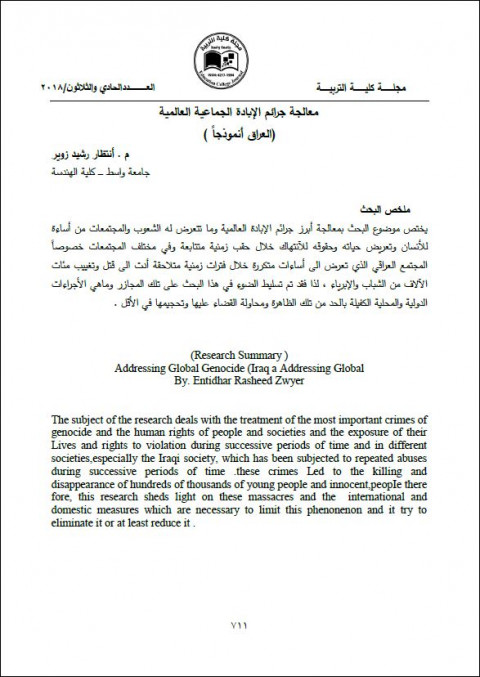 معالجة ج ا رئم الإبادة الجماعية العالمية سنة النشر: 2018 المؤلف: Entidhar Rasheed Zwyer يختز مػضػع البحث بسعالجة أبخز ج ا خئع الإبادة العالسية وما تتعخض لو الذعػب والسجتسعات مغ أساءة للؤنداف وتعخيس حياتو وحقػقو للآنتياؾ خلبؿ حقب زمشية متتابعة وفي مختمف السجتسعات خرػصاً السجتسع الع ا خقي الحي تعخض الى أساءات متكخرة خلبؿ فت ا خت زمشية متلبحقة أدت الى قتل وتغييب مئات الآلاؼ مغ الذباب والإبخياء ، لحا فقج تع تدميط الزػء في ىحا البحث عمى تمظ السجازر وماىي الأج ا خءات الجولية والسحمية الكفيمة بالحج مغ تمظ الطاىخة ومحاولة القزاء عمييا وتحجيسيا في الأقل . Addressing Global Genocide (Iraq a Addressing Global) سنة النشر: 2018 المؤلف: Entidhar Rasheed Zwyer The subject of the research is to deal with the most prominent crimes of global genocide and the abuse of peoples and communities to human beings and to expose his life and his rights to violation during successive periods of time in various societies, especially Iraqi society, which has been subjected to repeated abuses during successive periods of time led to the killing and absence of hundreds Thousands of young people and innocent people, so it was highlighted in this research on these massacres and what are the procedures International and domestic efforts to reduce this phenomenon and try to eliminate it and reduce it at least.
  أثر التغير في النظام الدولي على السياسات الخارجية للدول العربية 1990م - 2005م سنة النشر: 2008 المؤلف: Ali Awad Al Sharaa تبحث هذه الدراسة في ماهية التغيرات التي حدثت في النظام الدولي، وخصوصا بعد عام 1990م، ومدى أثرها على السياسات الخارجية للدول العربية، وذلك من خلال مناقشة حالتي دراسة وتحليلهما، وهما: القضية الفلسطينية، والشراكة العربية الأوروبية (الشراكة الأوروبية المتوسطية). The Impact of the Change in the International System on the Foreign Policies of the Arab Countries 1990-2005 سنة النشر: 2008 المؤلف: Ali Awad Al Sharaa This paper investigates the changes in the international order since 1990 and analyzes its impact on the foreign policies of the Arab countries, building on the assumption that the new World Order (Uni polar) has not left much space of maneuver before the middle and small states to have independent foreign policy. The study investigates the impact by analyzing two cases :the Palestinian issue in the foreign policies of the Arab countries, and the Euro-Arabian partnership (the euro Mediterranean partnership).
 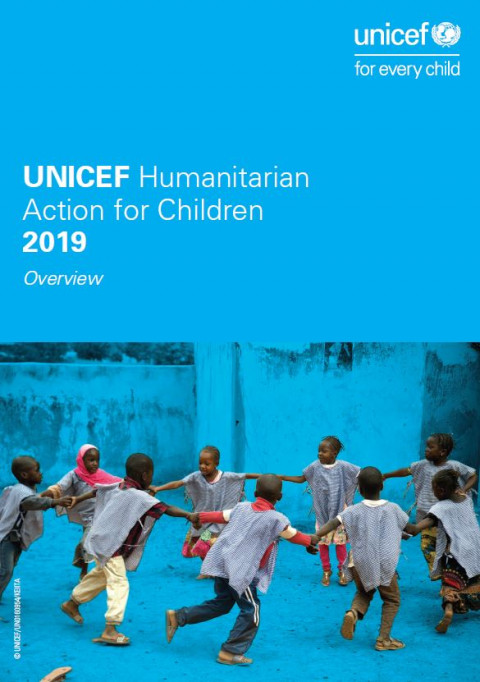 Humanitarian Action for Children 2019: Overview سنة النشر: 2019 المؤلف المؤسسي: United Nations Children's Fund (UNICEF) This edition of UNICEF’s report on requirements for humanitarian action highlights major emergencies affecting children and families around the world, and the results achieved by UNICEF and partners in response to those crises. Noting that more violent conflicts are raging today than at any time since the adoption of the Convention on the Rights of the Child 30 years ago, the report also describes UNICEF initiatives to improve the quality of its humanitarian response in 2019 – particularly in high-threat contexts. Additional information about humanitarian action and UNICEF funding appeals at the country and regional levels is available online atwww.unicef.org/appeals.
 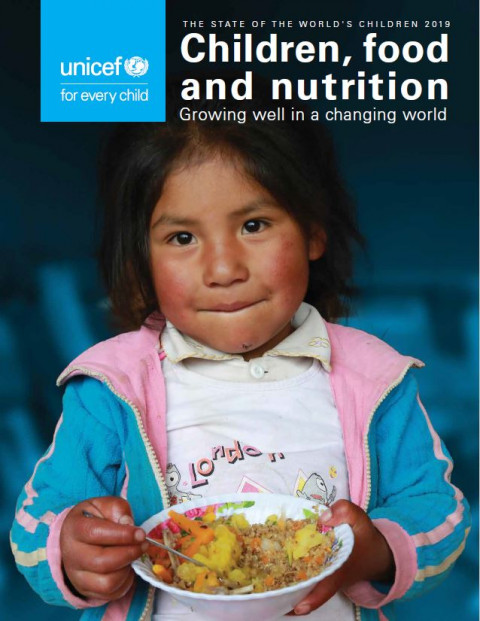 Children, Food and Nutrition: Growing Well in a Changing World سنة النشر: 2019 المؤلف المؤسسي: United Nations Children's Fund (UNICEF) This 2019 edition of The State of the World’s Children (SOWC) examines the issue of children, food and nutrition, providing a fresh perspective on a rapidly evolving challenge. Despite progress in the past two decades, one third of children under age 5 are malnourished – stunted, wasted or overweight – while two thirds are at risk of malnutrition and hidden hunger because of the poor quality of their diets. At the center of this challenge is a broken food system that fails to provide children with the diets they need to grow healthy. This report also provides new data and analyses of malnutrition in the 21st century and outlines recommendations to put children’s rights at the heart of food systems.
 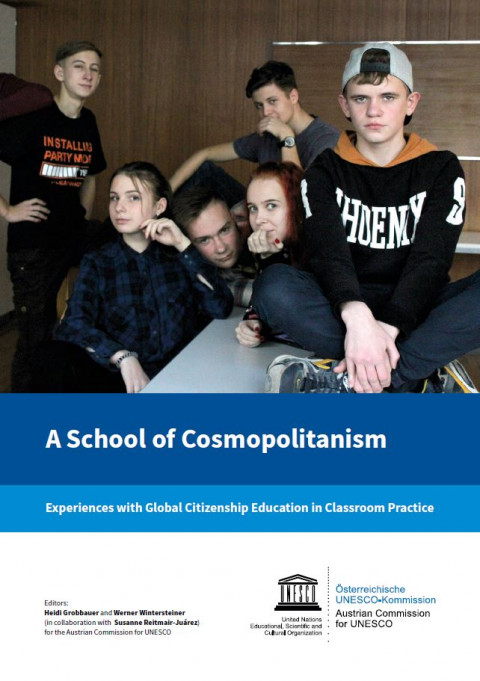 A School of Cosmopolitanism: Experiences with Global Citizenship Education in Classroom Practice سنة النشر: 2019 المؤلف: Heidi Grobbauer | Werner Wintersteiner المؤلف المؤسسي: Austrian Commission for UNESCO This publication focuses on examples from academic practice: this best practice collection demonstrates how young people can successfully be inspired to “think globally, act locally”. What is crucial is maintaining a view of the wider world; in particular, cooperation efforts with educational institutes outside of Europe (e.g. “élèves pour élèves” in Burkina Faso) provide a critical awareness of global connections. Learning to know/Learning to do/Learning to be/Learning to live together – these four pillars form the pedagogical foundation of the work carried out at more than 90 UNESCO schools throughout the whole of Austria. Since their founding in 1957, UNESCO schools have been considered model schools at which lessons are structured in a project-oriented, participative and even topic-specifc way. The unique ‘spirit’ of UNESCO schools often makes special projects possible. In the programme for the annual meetings of recent years, for example, Global Citizenship Education has been an ongoing topic of focus, accompanied by experts from various specialised institutions and NGOs. The pedagogical preparation of contents in a manner that ensures they are actually absorbed in the classroom presents a major challenge. Different types of schools have different educational goals, and the themes have to be made accessible for different age groups. The pedagogical finesse of each class team or individual teacher lies in finding the most motivating approaches.
 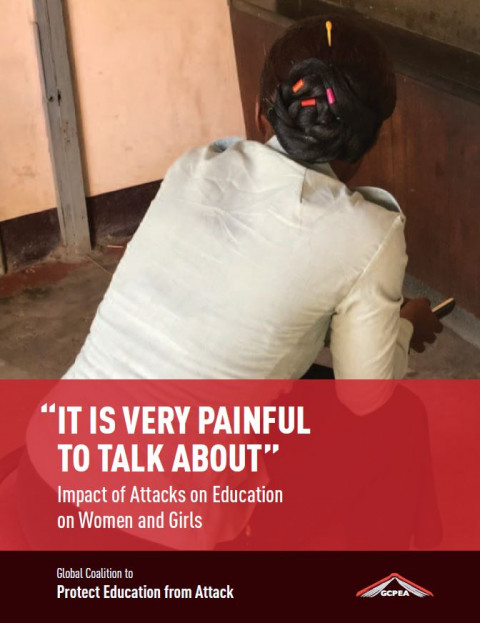 "It is Very Painful to Talk About”: The Impact of Attacks on Education on Women and Girls سنة النشر: 2019 المؤلف: Holly Cartner المؤلف المؤسسي: Global Coalition to Protect Education from Attack (GCPEA) This report presents the key findings of GCPEA’s multi-country study on the impact of attacks on education on women and girls.10 GCPEA’s research focuses on the types and causes of abuse most typically committed against female students in the context of attacks on education, and the long-term consequences that female students may face as a result of such attacks.11 GCPEA initiated this study to contribute to a better understanding of the implications for girls and women when education is attacked and to inform our advocacy for better strategies to protect girls and women, prevent attacks and abuse, and diminish harmful consequences against them.This report relies on previous GCPEA research, including Education Under Attack 2018 and 2014, and updates, and the organization’s field research in Nigeria and the Democratic Republic of Congo, which focused specifically on the experiences of women and girls when education is attacked. In addition, the report draws from interviews with numerous country and regional experts and an extensive review of secondary data sources, including reports by United Nations (UN) agencies, development and humanitarian non-governmental organizations (NGOs), human rights organizations, government bodies, and think tanks, including numerous contributions from GCPEA’s member organizations.