
الموارد
استكشف مجموعة واسعة من الموارد القيمة حول تعليم المواطنة العالمية لتعميق فهمك وتعزيز البحث والمناصرة والتعليم والتعلم.
تم العثور على 130 نتيجة
 Podcast: Learning for the Future; Digital Citizenship; Tools to Prevent and Eradicate Cyberbullying سنة النشر: 2022 المؤلف: Alheli Arona | Patricio Romero المؤلف المؤسسي: Chile Foundation | Educarchile One of the dimensions of digital citizenship is protection and security. This includes digital harassment or cyberbullying, a problem that affected more than 22% of students in Chile during the months of October and December 2021, according to the Citizen Participation Survey “Together against cyberbullying and digital violence” applied by the Superintendency of Education. What can we, as teachers, management teams and education professionals, do to prevent and eradicate this type of violence and help our students? Podcast: Aprendizaje para el futuro; Ciudadanía digital; Herramientas para prevenir e irradicar el ciberacoso سنة النشر: 2022 المؤلف: Alheli Arona | Patricio Romero المؤلف المؤسسي: Chile Foundation | Educarchile Una de las dimensiones de la ciudadanía digital es la protección y la seguridad. Dentro de esta se encuentra el acoso digital o ciberacoso, un problema que durante los meses de octubre y diciembre de 2021 afectó a más de un 22% de estudiantes en Chile según la Encuesta de Participación Ciudadana “Juntos frente al ciberacoso y la violencia digital” aplicada por la Superintendencia de Educación. ¿Qué podemos hacer las y los docentes, equipos directivos y profesionales de la educación para prevenir y erradicar este tipo de violencia y ayudar a nuestros estudiantes?
  Resource Kit for Working With Families in Digital Citizenship سنة النشر: 2024 المؤلف المؤسسي: Chile. Ministry of Education The role of families and guardians is essential to help children and adolescents learn to navigate the digital environment, taking advantage of its opportunities and minimizing its risks. For this reason, it is important that schools work with families and guardians to provide support in the digital environment, safeguarding the rights of children and adolescents and promoting their autonomy in a progressive way, through the development of digital citizenship. This kit is composed of: Capsules for parents/guardians that deal with issues related to the digital environment, Booklets “Recommendations for working with families on their mediating role in the use of mobile devices” and a training module “Digital Citizenship”. Kit de recursos para el trabajo con familias en ciudadanía digital سنة النشر: 2024 المؤلف المؤسسي: Chile. Ministerio de Educación El rol de las familias y tutores es fundamental para ayudar a los niños, niñas y adolescentes a aprender a desenvolverse en el entorno digital aprovechando sus oportunidades y minimizando sus riesgos. Por esta razón, resulta importante que desde el espacio escolar se trabaje con las familias y tutores para realizar un acompañamiento en el entorno digital, resguardando la protección de los derechos de niños, niñas y adolescentes y favoreciendo su autonomía de forma progresiva, a través del desarrollo de la ciudadanía digital. Este kit está compuesto por: Cápsulas para apoderados/as que tratan temas relacionados con el entorno digital, Cartillas “Recomendaciones para trabajar con familias su rol mediador en el uso de dispositivos móviles” y un módulo de formación “Ciudadanía Digital”.
 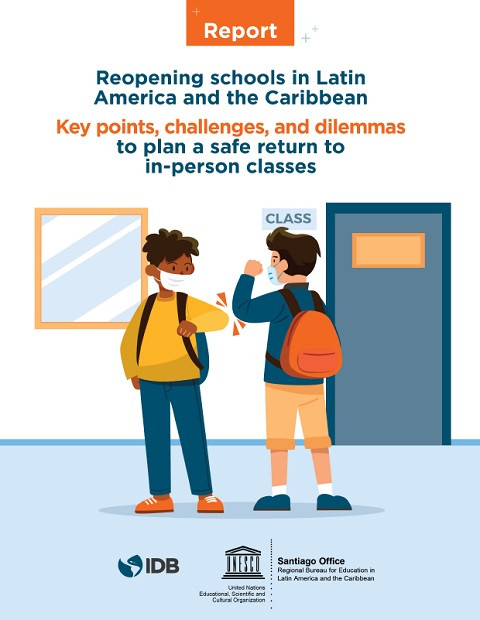 Reopening Schools in Latin America and the Caribbean: Keys, Challenges, and Dilemmas to Plan for a Safe Return to in-Person Classes سنة النشر: 2021 المؤلف: Alejandro Vera | Martín Scasso | Alejandro Morduchowicz | Cecilia Berlanga Alessio Robles المؤلف المؤسسي: UNESCO Santiago | Inter-American Development Bank The suspension of in-person classes as a consequence of the COVID-19 pandemic profoundly affected the education systems in Latin America and the Caribbean (LAC) and compromised the achievements reached around the goals established in the SDG4-Education 2030 Agenda. The most vulnerable people have been the most affected by this situation, which widened the preexisting gaps. The countries of the region have carried out great efforts to guarantee the continuity of learning. However, these have been limited by the challenges that this unprecedented crisis brought, aggravated by unequal conditions in access to infrastructure and other resources that affect broad sectors of the population.This report analyzes the possibilities, restrictions and needs that the countries of the region will face during the process of returning to in-person classes, considering five dimensions: (i) safe schools (school infrastructure, access to water and sanitation); (ii) human resources (principals and teachers); (iii) access to ITC and connectivity; (iv) education financing and (v) information and planning. Reabrir las escuelas en América Latina y el Caribe: Claves, desafíos y dilemas para planificar el retorono seguro a las clases presenciales; Reporte سنة النشر: 2021 المؤلف: Alejandro Vera | Martín Scasso | Alejandro Morduchowicz | Cecilia Berlanga Alessio Robles المؤلف المؤسسي: Organización de las Naciones Unidas para la Educación, la Ciencia y la Cultura (UNESCO) La suspensión de clases presenciales como consecuencia de la pandemia de COVID-19 afectó profundamente los sistemas educativos de América Latina y el Caribe, y puso en riesgo los avances alcanzados en torno al cumplimiento de las metas establecidas en la Agenda ODS 4-Educación 2030. Las poblaciones más vulnerables se han visto más afectadas por esta situación, lo cual acrecentó las brechas preexistentes. Los países de la región llevaron a cabo enormes esfuerzos para garantizar la continuidad de los aprendizajes. Sin embargo, se ven limitados por los desafíos que presenta este contexto inédito de crisis y agravados por las desiguales condiciones de acceso a infraestructura y otros recursos que afectan a vastos sectores de la población.El reporte analiza las posibilidades, restricciones y necesidades que enfrentarán los países de la región durante el proceso del regreso a las clases presenciales, considerando cinco dimensiones: (i) escuelas seguras (infraestructura escolar, acceso al agua y saneamiento); (ii) recursos humanos (directores y docentes); (iii) acceso a TIC y conectividad, (iv) financiamiento de la educación y (v) información y planificación.
  Non-Formal Education, Sustainable Development and the Education 2030 Agenda: Study of Civil Society Practices in Latin America and the Caribbean سنة النشر: 2020 المؤلف المؤسسي: UNESCO Santiago | UNESCO Mexico This publication shows 27 civil society initiatives from various countries in Latin America and the Caribbean that work to promote actions and programs to comply with Target 4.7 within non-formal education. The study seeks that these organizations show their work, the challenges they face as regards the implementation of their programs and their greatest achievements. Educación no formal, desarrollo sostenible y la Agenda de Educación 2030: Estudio de prácticas de la sociedad civil en América Latina y el Caribe سنة النشر: 2020 المؤلف المؤسسي: Organización de las Naciones Unidas para la Educación, la Ciencia y la Cultura (UNESCO) En esta publicación, se muestran 27 iniciativas de la sociedad civil de diversos países de la región de América Latina y el Caribe que trabajan promoviendo acciones y programas para lograr el cumplimiento de la Meta 4.7 desde la educación no formal. En el estudio, se busca que las propias organizaciones expongan su trabajo, los retos que enfrentan en la implementación de sus programas y sus mayores logros.
 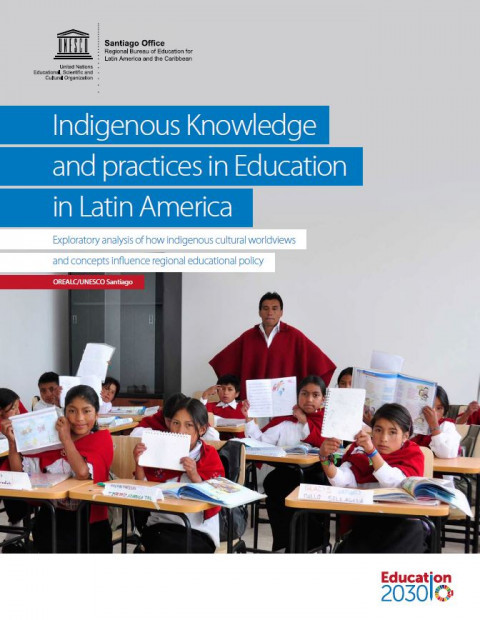 Indigenous Knowledge and practices in Education in Latin America: Exploratory Analysis of How Indigenous Cultural Worldviews and Concepts Influence Regional Educational Policy سنة النشر: 2017 المؤلف المؤسسي: UNESCO Santiago This study presents a preliminary exploration of the approaches, processes and tools through which indigenous worldviews and concepts of knowledge and well-being can and have influenced education policies in Latin America. First, it addresses the principal theoretical approaches used in the area of indigenous knowledge and education policies, taking into account the persistence of an “epistemic otherness” and the need for a dialogue between the predominant approaches. Second, it addresses the normative framework and intercultural educational policies, emphasizing how and to what extent the countries in the region take indigenous knowledge into consideration and include it in their education policies and practices. Third, it presents a number of “relevant practices” in terms of dialogue with indigenous knowledge in education policies, taking into account the factors that favour the relevance of education to indigenous views and cultural practices, facilitating their replicability and sustainability. Furthermore, these practices respond to key criteria like recognizing learners as ‘carriers’ and producers of culture, valuing the use of schools as centres of social and cultural activities and favouring the inclusive learning of indigenous and non-indigenous students. Finally, the study unveils challenges for the advancement of the dialogue between indigenous knowledge and education policies, at the same time proposing key concepts to be approached in depth. Conocimiento Indígena y Políticas Educativas en América Latina: Análisis exploratorio de cómo las cosmovisiones y conceptos culturales indígenas de conocimiento inciden, y pueden incidir, en la política educativa en la región سنة النشر: 2017 المؤلف المؤسسي: UNESCO Santiago El presente estudio explora la idea de una ‘alternativa epistémica’, construyendo desde el conocimiento y los valores que sustentan las prácticas sociales y educacionales indígenas de la región. En particular, explora cómo estos valores y formas de conocimiento han sido adoptados en las políticas educacionales de tres países de la región andina: Bolivia, Ecuador y Perú, que hace poco atravesaron reformas políticas y constitucionales con el fin de reconocer la composición de sus poblaciones multiculturales, multiétnicas y multilingüísticas. Esta publicación es una invitación a considerar el conocimiento indígena como una fuente legítima de inspiración para las políticas educacionales que puedan contribuir al bienestar de todos y a la sostenibilidad del planeta.