
الموارد
استكشف مجموعة واسعة من الموارد القيمة حول تعليم المواطنة العالمية لتعميق فهمك وتعزيز البحث والمناصرة والتعليم والتعلم.
تم العثور على 2,199 نتيجة
 Focus on Global Common Good: The New International Research Trend on World Citizenship Education (Modern Education Management; No. 2) سنة النشر: 2018 المؤلف: Song Qiang | Rao Congman المؤلف المؤسسي: Liaoning Institute of Education Globalization has posed challenges for national-states to develop traditional citizenship education. To develop the citizenship education in the world needs to regard education and knowledge as global common good, surpass short-term benefit, and promote learners to be world citizens by 2030. Start with the dialectical logic on global benefit and national benefit, the researches of world citizenship education focus on “human rights protection and joint development”, “from national identity to world identity”, “ from global governance to world government”, and “ western universal mind vs. multi-civilizations intergrowth”. Chinese citizenship education needs to reinforce the national identity in socialism national citizenship education; cultivateing socialism world citizenship and promoteing international discourse power; seek human common good and build community of common destiny for all mankind. 着眼全球共同利益:‘世界公民’教育的国际研究新趋势” (现代教育管理; No. 2) سنة النشر: 2018 المؤلف: Song Qiang | Rao Congman المؤلف المؤسسي: Liaoning Institute of Education 全球化对民族国家开展的传统公民教育提出了挑战。全球公民教育发展需要将教育和知识视 为全球共同利益,超越短期利益,推进学习者成为2030年的“世界公民”。当前“世界公民”教育研究本着全 球利益与国家利益的辩证逻辑,聚焦在“人权保护与共同发展”“国家认同到世界认同”“全球治理到世界政 府”“西方式普适思想与多元文明共生”四个方面。为此,我国公民教育要加强社会主义“国家公民”教育中 的国家认同;培养社会主义“世界公民”,提升国际话语权;寻求人类共同利益,构建“人类命运共同体”。
  코로나19와 교육: 교사전문성에 주는 시사점 سنة النشر: 2020 المؤلف: 조윤정 | 박휴용 المؤلف المؤسسي: 경기도교육연구원 코로나19는 우리 삶의 양태를 근본적으로 변화시키는 전환점이 되면서 교육적 위기와 사회적 위기를 빚어내고 있음. 교육에 있어서는 배움의 지체와 교육격차 현상이 심화되고 있으며, 코로나로 인해 자연과 자본 간 모순과 성장의 한계를 인식하게 되면서 생태의 중요성에 대해 눈을 뜨게 되었다. 또한 개인주의나 혐오와 차별이 횡행하고 국수주의로 회귀하는 현상이 나타나면서 인류는 고립과 연대 사이의 갈림길에 서 있다.코로나19는 우리가 당연시하였던 가치와 생활양식에 대해 성찰하는 계기로 작용하면서 우리에게 3가지 질문을 던져주고 있다. 첫째, 우리가 바라는 교육의 모습은 무엇인가? 둘째, 인간을 둘러싼 자연과 환경, 생태계와 어떻게 관계를 맺을 것인가? 셋째, 우리는 온라인 세상과 오프라인 세상에서 어떤 시민으로 살아가야 할 것인가?이 연구에서는 이상의 3가지 질문을 중심으로 포스트코로나 시대 학교교육의 방향과 교사전문성에 대해 고찰하였다. 첫째 우리가 바라는 교육의 모습은 배움과 성장의 지속성 확보이며, 이를 위해서 학습자 주도성을 살리는 교육, 학습동기를 높이고 상호작용과 소통을 강화하는 교육, 협력을 촉진하는 교육, 기초학력을 강화하고 교육격차를 완화하는 교육을 실천해야 한다. 둘째, 인간을 둘러싼 자연과 환경, 생태계와 어떻게 관계를 맺을 것인가?에 대해서는 생태적 전환을 실천하는 교육을 통해 인간과 생태계, 즉 모든 존재가 상호 창조하는 관계가 되어야 한다. 이를 위해서 교육자체가 생태적 전환이 되어야 하며, 학교를 생태적 전환의 리빙랩으로 전환하여야 하고, 지역사회를 순환경제로 전환하여야 하며 학교가 전환의 구심점이 되어야 한다. 셋째, 온라인 세상과 오프라인 세상에서 디지털 시민과 세계시민으로 살아가야 하며 이를 위해서 디지털 미디어 리터러시와 디지털 시민성을 키우는 교육, 범주 확장 교육, 글로벌 연대와 협력을 지향하는 세계시민교육을 실천해야 할 것이다.
  Australian Citizenship Program and Its Experience (Contemporary Education and Culture; Vol. 11, No. 3) سنة النشر: 2019 المؤلف: Sun Hongkai | Sun Yuhua المؤلف المؤسسي: Northwest Normal University In Western countries, the reform of Civics and Citizenship Education is an important way to cultivate responsible citizens. The Australian Citizenship Education Program provides students with a variety of activities, and follows the principle of change, engagement and resolution of specific issues. It is committed to raising students’ awareness of engagement and has achieved outstanding results in cultivating responsible citizens. Australian Citizenship Education program is both thainee- and prantice- oriented, which sets a good example for cultivating students’ awareness and ability of engagement in China. At the same time, critical learning is a must. 澳大利亚公民教育课程及其经验 (当代教育与文化; Vol. 11, No. 3) سنة النشر: 2019 المؤلف: Sun Hongkai | Sun Yuhua المؤلف المؤسسي: Northwest Normal University 在西方国家,公民教育课程改革是培养积极公民的重要途径。澳大利亚公民教育课程为学生提供多种活动 选择,力行改变、参与、解决具体问题的原则,致力于提高学生的参与意 识,在培养积极公民上取得了突出的效果。澳大利亚公民教育课程紧扣培养目标、实践取向、学生主导的课程开展经验为我国培育学生参与意识和参与能力提供 了借鉴价值,同时应该批判地选择其经验中的可取之处。
  Research on Community Education and Citizenship Education Driven by Big Data (Journal of Hubei Adult Education Institute; No.11) سنة النشر: 2019 المؤلف: Wang Jinying | Zhang Mingyue المؤلف المؤسسي: Heilongjiang Education College Big data is favored by educators in line with the advantages of learners’ brain science, cognitive psychology and educational technology development rules. It has had a subversive impact on the education system and is satisfactory for people. To do a good job in education, improve the quality of the people and strengthen the construction of a learning society, community education should take the initiative to combine with big data to explore the convergence of big data collection, storage, analysis, forecasting and other functions with civic education, build a data ecological space and drive community civic education and cultivate qualified citizens in the community through “ Big Data + Co-ordination” “ Big Data + Services” and “ Big Data + Evaluation ”.
  Regional Consultations of the National Human Rights Institutions of Central Asia: Conference Proceedings سنة النشر: 2016 المؤلف المؤسسي: UN. Office of the United Nations High Commissioner for Human Rights (UN. OHCHR) | United Nations Development Programme (UNDP) For the first time, the conference became a platform for consultations of national human rights institutions (NHRIs) of Central Asia to help strengthen partnerships and provide opportunities for mutual support and exchange of expertise. Special attention the role of NHRIs in their interaction with the government and other partners in the country, as well as the role of NHRIs in terms of achieving the Sustainable Development Goals (SDGs). Региональные консультации национальных правозащитных учреждений стран Центральной Азии: Отчет о конференции سنة النشر: 2016 المؤلف المؤسسي: UN. Office of the United Nations High Commissioner for Human Rights (UN. OHCHR) | United Nations Development Programme (UNDP) Конференция впервые стала площадкой для консультаций национальных правозащитных учреждений (НПЗУ) Центральной Азии в целях содействия укреплению партнерских отношений и обеспечения возможностей взаимной поддержки и обмена экспертным опытом. Особое вниманиеуделено роли НПЗУ в их взаимодействии с правительством и другими партнерами в стране, а также роли НПЗУ в части достижения Целей Устойчивого Развития (ЦУР).
 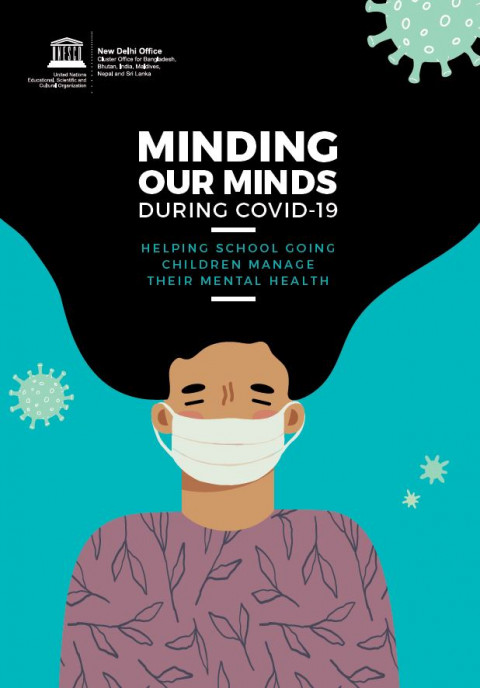 Minding Our Minds during COVID-19: Helping School Going Children Manage Their Mental Health سنة النشر: 2020 المؤلف: Huma Masood | Cynthia Saxena المؤلف المؤسسي: UNESCO New Delhi This guide provides an outline of how teachers and parents can address the issue of mental health amongst students. The sections in this guide cover basic information about coronavirus, explanation of anxiety in school going children, as well as ways by which students can take care of their mental health during this crisis. The sub-sections of the guide comprise guidelines outlining the duties and responsibilities that teachers and parents/ caregivers must follow to ensure students’ mental health is not negatively impacted by the COVID-19 pandemic. Additionally, sub-sections of the guide provide activities and exercises that teachers and parents can utilize to engage children with to ensure their wellbeing during these difficult times.
  Research on Civic Literacy Assessment Tools for Primary and Middle School Students (Journal of Shanghai Educational Research; No. 7) سنة النشر: 2018 المؤلف: Qin Jianping | Zhanf Hui | Chen Feipeng المؤلف المؤسسي: General Education Research Institute | Shanghai Academy of Educational Sciences Civic literacy is highly valued by international organizations and countries all over the world. China’s Ministry of Education has taken civic literacy as a key indicator for the comprehensive evaluation of the quality of primary and secondary education. Based on citizen, civic literacy connotation, civic education objective content, and common factors of civic literacy test, the dimensional structure hypothesis of civic literacy assessment for primary and middle school students was proposed, and the hypothesis was tested and corrected by using structural equation model, and the civic literacy test for primary and middle school students was developed. The reliability and validity meet the requirements of measurement and have a broad application prospect.