
الموارد
استكشف مجموعة واسعة من الموارد القيمة حول تعليم المواطنة العالمية لتعميق فهمك وتعزيز البحث والمناصرة والتعليم والتعلم.
تم العثور على 3,453 نتيجة
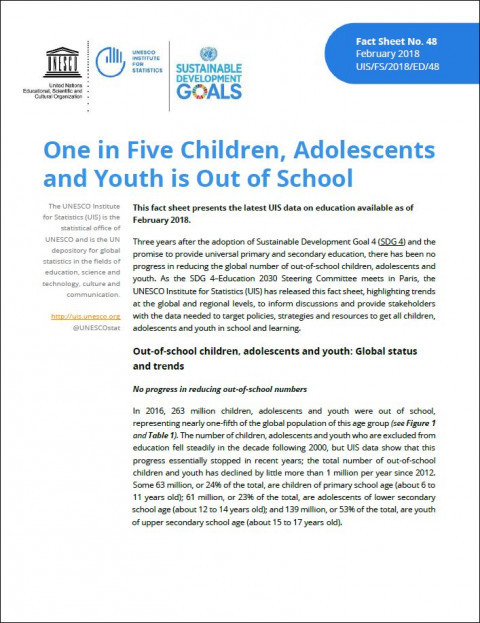 One in Five Children, Adolescents and Youth is Out of School (UIS Fact Sheet No. 48) سنة النشر: 2018 المؤلف المؤسسي: UNESCO Institute for Statistics (UIS) This fact sheet presents the latest UIS data on education available as of February 2018.Three years after the adoption of Sustainable Development Goal 4 (SDG 4) and the promise to provide universal primary and secondary education, there has been no progress in reducing the global number of out-of-school children, adolescents and youth. As the SDG 4–Education 2030 Steering Committee meets in Paris, the UNESCO Institute for Statistics (UIS) has released this fact sheet, highlighting trends at the global and regional levels, to inform discussions and provide stakeholders with the data needed to target policies, strategies and resources to get all children, adolescents and youth in school and learning.
 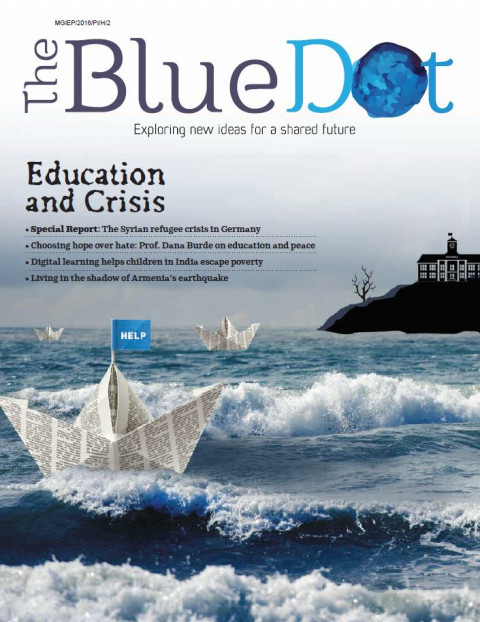 Education and Crisis (The Blue Dot Issue 3, 2016) سنة النشر: 2016 المؤلف المؤسسي: Mahatma Gandhi Institute of Education for Peace and Sustainable Development (MGIEP) In this third issue of The Blue Dot, we have chosen to focus on the often forgotten aspect of education in the context of crises. While relief efforts tend to focus on emergency responses such as providing food and shelter, more often than not rebuilding schools and ensuring that students continue to attend their classes are not considered priorities. At UNESCO MGIEP, we believe that when education is relegated to the side-lines, there is little hope for a country and its citizens to recover.In this issue, we have brought together expert contributors from academia and the field—from countries such as Afghanistan, Nepal and South Sudan—and have dedicated a large section to the ongoing civil conflict in Syria, which will soon enter its fifth year. With almost half of Syria’s population living as refugees or as internally displaced persons, an entire generation of young people risks losing out on stability and a better future. Our Syria Section explores how these young people, with a particular focus on those who have sought refuge in Germany, are faring and what their hopes are for the future.In other parts of the magazine, we focus on technology and on how modern information and communications technologies (ICTs) can help students access a better education. From impoverished communities in Calcutta using Skype to connect with teachers around the world, to new interactive platforms built for young people to discuss global issues, we hope the stories and experiences we have collected for our readers will give a new and fresh perspective on what it means for education when a crisis hits. We also hope that you enjoy our photo contest, which drew more than 100 entries from young people around the world on what “education and crisis” means to them.
 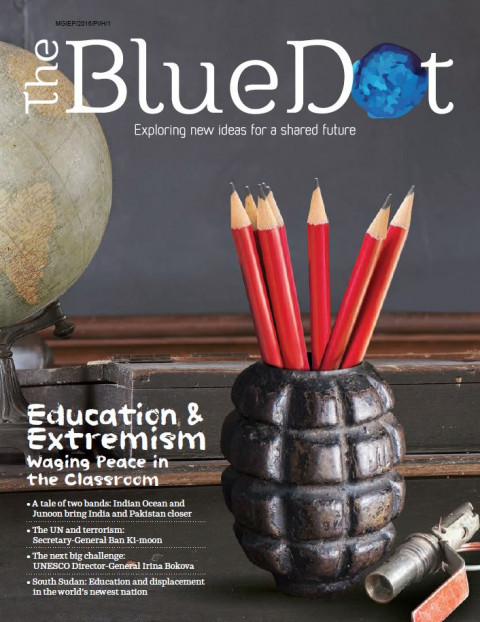 Education & Extremism: Waging Peace in the Classroom (The Blue Dot Issue 4, 2016) سنة النشر: 2016 المؤلف المؤسسي: Mahatma Gandhi Institute of Education for Peace and Sustainable Development (MGIEP) In this fourth issue of The Blue Dot, we have decided to focus on education as a tool for both preventing violent extremism and—sometimes—even propagating extremist ideologies. This issue reflects UNESCO MGIEP’s commitment to advancing the fundamental role of education as a means to changing mindsets and, ultimately, bringing about more peaceful societies.From an interview with award-winning social entrepreneur Prof. Sugata Mitra on the role of technology in revolutionizing education, to a foreword by Secretary-General Ban Ki-moon on the UN’s response to violent extremism, our contributors come from a host of different countries and backgrounds. What brings them together, however, is a call for changing current education systems. This is espoused even more clearly in a piece by Prof. K.P. Mohanan, who uses inquiry-driven approaches to prompt youth to question blind faith in any form of ideology or indoctrination.In this issue we also discuss UNESCO MGIEP’s activities in raising awareness of the strong link between education and radicalization and violent extremism, including our flagship Talking Across Generations (TAG) event which brought together policymakers and young people in an open discussion in Delhi this February. The outcome was a statement calling for greater inclusiveness and more space for young people to shape the policies that ultimately affect them.Just like our events, The Blue Dot is a platform for individuals from different backgrounds and walks of life who might have divergent ideologies, beliefs, and values, all of which may have prevented them from coming together to debate some of the most pressing issues of our time—including the global concern surrounding the rise in violent extremism. When individuals feel free to discuss, share ideas and question their beliefs, they can begin to think creatively and critically about the world and their surrounding environment. The challenge is to avoid lecturing or preaching to young people, but to provide youth with a safe space to discuss contentious issues in an open, inclusive and transparent manner.An open dialogue on violent extremism is a step towards providing young people with opportunities to ask questions and to reflect on their own beliefs, assumptions, and values, including animosities, prejudices, hatred and intolerance. At UNESCO MGIEP we believe that individuals who feel connected to others across political, religious or cultural divides also share a sense of responsibility for the world in which they live.
 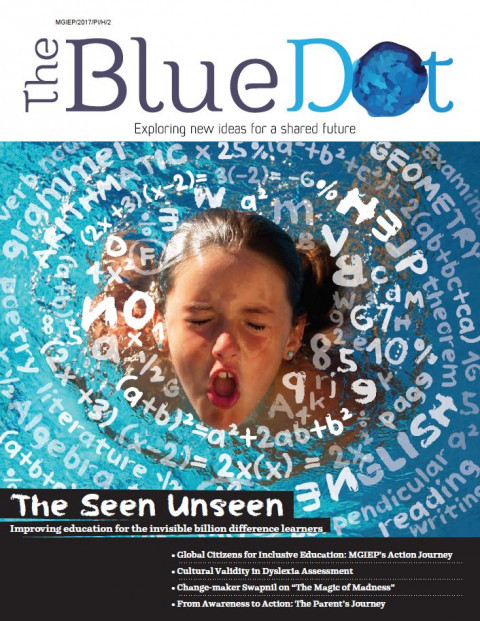 The Seen Unseen: Improving Education for the Invisible Billion Difference Learners (The Blue Dot Issue 5, 2017) سنة النشر: 2017 المؤلف المؤسسي: Mahatma Gandhi Institute of Education for Peace and Sustainable Development (MGIEP) MGIEP believes that addressing the needs of children with difference learning offers a unique opportunity to build the competency of understanding, respect and appreciation between the children and the rest of their peers in school.It provides the Institute favorable conditions to put in practice how inclusive education is a necessary condition for building peaceful and sustainable societies. Many of the Information Technology pedagogical tools developed by the Institute lend themselves to children with difference learning.Transforming the education system in such a manner will allow mainstream schools to provide a learning platform that breaks down barriers across learning types and provide the equitable access to education that is a fundamental Sustainable Development Goal.We are, in this issue of The Blue Dot, privileged to read from some of the world’s best experts on the subject describing the challenges at hand and suggesting ways and means of addressing the lacuna present in curricula and policy. As always, we dedicate a special section to reflecting the voices of young people in our discussion. I am especially honoured and delighted to present a foreword from a young entrepreneur who has not allowed his neurobiological dyslexic condition to prevent him from pursuing his dreams to help others.
  Resilience, violent extremism and religious education سنة النشر: 2013 المؤلف: Joyce Miller This article is an attempt to provide an educational justification for the British Government-funded project REsilience, on addressing contentious issues through religious education (RE), which was carried out by the RE Council of England and Wales. A number of issues relating to the inclusion of religiously inspired violent extremism in the curriculum are raised – definitional, political and educational.
  Addressing Anti-semitism through Education: Guidelines for Policymakers سنة النشر: 2018 المؤلف المؤسسي: OSCE. Office for Democratic Institutions and Human Rights (ODIHR) A new UNESCO and OSCE co-publication takes up the challenge of educating learners to resist contemporary anti-Semitism at a time when the issue is becoming ever more crucial around the world. It suggests concrete ways to address anti-Semitism, counter prejudice and promote tolerance through education, by designing programmes based on a human rights framework, global citizenship education, inclusiveness and gender equality.It also provides policymakers with tools and guidance to ensure that education systems build the resilience of young people to anti-Semitic ideas and ideologies, violent extremism and all forms of intolerance and discrimination, through critical thinking and respect for others. Prévenir l’antisémitisme par l’éducation: Lignes directrices à l’intention des décideurs politiques سنة النشر: 2018 المؤلف المؤسسي: OSCE. Office for Democratic Institutions and Human Rights (ODIHR) Cette nouvelle publication UNESCO/OSCE relève le défi de l’antisémitisme contemporain à un moment où la question devient de plus en plus cruciale dans le monde entier. Elle propose des moyens concrets pour combattre l’antisémitisme, lutter contre les préjugés et promouvoir la tolérance par l’éducation, sur la base de programmes fondés sur les droits humains, l’éducation à la citoyenneté mondiale, l’inclusion et l’égalité des sexes. Elle fournit également aux décideurs politiques des outils et des recommandations pour garantir que les systèmes éducatifs renforcent la résilience des jeunes aux idées et idéologies antisémites, à l’extrémisme violent et à toutes les formes d’intolérance et de discrimination, par l’acquisition d’une pensée critique et le respect des autres. Addressing Anti-semitism through Education: Guidelines for Policymakers سنة النشر: 2018 المؤلف المؤسسي: OSCE. Office for Democratic Institutions and Human Rights (ODIHR) A new UNESCO and OSCE co-publication takes up the challenge of educating learners to resist contemporary anti-Semitism at a time when the issue is becoming ever more crucial around the world. It suggests concrete ways to address anti-Semitism, counter prejudice and promote tolerance through education, by designing programmes based on a human rights framework, global citizenship education, inclusiveness and gender equality.It also provides policymakers with tools and guidance to ensure that education systems build the resilience of young people to anti-Semitic ideas and ideologies, violent extremism and all forms of intolerance and discrimination, through critical thinking and respect for others.
 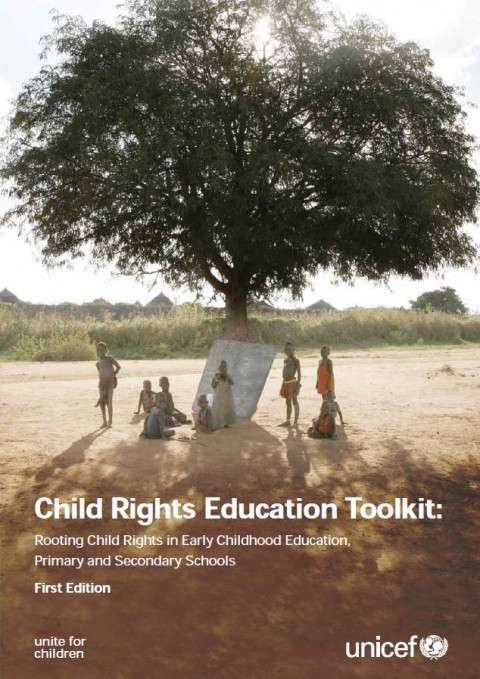 Child Rights Education Toolkit: Rooting Child Rights in Early Childhood Education, Primary and Secondary Schools سنة النشر: 2014 المؤلف المؤسسي: United Nations Children's Fund (UNICEF) This toolkit, developed by UNICEF, defines what is meant by child rights education and the child rights approach. It explains the relevance of child rights education to UNICEF’s mission and the ways in which education can take place in a range of contexts--including with professionals, caregivers, the corporate sector, the media, and children’s groups. The audience of this toolkit is therefore intended to be UNICEF National Committees, UNICEF country offices, UN agencies working on child rights education (CRE), governments, and other civil society organisations, NGOs, and academic institutions.Although this Toolkit focuses on child rights education in the formal learning environment (early childhood education settings, primary and secondary schools), it is hoped that it will also be useful for those working to promote child rights education through other channels, such as in the media, with children’s organizations and through children’s involvement in advocacy.For more information check the UNICEF webpage.
 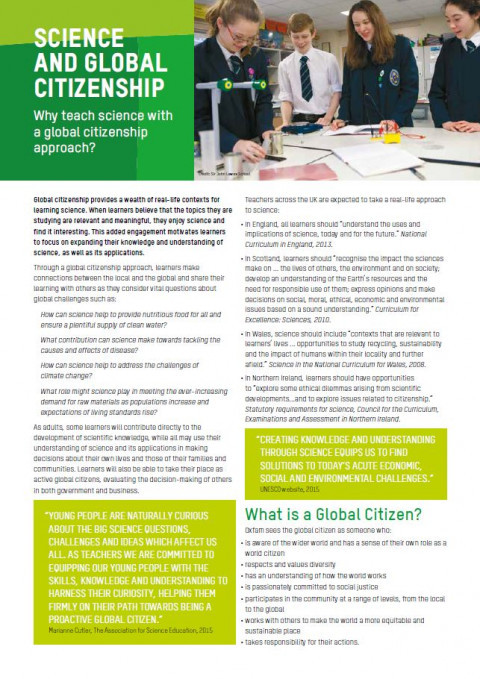 Science and Global Citizenship المؤلف المؤسسي: Oxfam GB Nurturing global scientists is key to the creation of a clean and fairer world for the future. A global citizenship approach enables learners to appreciate the relevance of science and investigate how it can be used to answer vital questions to global challenges.This guide includes practical advice for embedding global citizenship in topic areas like health and disease, water and climate change. It also has handy links to teaching resources which can be used in your lessons.