
الموارد
استكشف مجموعة واسعة من الموارد القيمة حول تعليم المواطنة العالمية لتعميق فهمك وتعزيز البحث والمناصرة والتعليم والتعلم.
تم العثور على 3,229 نتيجة
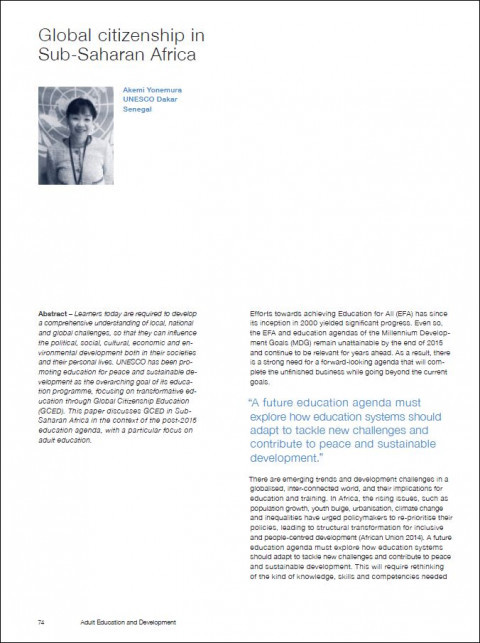 La citoyenneté mondiale en Afrique subsaharienne سنة النشر: 2015 المؤلف: Akemi Yonemura المؤلف المؤسسي: Éducation des Adultes et Développement Les apprenants doivent aujourd’hui bien comprendre les défis locaux, nationaux et mondiaux afin de pouvoir exercer une infl uence sur le développement politique, social, culturel, économique et environnemental, tant au sein de leurs sociétés que dans la vie privée. L’UNESCO a fait la promotion de l’éducation pour la paix et le développement durable en tant qu’objectifs fondamentaux de son programme d’éducation, se concentrant pour cela sur une éducation transformatrice par le biais de l’éducation à la citoyenneté mondiale (ECM). Cet article se penche sur l’ECM en Afrique subsaharienne dans le contexte du calendrier de l’éducation pour l’après-2015, et s’intéresse tout particulièrement à l’éducation des adultes.
 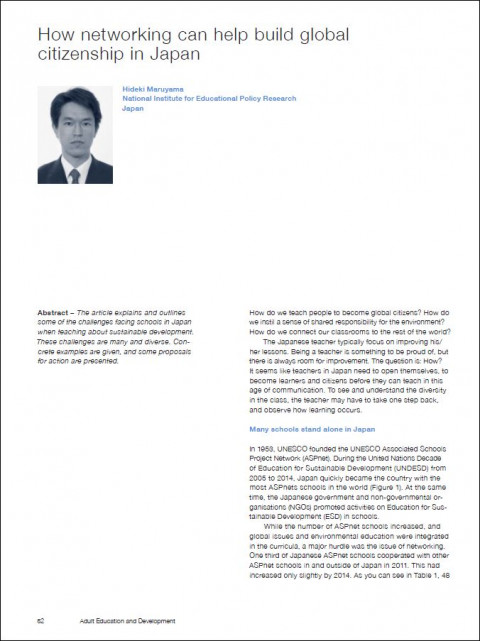 How Networking Can Help Build Global Citizenship in Japan سنة النشر: 2015 المؤلف: Hideki Maruyama المؤلف المؤسسي: Éducation des Adultes et Développement The article explains and outlines some of the challenges facing schools in Japan when teaching about sustainable development. These challenges are many and diverse. Concrete examples are given, and some proposals for action are presented.
 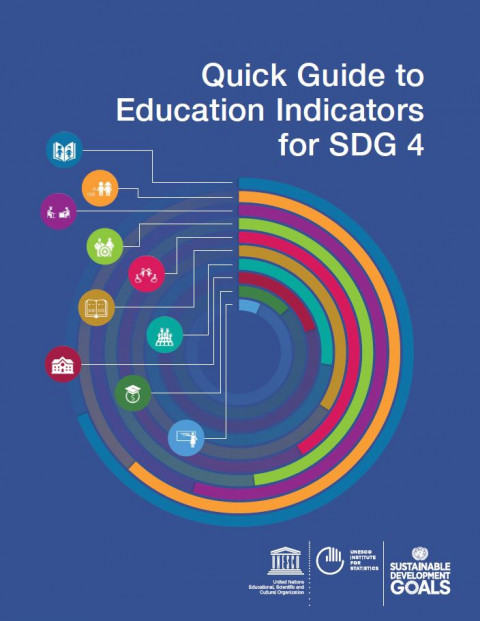 Quick Guide to Education Indicators for SDG 4 سنة النشر: 2018 المؤلف المؤسسي: UNESCO Institute for Statistics (UIS) This guide serves as a quick reference on how to monitor progress towards Sustainable Development Goal 4 (SDG 4) on quality education. It provides basic explanations of SDG 4 targets, their indicators, how they are created and where to find the information needed for these indicators.
 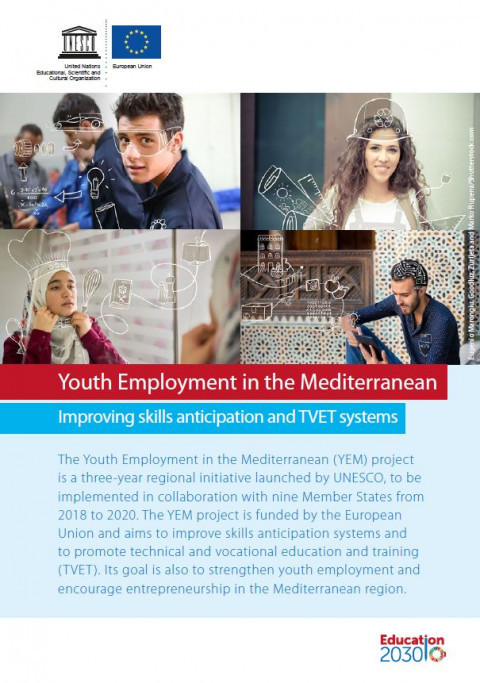 Youth Employment in the Mediterranean: Improving Skills Anticipation and TVET Systems سنة النشر: 2018 المؤلف المؤسسي: European Union (EU) The Youth Employment in the Mediterranean (YEM) project is a three-year regional initiative launched by UNESCO, to be implemented in collaboration with nine Member States from 2018 to 2020. The YEM project is funded by the European Union and aims to improve skills anticipation systems and to promote technical and vocational education and training (TVET). Its goal is also to strengthen youth employment and encourage entrepreneurship in the Mediterranean region.
  Review of Curricula and Curricular Frameworks: Report to Inform the Update of the UNESCO International Technical Guidance on Sexuality Education سنة النشر: 2018 المؤلف: Nicole Cheetham | Nora Gelperin المؤلف المؤسسي: Advocates for Youth In 2009, UNESCO published the International Technical Guidance on Sexuality Education (ITGSE): An evidence-informed approach for schools, teachers and health educators. The purpose of the ITGSE is to assist education, health and other relevant authorities in the development and implementation of school-based sexuality education programmes and materials (UNESCO, 2009). The publication was released in two volumes: Volume I, which focuses on the rationale for sexuality education and provides sound technical advice on the characteristics of effective programmes; and Volume II, which focuses on the topics and learning objectives to be covered in a ‘basic minimum package’ on sexuality education for children and young people from 5 to 18+ years of age, and includes a bibliography of useful resources.In 2016, UNESCO began a process to update the ITGSE, consisting of a literature review of the evidence and lessons learned since the release of the original publication; a stakeholder consultation on sexuality education held in October of 2016; an online user survey; and an expert, Comprehensive Sexuality Education (CSE) Advisory Group established to inform the process and its findings.This report summarizes evidence-informed conclusions, expert recommendations and current practice for curriculum-based sexuality education for ages 5-18+ and provides preliminary, overarching changes to Volume II of the ITGSE for consideration by the UNESCO CSE Advisory Group.
 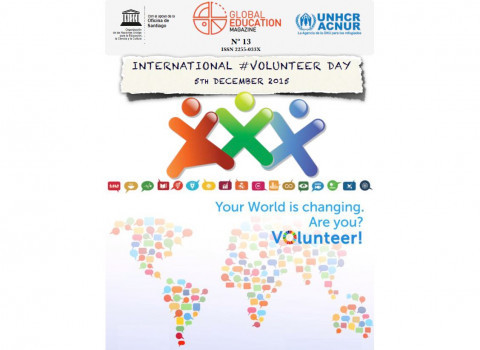 Global Education Magazine No. 13: International #Volunteer Day سنة النشر: 2015 المؤلف: Global Education Magazine This year’s International Volunteer Day (IVD) theme, "The world is changing. Are you? Volunteer!" is challenging each and every one of us to be part of implementing the newly launched Global Goals. The 2030 Agenda for Sustainable Development is a plan of action for ending poverty in all its dimensions, irreversibly, everywhere. Volunteerism, and each one of your volunteer actions, are critical to ensure we “leave no one behind” in this effort.The contribution of volunteers in the new development agenda is two-fold. Volunteerism is a way for us all to be directly involved in achieving sustainable development and peace. At the same time, this essential way of fostering people’s participation makes it a key element for success when striving for sustainability of development. Volunteer organizations can be brokers of civic engagement, connecting institutional initiatives with volunteer action at local, national and global levels.
 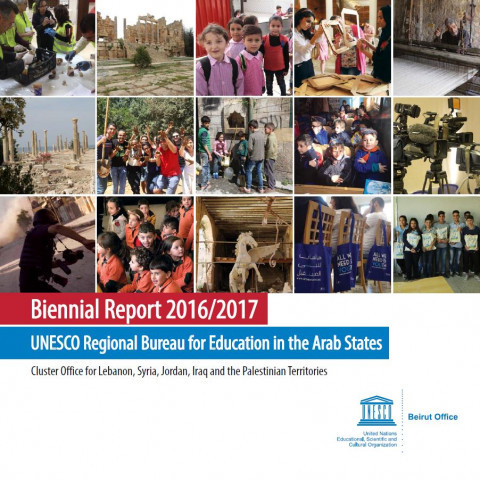 Biennial Report 2016/2017: UNESCO Regional Bureau for Education in the Arab States سنة النشر: 2018 المؤلف المؤسسي: UNESCO Beirut As Regional Bureau for Education, UNESCO Beirut is the lead coordinator for SDG 4 in the Arab Region. We strive to provide tangible support for each Member State in the region, taking into account national needs and priorities, thereby employing nationally relevant approaches. More specifically, our work aims to address both the humanitarian and development aspects brought about by the protracted crisis in Syria through bridging the learning gaps for the youth, both for Syrian refugees and vulnerable youth in host communities. Our response also targets teachers, mentors and facilitators as well as Ministries’ technical officials. The crisis in Syria has created a need for specific support in education in emergencies and quality education to which we actively engage from both, upstream analytical and capacity building and downstream operational levels. UNESCO Beirut has also strengthened its leadership to respond to the deliberate destruction of cultural heritage, illicit trafficking, and attacks against individuals on religious or cultural grounds. We raise the alarm to protect heritage in danger, assessing damages to World Heritage sites in conflict. We also raise awareness among the public about the values of cultural heritage and the need to protect it for future generations. In today’s diverse societies, the Organization’s fundamental humanist mission guides us to support people, especially the youth, in understanding each other and working together to build lasting peace and enables people to create and use knowledge for just and inclusive societies. We continue to advocate free, independent and pluralistic media in print, broadcast and online to enhance freedom of expression as a contributor to peace, sustainability, poverty eradication and human rights. This biennial report summarizes the work and achievements accomplished between 2016 and 2017 by our office.
  A Whole School Approach: Involving the School Community in Reducing its Carbon Footprint سنة النشر: 2010 المؤلف المؤسسي: Carbon Trust Reducing energy use has many advantages for schools – it saves money, reduces carbon emissions (helping to combat climate change), improves the learning environment and can enhance a school’s reputation.To be really effective, the whole school must be involved in energy saving. This guide outlines an approach to energy management which involves pupils, teachers and other staff. By motivating staff and pupils through lessons, as well as providing practical advice on how to go about saving energy, a whole school approach to energy management can reduce the school’s carbon footprint and provide long-term benefits for the school, its people and the environment.
 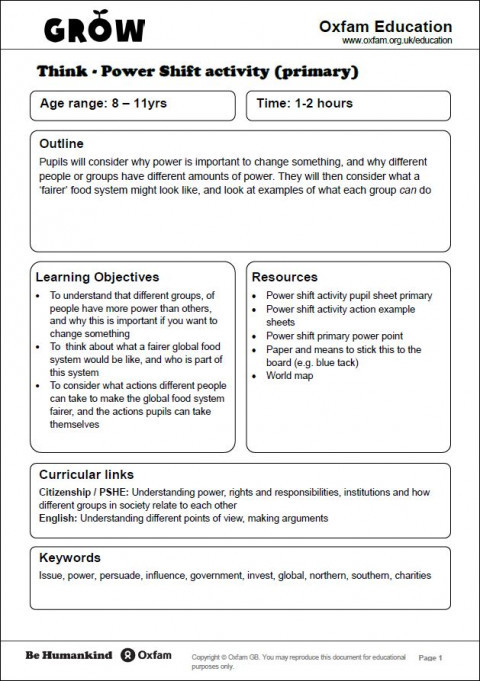 Think: Power-Shift Activity Teachers Guide for Primary Schools المؤلف المؤسسي: Oxfam GB Linked to Oxfam's GROW campaign, the Food for Thought school resources get young people learning, thinking and taking action for a fairer food system.Through this activity pupils will consider why power is important to change something, and why different people or groups have different amounts of power. They will then consider what a ‘fairer’ food system might look like, and look at examples of what each group can do.
 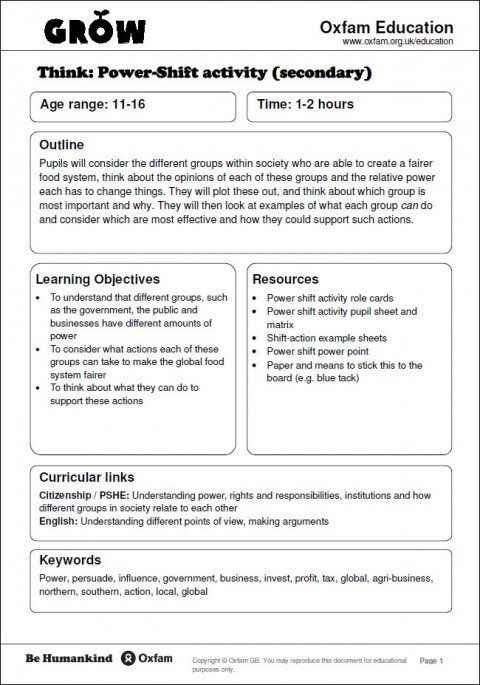 Think: Power-Shift Activity Teachers Guide for Secondary Schools المؤلف المؤسسي: Oxfam GB Linked to Oxfam's GROW campaign, the Food for Thought school resources get young people learning, thinking and taking action for a fairer food system.Through this activity pupils will consider the different groups within society who are able to create a fairer food system, think about the opinions of each of these groups and the relative power each has to change things. They will plot these out, and think about which group is most important and why. They will then look at examples of what each group can do and consider which are most effective and how they could support such actions.